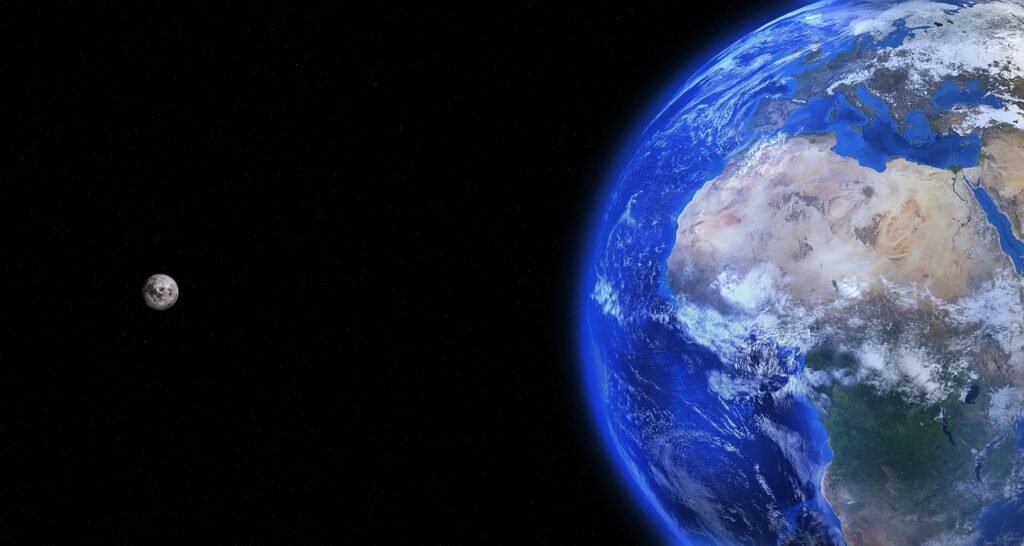
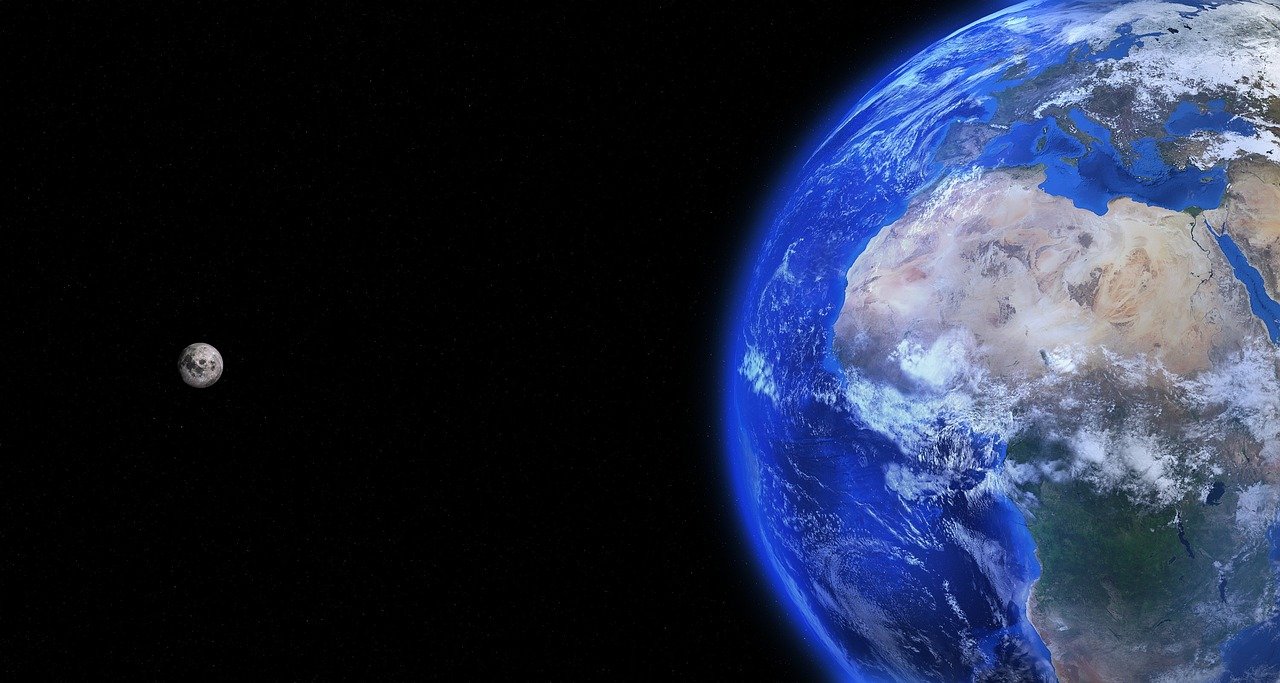
Blunt Force from Unyielding Inertia (Image Credits: Pixabay)
Earth’s relentless rotation propels its surface at speeds up to 1,000 miles per hour at the equator, a motion so constant that humans rarely notice it until imagining its abrupt end.[1]
Blunt Force from Unyielding Inertia
Everything on the planet’s surface would keep hurtling forward at rotational velocities the moment Earth halted, mimicking passengers in a high-speed vehicle slamming to a stop without restraints.
Structures would crumble instantly under the onslaught. People and loose objects would catapult eastward in a deadly scramble. The equator experiences the fiercest impact, with ground speeds reaching over 1,000 mph, while effects taper toward the poles.[1]
Supersonic Winds Rip Across Continents
Atmospheric gases, loyal to their prior momentum, would generate winds surpassing 1,000 mph at the equator – nearly five times the record surface gust and packing 25 times the force.[1]
These tempests would shred buildings and scour landscapes clean. Wind velocities follow a precise pattern dictated by latitude, calculated as 1,036 times the cosine of the latitude in miles per hour. Closer to the poles, speeds drop dramatically, offering scant mercy in the chaos.
- Equator (0° latitude): Over 1,000 mph
- New York City (~40°): About 794 mph
- Mid-latitudes: Hundreds of mph
- Poles: Zero mph
Oceans Surge Inland in Unstoppable Waves
Seas and oceans, moving at latitude-specific speeds, would pile up and race toward landmasses, overwhelming coasts and penetrating deep inland.
The sheer kinetic energy of displaced water defies containment by any barrier. Even familiar swift currents hint at the power, but this deluge would drown vast continental expanses. Combined with buckling earth, the floods would reshape shorelines forever.[1]
Crustal Chaos and Planetary Readjustment
The ground itself would rebel against the halt, buckling, splitting, and tearing as stresses release violently.
Earth’s oblate spheroid form, bulged at the equator by centrifugal force, would snap back toward a perfect sphere. This shift would redirect ocean waters poleward, cracking the surface anew. Volcanoes worldwide would erupt, belching ash, fire, and debris into the skies in megatons.[1]
| Latitude | Rotational Speed (mph) |
|---|---|
| 0° (Equator) | 1,036 |
| 40° (e.g., New York) | 794 |
| 60° | 518 |
| 90° (Poles) | 0 |
The Real Trajectory of Earth’s Rotation
Fortunately, such a sudden stop remains pure speculation. Earth’s spin actually fluctuates subtly, slowing overall by mere fractions of milliseconds annually due to tidal forces, quakes, and climate shifts.
Recent measurements even indicate a slight speedup, prompting talks of a negative leap second by 2029. No mechanism exists to halt rotation entirely within human timescales. For deeper insights, see the analysis by Etan Meyer at Astronomy.com.[1]
- Sudden halt triggers inertia-driven destruction across land, sea, and air.
- Winds exceed 1,000 mph at equator, scaling by latitude cosine.
- Long-term: crustal reshaping, polar flooding, volcanic apocalypse.
In essence, stopping Earth’s spin equates to engineering doomsday: oceans drowning continents, winds obliterating life, and the planet fracturing under its own readjustment. “Earth’s surface cracking violently open; volcanoes erupting worldwide and spewing megatons of ash, fire, and debris into the atmosphere – in short, the end of the world could be achieved merely by stopping its spin.”[1] What scenarios from science fiction match this reality? Share your thoughts in the comments.