
What if your thoughts, memories, and sense of self aren’t locked inside your skull after all? The idea sounds wild, almost like something out of a sci‑fi movie, yet a growing number of scientists and philosophers are seriously questioning the old assumption that consciousness is created only by the brain. They’re not all saying the same thing, but they are opening the door to a possibility that used to be dismissed out of hand: that mind might be more than just brain activity.
This shift didn’t happen overnight. It’s been pushed forward by strange clinical cases, puzzles in physics, and the stubborn mystery of how a lump of gray tissue could ever produce the rich inner world you experience every day. I remember the first time I read about a person functioning almost normally with far less brain tissue than expected, and feeling my stomach drop a little. If that doesn’t neatly fit the story we’ve been told, what else might we be missing?
The Cracks in the “Brain-Only” Model
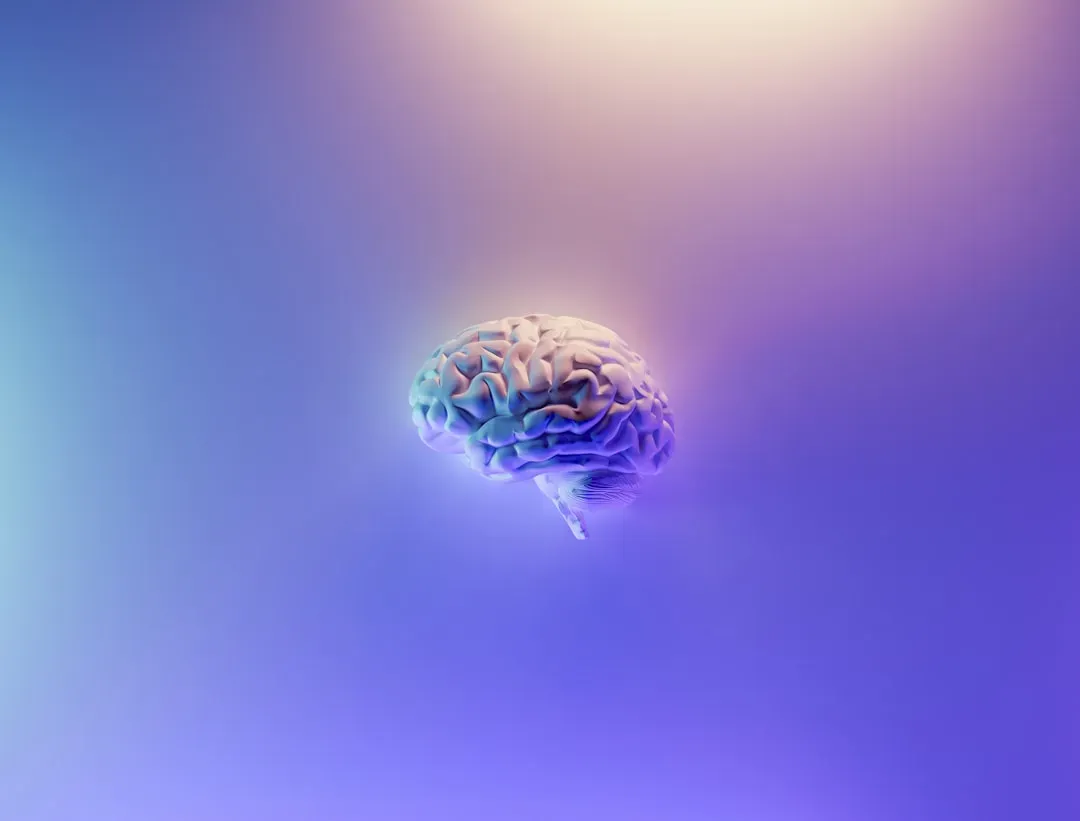
For a long time, the dominant view in neuroscience has been that consciousness is entirely generated by neurons firing in the brain, end of story. Yet some medical cases quietly refuse to play along. There are people who’ve lost large portions of brain tissue due to injury or disease and still retain normal or near‑normal mental function, which is unsettling if you assume every aspect of mind must map cleanly onto specific brain regions.
These cases don’t prove the brain is unimportant, of course, but they hint that the relationship between brain structure and conscious experience might not be as straightforward as a simple one‑to‑one map. On top of that, brain imaging can reveal where activity correlates with certain experiences, but correlation doesn’t explain why activity produces experience in the first place. It’s like knowing where an app runs on your phone but having no idea what a “user” is or why anything feels like something from the inside.
Extended Mind: When Your Mind Spills into the World

One of the most grounded, less “out there” ideas challenging a strict brain‑only view is the extended mind theory. It suggests that our thinking isn’t confined to the brain, but stretches into tools, objects, and even other people around us. When you offload directions onto your phone’s GPS or lean heavily on a notebook to remember appointments, those tools effectively become part of your cognitive system, not just accessories.
Imagine your mind as a network rather than a box: your brain is still the core hub, but your smartphone, calendar, and even your workspace layout act like external memory and processing nodes. This doesn’t say that consciousness literally hovers in the air, but it does challenge the idea that everything mental happens in isolation inside your head. In a way, it blurs the border between “me” and “not me” far more than most of us realize.
Embodied Consciousness: Your Body as Part of Your Mind
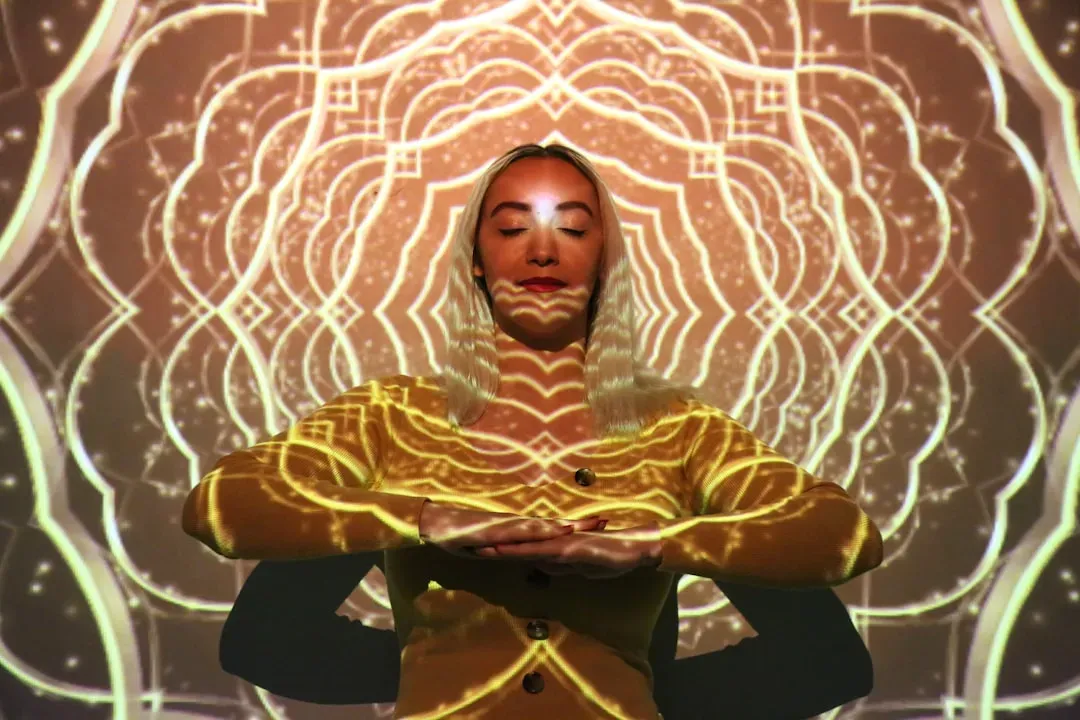
Another powerful shift comes from the idea of embodied cognition, which argues that consciousness is deeply rooted in the entire body, not just the brain. Think about how your posture, breathing, and gut sensations shape your mood and decisions; it’s not just background noise. A racing heart and tight chest can color your thoughts with anxiety, while relaxed muscles and slow breathing can make problems feel more manageable, even if nothing else has changed.
Some researchers point to the complex nervous systems in the heart and gut, which communicate constantly with the brain, as part of this picture. It’s not that your stomach is secretly thinking in words, but the signals flowing through your body seem to actively contribute to how your mind feels and works. Put simply, your mind isn’t floating inside your skull like a pilot in a cockpit; it’s more like an orchestra spread across your whole body, with the brain as the conductor rather than the entire band.
Panpsychism: When Consciousness Is Everywhere (In Some Form)
One of the most controversial ideas gaining renewed attention is panpsychism, the view that some form of consciousness, however tiny or primitive, might be a fundamental feature of the universe. This doesn’t mean rocks think about their career choices, but it suggests that the basic building blocks of reality might carry rudimentary “proto‑experiences” that combine in complex ways in brains and other systems. It’s a radical departure from the old story that consciousness popped into existence late in cosmic history as a weird by‑product of biology.
Proponents argue that this move actually simplifies the problem rather than complicates it, because it avoids trying to explain how pure matter suddenly produces experience out of nowhere. Instead, consciousness is treated more like mass or charge: a basic aspect of nature that shows up in different forms and intensities. Critics find this deeply unsatisfying, but the fact that it’s back on the table in serious philosophy journals and scientific discussions says a lot about how stuck the traditional story has become.
Quantum Mind Ideas: Physics Meets Consciousness
Whenever consciousness comes up, quantum physics isn’t far behind. Some theories propose that strange quantum effects inside neurons, or in networks of brain structures, might play a key role in generating awareness. The idea here is that classical physics, which treats the brain like a very complicated machine, might be missing something essential about how reality behaves at tiny scales, and that “something” could be linked to conscious experience.
Most physicists and neuroscientists remain skeptical of specific quantum mind models, pointing out that brains are warm, wet environments where delicate quantum states tend to break down quickly. Still, quantum theory itself leaves us with a picture of reality that’s less solid and more interconnected than everyday intuition suggests. That’s enough to keep the door open, at least for some, to the possibility that consciousness and the deep structure of reality are entangled in ways we don’t yet understand.
Near-Death Experiences and the “Brain Offline” Puzzle
Near‑death experiences are another area that adds fuel to the debate about whether consciousness is strictly tied to the brain. Some people report vivid, structured experiences during periods when their brain activity appears to be severely reduced or even undetectable in medical measurements. These stories range from feeling detached from the body to encountering intense feelings of peace or life review sequences that feel more real than waking life.
There are material explanations on the table, such as residual activity that standard instruments can’t pick up or the brain producing powerful experiences as it shuts down and reboots. At the same time, the sheer richness and coherence of some of these reports keep the mystery alive. Even if every detail eventually gets a brain‑based explanation, the fact that consciousness can feel so full and intense right at the edge of brain failure unsettles the neat picture of mind as just a smooth readout of neural health.
Rethinking “Self” in a World of Distributed Consciousness

If consciousness isn’t neatly boxed inside the brain, even in principle, then our everyday sense of a sharply defined, isolated self starts to wobble. Many of these emerging theories, from the extended and embodied mind to more speculative frameworks, point toward a picture of the self as fluid, relational, and distributed. You’re not just a brain in a body; you’re also your habits, your tools, your relationships, and your environment, all woven into the way you experience being you.
This can feel unsettling at first, like losing a solid anchor, but it can also be oddly freeing. It suggests that who you are is less a fixed object and more an ongoing process, a constantly updated collaboration between brain, body, and world. In that light, exploring consciousness becomes less about finding a single switch inside the skull and more about mapping an intricate web of connections you’re part of. How different does your own mind feel when you imagine it that way?
A Mystery That Refuses to Stay Small
Across all these theories and findings, one theme keeps resurfacing: consciousness is far harder to stuff into a neat, brain‑shaped box than we once believed. The brain remains central, but the story seems to spill out into the body, the environment, and perhaps even the basic fabric of reality itself. Each new approach offers a different lens, and none has all the answers, yet together they’re slowly prying open a worldview that used to be firmly shut.
Maybe, in the end, the biggest shift is not any single theory, but the willingness to admit we might have underestimated what mind really is. Instead of treating consciousness as a tiny side effect of brain chemistry, more researchers are beginning to see it as a clue to something deeper about the universe and our place in it. As these ideas evolve over the coming years, one question will keep echoing in the background: were we ever just brains in a box, or have we been part of something larger all along?