
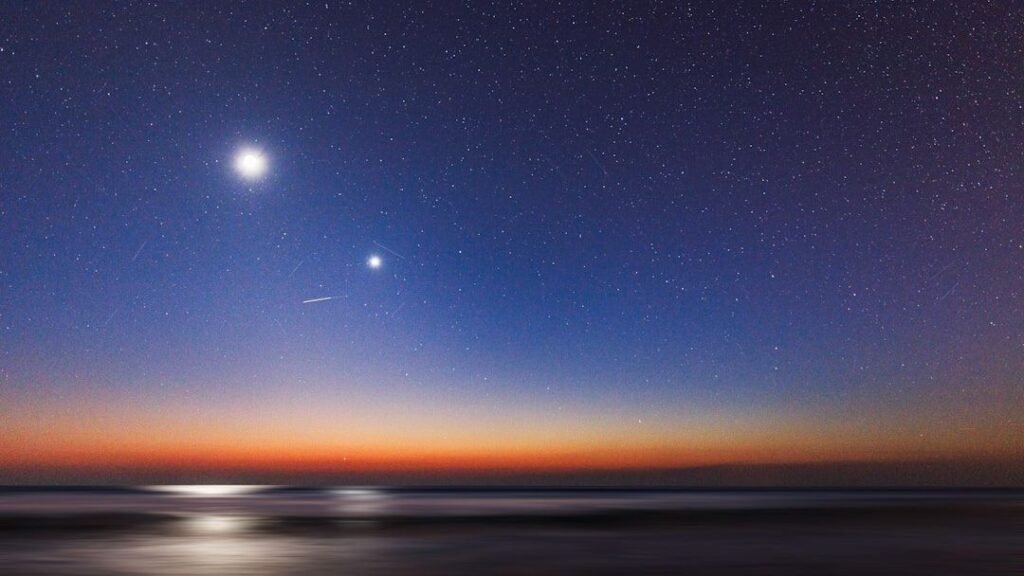

Every few nights somewhere on Earth, the sky briefly behaves like it’s glitching. Strange flashes appear on perfectly clear evenings, glowing orbs drift above quiet towns, and mysterious streaks of light race across the atmosphere without leaving a trace. We have satellites mapping distant galaxies and telescopes peering billions of years into the past, yet some of the lights right above our heads still refuse to make sense.
These aren’t casual UFO campfire stories or grainy social media clips that fall apart under scrutiny. Many of these unexplained lights are recorded by professional observatories, high-speed cameras, pilots, and even Earth-observing satellites. They show up in places where scientists are supposed to understand what’s going on – and then stubbornly break all the rules. Let’s walk through eight of the most intriguing kinds of unexplained lights that continue to keep researchers, and honestly a lot of ordinary skywatchers, awake at night.
1. Fast Radio Bursts and Their Mysterious Optical Twins
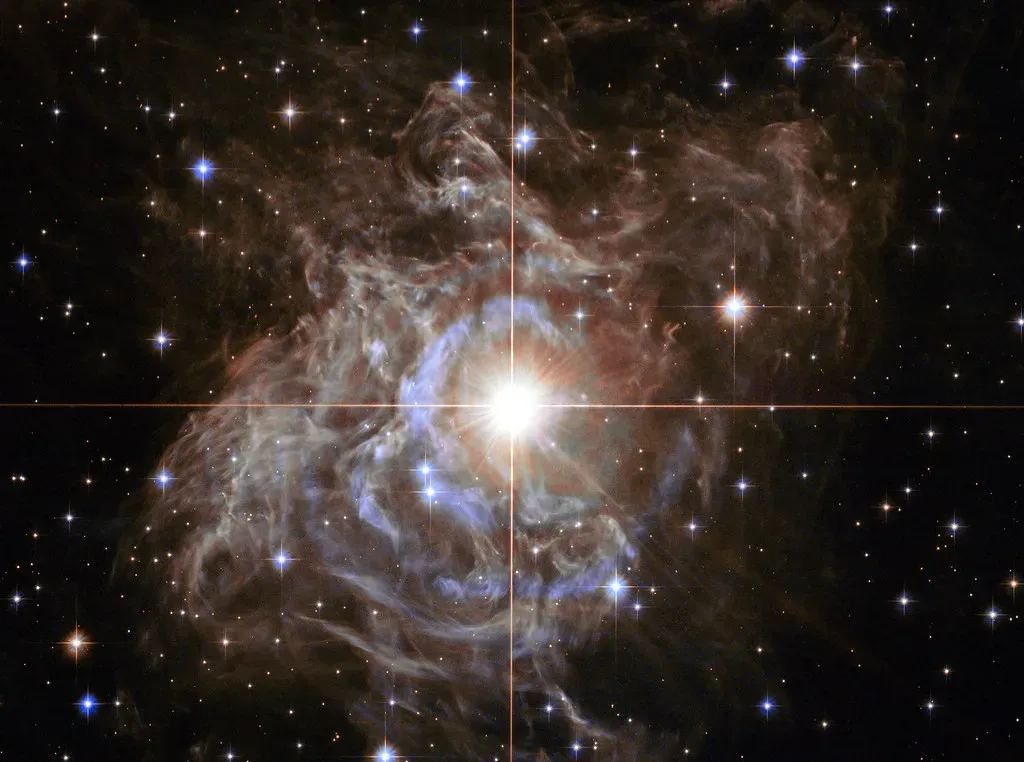
Imagine a cosmic camera flash that lasts less than the blink of an eye but releases more energy than the Sun does in days. That’s roughly what happens with fast radio bursts, or FRBs: ultra-short, ultra-powerful bursts of radio waves coming from distant galaxies. Over the last decade, radio telescopes have detected hundreds of them, some repeating, some one-time events, and they’ve become one of the biggest puzzles in modern astrophysics.
What makes them even stranger is that scientists are now catching hints of optical flashes linked to some FRBs – quick spikes of visible light that accompany the radio burst but vanish almost as soon as they appear. In a few cases, telescopes scanning the same patch of sky saw a sudden brightening at just the right moment, suggesting that some FRBs might literally light up the sky to human eyes for a fraction of a second. Theories range from highly magnetized neutron stars cracking under extreme stress to bizarre interactions in the dense regions near black holes, but no single idea fully explains all the different FRB behaviors. It’s like hearing a door slam in a distant house again and again, seeing a light flicker in the window, and still having no idea who’s inside or what they’re doing.
2. Transient Luminous Events: Sprites, Elves, and Blue Jets
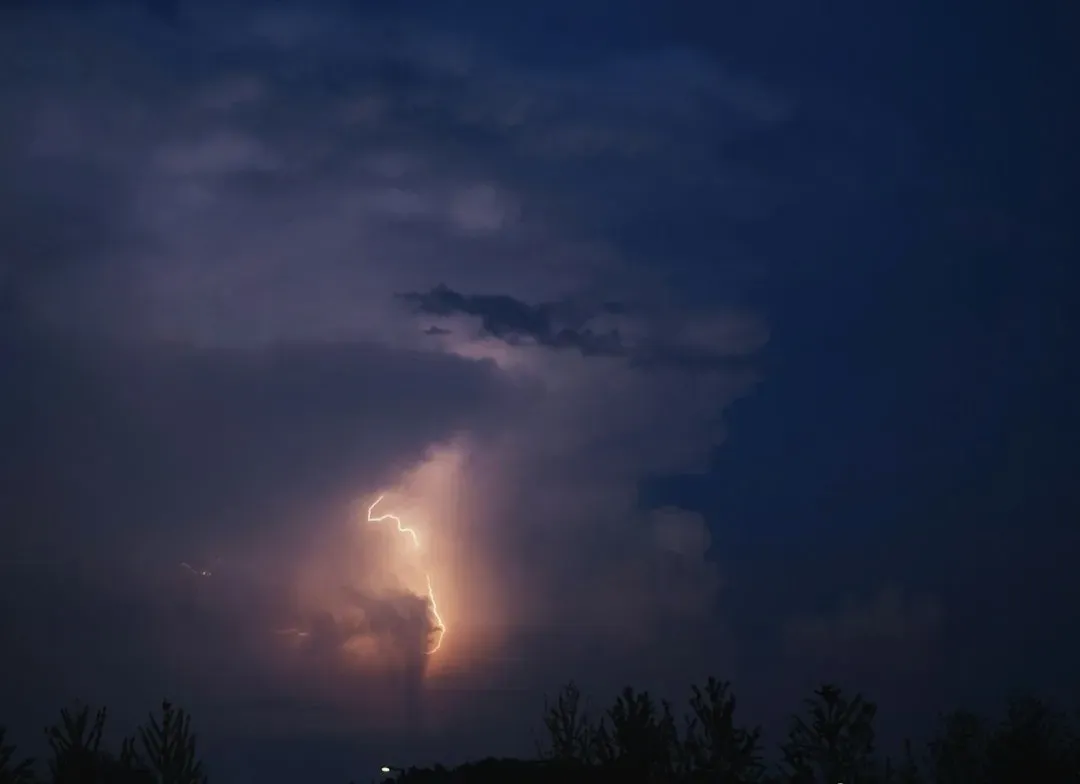
For decades, pilots reported strange flashes of light above thunderstorms, and almost nobody in the scientific community believed them. Then in the late twentieth century, high-speed cameras finally captured what they were talking about: immense, ghostly red “sprites” flickering high above powerful storms, sometimes stretching taller than Mount Everest. Alongside them came other weird relatives with equally whimsical names, like elves and blue jets, all grouped together under the label transient luminous events.
Sprites look like upside-down jellyfish or root systems of light, appearing for a few thousandths of a second in the upper atmosphere. Blue jets and gigantic jets, on the other hand, shoot narrow, bright beams upward from thundercloud tops toward space, like nature’s own lightning sabers. We know these lights are linked to thunderstorm electrification and powerful lightning strokes, but the exact triggers, shapes, and patterns remain difficult to predict. Even now, satellites like the International Space Station’s instruments are finding new kinds or variations of these flashes. It’s a reminder that even something as “ordinary” as a thunderstorm still hides behaviors we’re only just starting to understand.
3. The Hessdalen Lights of Norway
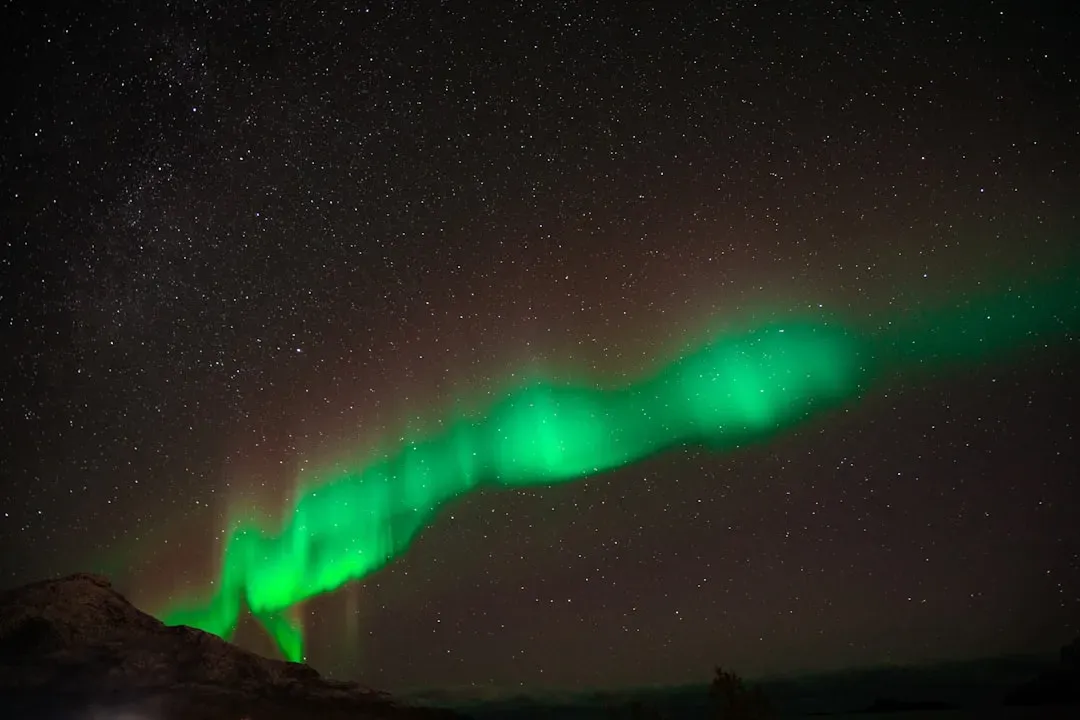
In a remote Norwegian valley called Hessdalen, residents have been seeing strange lights in the sky for decades: glowing orbs that hover, dart, or slide silently along the horizon. Some appear as white or yellowish lights moving slowly, others as bright, pulsing objects that split into multiple points before merging again. Unlike many local UFO tales, these sightings are frequent enough and persistent enough that scientists have actually set up long-term observation stations in the area to watch them.
These lights have been recorded by cameras, radars, and spectrometers, which analyze what kind of light they emit. Several ideas compete to explain them, from unusual plasma caused by the valley’s geology and metallic minerals, to piezoelectric effects when rocks are squeezed deep underground, to more conventional aircraft misidentifications. But no theory has fully nailed down why the lights have such diverse behavior, last from seconds to hours, and appear so regularly in this specific place. Standing in that dark valley and seeing a silent, self-contained light drift across the sky, it’s easy to understand why Hessdalen has become one of the most famous active mysteries in atmospheric science.
4. Transient Lunar Phenomena: Strange Flashes on the Moon
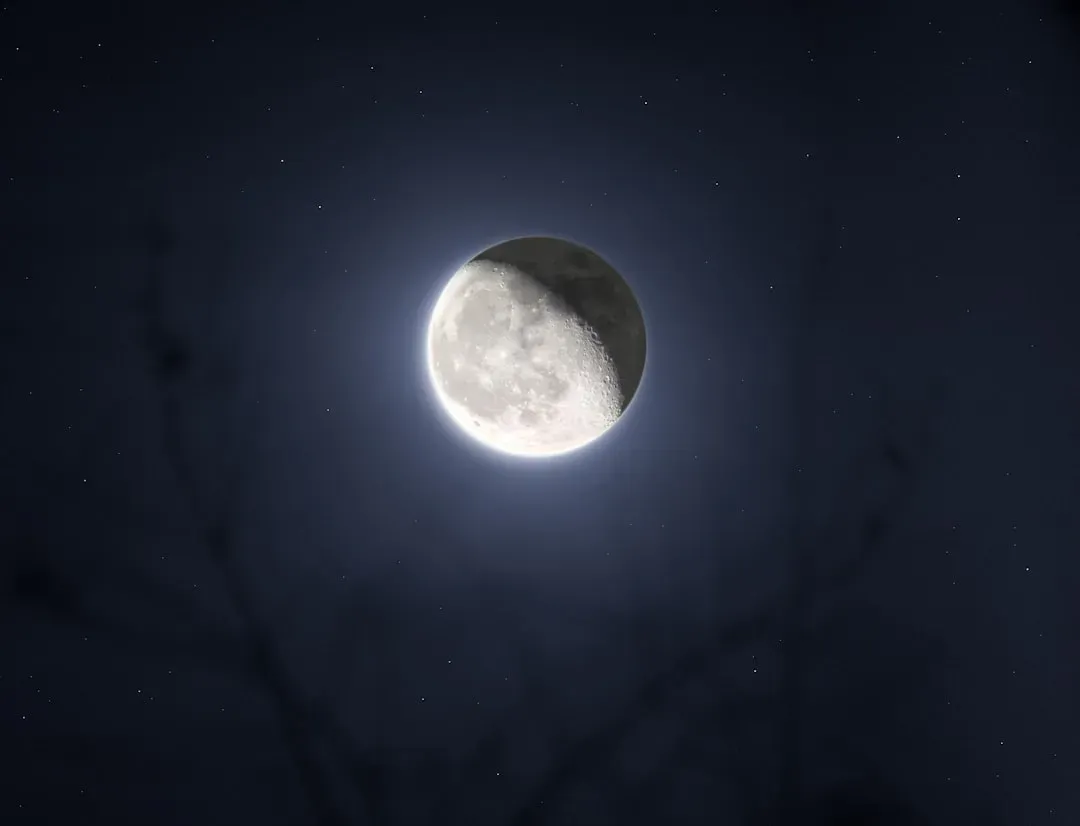
It sounds like pure science fiction: the Moon, which we think of as dead and inert, occasionally appears to sparkle. Yet for centuries, astronomers have reported brief flashes, glows, and color changes on the lunar surface, usually called transient lunar phenomena, or TLPs. Some describe fleeting bright spots, others say a region that normally looks gray suddenly appears hazy or reddish for a few seconds or minutes.
With modern telescopes and digital cameras, some of these events have been recorded more systematically, and a few observatories now monitor the Moon specifically to catch them. Possible explanations include small meteoroids slamming into the lunar surface, releasing plumes of dust that briefly reflect sunlight, or charged particles from the solar wind interacting with the Moon’s thin exosphere. Another idea is that internal stresses in the lunar crust might release gases, causing brief local glows. The tricky part is that TLPs are rare, short-lived, and often observed under less-than-ideal conditions, so the data is always just a bit too thin. That lingering uncertainty keeps the idea alive that the Moon might still be more dynamic, and occasionally more luminous, than we once assumed.
5. Earth’s Mysterious STEVE: A Sky Ribbon That Isn’t Quite an Aurora
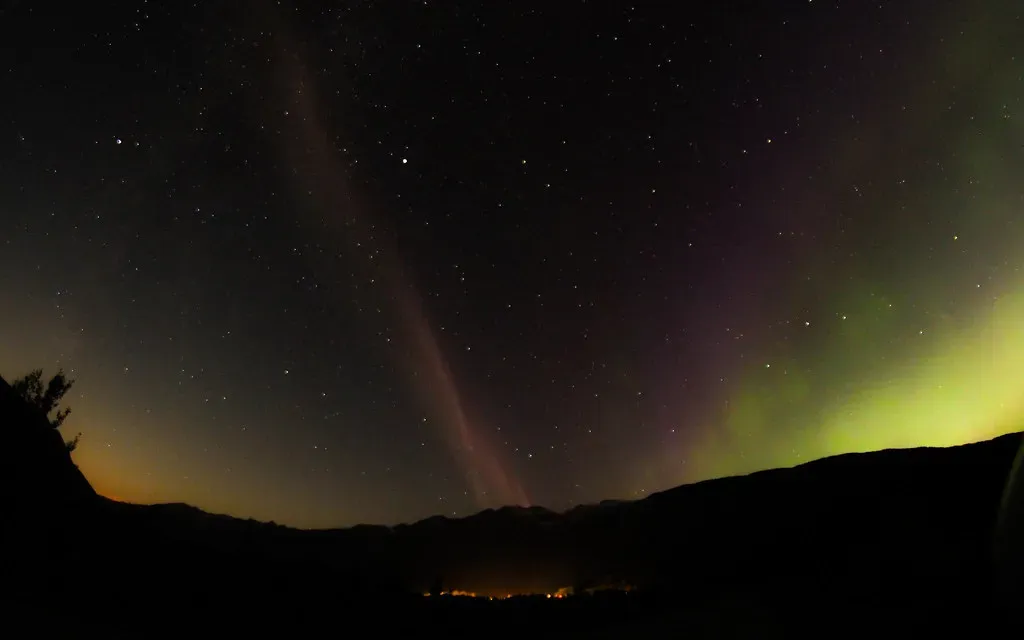
Over the past decade, backyard skywatchers in Canada and other high-latitude regions began sharing photos of a strange, narrow ribbon of purple and greenish light stretching across the sky. It looked like an aurora, but too thin, too organized, and appearing in the wrong places. Scientists eventually gave this odd phenomenon a tongue-in-cheek name that stuck: STEVE, short for a longer technical phrase, and officially recognized it as something distinct from a classic aurora.
STEVE often appears as a bright, smooth arc running east–west, sometimes with vertical green “picket fence” structures underneath. Satellite data suggests it’s tied to extremely fast, hot flows of charged particles in the upper atmosphere, likely driven by disturbances in Earth’s magnetic field. However, it doesn’t behave like normal auroras, which are caused by electrons raining down along magnetic field lines into the polar regions. In a way, STEVE feels like the sky’s version of discovering a new category of ocean current we never knew existed. It shows that even in countries with long traditions of aurora watching, a completely new kind of light can suddenly demand a place in the textbooks.
6. Ghostly Glows: The Airglow Bands and Night-Shining Clouds
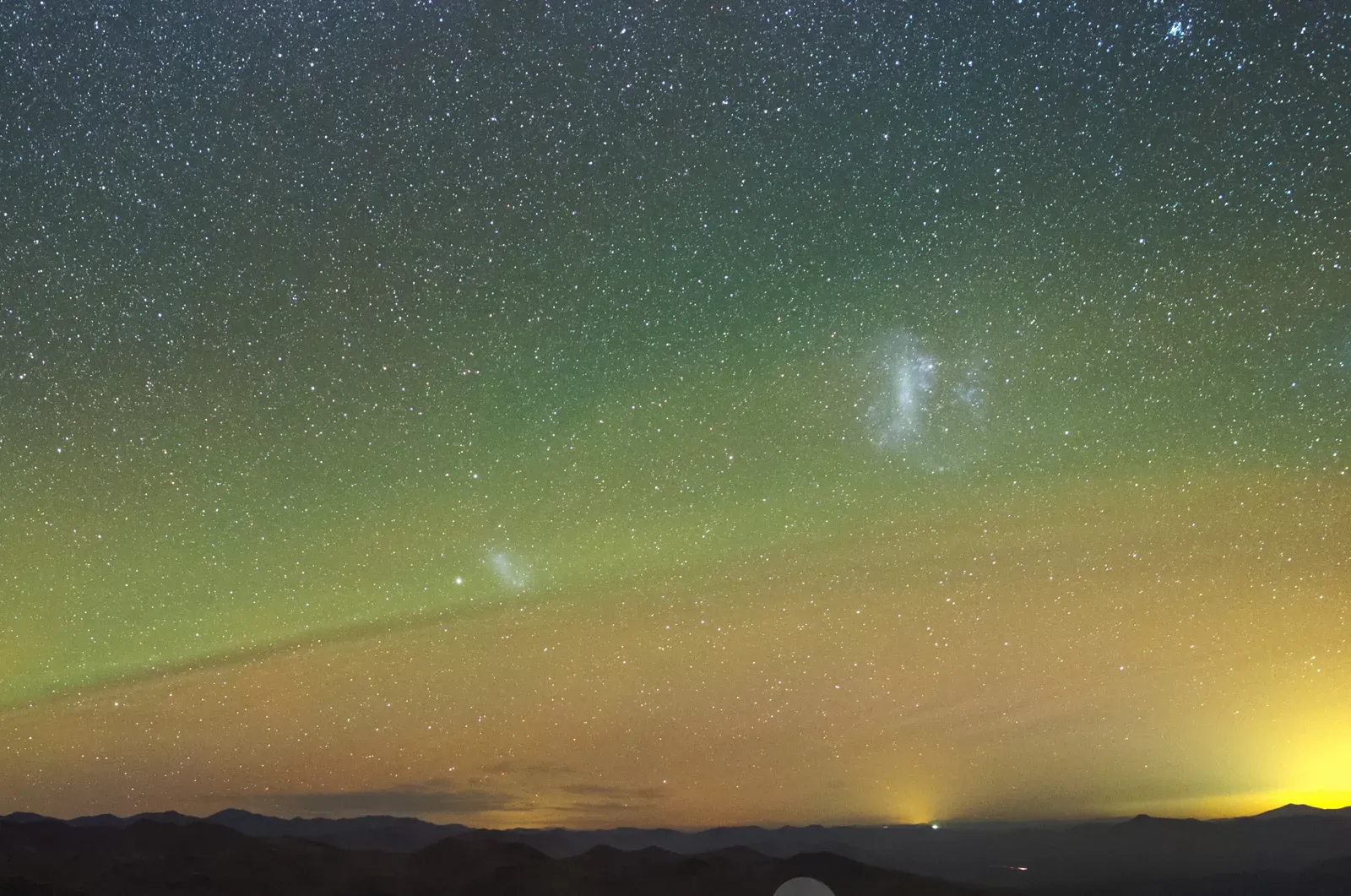
If you’ve ever been out under an extremely dark sky and thought you saw a faint, milky band or greenish haze that wasn’t the Milky Way, you might have been glimpsing the Earth itself glowing. The upper atmosphere constantly gives off a very faint light called airglow, produced by chemical reactions high above us. In recent years, sensitive cameras and satellites have caught enormous rippling bands of airglow stretching for thousands of kilometers, like waves frozen in the sky.
These structures are influenced by atmospheric waves, weather systems, and even distant storms, but the exact patterns can be hauntingly complex. Then there are night-shining or noctilucent clouds: ultra-high, electric-blue clouds visible just after sunset or before sunrise, far higher than typical weather clouds. They reflect sunlight from below the horizon and have become more common and brighter over the last century, possibly linked to changes in the upper atmosphere. While we know the general physics behind airglow and noctilucent clouds, the way they combine into moving, glowing tapestries remains surprisingly tricky to model. To the naked eye, they can look almost supernatural, like the planet is quietly breathing light in its sleep.
7. Unidentified Aerial Phenomena Detected by Military Sensors
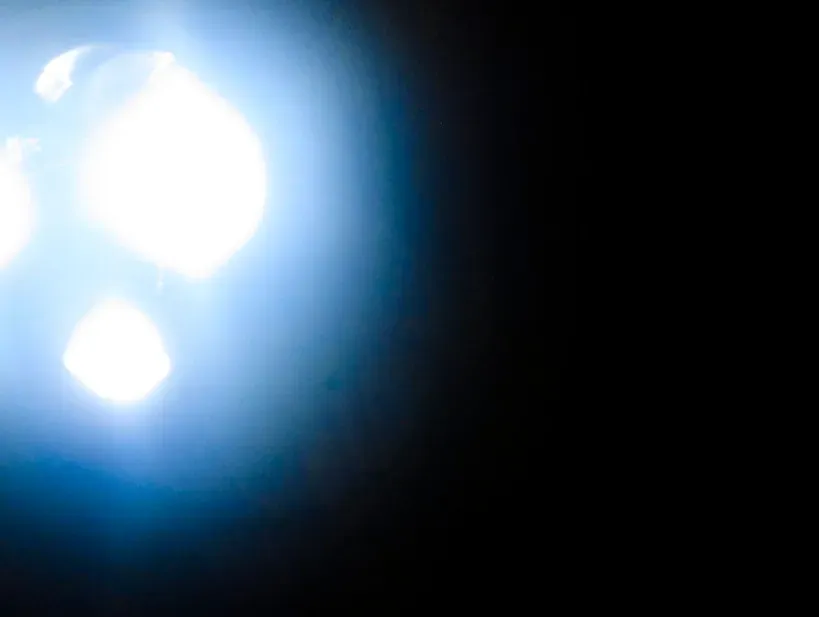
In the last several years, one of the most controversial sets of unexplained lights has come not from amateur skywatchers but from military pilots and advanced sensors. Various governments, especially in the United States, have released or acknowledged recordings of objects and lights in the sky that appear to move in ways that don’t line up easily with known aircraft or natural atmospheric effects. Officially, these are now labeled as unidentified aerial phenomena, or UAP, a more neutral term than the old popular label people used to throw around.
The intriguing part isn’t just grainy cockpit videos, but multi-sensor detections: radar, infrared cameras, and visual sightings all tracking the same target. Many UAP cases eventually turn out to be misidentified drones, balloons, glare, or sensor glitches, but a small fraction remain unresolved even after review. Governments have set up task forces and reporting systems to collect data more rigorously, partly out of security concerns, partly out of scientific curiosity. The current stance from many officials is surprisingly cautious: they aren’t jumping to conclusions about what these lights and objects are, but they’re also not pretending the remaining puzzles simply don’t exist.
8. Optical Illusions of the Sky: When the Atmosphere Tricks Our Eyes
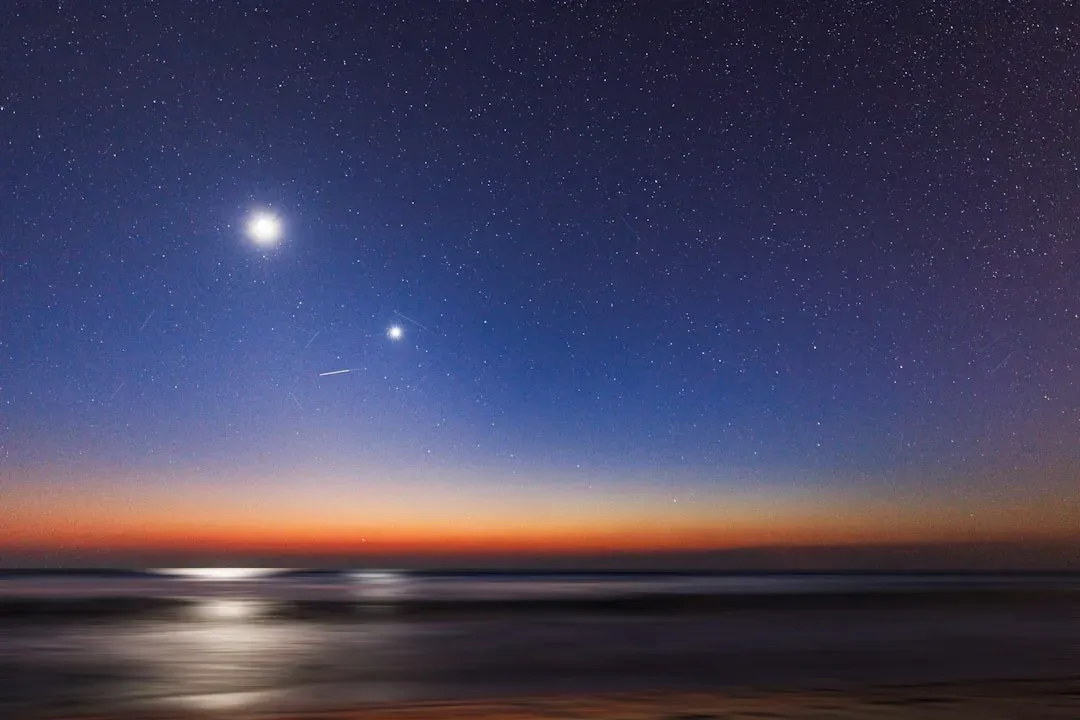
Not every unexplained light in the sky is genuinely mysterious, but the ones that fool experienced observers still fascinate scientists because they reveal how strange the atmosphere can be. Bright planets like Venus, for instance, often get reported as hovering or slowly moving lights, especially when seen through thin clouds or near the horizon. Under certain conditions, temperature inversions – layers of warmer air trapped above cooler air – can bend light in odd ways, making distant ships, cities, or even stars appear higher, lower, or in multiple places at once.
There are documented cases where landing lights from aircraft, flares from military exercises, satellite reflections, or even bright searchlights have created eerie glows that sparked entire waves of local sightings. What keeps scientists interested is that some of these events are only fully understood after detailed reconstruction: mapping out atmospheric layers, light paths, and human viewing angles. It highlights a humbling reality – even with all our technology, the simple act of looking up at the sky is still shaped by illusions we’re not always aware of. In a sense, some unexplained lights are really about the mystery of perception as much as the mystery of the heavens themselves.
What makes these phenomena so gripping is how they sit right at the edge of what we know: real enough to measure, elusive enough to resist neat categorization. They remind us that “mystery” isn’t just a word for ancient myths; it’s a living part of modern science, hanging there above us every night. The next time you see a strange light in the sky, you might be looking at the start of the next big question. If you had to bet, which of these lights do you think will stay unexplained the longest?


