

You’ve probably wondered about it at some point. That strange, inexplicable sense of being you. The feeling of existence itself. For centuries, philosophers pondered what consciousness actually is, but now scientists are diving deep into one of the universe’s most perplexing mysteries. The results? Honestly, they’re wild.
What if everything you think you know about your own awareness is wrong? What if consciousness isn’t just happening in your brain, but extends beyond it in ways you never imagined? Recent years have brought forth theories so radical they challenge our most fundamental assumptions about reality itself. Let me be real here, some of these ideas sound like science fiction, but they’re backed by serious researchers and legitimate experiments. From quantum processes inside your neurons to the possibility that even atoms possess rudimentary awareness, these theories push the boundaries of what we thought possible. So let’s dive in.
Integrated Information Theory: Your Brain Might Not Be the Only Thing That’s Conscious

Integrated Information Theory proposes a mathematical model for consciousness that could explain why some physical systems are conscious and what particular experience they have. This isn’t just another hypothesis tossed around at academic conferences. Neuroscientist Christof Koch has called IIT “the only really promising fundamental theory of consciousness”.
Here’s where it gets strange. According to IIT, consciousness is linked to integrated information, represented by a precise mathematical quantity called Φ (phi), and the human brain has very high Φ, making it highly conscious with complex and meaningful experiences. Systems with lower phi values? They have simpler experiences. Zero phi means no consciousness at all. The theory implies a kind of panpsychism, the view that all things are associated with some amount of consciousness. Yes, you read that correctly. Even your smartphone might possess some vanishingly tiny spark of awareness, though nothing remotely like yours.
Panpsychism: Consciousness All the Way Down
This theory feels counterintuitive at first. According to IIT and related panpsychist views, consciousness probably goes all the way down, and even particles have some Φ, though vanishingly small compared to the brain. Think about that for a moment. The atoms making up your coffee cup, the electrons zipping through wires, the quarks deep inside protons – they all might experience something.
Panpsychism runs deeply counter to common sense, yet Tononi openly stands by it insofar as it follows from IIT. After all, what evidence do we really have that particles aren’t conscious? We can’t observe consciousness except in our own individual case. Panpsychism has seen a resurgence in philosophy of mind, spurred by philosophers like Thomas Nagel and Galen Strawson, with other recent proponents including David Ray Griffin, David Skrbina, Gregg Rosenberg, and Philip Goff.
The idea isn’t as crazy as it sounds. If consciousness emerges only at certain levels of complexity, we face what philosophers call the “hard problem” – how does non-conscious matter suddenly become conscious? Panpsychism sidesteps this by suggesting consciousness is fundamental, like mass or charge.
Orchestrated Objective Reduction: Quantum Consciousness Inside Your Neurons
Now we’re getting really weird. Orchestrated objective reduction is a controversial theory postulating that consciousness originates at the quantum level inside neurons, with the mechanism being a quantum process called objective reduction that is orchestrated by cellular structures called microtubules. The hypothesis was put forward in the 1990s by physicist Roger Penrose and anesthesiologist Stuart Hameroff.
Let me break this down. Inside your neurons are tiny structures called microtubules. Hameroff teamed with Penrose to develop the theory that consciousness derives from quantum computations in microtubules inside brain neurons, quantum computations connected to the fine-scale structure of spacetime geometry. Orch OR proposes that in the brain, objective reduction events are orchestrated across entangled microtubule networks, forming temporally and spatially coherent patterns that underlie unified conscious states, like chords and harmonies in a musical composition.
Here’s the thing, though. Orchestrated objective reduction has been criticized from its inception, with criticisms focusing on Penrose’s interpretation of Gödel’s theorem, his linking of non-computability to quantum events, and the brain being too “warm, wet and noisy” to avoid decoherence. Yet the theory persists, with recent experimental support keeping it alive in scientific discourse.
Global Workspace Theory: Your Mind as a Spotlight on a Stage
Global workspace theory was first introduced in 1988 by cognitive scientist Bernard Baars and was developed to qualitatively explain conscious and unconscious processes, becoming influential in modeling consciousness as emerging from competition and integrated flows of information. The metaphor here is actually quite beautiful. GWT uses the metaphor of a theater, with conscious thought being like material illuminated on the main stage, with attention acting as a spotlight bringing unconscious activity into conscious awareness.
Your brain contains countless specialized processes running in parallel, most unconsciously. The brain contains many specialized processes that operate in parallel, and the global workspace is a functional hub of broadcast and integration that allows information to be disseminated across modules. Only what enters the global workspace – what the spotlight hits – becomes conscious.
The theory makes a bold, testable prediction. If Global Workspace Theory is correct, conscious experience should be sparse, with almost everything happening in your sensory systems processed nonconsciously unless it is currently the topic of attention. That feeling of your feet in your shoes right now? Probably wasn’t conscious until I mentioned it. The theory suggests your experience is far narrower than it feels.
Electromagnetic Field Theory: Your Consciousness Might Be a Field, Not Matter
McFadden’s conscious electromagnetic information (CEMI) field theory proposes that the human brain functions as a hybrid digital-EM field computer. This shifts everything we thought we knew. The CEMI field theory differs from nearly all other established theories by proposing that the physical substrate of consciousness is the brain’s EM field rather than its matter, with the “stream of consciousness” flowing in the brain’s electromagnetic field.
Think about this. Every time neurons fire, they generate electromagnetic fields. We’ve known this forever – it’s how EEG works. The synchronous firing of neurons amplifies the brain’s EM field fluctuations, and McFadden proposes that digital information from neurons is integrated to form a conscious electromagnetic information field in the brain. This electromagnetic energy carries the same information as nerve firings, but as an immaterial wave of energy, rather than a flow of atoms.
The implications are staggering. If consciousness is an electromagnetic field, then it’s not some mystical property but a physical phenomenon we can measure and potentially manipulate. The cemi field theory proposes that the seat of consciousness is the brain’s electromagnetic field that integrates information from trillions of firing neurons, and what we call free will is its output.
Consciousness as Fundamental: What If Matter Emerges From Awareness?
Most theories assume consciousness emerges from matter. But what if we have it backwards? A new theoretical model proposes that consciousness is the foundational field from which time, space, and matter emerge, rather than a byproduct of brain activity. This framework integrates quantum physics with non-dual philosophy, positing individual consciousnesses as parts of a universal field and offering testable predictions in physics, neuroscience, and cosmology.
This isn’t just philosophical speculation. Professor Maria Strømme at Uppsala University presented this model in AIP Advances, proposing an entirely new theory of the origin of the universe where consciousness is not viewed as a byproduct of brain activity, but as a fundamental field underlying everything we experience. The theory also suggests that our individual consciousness does not cease at death, but returns to the universal field of consciousness from which it once emerged.
I know this sounds mystical, but it’s formulated in rigorous quantum-mechanical terms. The model actually makes testable predictions. Whether those predictions hold up remains to be seen, yet the willingness of established scientists to explore such radical ideas shows how far consciousness research has come.
The Binding Problem: Why Your Experience Feels Unified
Here’s something you probably never thought about. Right now you’re seeing these words, perhaps hearing sounds around you, feeling the weight of your body, maybe tasting something. All these separate sensory streams feel like one unified experience. But why? The Landscape of Consciousness project organizes more than 350 explanations of phenomenal consciousness across physicalist and non-physicalist traditions. The binding problem asks how the brain combines all this disparate information into a single, coherent experience.
The CEMI field theory argues that field representation integrates parts into a meaningful whole, so a face is not seen as a random collection of features but as somebody’s face, and this integration in the field resolves the binding problem. Other theories propose different solutions. Some suggest it’s the synchronous firing of neurons across different brain regions. Others point to specific neural structures that act as integration hubs.
The binding problem remains one of consciousness science’s deepest mysteries. It’s hard to say for sure, but solving it might be key to understanding consciousness itself. After all, your unified sense of self depends on this mysterious binding process working seamlessly every moment of your life.
The Measurement Problem: When Observation Creates Reality
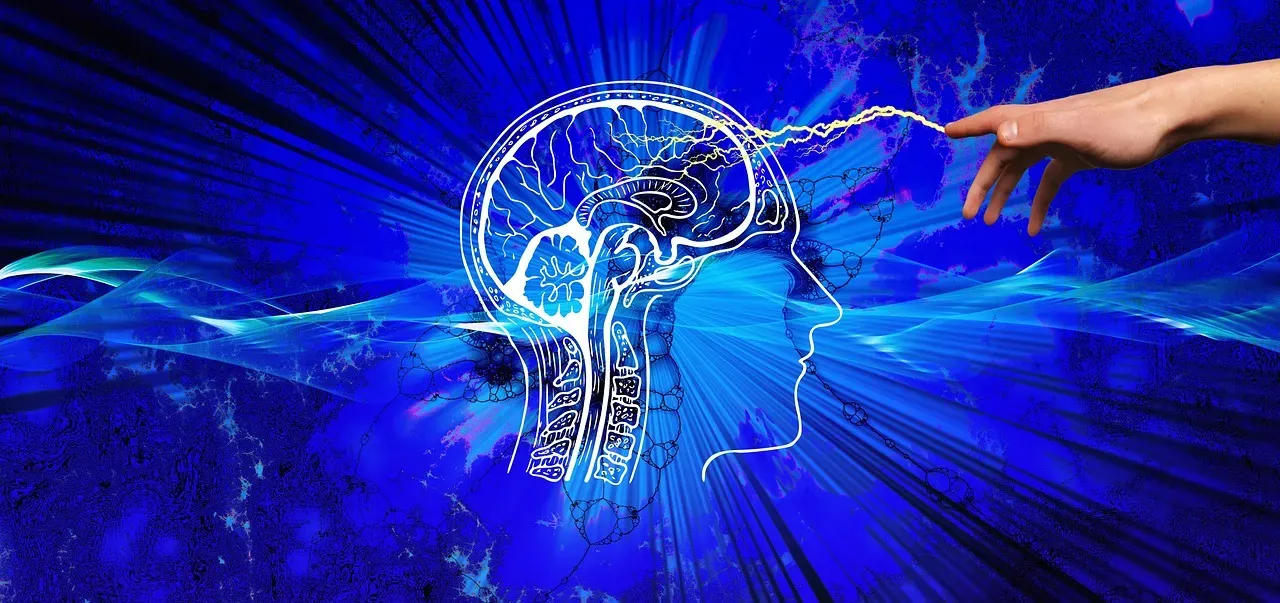
Quantum mechanics throws a wrench into everything. Consciousness has become an object of intense scrutiny from different disciplines, with neuroscience and psychology attempting to discover and explain the connections between conscious experiences and neural activity. Yet quantum physics suggests something stranger: that observation itself affects reality.
In quantum mechanics, particles exist in superposition – multiple states at once – until observed, at which point they “collapse” into one state. Some physicists have suggested consciousness plays a role in this collapse. It’s a controversial idea that most scientists reject, yet it refuses to die. Philosopher David Chalmers outlined a variant of panpsychist property dualism related to quantum mechanics, believing information plays an integral role in consciousness because the mind and brain have corresponding informational structures, with both regularities in nature and conscious experience being expressions of information’s underlying character.
The connection between consciousness and quantum mechanics remains speculative. Perhaps measurement requires a conscious observer. Perhaps consciousness itself is a quantum phenomenon. Or perhaps we’re barking up entirely the wrong tree. The mystery deepens the more we look.
Conclusion
Questions about the nature of consciousness remain among the most perplexing areas of modern scientific research, with implications for both the human mind and our broader concept of reality. We’ve explored theories suggesting consciousness might be a fundamental property of the universe, a quantum process in your neurons, an electromagnetic field generated by brain activity, or even the foundation from which matter itself emerges.
Each theory challenges our assumptions differently. Some suggest your experience is far narrower than it feels. Others imply even atoms possess rudimentary awareness. A few propose consciousness predates the physical universe.
The truth is, we still don’t know. Despite the current “pre-paradigmatic” state of consciousness science, where no unified theory has emerged, researchers believe new approaches can serve as a bridge between philosophy and scientific data. What we do know is that consciousness is stranger, more mysterious, and potentially more fundamental than we ever imagined.
So what do you think? Does your awareness feel like an electromagnetic field? Can you imagine particles having experiences? Does the idea that consciousness might be fundamental change how you see yourself and the universe? The answers might reshape everything we think we know about reality itself.