Imagine looking up at a starry sky and realizing that almost everything you see is, in a cosmic sense, a rounding error. The glowing stars, the swirling gas, the bright galaxies: all of that is just a tiny fraction of what’s really out there. The rest is something we can’t see, can’t touch, and still don’t fully understand – and yet it silently controls the fate of galaxies and the shape of the entire universe.
That invisible majority is what scientists call dark matter, and it’s one of the most fascinating mysteries in modern physics. It bends light without shining, sculpts galaxies without glowing, and quietly challenges everything we thought we knew about reality. Once you see how central this unseen force is to the story of the cosmos, it becomes hard to look at the night sky the same way again.
The Shocking Realization: Most of the Universe Is Missing
One of the most jarring facts in modern science is that all the familiar stuff – you, me, planets, stars, and gas – makes up only a small slice of the universe’s total matter and energy. Observations suggest that ordinary matter is just a small minority, while dark matter is several times more abundant, and dark energy is even larger still. In other words, almost everything we experience directly is built from the rarest kind of matter in the cosmos. That realization hits like discovering that your entire life has been lived in a small, dimly lit corner of a vast, unknown mansion.
This wasn’t some philosophical idea; it came from hard data. Astronomers studying galaxy motions, the way light bends around massive objects, and patterns in the leftover glow from the Big Bang kept hitting the same wall: the gravity they could see from normal matter just wasn’t enough. Something else had to be there, hidden but heavy, silently pulling the strings. Dark matter went from a wild possibility to the leading explanation, not because physicists wanted it, but because the universe practically forced it on them.
Spinning Galaxies and the First Clues of the Invisible
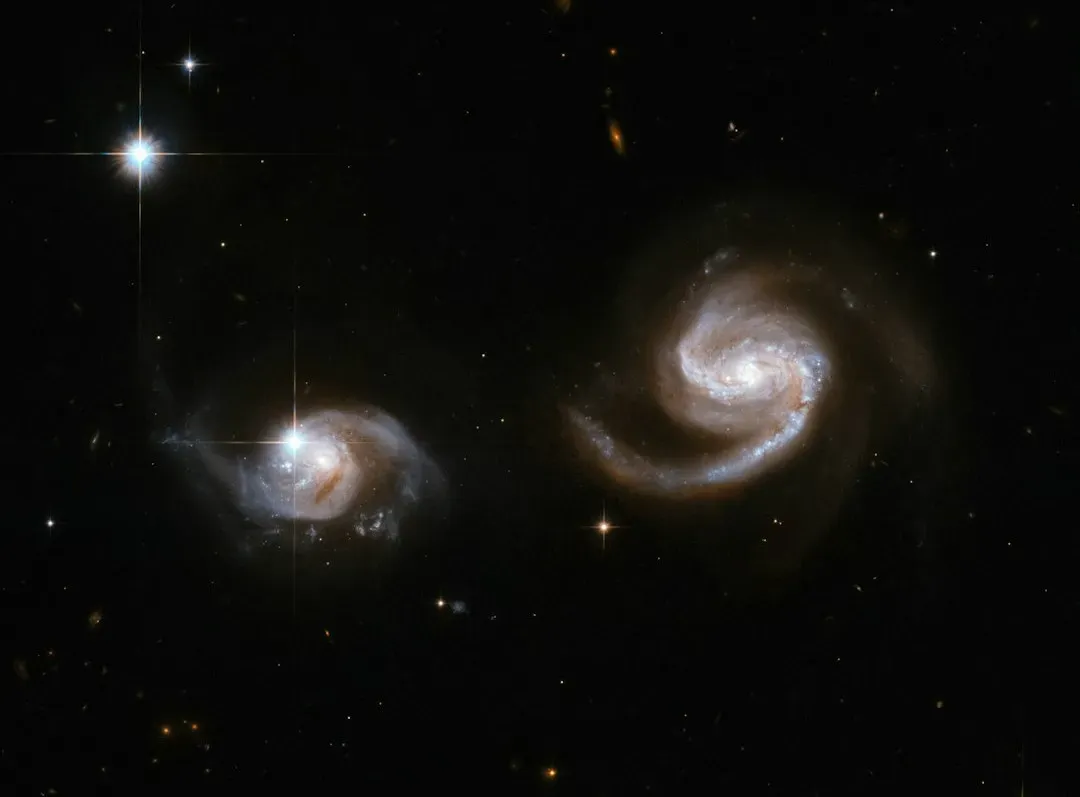
The story of dark matter really took off when astronomers started carefully measuring how fast galaxies spin. If only the visible stars and gas were providing gravity, then the outer parts of galaxies should be moving more slowly than the inner regions, like planets in our solar system. But when researchers measured the speeds, they found something shocking: stars far from the galactic center were whipping around just as fast as those closer in. The visible matter simply didn’t provide enough gravitational glue to keep those fast-moving stars from flying off into space.
To make sense of this, scientists proposed that galaxies are surrounded by huge halos of invisible mass. This unseen matter would provide the extra gravity needed to hold everything together, like an invisible scaffolding wrapping each galaxy. Similar clues showed up in galaxy clusters, where galaxies were moving too quickly to be bound by the gravity of visible matter alone. Over time, the pattern became unavoidable: wherever astronomers looked closely, they saw the fingerprints of something massive that refused to show its face.
Dark Matter as the Cosmic Skeleton of Structure
Today, dark matter is thought to act like a hidden skeleton on which the visible universe is built. In the early universe, slightly denser regions of dark matter began pulling more matter toward them through gravity, forming clumps that grew over time. Ordinary matter – gas that would later ignite into stars – fell into these dark matter wells, eventually forming galaxies and clusters. Without dark matter, the universe would likely be a smoother, emptier place, without the rich structure of galaxy filaments and clusters we see today.
Computer simulations have been especially powerful in revealing this picture. When scientists model a universe with only normal matter, they don’t get the web-like network of structures we actually observe. But when they include dark matter, the virtual cosmos suddenly begins to resemble the real one, with long filaments, dense knots, and sprawling clusters. It’s as if dark matter drew the blueprints and regular matter simply moved in and built the visible parts of the cosmic city on top.
The Curved Paths of Light: Gravitational Lensing as a Cosmic X-ray
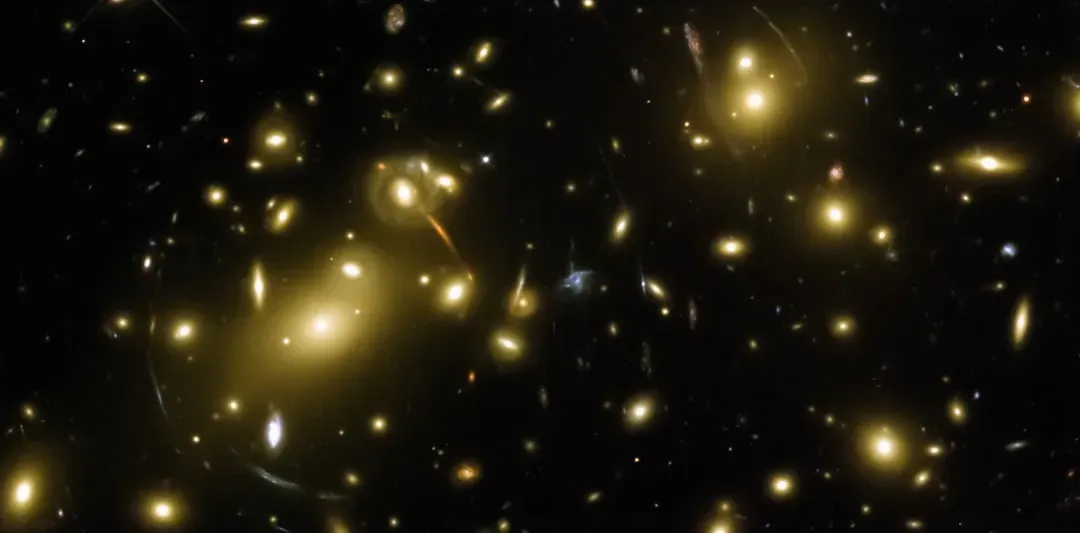
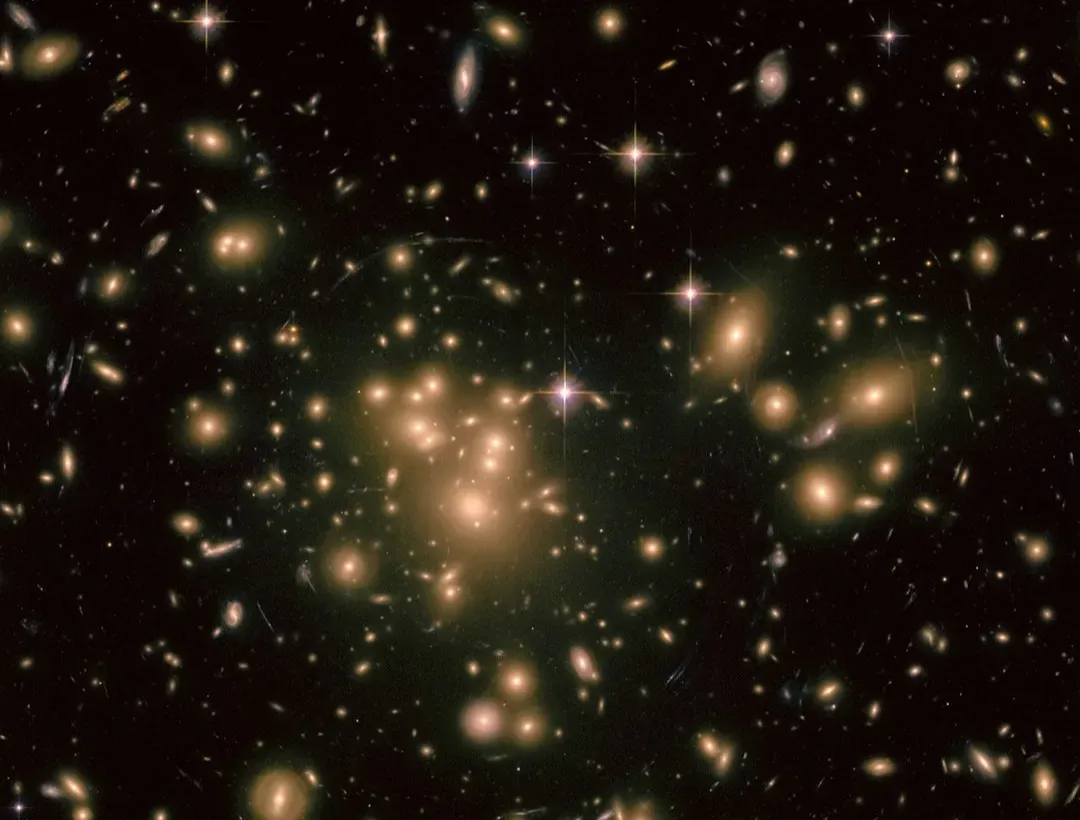
One of the most compelling ways we “see” dark matter is through a phenomenon called gravitational lensing, where gravity bends the path of light. When a massive cluster of galaxies sits between us and more distant galaxies, its gravity warps space so much that light from background objects is distorted, magnified, or stretched into arcs. By carefully mapping how that light is bent, astronomers can reconstruct where the mass really is, almost like a cosmic X-ray revealing the hidden bones beneath the visible skin.
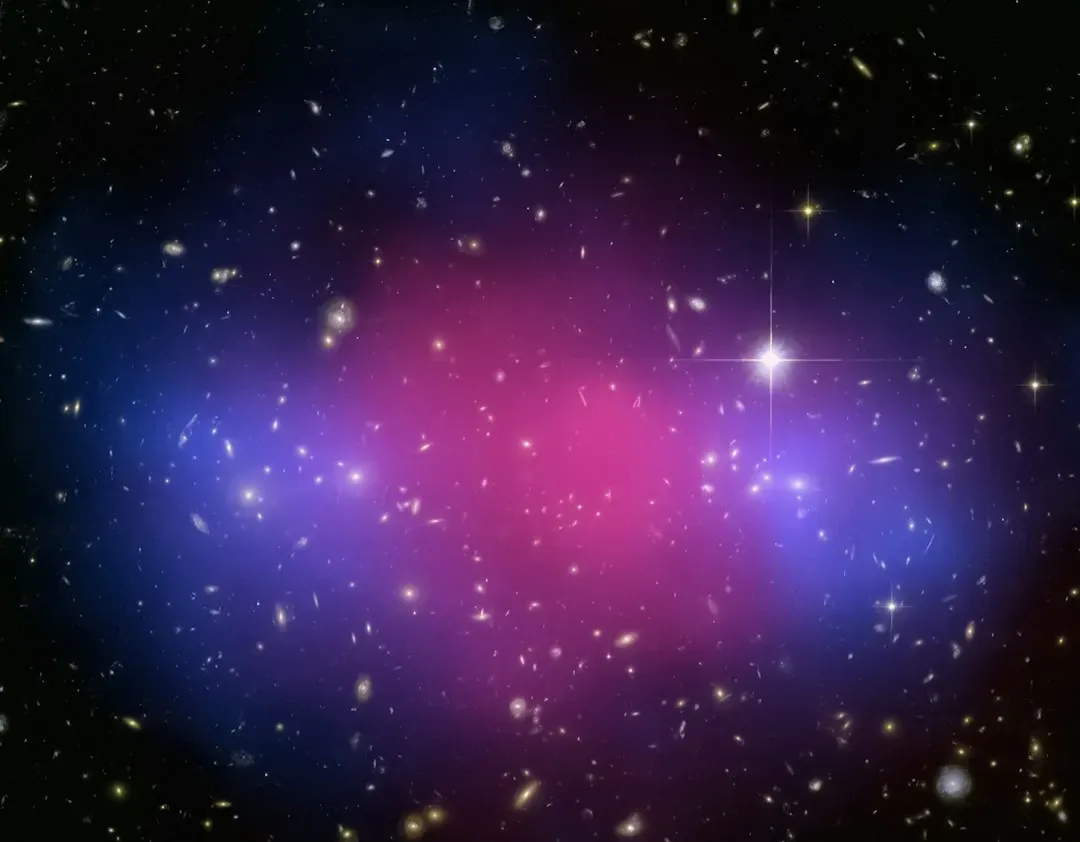
What’s striking is that the mass maps often do not line up with where we see the glowing gas and stars. Much of the mass is offset or extended well beyond the visible components, forming ghostly halos of gravitational influence. This mismatch is exactly what you’d expect if dark matter, not visible matter, dominates the gravitational landscape. In some famous galaxy cluster collisions, the hot gas was slowed down by friction, but the main mass sailed through, suggesting that dark matter hardly interacts with normal matter except through gravity.
What Could Dark Matter Actually Be?
The frustrating beauty of dark matter is that we know a lot about what it does, but almost nothing about what it is. It doesn’t seem to emit light, absorb it, or bounce it back in any meaningful way, which rules out most ordinary matter in hidden forms like cold gas or faint stars. It also can’t be made simply from the same particles we already know, at least not in the amounts needed to explain the data. So physicists have proposed a zoo of new particles: heavy ones, light ones, slow ones, fast ones, each with their own exotic properties.
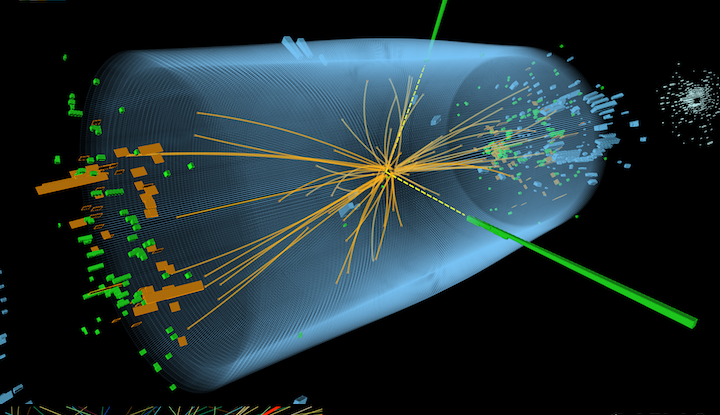
For years, a leading idea focused on so-called weakly interacting massive particles, or WIMPs, which might have been produced in large numbers in the early universe. Huge underground detectors, shielded from everyday radiation, have patiently waited for rare collisions between these hypothetical particles and atomic nuclei. Other approaches search for dark matter particles created in high-energy collisions at accelerators, or for faint signals they might leave in space. So far, though, nothing definitive has turned up, forcing scientists to widen the net and consider more unusual possibilities.
How Dark Matter Is Reshaping Physics and Philosophy
Dark matter isn’t just a niche topic for astronomers; it’s reshaping how we think about reality itself. For one thing, it shows that the familiar world we move through is not representative of the universe at large. The basic assumptions in many people’s minds – that what we see is roughly what exists – simply don’t hold up on cosmic scales. That can be an unsettling thought, but it’s also strangely liberating, a reminder that our everyday experience is only a tiny window into a much larger, stranger realm.
There’s also an ongoing debate about whether dark matter reflects new particles or a need to modify our understanding of gravity. Some researchers argue that perhaps our equations for gravity break down under certain conditions, and that the apparent need for invisible matter is a sign that we’re using the wrong rules. Others counter that the wide range of independent evidence, from early-universe measurements to galaxy clusters, is better explained by actual unseen mass. Either way, dark matter is forcing physics to stretch, adapt, and question its deepest assumptions, which is where some of the most exciting progress often happens.
The Road Ahead: New Telescopes, Bolder Experiments, Deeper Questions
Even without a direct detection of dark matter particles, the next decade promises a flood of new clues. Powerful telescopes on the ground and in space are mapping more galaxies, more lensing events, and more precise patterns in the cosmic microwave background. These observations can tighten the constraints on what dark matter can and cannot be, and may even reveal subtle signatures that distinguish between different theories. At the same time, upgraded underground detectors and new experimental designs are probing weaker and lighter particles than ever before.
Personally, I find something strangely comforting about the idea that the universe is mostly made of something we still do not understand. It means the story is not finished, that even in 2026 there are still open, fundamental mysteries waiting to be cracked by curious minds. Maybe dark matter will turn out to be a new kind of particle that neatly fits into an expanded theory, or maybe it will force us to rethink gravity, spacetime, or even what we mean by “matter” itself. Either way, it’s a reminder that the cosmos is not a solved puzzle but a living question, quietly pulling on us, just like dark matter pulls on the stars.
Living in a Universe Ruled by the Unseen
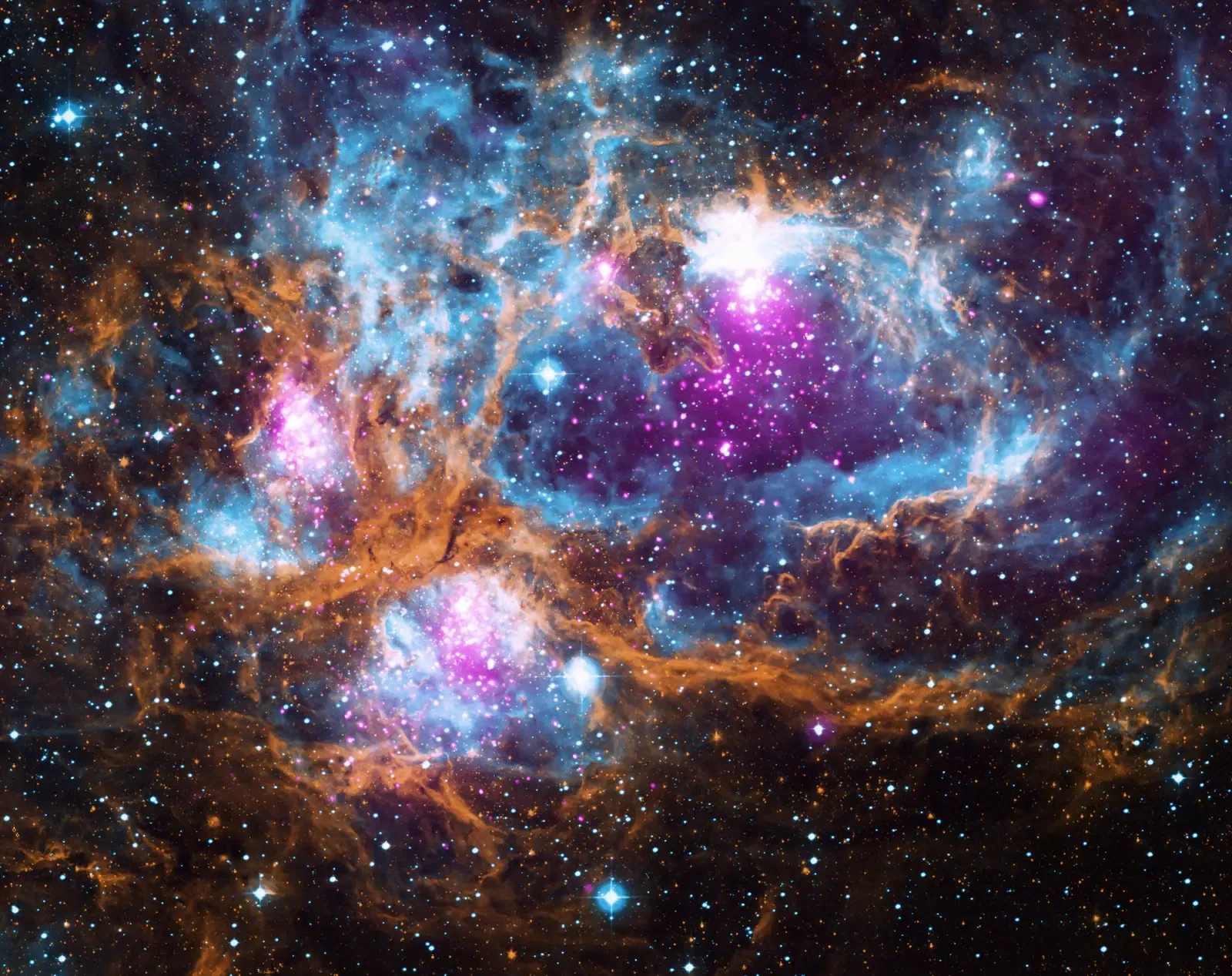
Dark matter sits at the center of one of the biggest scientific stories of our time: the realization that the universe is controlled by something we cannot see, yet can measure through its effects. It holds galaxies together, sculpts the large-scale structure of the cosmos, and leaves its imprint on the earliest light we can observe. Our entire visible world is effectively a thin layer wrapped around a vast, invisible framework that has been shaping the universe for billions of years.
We don’t yet know what dark matter is made of, and that uncertainty is both the problem and the thrill. The search forces us to build new instruments, question old ideas, and accept that our picture of reality is still incomplete. Someday, we may look back on this era as the time when humanity finally learned what most of the universe is made of. Until then, we live in a cosmos guided by an unseen force, knowing just enough to realize how much we still don’t know. What do you think is stranger: that the universe hides most of itself, or that we’ve only just begun to notice?