
Have you ever wondered if reality might be stranger than science fiction? There’s a phenomenon in the quantum world so bizarre that even Albert Einstein himself refused to accept it. It challenges everything we thought we knew about how the universe works, and yet it’s been proven real time and time again.
We’re talking about quantum entanglement, a mind-bending feature of the subatomic realm where two particles become mysteriously linked across any distance. When you measure one particle, you instantly know something about its partner, even if it’s on the other side of the galaxy. Let’s be real, that sounds absolutely crazy. So let’s dive in and explore why this phenomenon has physicists both excited and deeply unsettled.
What Einstein Called “Spooky Action at a Distance”
Einstein famously called it spooky action at a distance, and honestly, it’s hard to blame him for the skepticism. Quantum entanglement is the phenomenon wherein the quantum state of each particle in a group cannot be described independently of the state of the others, even when the particles are separated by a large distance. Think about that for a moment. Two particles, separated by literally any distance you can imagine, remain connected in a way that defies our everyday experience.
In the 1930s when scientists, including Albert Einstein and Erwin Schrödinger, first discovered the phenomenon of entanglement, they were perplexed. Entanglement, disturbingly, required two separated particles to remain connected without being in direct contact. The whole idea seemed to violate everything Einstein held dear about physics, particularly his theory of relativity which states nothing can travel faster than light. Yet here was quantum mechanics suggesting that measuring one particle could instantly affect another, regardless of the space between them.
How Entanglement Actually Works in the Quantum World
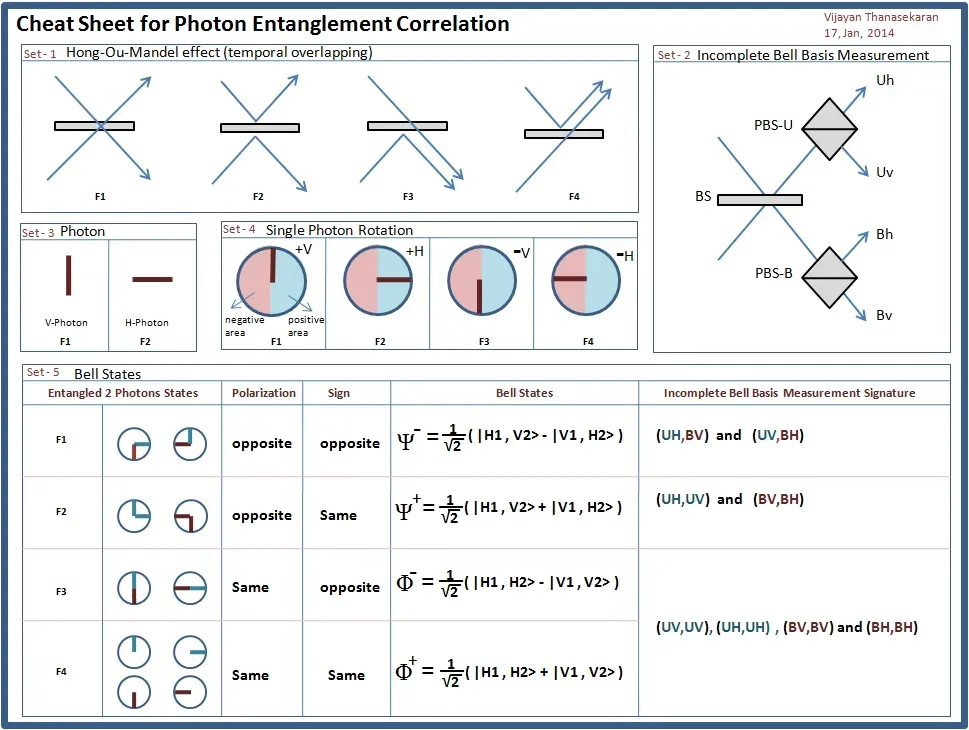
To create entangled particles you essentially break a system into two, where the sum of the parts is known. For example, you can split a particle with spin of zero into two particles that necessarily will have opposite spins so that their sum is zero. It’s kind of like breaking a coin into two pieces, where one piece shows heads and the other must show tails, except way more complicated because of quantum superposition.
Quantum superposition is the idea that particles exist in multiple states at once. When a measurement is performed, it is as if the particle selects one of the states in the superposition. Here’s where it gets weird. Before you measure, both particles exist in all possible states simultaneously. The moment you measure one particle and find it spinning clockwise, its partner instantly “decides” to spin counterclockwise. The strange part of quantum entanglement is that when you measure something about one particle in an entangled pair, you immediately know something about the other particle, even if they are millions of light years apart.
One of the defining features of quantum entanglement is non-locality. This means that the measurement of one particle’s state instantly affects the state of the other, no matter how far apart they are. This correlation violates classical locality, which states that no information or influence can travel faster than the speed of light. Non-locality is not a communication channel (no usable information is transmitted faster than light), but it reflects a deep interdependence in the wavefunction that describes the entangled system.
The Experiments That Proved Einstein Wrong
For decades, the scientific community debated whether entanglement was real or just a theoretical quirk. In 1964, John Bell proved that classical hidden variable theories cannot reproduce the predictions of quantum mechanics unless they employ some type of action at a distance. This set the stage for experiments that would settle the debate once and for all.
Researchers showed the measured results not only were correlated, but also – by eliminating all other known options – that these correlations cannot be caused by the locally controlled, “realistic” universe Einstein thought we lived in. This implies a different explanation such as entanglement. Researchers calculated that the maximum chance of local realism producing these results is just 0.0000000059, or about 1 in 170 million. This outcome exceeds the particle physics community’s requirement for a “5 sigma” result needed to declare something a discovery. The results strongly rule out local realistic theories, suggesting that the quantum mechanical explanation of entanglement is indeed the correct explanation.
The scientists behind these experiments won the 2022 Nobel Prize in physics. The 2022 Nobel Prize in physics recognized three scientists who made groundbreaking contributions in understanding one of the most mysterious of all natural phenomena: quantum entanglement. I think it’s worth noting that it took nearly a century from when Einstein first expressed his doubts until scientists definitively proved he was wrong about this particular aspect of nature.
Recent Breakthroughs Pushing Quantum Boundaries
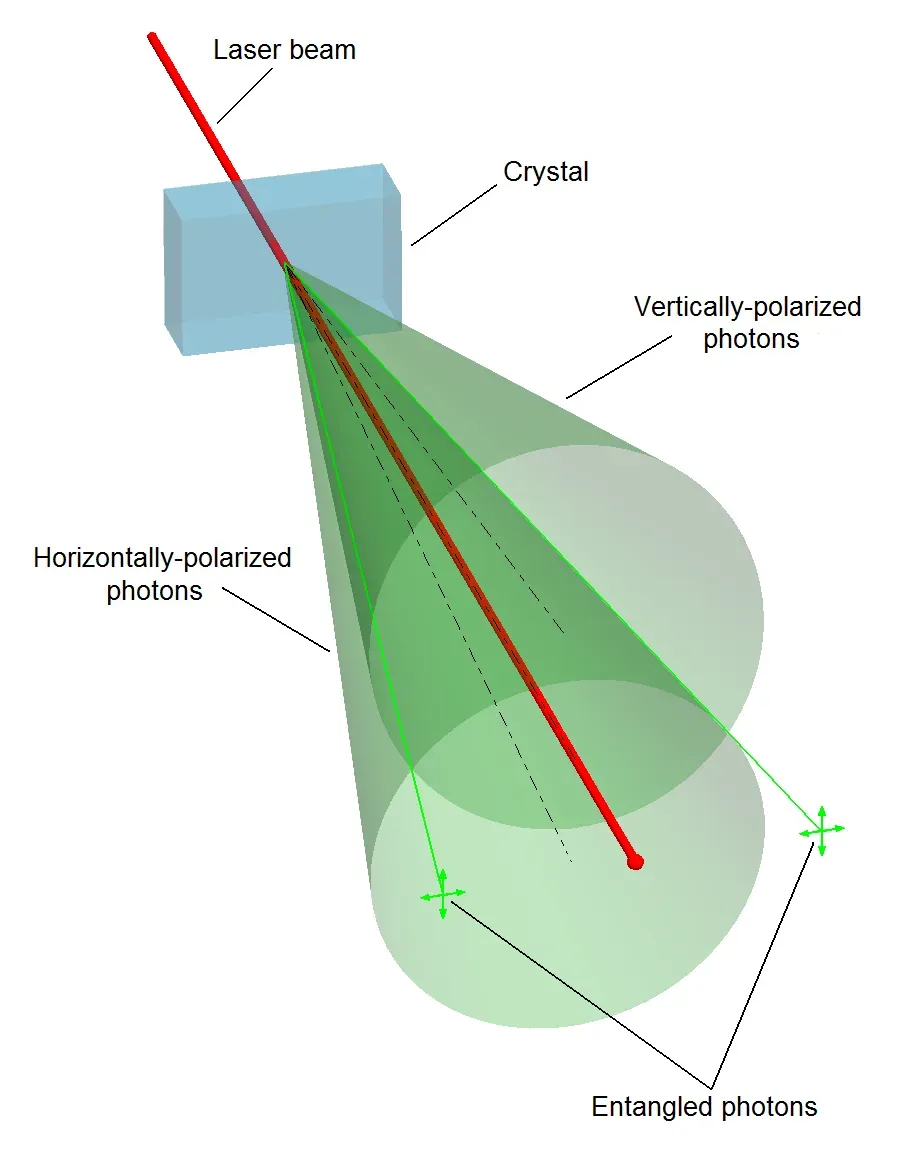
The world of quantum entanglement research hasn’t slowed down. A team of researchers at Kyoto University and Hiroshima University took on this challenge, ultimately succeeding in developing a new method of entangled measurement to identify the W state. This September 2025 breakthrough solved a problem that had stumped physicists for over a quarter century.
Researchers have shown that quantum signals can be sent from Earth up to satellites, not just down from space as previously believed. This breakthrough could make global quantum networks far more powerful, affordable, and practical. Think about what this means. In 2025, the Jinan-1 microsatellite pushed this work further by establishing a 12,900 km quantum connection between China and South Africa. We’re talking about entanglement spanning an entire continent.
A fully integrated, electrically powered source of entangled photons has been demonstrated on a photonic chip, eliminating the need for external lasers. Researchers at University of Science and Technology of China, Jinan Institute of Quantum Technology, CAS Institute of Semiconductors and other institutes recently realized a new EPS integrated onto a single photonic chip, which can generate entangled photons via an electrically powered laser. This January 2026 development represents a major step toward making quantum technologies more practical and accessible.
Quantum Computing: Where Entanglement Becomes Power
Entanglement is the backbone of quantum computing. By entangling qubits, quantum computers can represent and process vast amounts of information simultaneously, enabling algorithms like Shor’s algorithm for factoring large numbers and Grover’s algorithm for database searching. This capability promises revolutionary advances in fields such as cryptography, optimization, and machine learning. It’s hard to say for sure, but some experts believe quantum computers could eventually tackle problems that would take conventional supercomputers thousands of years to solve.
Researchers from the Faculty of Engineering at The University of Hong Kong (HKU) have made a significant discovery regarding quantum entanglement. This phenomenon, which has long been viewed as a significant obstacle in classical quantum simulations, actually enhances the speed of quantum simulations. The findings are published in Nature Physics. Here’s the thing: what scientists once thought was a limitation turned out to be an advantage. They discovered that while entanglement hinders classical computers, it actually accelerates quantum simulations, turning a former obstacle into a powerful resource.
Unbreakable Communication and Quantum Cryptography

Quantum entanglement is pivotal in developing secure communication protocols. Entanglement-based quantum key distribution (QKD) allows for the creation of cryptographic keys that are theoretically secure against any eavesdropping attempts. Let me explain why this is such a big deal. Protocols like BB84 and E91 use entangled particles to generate encryption keys that are theoretically unhackable. Any attempt to eavesdrop on the entangled particles immediately changes their state, alerting the communicating parties and ensuring secure data transfer.
Traditional encryption can be cracked with enough computing power and time, but quantum cryptography is different. The very act of trying to intercept the communication destroys the entangled state, making it impossible to spy undetected. Researchers developed a room-temperature quantum communication device, removing the need for super-cooling and enhancing practical applications. The device utilizes twisted light from molybdenum diselenide to entangle photons and electrons, stabilizing quantum states for effective communication. Researchers are refining the device to achieve greater quantum performance, aiming to eventually miniaturize quantum systems for embedding in everyday devices. Imagine having this level of security built into your smartphone.
Real-World Applications Beyond the Laboratory
Quantum entanglement enables secure, network-independent communication between devices such as drones, offering advantages over classical and non-entangled quantum systems. The eQMARL framework demonstrates improved performance in disaster scenarios, with potential applications in secure data sharing, AI, and energy-efficient computing. This December 2025 research shows how entanglement could revolutionize disaster relief operations when traditional communication networks fail.
The quantum-logic clock at the U.S. National Institute of Standards and Technology (NIST) in Colorado only loses or gains a second every 3.7 billion years. And the NIST strontium clock, unveiled earlier this year, will be that accurate for 5 billion years – longer than the current age of the Earth. Such super-sensitive atomic clocks help with GPS navigation, telecommunications and surveying. These aren’t just abstract scientific achievements. Better atomic clocks mean more accurate GPS, which affects everything from your daily commute to global financial transactions that rely on precise timestamps.
These include, for example, quantum computers that can solve certain problems much faster than conventional computers, quantum simulators that can model complex materials whose behaviors are difficult to model, and quantum sensors that can measure faster than their traditional counterparts. This mechanism could significantly improve efficiency in simulating materials, high-energy physics, and chemical reactions. These advancements could pave the way for breakthroughs in developing better batteries, catalysts, and pharmaceuticals, where understanding complex quantum interactions is key.
The Challenges That Still Keep Scientists Awake
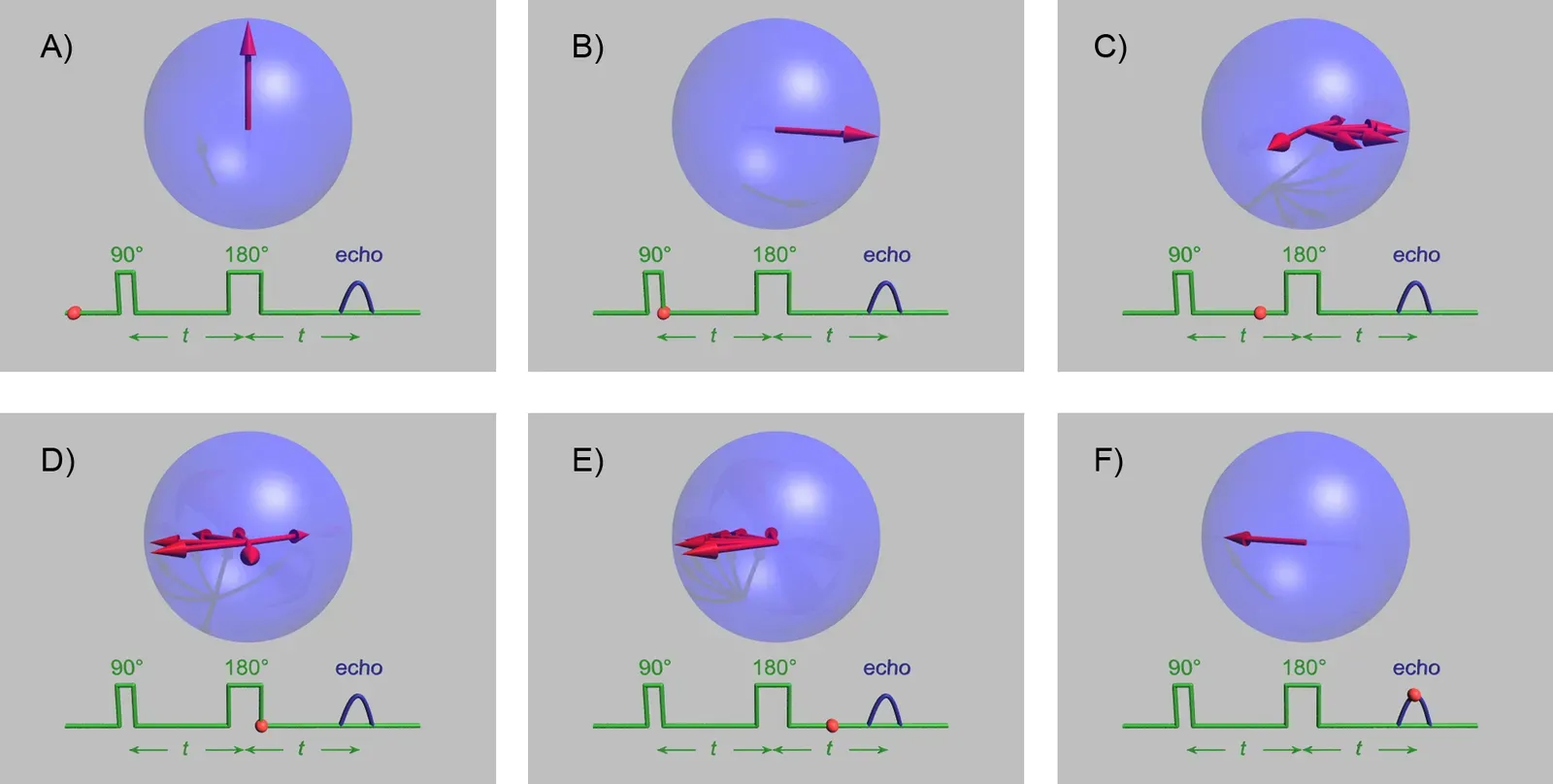
Entangled states are extremely sensitive to their environment. Even slight interference – thermal fluctuations, electromagnetic noise, or vibrations – can destroy the fragile quantum correlations between qubits. This process, called decoherence, causes the entangled system to collapse into a classical mixed state. The more qubits are entangled, the faster decoherence tends to occur. This is probably the biggest headache facing quantum engineers right now.
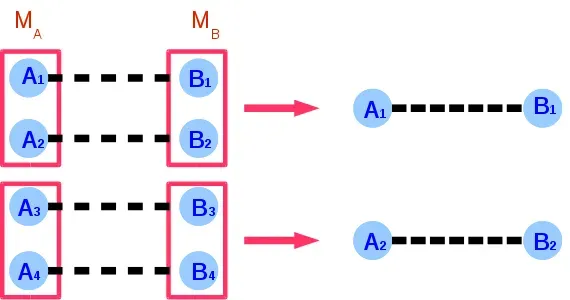
Creating entanglement between just two particles is challenging but feasible; however, scaling entanglement to many particles (multi-qubit entanglement) necessary for practical quantum computing or networks remains a major hurdle. The complexity grows exponentially, and preserving coherence across many qubits requires breakthroughs in quantum error correction and hardware design. Think of it like trying to keep dozens of spinning plates balanced simultaneously while someone’s shaking the table. Although entanglement can exist over large distances, transmitting entangled particles through optical fibers or free space faces challenges such as photon loss and signal degradation.
Interestingly, in multi-user quantum communication networks, increasing entanglement does not always enhance performance. A key assumption in the field of quantum science is that greater entanglement would be linked to more reliable communications. Researchers at Northwestern University recently published a paper in Physical Review Letters that challenges this assumption, showing that, in some realistic scenarios, more entanglement can adversely impact the quality of communications. Who would have thought that too much of a good thing could be a problem?
Conclusion: Living in a Quantum-Connected Universe
In the future, quantum entanglement is going to be a bit like electricity. A commodity that we talk about that powers other things. It’s generated and transmitted in a way that is often invisible to the user; we just plug in our appliances and use it. This will ultimately be the same for large quantum entanglement networks. There will be quantum devices that plug into an entanglement source as well as a power source, utilizing both to do something useful.
Einstein hated “spooky action at a distance,” but much to his chagrin, quantum mechanics remains as spooky as ever. Yet this spookiness isn’t just a curiosity anymore. From unbreakable encryption to revolutionary computing power, from precision timekeeping to new frontiers in medicine and materials science, entanglement is becoming the foundation of tomorrow’s technology. Experiments have confirmed that entanglement can persist for astronomically large distances. It is as if an entangled state exists in a realm where spatial distances and time intervals simply don’t matter.
The universe, it turns out, is far weirder and more interconnected than Einstein ever wanted to believe. What do you think about living in a reality where particles can be mysteriously linked across the cosmos? Does it change how you see the world around you?