

Have you ever wondered if your thoughts might be more than just electrical sparks bouncing around in your brain? For decades, mainstream science has treated consciousness like a side effect, something that simply pops into existence when neurons fire in the right patterns. It’s comfortable, neat, and fits nicely into textbooks. Yet recent discoveries in physics are making that explanation look increasingly incomplete.
The weirdness of quantum mechanics keeps forcing us to reconsider what we thought we knew. Strange phenomena that even Einstein found unsettling are now pointing toward a possibility that sounds more like science fiction than science fact. What if awareness isn’t just produced by matter, but somehow woven into the fabric of reality itself? Let’s explore the clues that are making physicists scratch their heads and rethink everything.
The Observer Effect Refuses to Go Away
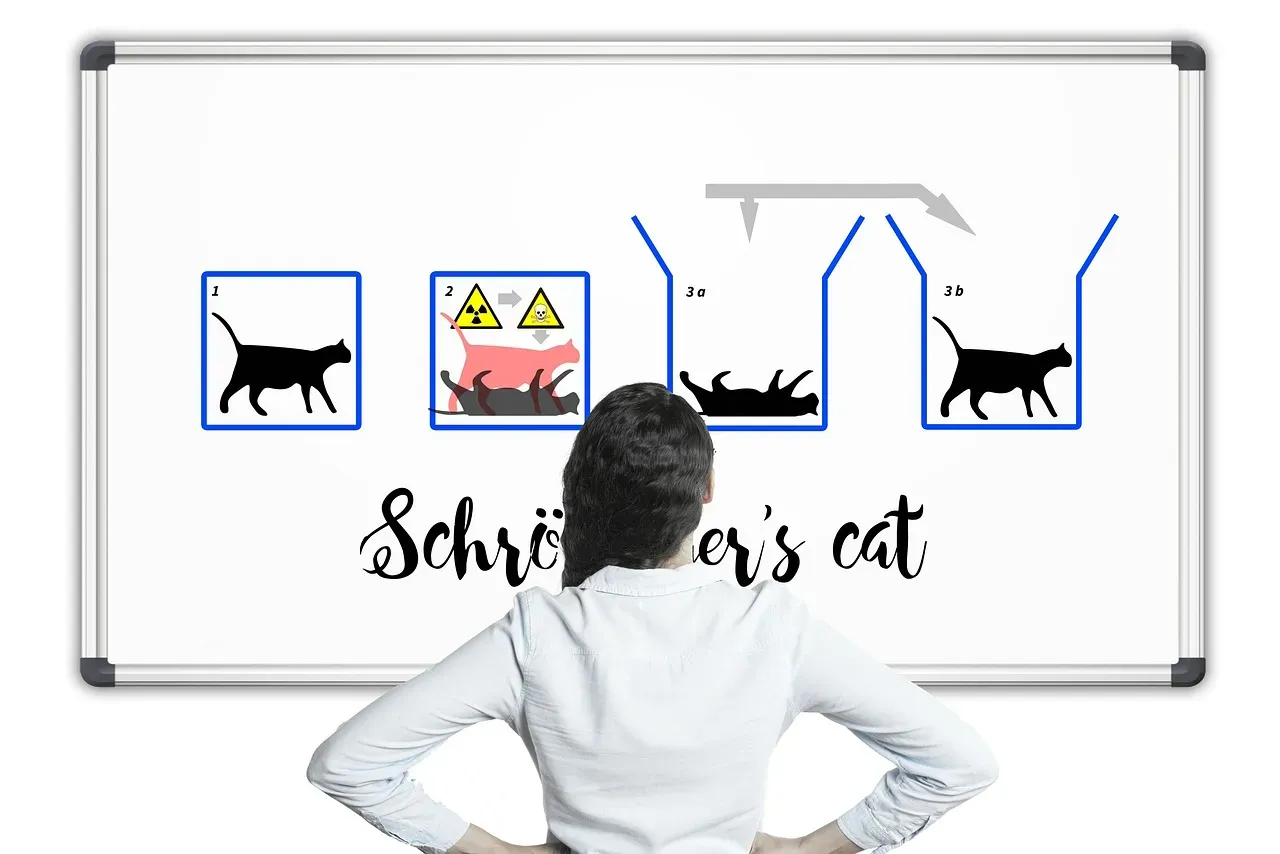
When physicists examine quantum phenomena through experiments like the double slit test, they find that observation by a detector or instrument genuinely changes the measured results. This isn’t just about clunky equipment interfering with delicate particles. The very act of measurement appears to collapse a wave of possibilities into a single reality.
The double slit experiment hints at a profound connection between consciousness and quantum reality, with the observer effect suggesting that physical perception itself influences the quantum state, collapsing probability waves into definite outcomes. Sure, most physicists will tell you that consciousness isn’t required for this collapse. Yet the question refuses to die, lingering in the background like smoke you can’t quite clear from a room. Something about the relationship between observation and reality still doesn’t sit right with a purely mechanical explanation.
Entanglement in the Brain Keeps Showing Up
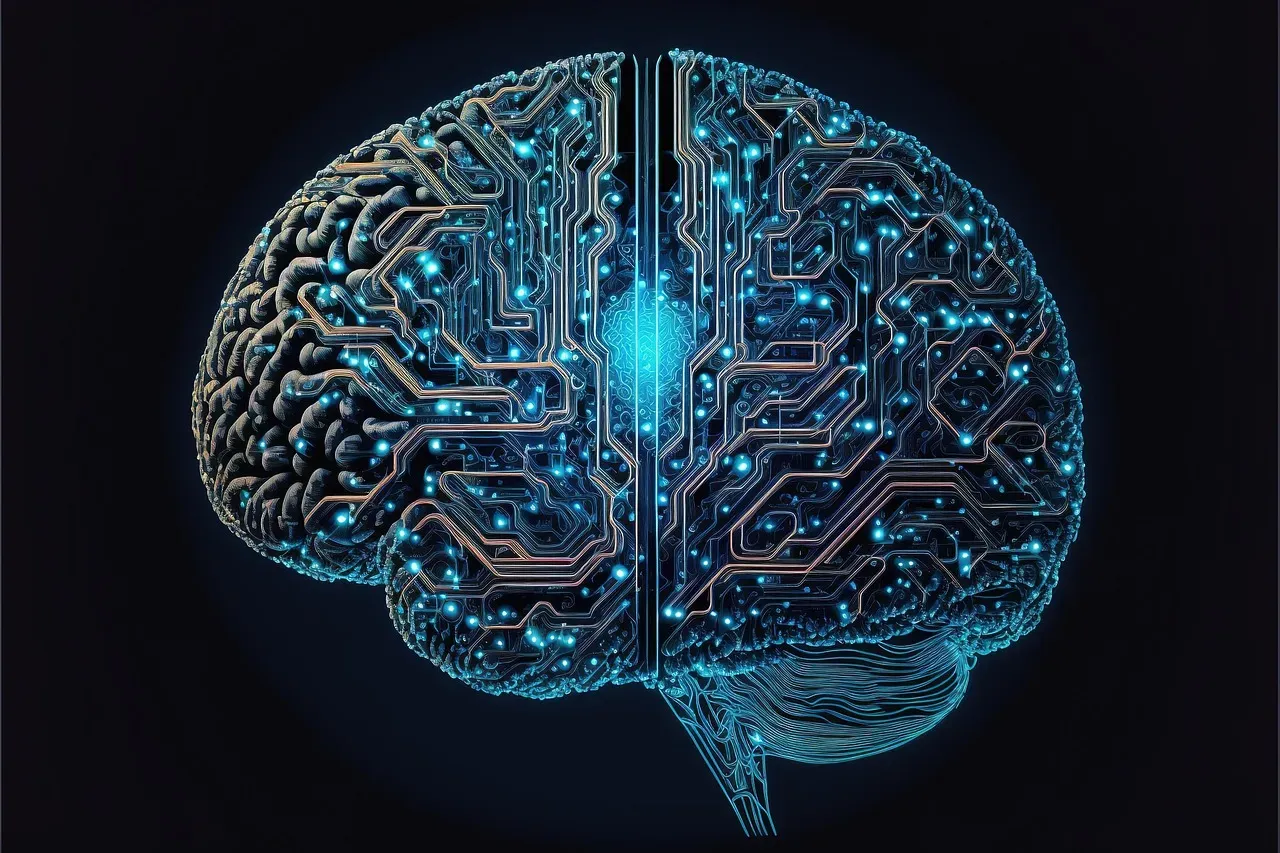
A recent study from Shanghai University suggests that myelin, the fatty material surrounding nerve cell axons, provides an environment where entanglement of photons is possible. Think about that for a moment. The same “spooky action at a distance” that Einstein couldn’t wrap his head around might be happening inside your skull right now.
Researchers at Trinity College Dublin possibly witnessed entanglement in the brain, suggesting that some brain activity and perhaps consciousness operates on a quantum level. The brain has always been considered too warm and messy for quantum effects to survive. While quantum effects typically blur into irrelevance on scales larger than atoms and molecules, several recent findings are forcing researchers to reconsider whether quantum chemistry might be at work inside our minds. Critics still argue the evidence is thin, yet the discoveries keep piling up in unexpected places.
The Penrose-Hameroff Theory Won’t Die
Orchestrated objective reduction is a controversial theory postulating that consciousness originates at the quantum level inside neurons through a quantum process orchestrated by cellular structures called microtubules. For nearly thirty years, this idea has been ridiculed, dismissed, and attacked from every angle. Honestly, I think that’s partly what makes it interesting.
Mathematical physicist Sir Roger Penrose thinks consciousness has quantum origins, and together with anesthesiologist Stuart Hameroff, developed the Orchestrated Objective Reduction theory of the mind. While the theory faced decades of criticism, a growing body of research has reported evidence of quantum processes being possible in the brain, leading some scientists to reconsider the possibility that consciousness could be quantum in nature. The fact that new experiments keep finding hints supporting parts of this framework suggests something worth investigating lies beneath all the controversy.
Consciousness as a Fundamental Field Gains Mathematical Traction
A framework presented at Uppsala University views consciousness not as a byproduct of brain activity but as a fundamental field underlying everything we experience, including matter, space, time, and life itself. This isn’t fringe mysticism anymore. It’s being published in peer-reviewed physics journals with actual equations.
This novel framework proposes that consciousness is not an emergent property of neural processes but a foundational aspect of reality, aligning with emerging theories in quantum gravity, information theory, and cosmology that posit classical spacetime as emergent from a deeper order. The model treats consciousness like physicists treat electromagnetic fields, something that exists everywhere with varying intensities. Consciousness is proposed as fundamental, with time, space, and matter arising thereafter, according to a theoretical model by Maria Strømme, Professor of Materials Science at Uppsala University. It’s a complete inversion of how we normally think about things.
Quantum Coherence Survives Where It Shouldn’t
Here’s the thing everyone keeps saying: the brain is too hot, too wet, and too chaotic for quantum processes to persist. Most scientists believe the brain environment is too wet, warm, and noisy for quantum mechanics to play a role in cognition or consciousness. Yet nature apparently didn’t read that memo.
While evidence of entangled photons affecting large scale biological processes is currently limited to photosynthesis, mounting evidence suggests fuzzy superposition states of electron spins in proteins can be influenced by magnetic fields, helping explain long distance navigation in some animals. If quantum effects can guide birds across continents and drive photosynthesis in plants, why should the brain be exempt? Recent experiments with microtubules have shown quantum vibrations lasting far longer than expected. Let’s be real, every time someone says quantum effects can’t happen in biological systems, nature seems to prove them wrong in the next experiment.
The Hard Problem Remains Stubbornly Hard
Philosopher David Chalmers dubbed the issue of how physical brain processes create subjective experience the hard problem of consciousness. No amount of mapping neural circuits or measuring brain waves gets us closer to explaining why anything feels like something. You can describe every neuron firing when you see the color red, but that tells you nothing about the redness itself.
Even if you knew every detail about brain processes, you still wouldn’t know what it’s like to be another person, suggesting a clear explanatory gap between the physical and the mental. Theorists like Roger Penrose have conjectured that quantum effects underpin consciousness, though this theory lacks the same level of evidence as other theories. The gap keeps widening despite decades of neuroscience progress. Maybe, just maybe, that’s because we’re looking in the wrong place entirely. Perhaps consciousness doesn’t emerge from complexity but taps into something already present in the universe’s fundamental architecture.
Where Does This Leave Us?
The evidence isn’t conclusive. I’ll admit that straight up. Science works slowly, testing and retesting, demanding extraordinary proof for extraordinary claims. Yet something fascinating is happening at the intersection of quantum physics and consciousness research. The old materialist story that worked for centuries is developing cracks.
Evolution is very clever and has had the entire planet to experiment with for billions of years, making it possible that anything not ruled out by physics laws could be exploited, including various theories attempting to explain how quantum physics might play a role in consciousness. Whether consciousness turns out to be a fundamental field, a quantum process in microtubules, or something we haven’t even imagined yet remains to be seen. The experiments are being designed, the mathematics is being worked out, and the paradigm might be shifting beneath our feet.
What if your awareness really is more than neurons firing? What if it’s tapped into something deeper, something quantum, something fundamental? Did you expect physics to take us here?
Hi, I’m Andrew, and I come from India. Experienced content specialist with a passion for writing. My forte includes health and wellness, Travel, Animals, and Nature. A nature nomad, I am obsessed with mountains and love high-altitude trekking. I have been on several Himalayan treks in India including the Everest Base Camp in Nepal, a profound experience.


