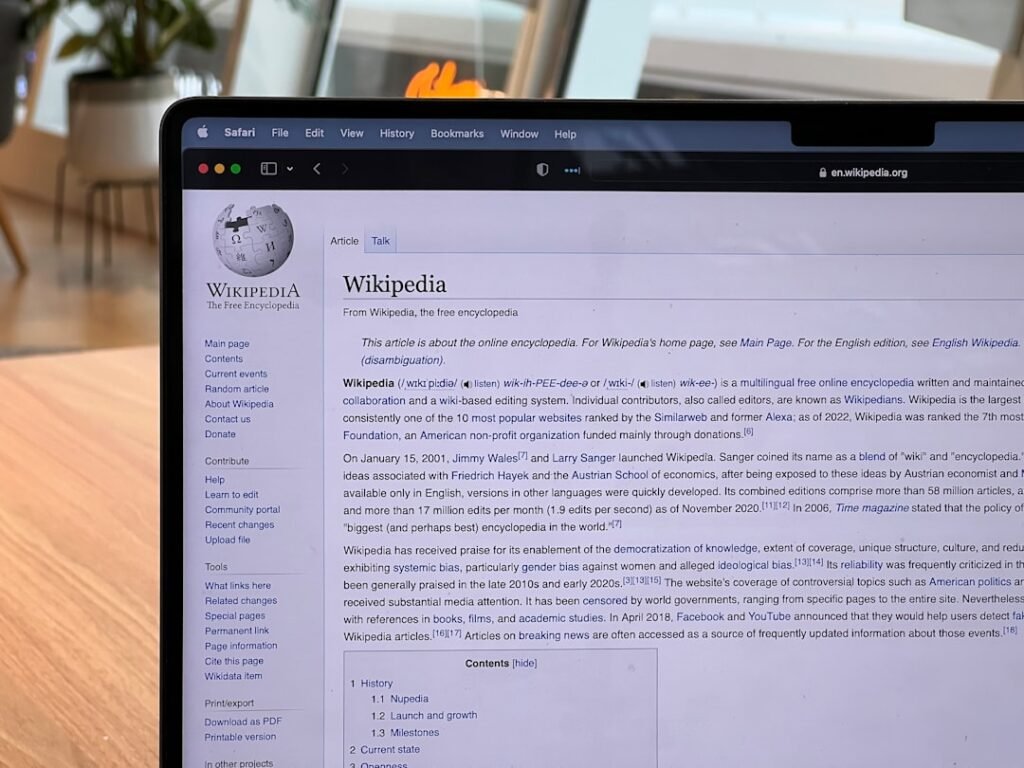

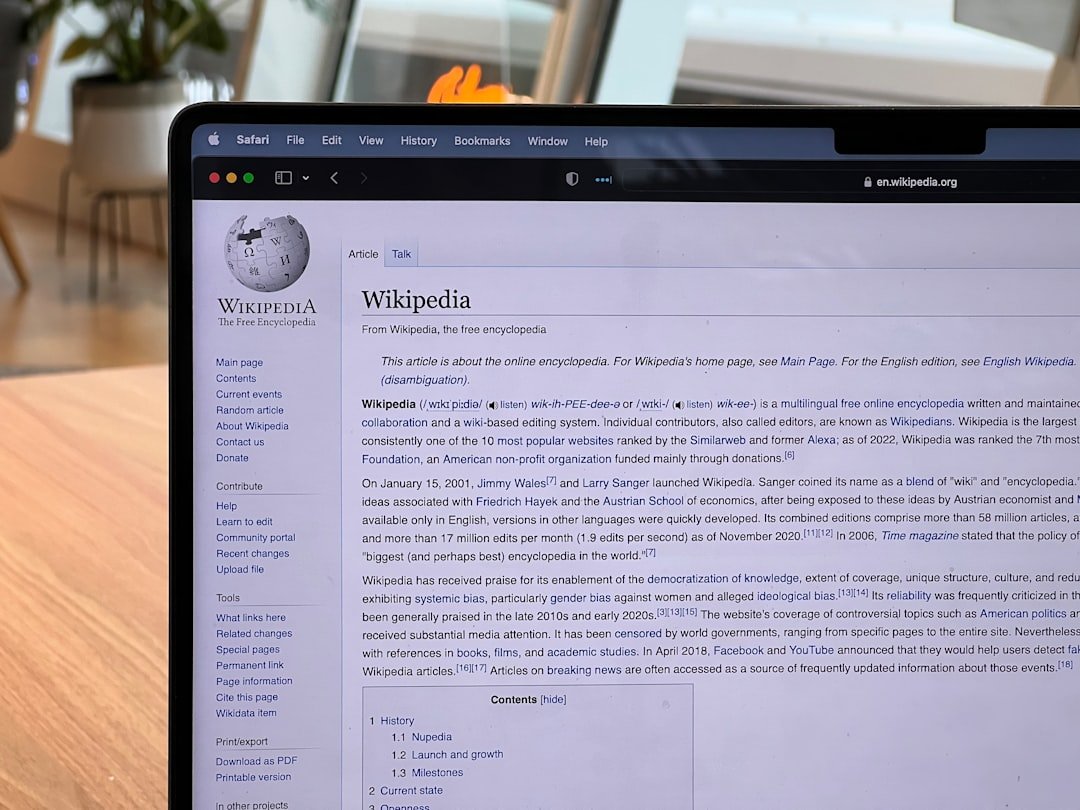
A Model of Scale and Simplicity (Image Credits: Unsplash)
The online encyclopedia Wikipedia celebrated its 25th anniversary on January 15, reaching a milestone that underscores its enduring value amid rising misinformation challenges.[1][2]
A Model of Scale and Simplicity
Wikipedia launched in 2001 with a vision of collaborative knowledge-sharing. Its homepage remains strikingly simple, featuring a search bar and links to more than 300 language editions. The English version alone adds roughly 500 new articles each day.[1]
That growth extends beyond core entries. Sister projects like Wiktionary provide multilingual dictionaries, Wikidata offers open datasets, and Wikimedia Commons hosts free media files. The Wikimedia Foundation, a San Francisco-based nonprofit with about 700 staff, oversees these efforts, supported by nearly 280,000 active volunteer editors worldwide.[1]
Core Principles That Ensure Quality
Wikipedia operates on five foundational pillars that guide its content creation. These include maintaining a neutral point of view, ensuring verifiability through reliable sources, and fostering civility in discussions. For instance, the climate change article presents scientific consensus while addressing denialist claims with sourced context.[1]
- Neutral point of view: Represents all significant views fairly.
- Verifiability: Facts must cite published, reliable sources.
- No original research: Relies on existing knowledge.
- Free content: Accessible to all without restrictions.
- Civility: Editors engage respectfully despite disagreements.
A 2019 study in Nature Human Behaviour confirmed that these processes yield information comparable to expert-curated sources. Talk pages attached to articles reveal ongoing debates, mirroring scientific peer review.[1]
Facing Modern Threats Head-On
Social media algorithms amplify extreme views, while AI tools generate vast amounts of low-quality content. Search engines now often display AI summaries before linking to Wikipedia, cutting traffic. Many AI models train on Wikipedia data without compensation, straining its donation-based model funded by about eight million contributors yearly.[1]
Wikipedia co-founder Jimmy Wales described the platform’s approach as a “worship of expertise,” requiring citations from peer-reviewed journals and reputable outlets rather than opinions. He noted that AI hallucinations persist, particularly on niche topics, reinforcing the need for human oversight.[2]
Academia’s Overdue Embrace
Researchers have historically under-contributed to Wikipedia despite its reliance on scientific sources. Nature previously highlighted this gap, urging academics to edit articles for accuracy and balance. In polarized times, their evidence-based input proves invaluable.[1]
The platform invites participation through edit-a-thons and guides tailored for scientists. Volunteers from diverse backgrounds help counter biases, though efforts continue to boost underrepresented voices like women in STEM.[2]
Key Takeaways
- Wikipedia’s 65 million articles demand verifiable sources, setting it apart from unvetted web content.
- AI poses risks by scraping data unpaid and eclipsing original links.
- Researchers can strengthen it by editing civilly and donating modestly.
Wikipedia’s quarter-century success demonstrates that collective, transparent effort can sustain reliable knowledge against digital chaos. Its model offers lessons for rebuilding trust online. What steps will you take to support it? Share your thoughts in the comments.