
If you’ve ever stepped outside at night, looked up, and felt something tug at your chest, you’re not alone. There’s a quiet kind of shock in realizing that, even without a telescope, Earth is a front-row seat to some of the most dramatic shows in the universe. You don’t have to be an astronomer, or even know the names of the constellations, to feel that mix of awe and smallness when the sky suddenly changes.
What surprises most people is how many of these events are predictable, accessible, and visible with nothing more than your own eyes and a bit of patience. Some last only a few seconds; others unfold slowly across hours or even days. A few are rare, once-in-a-lifetime kinds of moments. Others come back every year like an old friend. Let’s walk through ten of the most astonishing celestial events you can actually witness from Earth – no spaceship, no observatory pass required.
Total Solar Eclipses: When Day Turns to Night
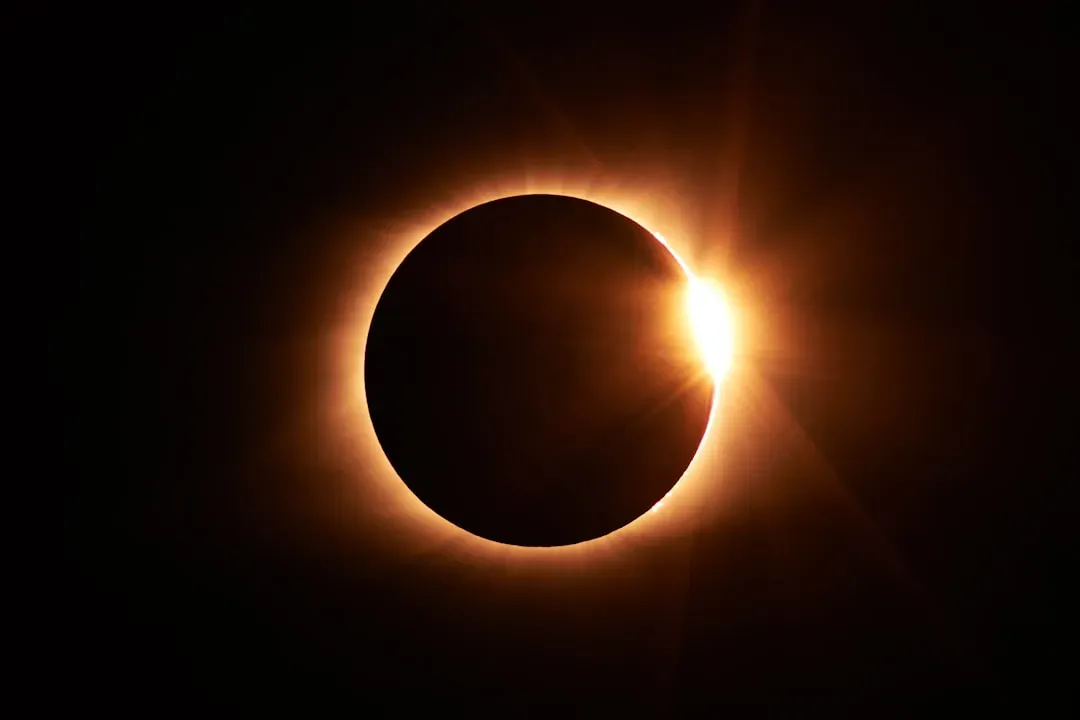
Imagine standing in broad daylight and watching the Sun slowly vanish, shadows sharpen, the air cool, and a sudden twilight fall over your world. That’s a total solar eclipse, and it’s one of the few times millions of people collectively gasp at the sky. The Moon slides perfectly in front of the Sun, blocking its blazing disk and revealing the delicate outer atmosphere called the corona, a ghostly halo you simply can’t see at any other time.
Totality usually lasts only a few minutes, but those minutes can feel strangely stretched, like time itself is hesitating. Birds may quiet down or start their evening routines, streetlights can flicker on, and people nearby often cheer or fall completely silent. In recent years, major eclipses crossing heavily populated areas have turned into huge traveling events, with families driving hours just to stand inside the narrow path of totality. Once you’ve seen one, partial eclipses never quite feel like enough again.
Lunar Eclipses: A Copper-Red Moon Hanging in the Dark
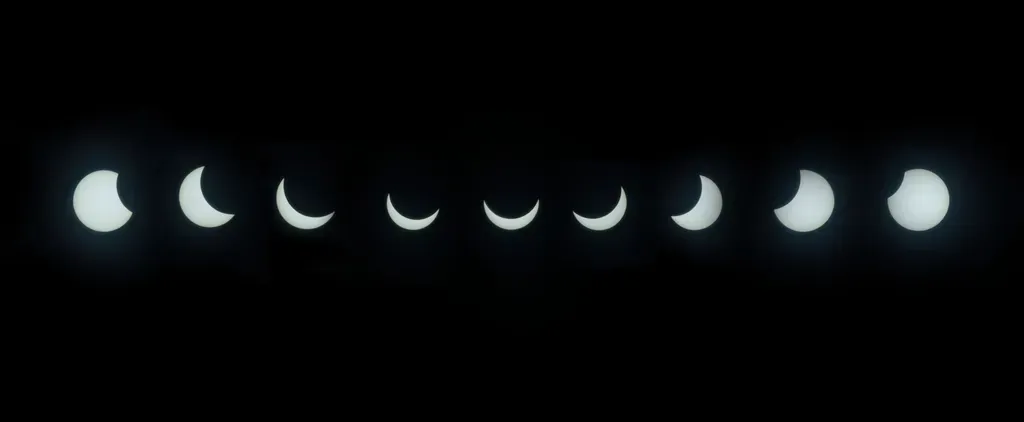
A lunar eclipse feels slower, more meditative, almost like watching a painting change in real time. Instead of the Sun disappearing, it’s the full Moon slipping into Earth’s shadow, gradually dimming and often turning a deep copper or brick red. The color comes from sunlight bending through Earth’s atmosphere; the same light that gives us red sunrises and sunsets is being filtered and projected onto the Moon.
The best part is how accessible it is. Unlike solar eclipses, lunar eclipses are safe to watch with the naked eye, and they’re visible from entire night-time halves of the planet at once. You can lie back in your yard, sit on a balcony, or even peek out a window and watch the bite of Earth’s shadow move across the lunar surface. Over an hour or more, the bright, familiar Moon transforms into something far more eerie and ancient-looking, as if the sky has gone into a different mode.
Annual Meteor Showers: The Sky’s Sparkling Fireworks
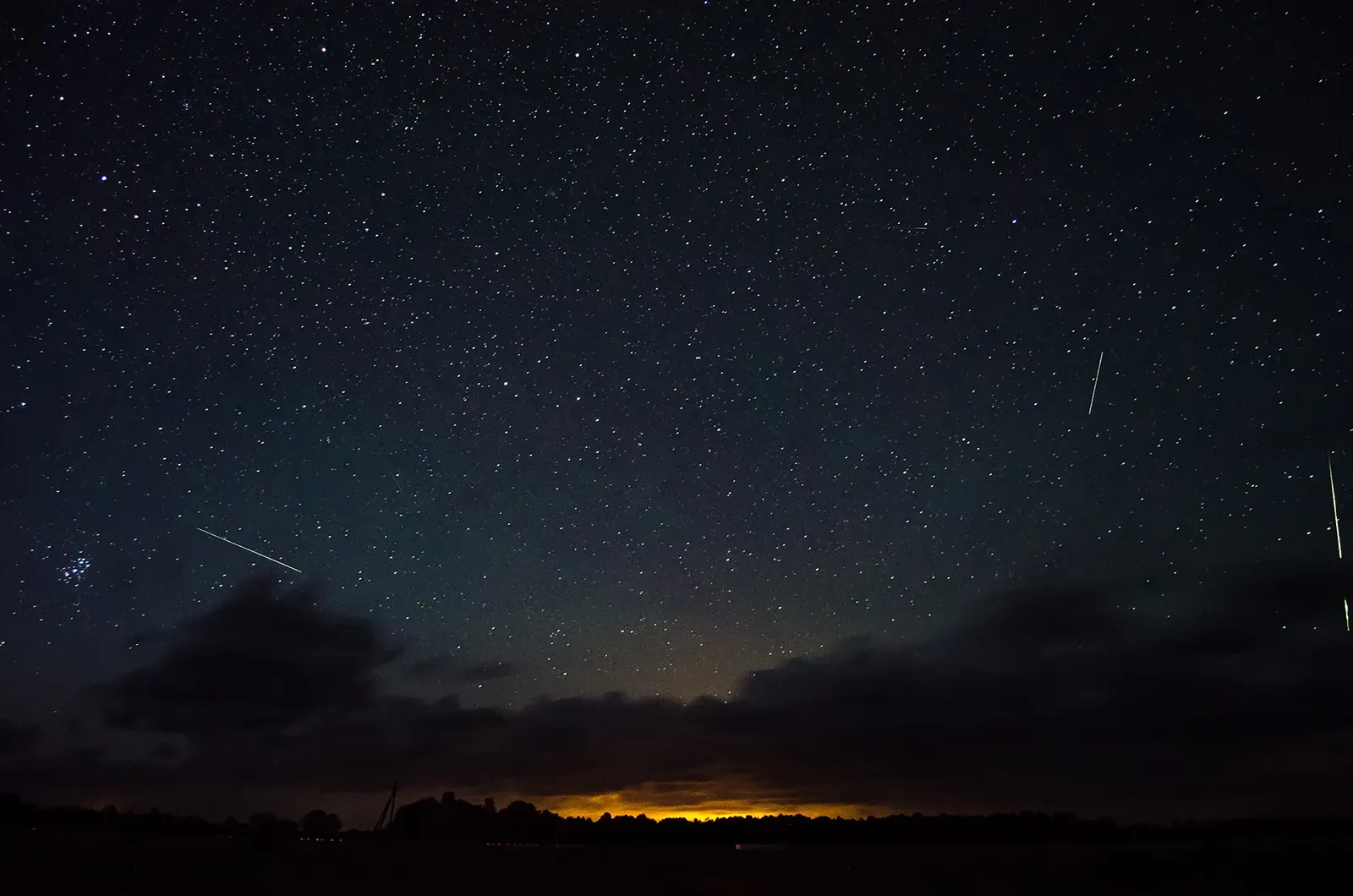
Most people have wished on a “shooting star” at least once, but a proper meteor shower turns that rare moment into a repeating spectacle. Several times a year, Earth plows through dusty debris trails left behind by comets or, more rarely, asteroids. Each tiny grain slams into our atmosphere at incredible speeds and burns up in a brief, bright streak of light. In a good shower, you might see a meteor every couple of minutes under dark skies.
Regular standouts include the Perseids in August and the Geminids in December, both capable of producing dozens of meteors per hour in ideal conditions. Watching a shower is wonderfully low-tech: you don’t need a telescope, just a dark spot, comfortable clothing, and patience. As your eyes adjust, you start noticing faint streaks in your peripheral vision, then bright fireballs that make you involuntarily say something out loud. It feels less like a distant phenomenon and more like the universe tossing sparks right over your head.
The Aurora Borealis and Aurora Australis: Dancing Lights at the Edge of the World
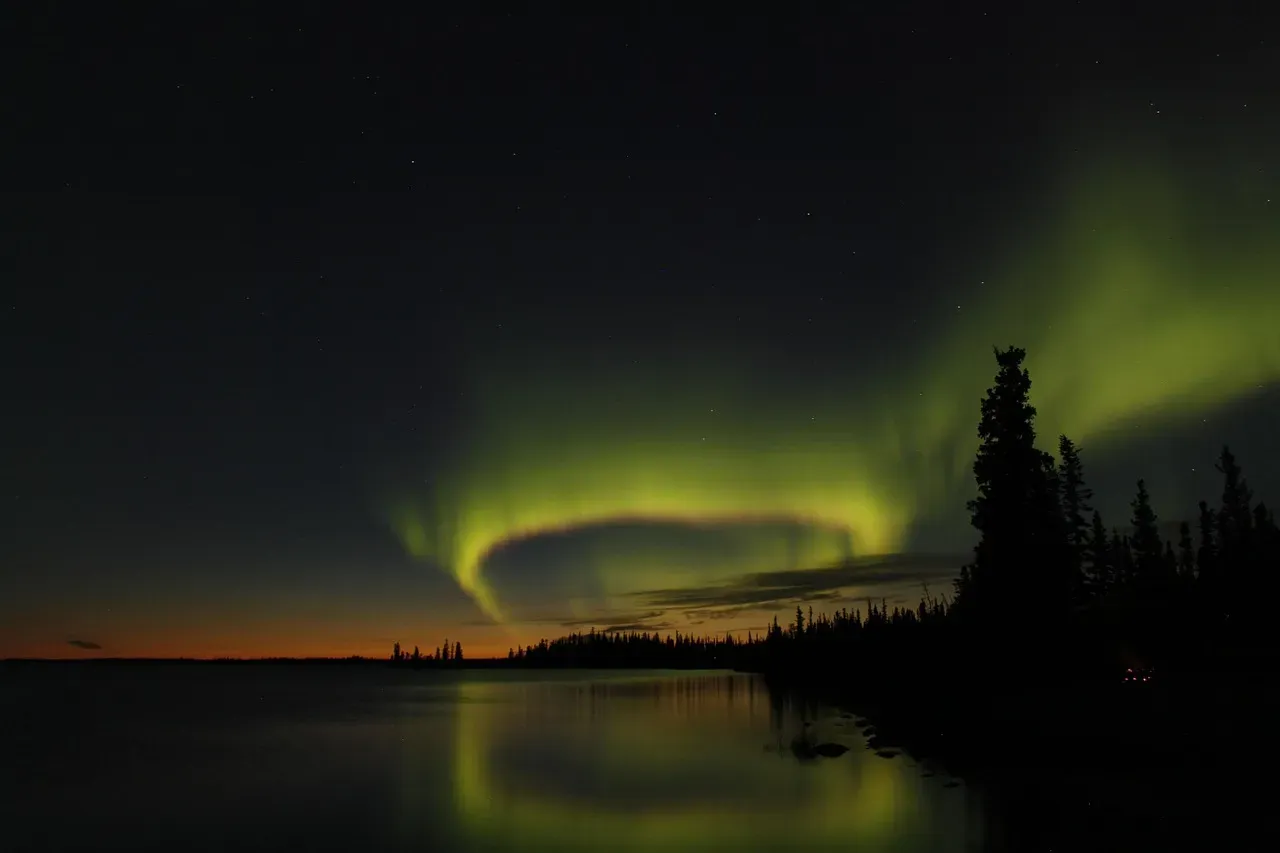
The aurora is one of those things that photos never quite get right. In reality, the lights can ripple, flicker, and surge across the sky like curtains in a cosmic wind. These displays happen when charged particles from the Sun slam into Earth’s magnetic field and funnel toward the poles, colliding with atoms high in the atmosphere. Those collisions release energy as shimmering light, usually green, but sometimes tinged with red, purple, or blue.
People travel to high-latitude regions like northern Scandinavia, Canada, Alaska, or the southern tips of places like New Zealand to chase these ghostly shows. There’s suspense built into the experience: you can stand outside for hours, battling cold air and fatigue, only to suddenly have the sky flare to life. During strong solar activity, the auroras can dip lower in latitude than usual, surprising people who never expected to see them from their own backyard. It’s one of the few sky events that can make even a hardened adult feel like a kid again, staring up with their mouth open.
Planetary Conjunctions: When Worlds Seem to Meet
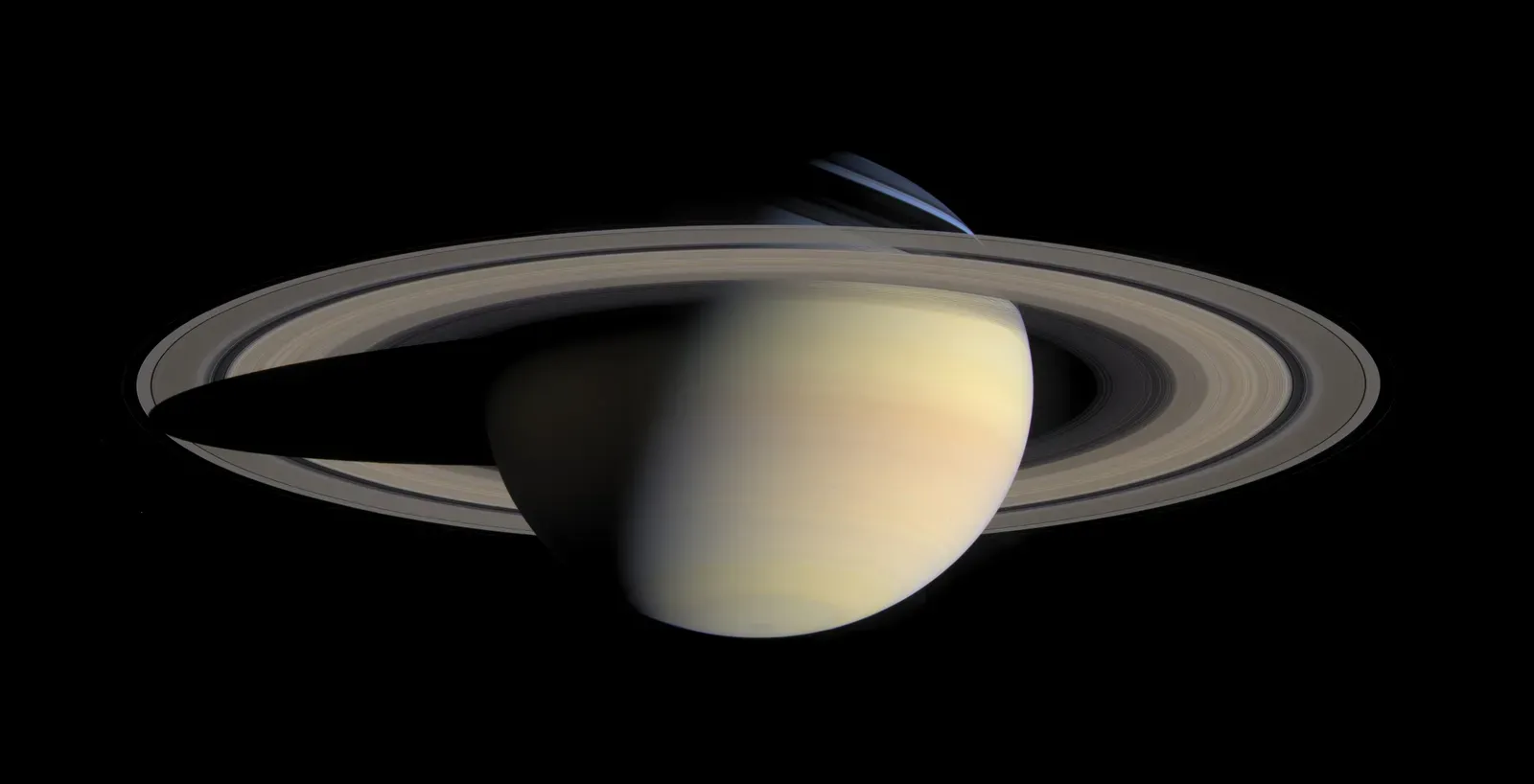
Every so often, two or more bright planets appear unnervingly close together in the sky, almost like they’re having a quiet meeting. These planetary conjunctions happen because the planets are all circling the Sun at different speeds, and from our moving vantage point on Earth, their paths line up just right. To the naked eye, they look like a pair of brilliant stars side by side, or even stacked above each other like celestial punctuation marks.
One of the most striking examples in recent memory was a close pairing of Jupiter and Saturn, when they appeared in the same tiny patch of sky, sparking a wave of photos and social media buzz. Conjunctions between Venus and Jupiter are especially eye-catching, since both are extremely bright. There’s something unsettling, in a good way, about seeing distant worlds seem to cozy up in the same spot; you’re looking at a complex orbital dance compressed into a simple, elegant pattern of light.
Bright Comets: Icy Wanderers with Flowing Tails
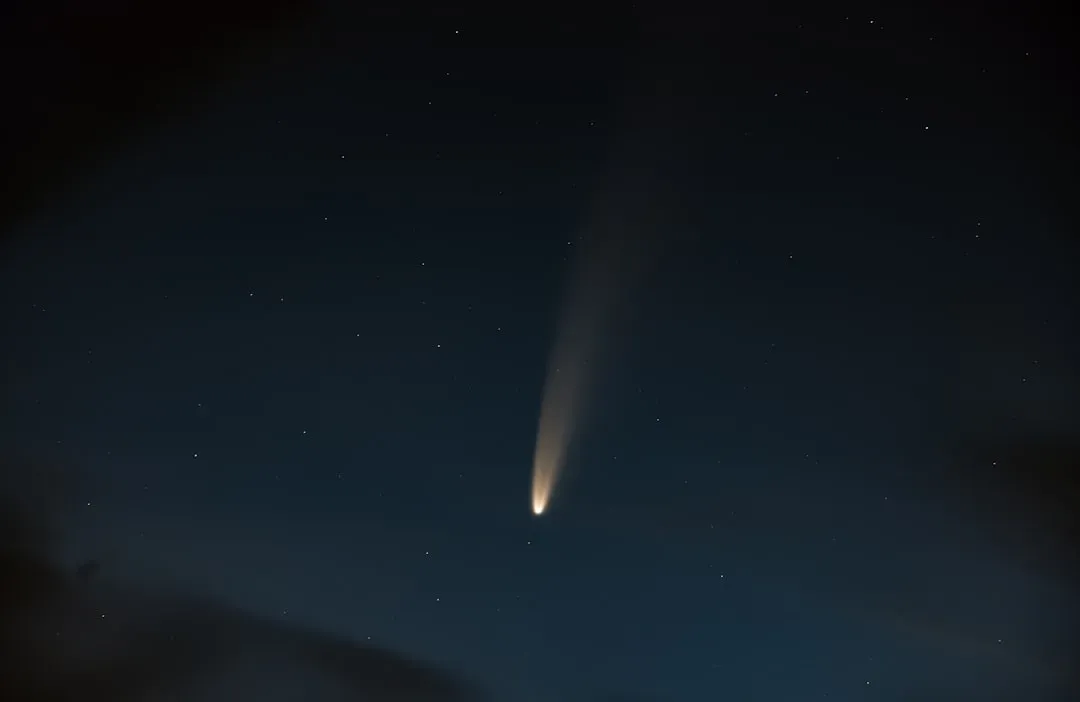
Comets are like the surprise guests of the night sky. Most of the time they’re too faint and distant to see, but every so often, one swings close enough to the Sun and Earth to put on a visible show. As the Sun heats a comet’s icy nucleus, gas and dust stream off, forming a glowing coma and sometimes one or more long tails stretching across a chunk of the sky. A truly bright comet can be visible even from cities, turning casual skywatchers into temporary comet chasers.
Recent years have delivered a few striking visitors that sparked renewed public interest in these icy wanderers. Watching a comet night after night is like tracking a slow, graceful traveler; it shifts position among the stars, sometimes brightening, sometimes fading. You don’t need fancy gear to enjoy one – just your eyes and the awareness that what you’re seeing is basically a leftover piece of the early solar system, making a rare and fleeting appearance. There’s a certain bittersweetness to it, knowing you might never see that particular object again in your lifetime.
The Milky Way Core: A River of Stars Across the Sky
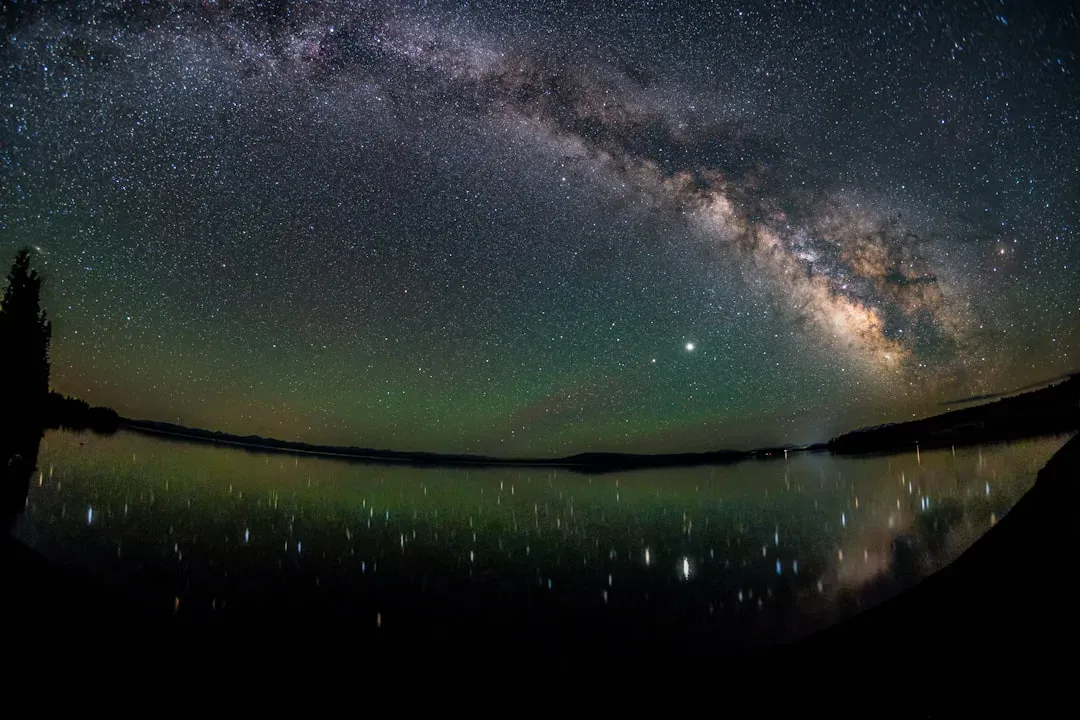
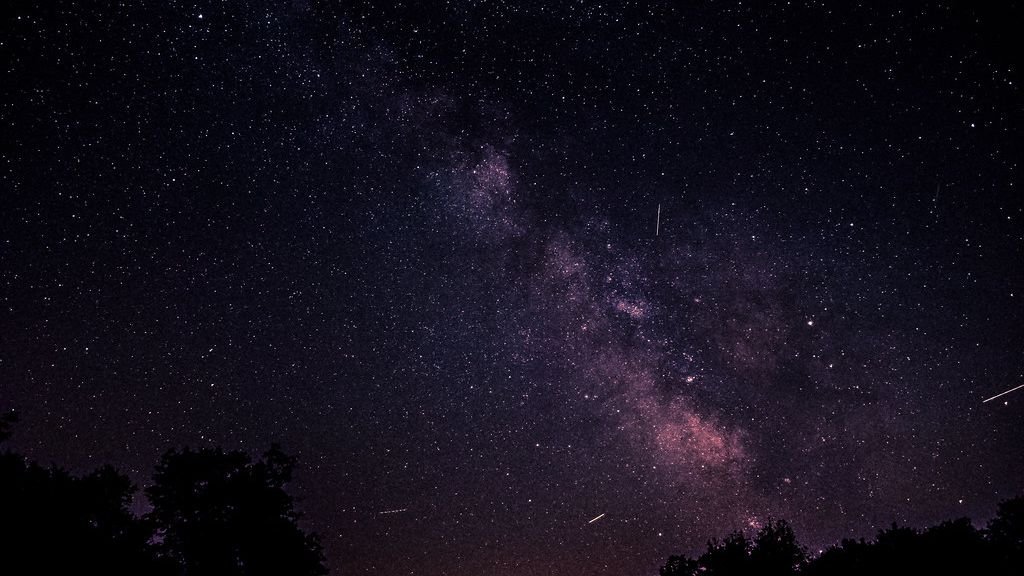
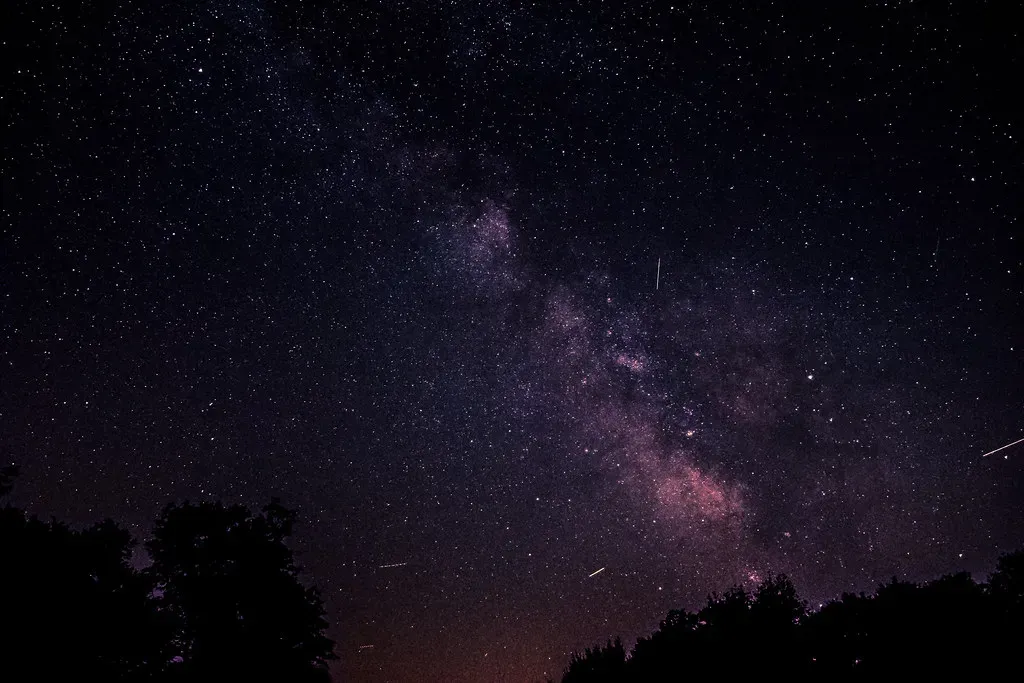
For many people who grow up in brightly lit cities, the first true sight of the Milky Way is honestly a bit shocking. In a dark location, far from urban glow, the night sky stops being a scattered dusting of stars and becomes a thick, cloudy river of light. That pale band is our home galaxy seen from the inside, and the core – most visible in certain seasons depending on where you live – looks like a luminous, textured cloud running roughly from horizon to horizon.
Standing under a proper Milky Way sky can be strangely emotional. You start to notice fine details: knots and lanes of dust, brighter patches, delicate gradients where star fields thicken. It feels less like you’re looking at something “out there” and more like you’re floating inside a gigantic, luminous structure. Many people who make a point of visiting dark-sky reserves or remote rural locations come back changed a little, with a sharper sense of just how much our everyday light pollution has taken away from us.
Planetary Oppositions: When Planets Blaze at Their Brightest
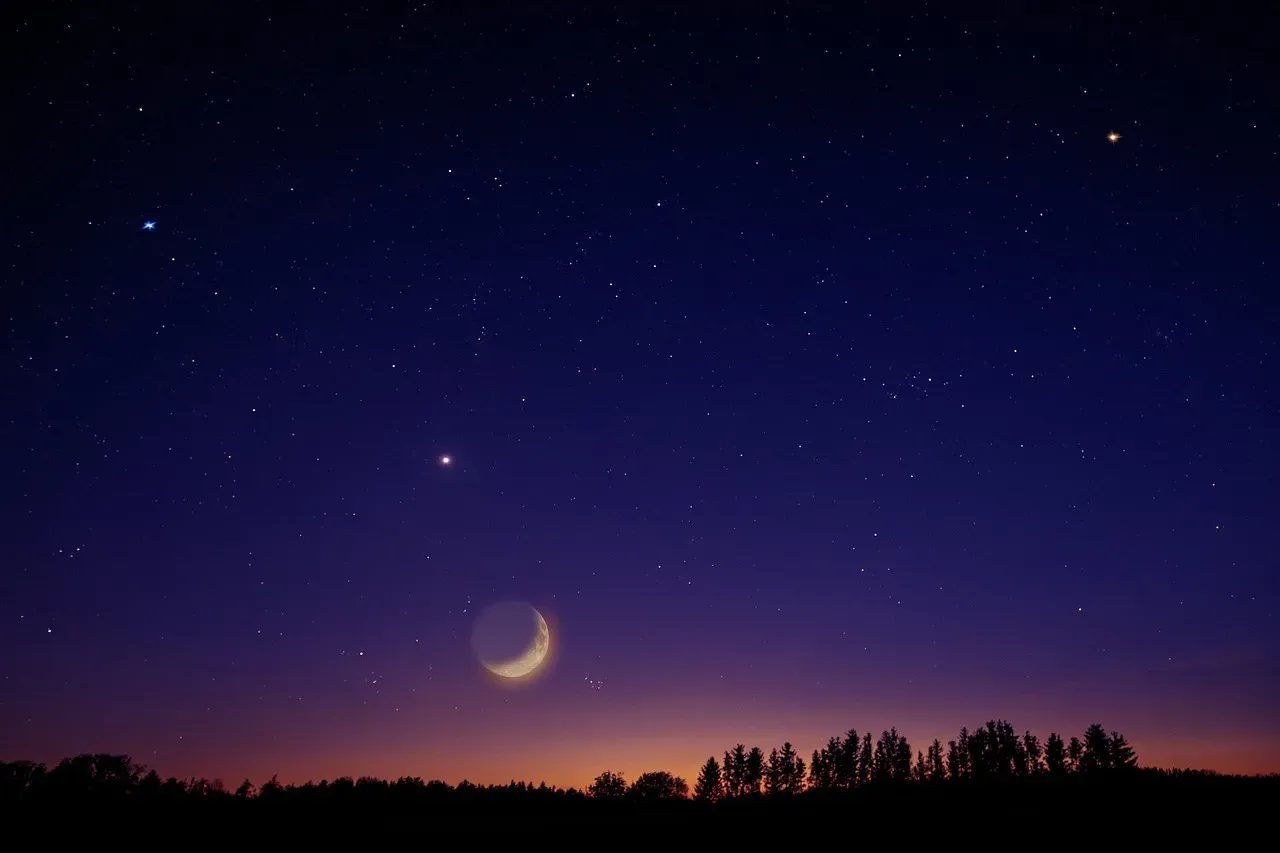
When astronomers talk about a planet being “at opposition,” it simply means that, from our perspective, the planet is opposite the Sun in the sky. Practically, this is when outer planets like Mars, Jupiter, and Saturn rise as the Sun sets and stay visible all night, appearing larger and brighter than usual. These are the times when even a small backyard telescope suddenly becomes a portal to other worlds.
During a good opposition, Mars can glow a deep, intense orange-red, while Jupiter and Saturn show crisp disks and, with some magnification, cloud bands or rings. Even without equipment, you can notice how much more prominent they become against the stars. There’s something grounding about watching another planet track across the sky over the course of a single night, knowing that what you’re seeing isn’t a distant star but a solid world bathing in the same sunlight that hits your face.
Occultations and Transits: Precise Cosmic Lineups
Not all celestial events are dramatic to the casual eye, but some are astonishing for how precise and delicate they are. An occultation happens when one object passes in front of another, like when the Moon briefly covers a bright star or even a planet. From Earth, the star can suddenly wink out, sometimes for just a few seconds, then snap back as the Moon’s motion carries it clear. For people watching closely or with binoculars, it feels like a magic trick performed on a cosmic scale.
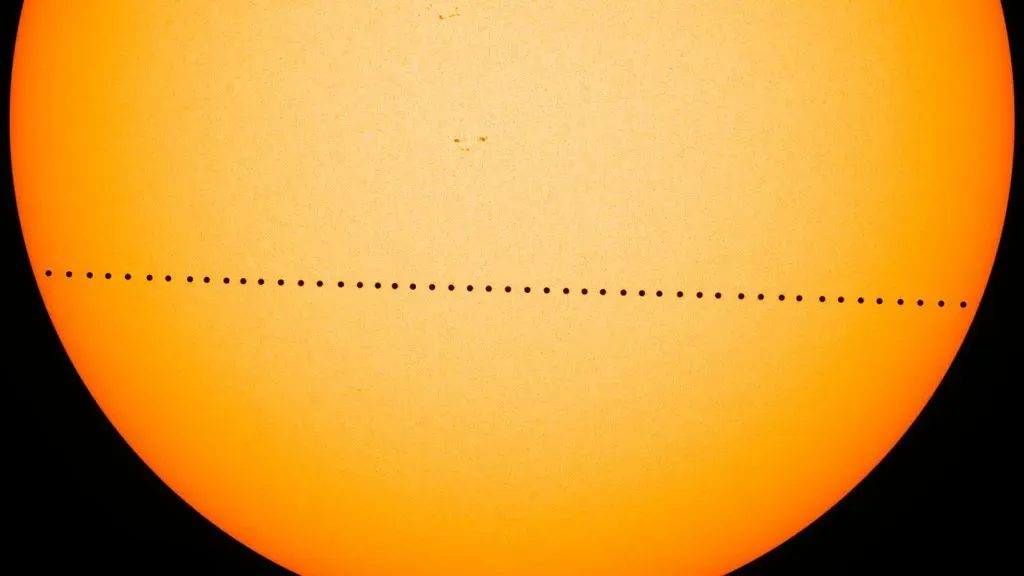
Transits are similar but involve a small object crossing the face of a larger one, such as when Mercury or Venus passes directly between Earth and the Sun. During a transit of Venus, for example, observers with proper solar filters can see a tiny, perfectly round black dot gliding across the solar disk. These events are rare and often historically important, helping past astronomers measure distances in the solar system. Even if they don’t dazzle the way an eclipse does, there’s something quietly thrilling about nature hitting such perfect alignment that you can time it down to the second.
Zodiacal Light and Gegenschein: The Faintest Ghosts of Sunlight
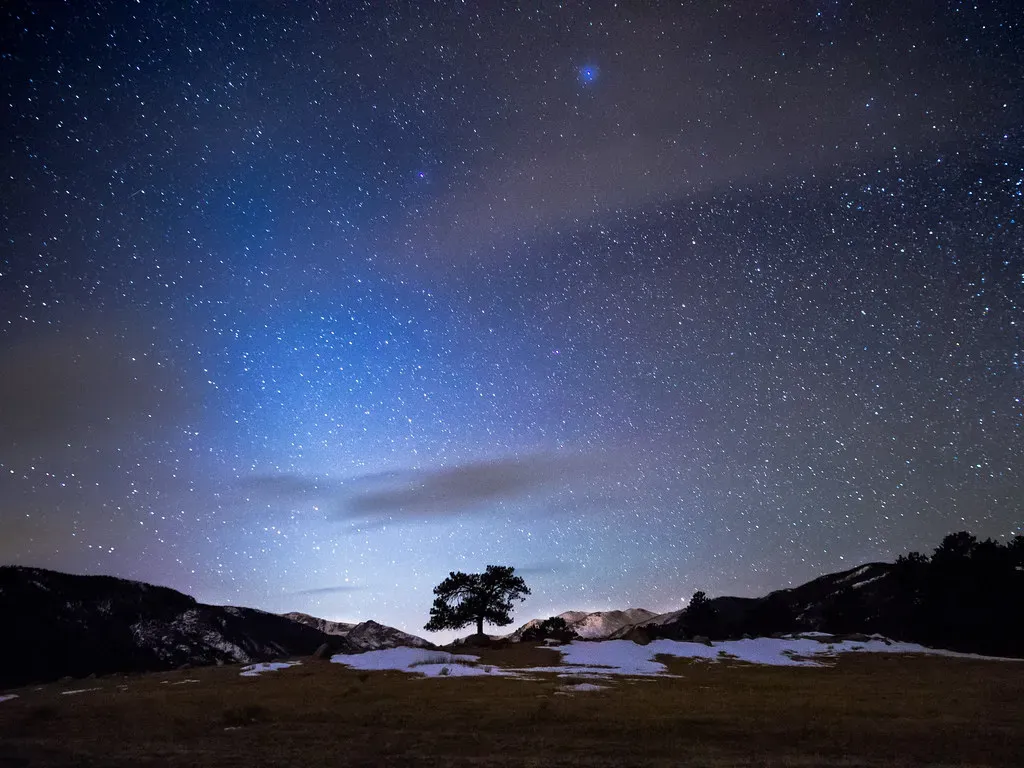
There are a couple of sky phenomena so subtle that most people have never even heard of them, yet you can spot them with just your eyes under the right conditions. Zodiacal light appears as a faint, triangular glow stretching up from the horizon before dawn or after dusk, along the plane of the planets. It’s caused by sunlight scattering off countless tiny dust particles filling the inner solar system, like a barely visible bridge of light connecting the Sun and the stars.
Gegenschein is even softer: a very faint, diffuse patch of light directly opposite the Sun in the sky, also produced by sunlight reflecting off interplanetary dust. These glows require truly dark, clear skies and a bit of practice to recognize, but once you do, they change how you think about “empty” space. You realize that the space between planets isn’t truly empty at all – it’s filled with enough dust to leave a ghostly fingerprint of light across the heavens. It’s a quiet kind of astonishment, but no less real than the shock of an eclipse or a meteor storm.
A Universe That Comes to You
What ties all these events together is that you don’t have to go anywhere extraordinary to meet them; you just have to look up at the right time and place. From total eclipses that rewrite the sky for a few minutes to the nearly invisible glow of zodiacal light, the universe constantly stages shows for anyone willing to pay attention. Some are loud and dramatic, others are whisper-soft, but all of them remind you that Earth is not separate from the cosmos – it’s right in the middle of it.
In a world that often feels crowded, noisy, and relentlessly digital, there’s something deeply calming about being alone under a vast, indifferent sky. It puts your problems in perspective without dismissing them, like realizing your story is one thread in a much larger tapestry. The next time you hear about an eclipse, a meteor shower, or a bright planet rising, maybe step outside for a few minutes and see what the sky is doing. What might be waiting up there that you’ve never really noticed before?