
Imagine changing something in your living room and watching the effect appear instantly on the Moon, with no delay at all. That’s roughly what quantum entanglement sounds like when you first hear about it, and it feels almost like science cheating at the rules of the universe. For more than a century, this phenomenon has been puzzling, annoying, and inspiring some of the smartest people on the planet.
Quantum entanglement often gets described as particles “talking” , but what’s really going on is more subtle and way more interesting. It doesn’t just stretch our understanding of distance and time; it shatters our sense of what “separate things” even means. Once you see how deep it goes, it’s hard to look at the everyday world in quite the same way again.
What Entanglement Actually Is (Without the Hype)
Here’s the heart of it: two or more particles can be created or interact in such a way that their properties become linked, or “entangled,” no matter how far apart they later move. If you measure one particle’s property (like its spin or polarization), the result you get is mysteriously correlated with the result you’d get from measuring the other particle. These correlations are stronger than anything classical physics can explain, even if you imagine hidden instructions carried by each particle.
But entanglement isn’t like two friends secretly texting each other behind your back. Nothing is traveling between the particles in any normal sense, and there’s no evidence of a signal shooting across space . Instead, quantum theory says the entangled pair is really one combined system described by a shared wave function, and what looks like “communication” is more like revealing different aspects of the same underlying state. It’s not that information leaps across space; it’s that the universe refuses to treat the particles as truly independent in the first place.
The Einstein Problem: Spooky Action and a Big Argument

When Albert Einstein first really stared this idea in the face, he hated it. He felt that if quantum mechanics allowed this “spooky action at a distance,” then it must be incomplete, like a half-finished puzzle missing key pieces. With colleagues, he proposed a thought experiment showing that if quantum theory was right, then distant measurements had to be strangely linked, which he considered unacceptable for a sensible, local universe.
Einstein’s camp believed there had to be hidden variables – deeper, invisible details – quietly determining the outcomes ahead of time, with no need for instant influence across space. Quantum theory, in their view, was like a blurry photograph of a sharper, more complete reality. They were convinced that one day, a better theory would arrive and quietly retire entanglement’s weirdness. Instead, decades of experiments ended up doing the opposite and pushed us even more firmly into the bizarre quantum picture.
Bell’s Inequality: The Mathematical Showdown

The real turning point came when physicist John Bell translated this philosophical fight into a clear mathematical test. He derived what are now called Bell inequalities: precise limits on how strongly different measurements could be correlated if the world was governed by local hidden variables. If experiments broke those limits, then any theory based on local realism – the idea that things have definite properties and nothing influences anything – would be ruled out.
Over the following decades, researchers tested these inequalities using entangled photons, atoms, and more, constantly closing loopholes that critics pointed to. The experimental results were blunt: the correlations in entangled systems repeatedly violated Bell’s bounds. That means nature itself doesn’t follow the rules that would make Einstein comfortable. The universe is either nonlocal in some deep sense, or it doesn’t have pre-set properties before measurement, or both – either way, the classical picture is gone.
So Are Particles Really Communicating ?
It’s tempting to say yes, but the honest answer is more careful: not in any way that lets you send a usable message . When you measure one entangled particle, you get a random outcome – completely unpredictable. Your partner, far away, also gets a random outcome. Only when you later compare notes do you see the eerie correlations that quantum mechanics predicts. You can’t control what result you get, so you can’t encode a message in it.
This is exactly why quantum entanglement doesn’t actually break Einstein’s speed limit, even though it feels like it should. There’s an instant connection in the statistics of the outcomes, but no way to harness that for faster‑than‑light communication or data transfer. In physics language, the correlations are nonlocal, but they don’t allow superluminal signaling. It’s more like the universe quietly keeping its books balanced than like a high-speed phone call across the galaxy.
How We Create Entangled Particles in the Real World
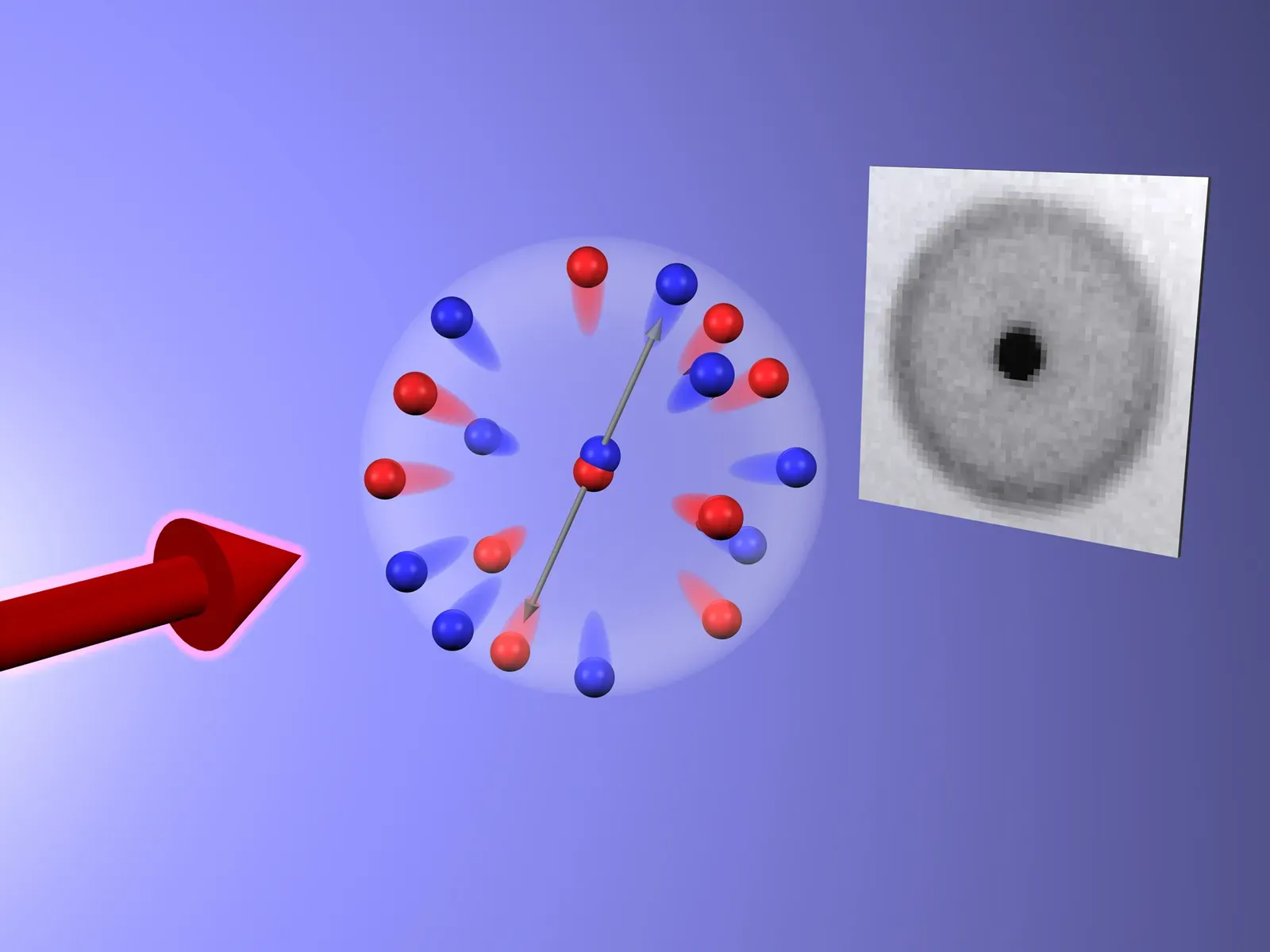
Entanglement isn’t just a theoretical fantasy; labs around the world create and use entangled particles every day. One common method uses a laser and a special crystal to generate pairs of photons whose polarizations are linked in a carefully designed way. Another approach entangles atoms or ions held in traps using lasers and electromagnetic fields to couple their internal states.
Researchers have entangled particles separated by dozens of kilometers through fiber-optic cables and even across ground-to-satellite links in space. These setups are extremely delicate: vibrations, thermal noise, and even tiny imperfections in equipment can destroy the entanglement, a process called decoherence. Building robust systems that keep entanglement alive long enough to be useful is now one of the central engineering challenges in the field.
Real-World Uses: From Quantum Keys to Future Networks
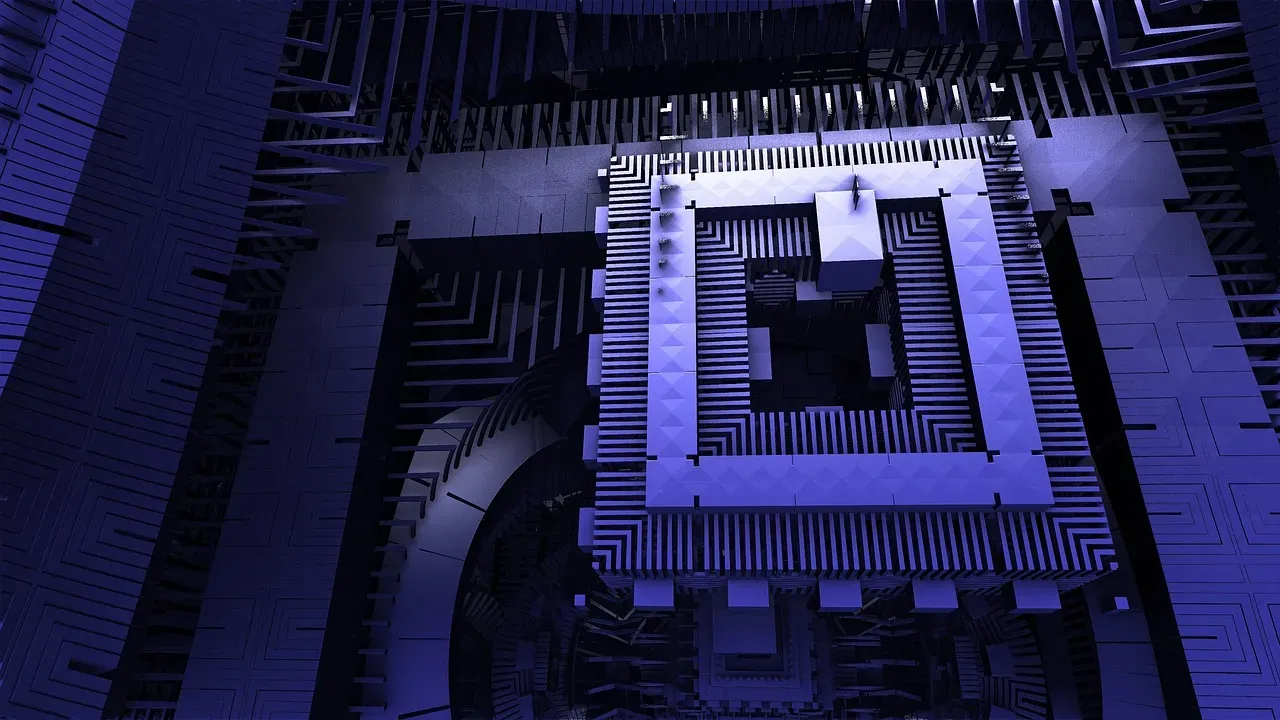
The strangest thing about entanglement is that it’s not just weird, it’s useful. Quantum key distribution can use entangled photons to let two parties share encryption keys in a way that reveals any eavesdropping attempt, because tampering disturbs the quantum correlations. This isn’t sci‑fi; several countries already operate experimental quantum communication links, and some banks and data centers have tested such systems for secure connections.
Looking ahead, entanglement is the backbone for the idea of a quantum internet: a network where quantum states, not just classical bits, are distributed between distant nodes. Quantum repeaters, which rely on swapping and storing entanglement across links, could eventually connect cities or even continents in ways that ordinary networks simply can’t. While this technology is still young and fragile, steady progress suggests that entanglement-based infrastructure will gradually move from specialized labs into parts of everyday digital life.
Entanglement in Quantum Computers: Why It Matters So Much
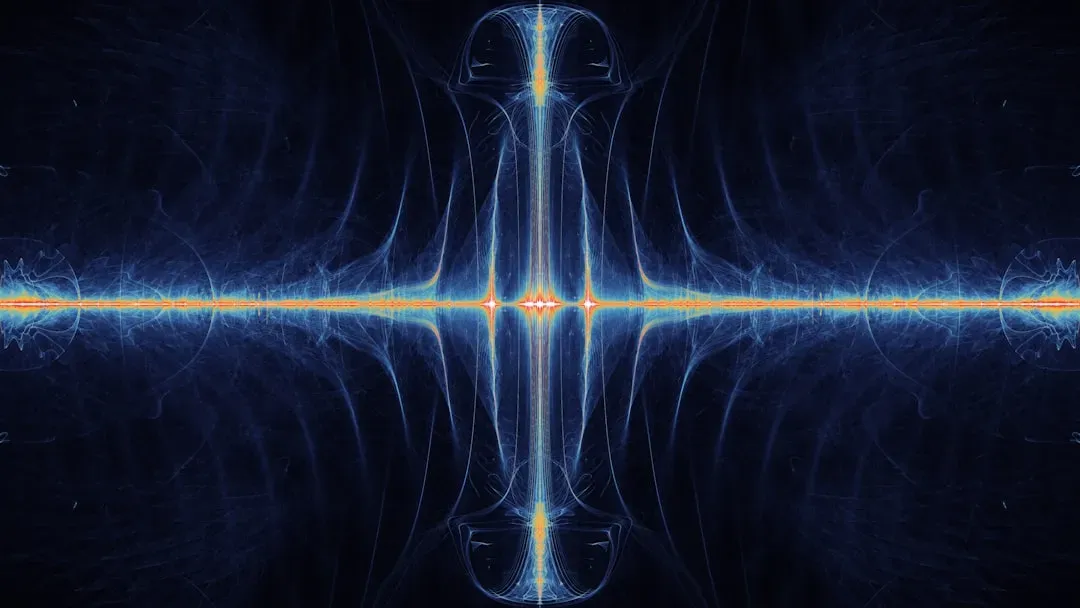
Quantum computers lean heavily on entanglement to gain their advantage over classical machines. In a quantum processor, qubits can be entangled so that their possible states are not independent, allowing certain algorithms to explore many computational paths in parallel. This does not mean they magically solve every problem instantly, but for specific tasks, the entangled structure can dramatically reduce the time required.
In practice, engineers have to juggle two conflicting needs: creating strong entanglement among many qubits and protecting that entanglement from noise and errors. Slight vibrations, stray electromagnetic fields, or imperfect control pulses can all break the delicate quantum links. Techniques like error-correcting codes, improved materials, and clever circuit designs are all aimed at preserving entanglement long enough to run meaningful algorithms, from simulating molecules to optimizing complex systems.
What Entanglement Says About Reality Itself

Entanglement isn’t just a quirky technical trick; it forces us to rethink what it means for something to “exist” on its own. The fact that two distant particles can behave like one inseparable system suggests that separateness is sometimes an illusion created by our limited perspective. The universe, at a deep level, looks more like a web of relationships than a pile of independent objects stacked side by side in space.
There’s a personal feeling that sneaks in here, at least for me: the more I read about entanglement, the more everyday words like “here” and “there” feel a bit too simple. Our familiar world of tables and trees and phones still works just fine, but underneath it sits a stranger layer where connections matter more than locations. The idea that a decision made in one lab can be perfectly mirrored in a partner lab on the other side of the planet, without any signal racing between them, is a reminder that reality runs deeper than our common sense usually allows.