
You’ve looked at the stars, admired the moon, maybe even seen a meteor streak across the summer sky. For generations, humanity has gazed upward in wonder, trying to make sense of what’s out there. That childlike curiosity eventually led to something more structured, more precise – what we now call modern astronomy.
Throughout history, certain astronomical events have acted like lightning strikes to our understanding. They’ve forced scientists to rethink everything. They’ve turned established theories upside down. Some of these cosmic moments were completely unexpected, stumbled upon by accident, while others required decades of painstaking observation. What they share is this: they fundamentally altered how we perceive the universe and our place within it.
The Accidental Discovery of Cosmic Microwave Background Radiation
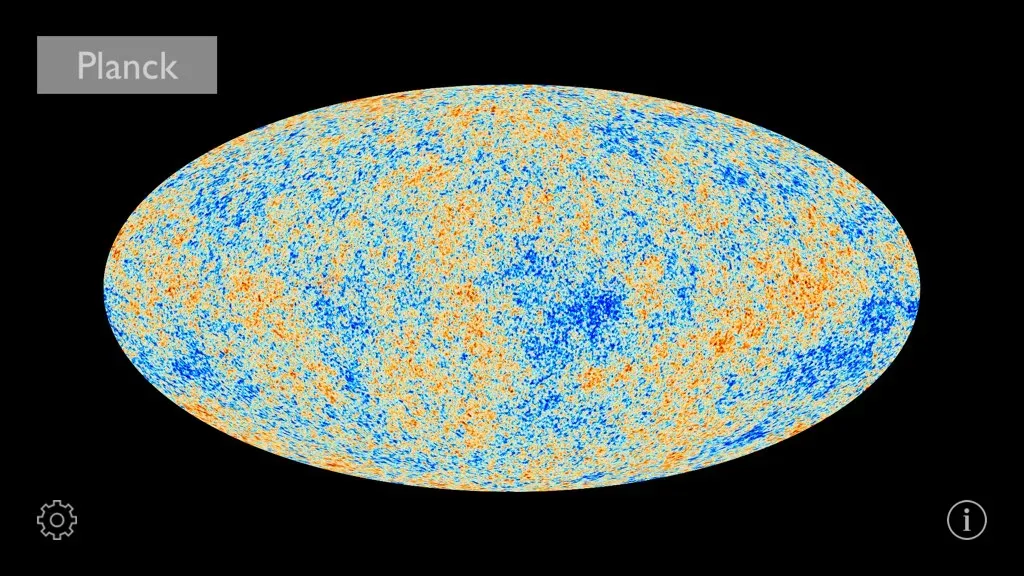
In 1964, two scientists at Bell Telephone Laboratories, Arno Penzias and Robert Wilson, were wrestling with an annoying problem. They were experimenting with a supersensitive horn antenna, trying to eliminate noise for satellite communications. No matter what they did, a low, steady, mysterious noise persisted in their receiver that was evenly spread over the sky and present day and night. After cleaning out pigeons nesting in the antenna and their accumulated droppings, the noise remained.
Here’s the thing: They had stumbled on the first observational evidence to support the Big Bang theory of the origin of the universe. The CMB is the key experimental evidence of the Big Bang theory for the origin of the universe. This radiation was the leftover glow from the universe’s infancy, cooled down over billions of years. Penzias and Wilson received the 1978 Nobel Prize in Physics for their discovery. What makes this discovery so remarkable is that it confirmed theoretical predictions made years earlier, providing tangible proof that our universe had a beginning and continues to evolve. The cosmic microwave background essentially gave scientists a snapshot of what the universe looked like when it was just a few hundred thousand years old.
Hubble Deep Field Reveals a Universe Teeming with Galaxies
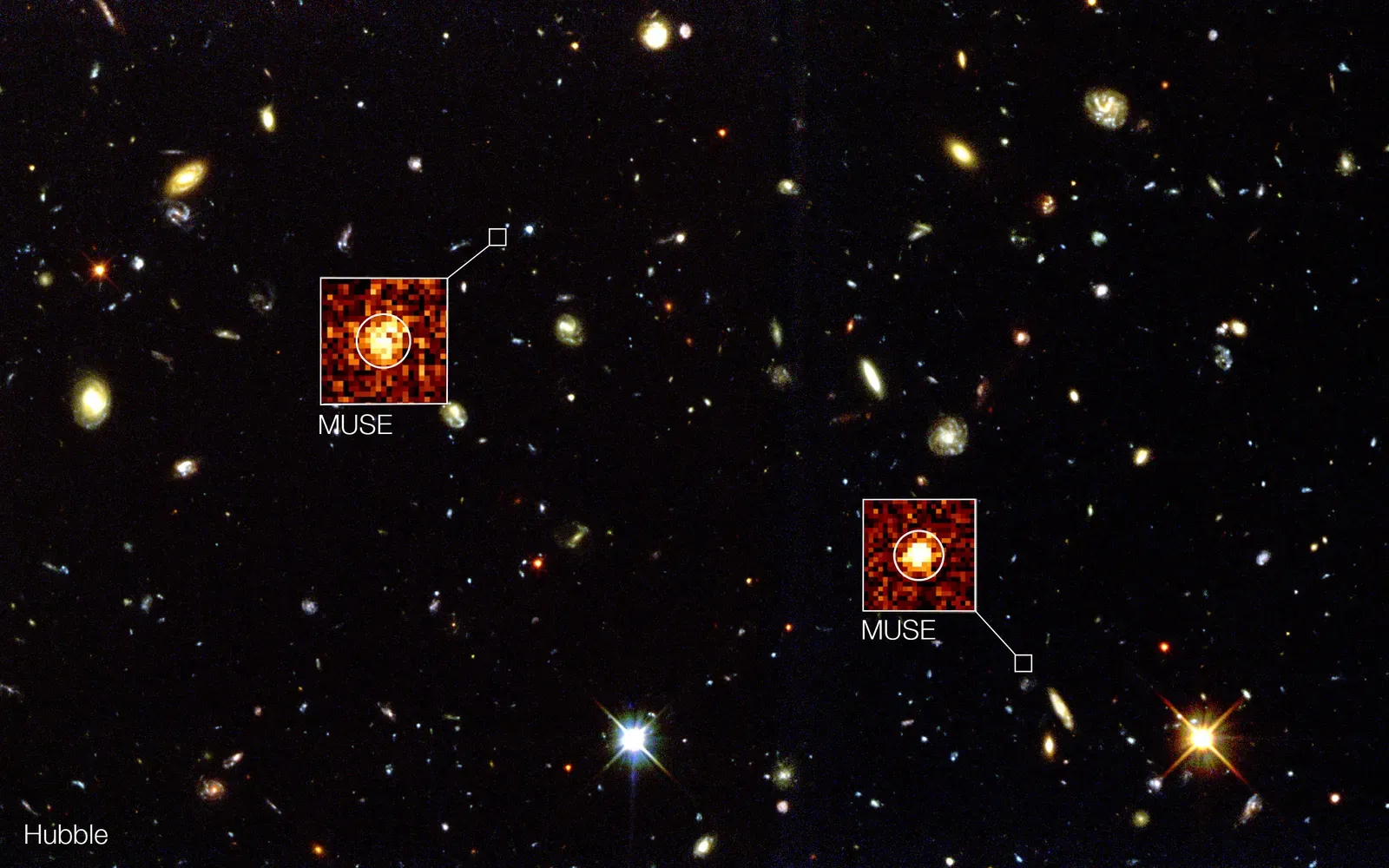
Taken over the course of 10 days in 1995, the Hubble Deep Field captured roughly 3,000 distant galaxies varying in their stages of evolution. This was bold, almost reckless. The Hubble Space Telescope stared at what looked like a completely empty patch of sky – about the size of a pinhead held at arm’s length – for ten consecutive days. When Hubble first launched, many members of the astronomy community doubted its ability to observe distant galaxies, with one of the world’s top astrophysicists arguing it wouldn’t reveal any galaxies not already visible from ground-based methods.
The result was astounding: a collection of thousands of galaxies in various stages of evolution, a glimpse back in space and time that revealed a universe full of previously unrevealed wonders. Most of the galaxies were so faint – four billion times fainter than the human eye can see – that they had never been observed before, even by the largest telescopes. The Deep Field fundamentally shifted our understanding of the universe’s sheer vastness and complexity. By revealing such large numbers of very young galaxies, the HDF has become a landmark image in the study of the early universe. It proved that looking deeper into space means looking further back in time, offering humanity a window into the universe’s childhood.
The Shocking Discovery of an Accelerating Universe
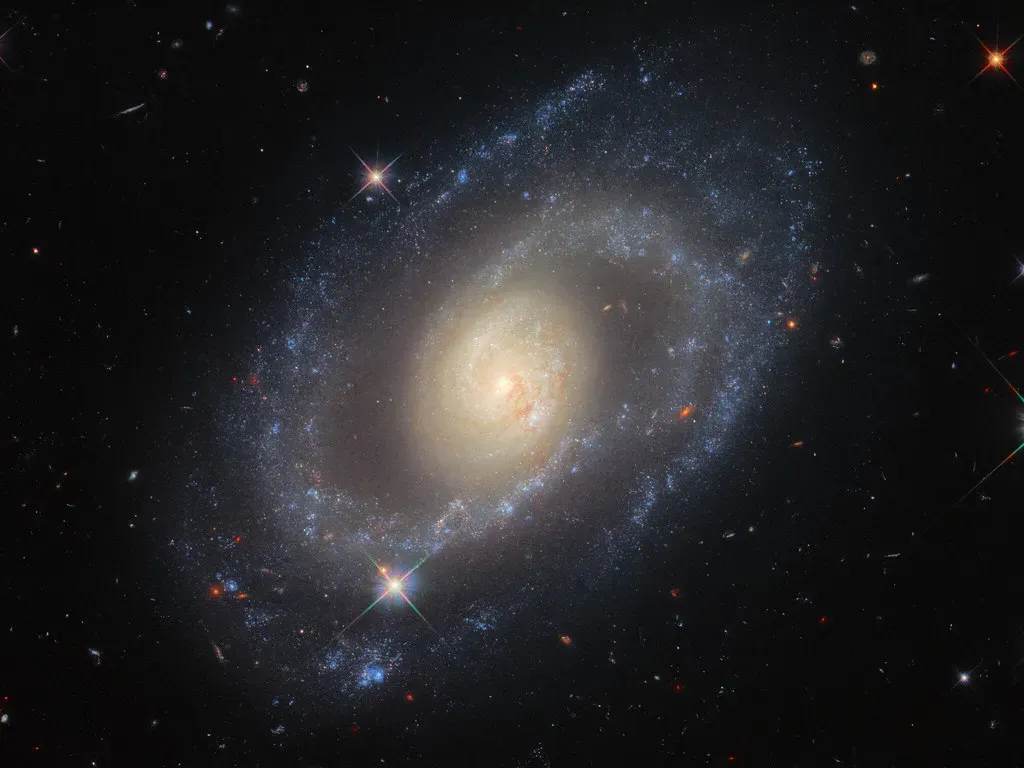
Scientists assumed they knew how the universe worked. Gravity should slow everything down, right? Scientists previously thought that the universe’s expansion would likely be slowed down by gravity over time, an expectation backed by Einstein’s theory of general relativity. In 1998, everything changed when two different teams of astronomers observing far-off supernovae noticed that the stellar explosions were dimmer than expected, led by astronomers Adam Riess, Saul Perlmutter, and Brian Schmidt.
The first direct evidence for dark energy came from supernova observations in 1998 of accelerated expansion. Instead of slowing, the universe was speeding up. These astronomers were looking at Type 1a supernovae, which are known to have a certain level of luminosity, so they knew that there must be another factor making these objects appear dimmer. This completely unexpected finding meant that some mysterious force – now called dark energy – was pushing galaxies apart at an accelerating rate. The 2011 Nobel Prize in Physics was awarded to Saul Perlmutter, Brian P. Schmidt, and Adam G. Riess for their leadership in the discovery, winning the trio the 2011 Nobel Prize in Physics for this work. Today, scientists estimate that dark energy makes up roughly 68 percent of the universe’s total energy content, yet we still have no definitive explanation for what it actually is.
Supernova 1987A Brings Cosmic Explosions Close to Home
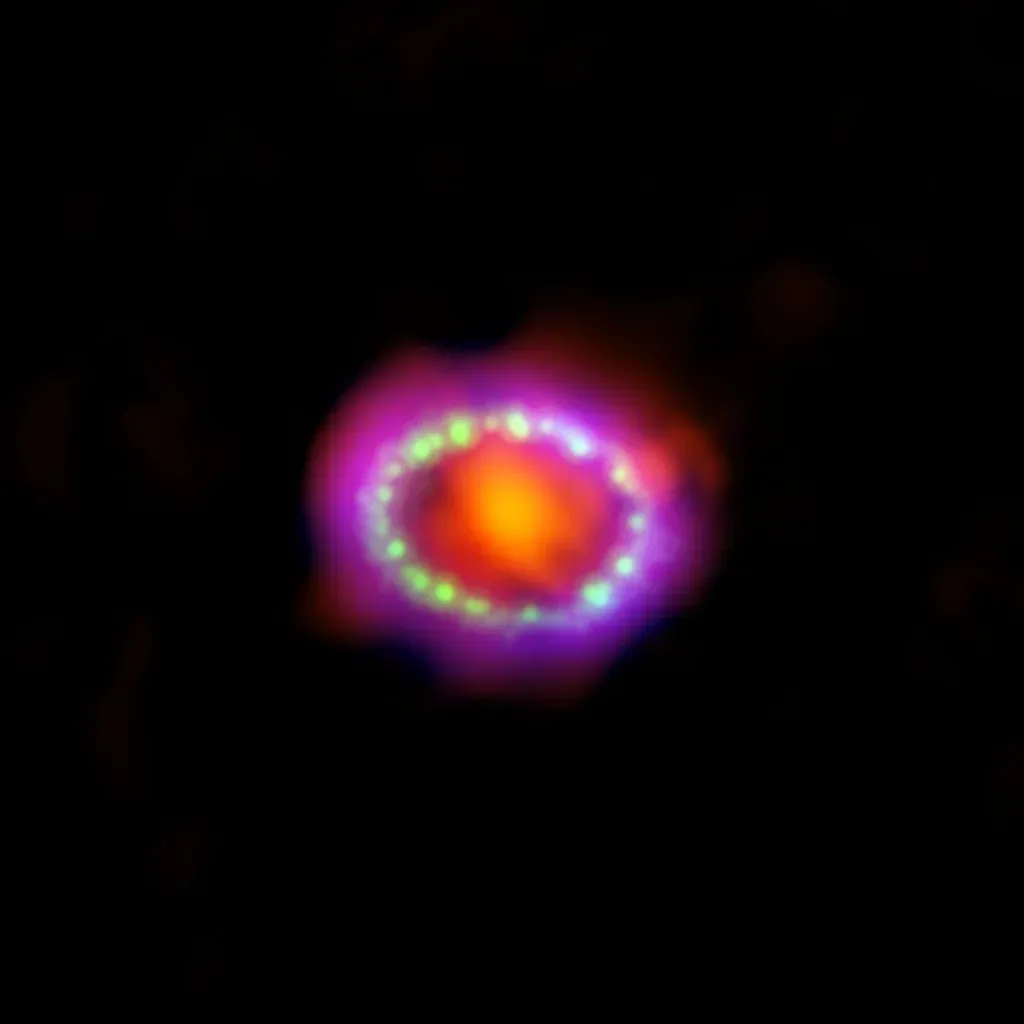
In 1987 a star exploded in the Large Magellanic Cloud and, even though it was still 168,000 light years from Earth it afforded astronomers a great opportunity to study a supernova up close, closer than ever before. This wasn’t just another distant pinpoint of light. SN 1987A was the explosion of a blue supergiant star in the Large Magellanic Cloud, a satellite galaxy of the Milky Way in 1987. For the first time in centuries, astronomers witnessed a supernova visible to the naked eye.
The event gave scientists an unprecedented opportunity. At the heart of the slowly expanding supernova remnant is a neutron star, with the detection of neutrinos confirming this as the remains of the core of the progenitor star. A supernova explosion marks the violent end of a massive star’s life, releasing immense amounts of energy, often outshining the combined light from all the stars in the host galaxy for a very brief period of time. SN1987A confirmed theoretical models about stellar evolution and death. It also demonstrated that supernovae are cosmic factories, producing and dispersing heavy elements throughout the universe, elements that eventually become part of new stars and planets. Let’s be real: without supernovae, we wouldn’t exist – the carbon, oxygen, and iron in our bodies all came from exploding stars.
Gravitational Waves Detected, Opening a New Window to the Universe
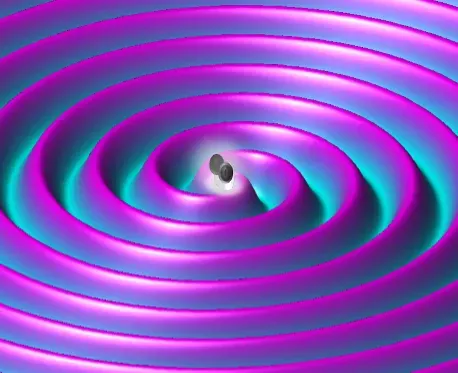
In 2016, the LIGO Scientific Collaboration and Virgo Collaboration announced that gravitational waves were directly detected by two LIGO detectors, with the waveform matching the prediction of General relativity for a gravitational wave emanating from the inward spiral and merger of a pair of black holes. Einstein had predicted their existence a century earlier, but nobody had actually detected them. Gravitational waves are minute distortions or ripples in spacetime caused by the acceleration of massive objects, produced by cataclysmic events such as the merger of binary black holes.
The second detection verified that the first event was not a fluke, thus opening an entire new branch in astrophysics, gravitational-wave astronomy. This detection wasn’t just confirming Einstein’s theory – it opened an entirely new way of observing the universe. Gravitational waves can travel freely through the Universe and are not absorbed or scattered like electromagnetic radiation, making it possible to see to the center of dense systems and also to see further back in time than with electromagnetic radiation. In 2019, the Event Horizon Telescope Collaboration published the image of the black hole at the center of the M87 Galaxy, the first time astronomers captured an image of a black hole. Together, gravitational wave astronomy and black hole imaging represent humanity’s newest tools for understanding the most violent and mysterious phenomena in the cosmos.
Conclusion
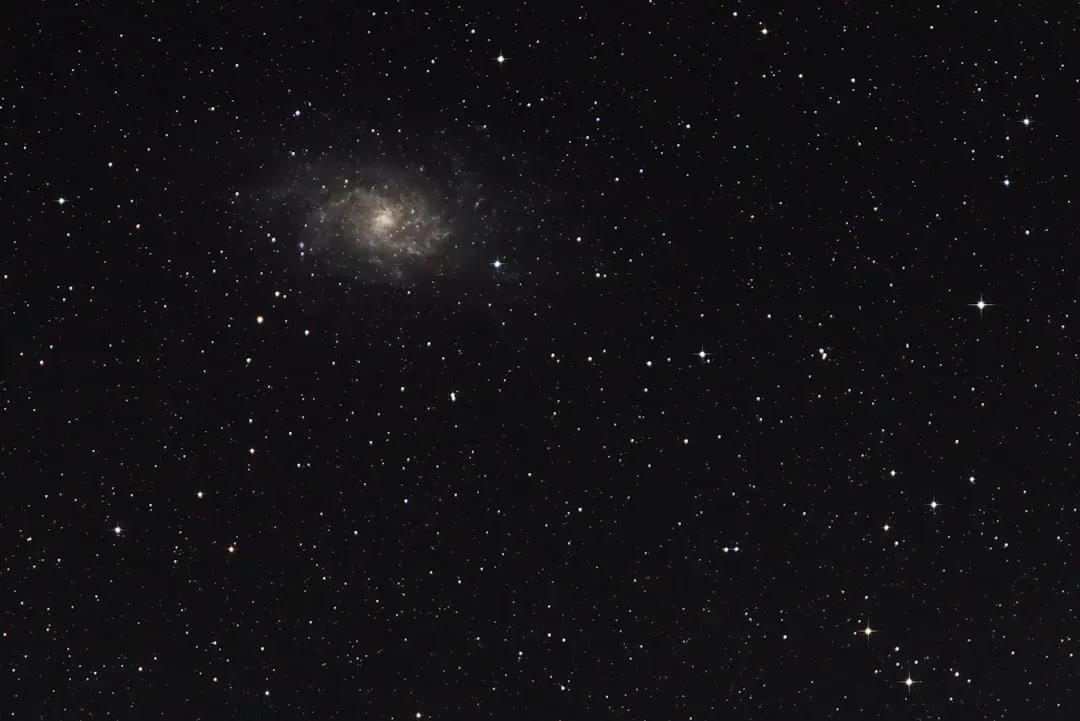
These five events didn’t just add to our knowledge – they forced us to rewrite the textbooks. From the accidental discovery of the cosmic microwave background to the stunning revelation that dark energy is accelerating the universe’s expansion, each moment represents a seismic shift in how we understand reality itself. The Hubble Deep Field showed us a universe far richer and more ancient than we imagined, while Supernova 1987A brought the lifecycle of stars into sharp focus. Gravitational waves, meanwhile, gave us an entirely new sense with which to perceive the cosmos.
What’s remarkable is how often we’ve been wrong, or at least incomplete in our understanding. Each discovery humbled us while simultaneously expanding our vision of what’s possible. The universe continues to surprise us, challenge us, and invite us to look deeper.
What do you think the next big cosmic revelation will be?