
It’s one of those ideas that makes you stop and wonder if the universe has been plotting our existence all along. The notion that our brains, our thoughts, and our entire evolutionary trajectory might owe a debt to something as fundamental as gravity sounds almost too wild to be true. Yet here we are in 2026, confronting a fascinating theory that traces a chain of cosmic events from colliding neutron stars to the emergence of human consciousness. This isn’t science fiction. This is serious scientific inquiry attempting to connect the dots between the universe’s most fundamental forces and the very intelligence that allows us to ponder them.
A recent paper uploaded to the preprint server arXiv walks through a thought experiment detailing a long chain of astronomical, geophysical, and biological events that suggest gravitational waves played an essential role in creating the conditions for intelligent life. It’s a cosmic domino effect that began billions of years ago and continues to shape our existence today.
The Collision That Changed Everything
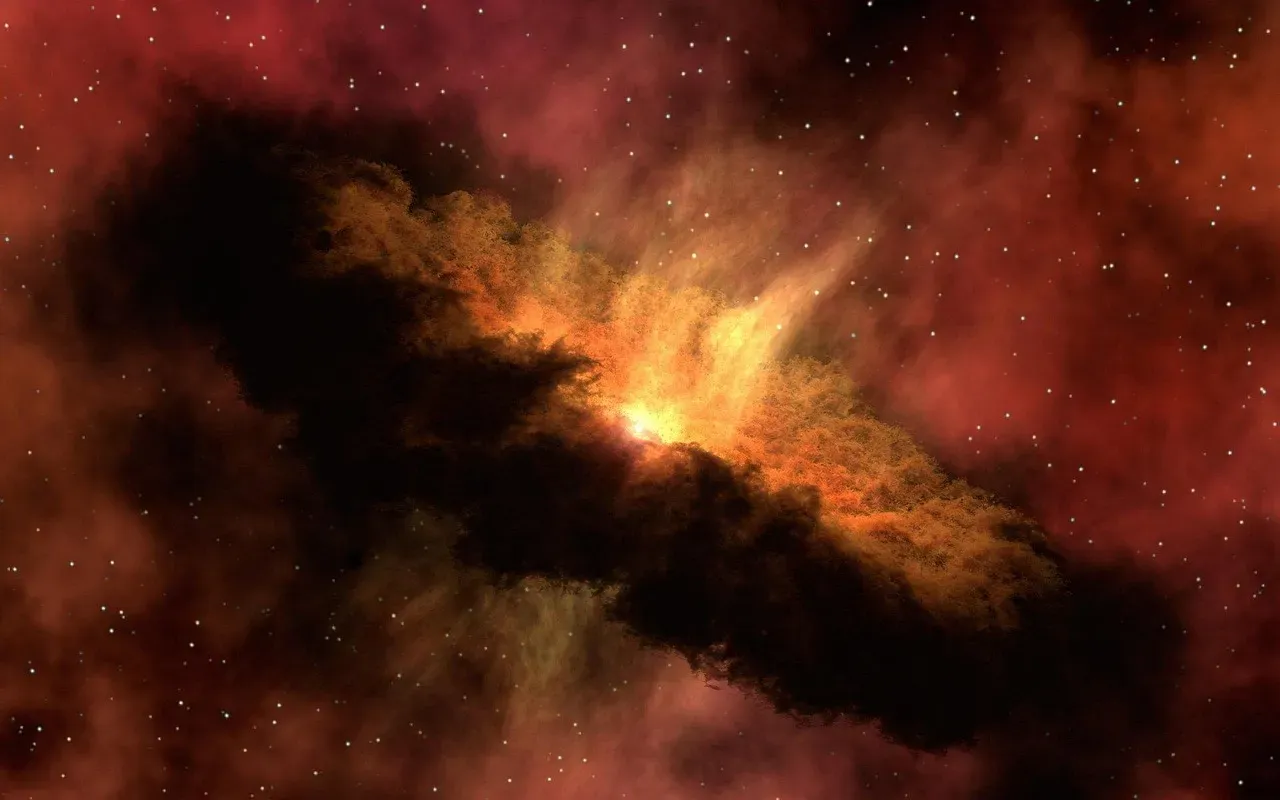
The new study describes how gravitational waves emitted from binary neutron stars pulled these stars closer together and initiated their collisions, ejecting heavy elements crucial to the formation of Earth’s molten core. Think about that for a moment. These massive stellar explosions, known as kilonovas, didn’t just create spectacular light shows in the distant universe.
Gravitational waves played a starring role at the very beginning of this cosmic tale as the main drivers of neutron-star collisions and the engine behind the abundance of heavy elements that formed our planet. Without these waves carrying energy away from binary star systems, the neutron stars would never have spiraled together with enough violence to forge the building blocks of Earth itself.
Heavy Elements and Earth’s Fiery Heart

Here’s where the story gets truly captivating. Kilonova explosions have been the principal source of elements in the periodic table above iron, including uranium and thorium, whose radioactive isotopes are distributed throughout Earth’s interior. Without kilonovas, these elements would be vanishingly rare or completely absent from our planet.
Uranium 238 and thorium 232 keep the Earth warm by the energy released when they decay, and this heat has made it possible for us to enjoy a more developed intelligence. The radioactive decay of these elements isn’t just keeping our planet cozy. It drives mantle convection, plate tectonics, mountain building, rock metamorphism, and volcanism.
This internal heat source transforms Earth from a cold, geologically dead rock into a dynamic, living world. The connection to intelligence becomes clearer when you consider how plate tectonics creates diverse environments, cycles nutrients, and establishes conditions for complex life to flourish.
The Magnetosphere That Shields Us
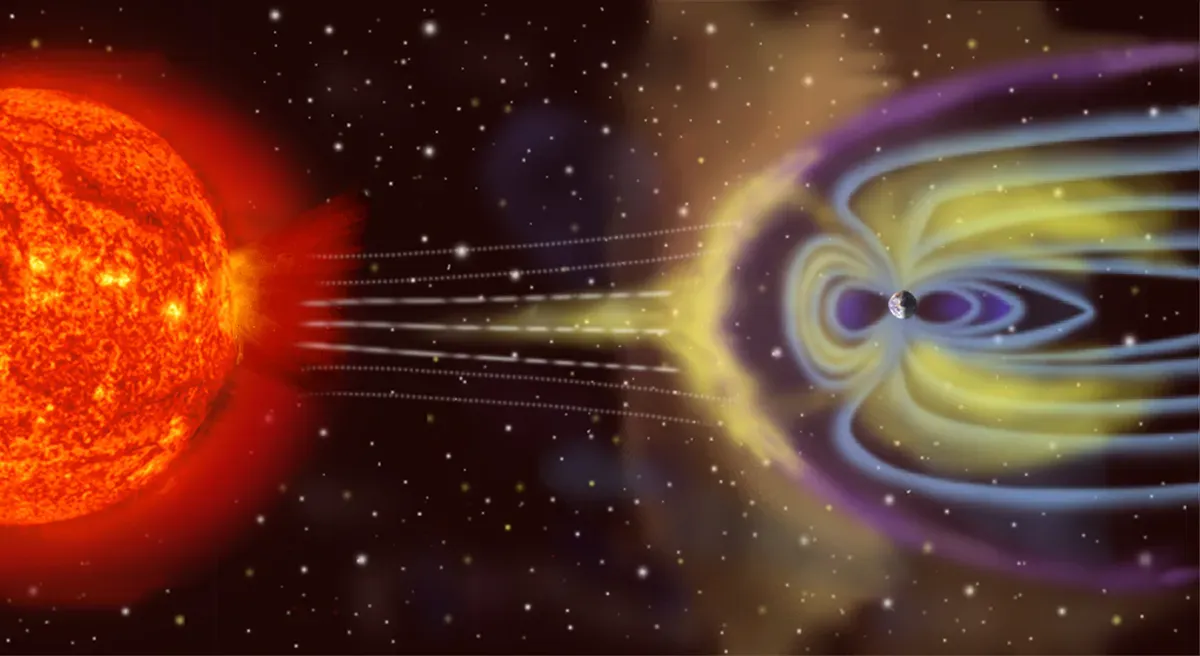
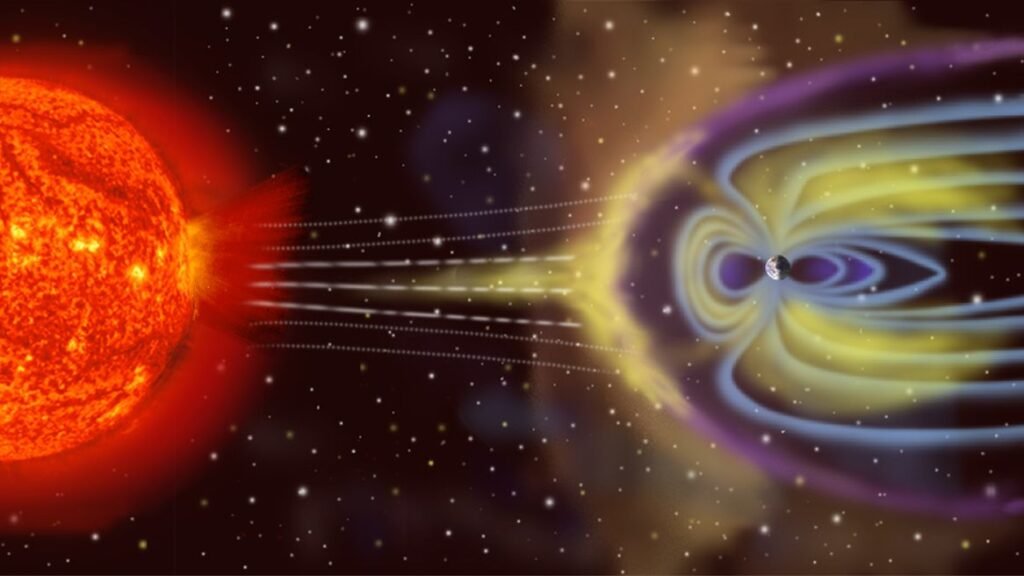
The heated, liquid outer core turns Earth into a geodynamo, producing a magnetosphere capable of shielding potential life from the Sun’s cosmic rays. This invisible force field isn’t just a nice bonus. It’s absolutely essential for protecting the delicate chemistry of life from being stripped away by solar radiation.
Magnetic fields can protect a planet from solar winds and cosmic rays, while plate tectonics provide a means of modulating the heat of the planet and releasing via volcanoes elements needed to create an atmosphere. Without the radioactive elements forged in neutron star collisions, Earth might lack the internal heat necessary to maintain this protective shield. The implications are staggering.
Think of planets like Mars, which lost much of its atmosphere after its magnetic field weakened. Our ability to exist, let alone develop intelligence, depends on this cosmic defense system powered by elements created in the most violent collisions in the universe.
Plate Tectonics and the Evolution of Cognition

Heat from the core drives plate tectonics, which previous studies have shown to be a major driver of evolution and advanced cognition. This isn’t just about continents drifting around. Plate tectonics creates mountains, ocean basins, and diverse climatic zones. It recycles nutrients and carbon, regulating Earth’s temperature over geological timescales.
The constant reshaping of landscapes forces species to adapt, migrate, and innovate. Environmental challenges drive natural selection toward increasingly sophisticated survival strategies. Over millions of years, this pressure cooker of changing conditions favored organisms with better memory, problem-solving abilities, and eventually, the complex reasoning we recognize as intelligence.
Honestly, it’s hard to say for sure how much plate tectonics directly influenced human brain evolution specifically, but the broader pattern is undeniable. Dynamic geology creates dynamic ecosystems, and those ecosystems reward cognitive flexibility.
The Gravitational Wave Genesis Theory
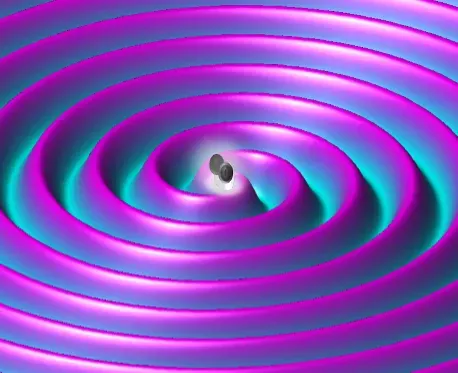
Cardiff University’s Bernard Schutz, the lead author of the paper, has long pondered how gravitational waves are vital for the existence of everything. Schutz and his colleagues are the first team to make this gravitational wave genesis theory. The theory represents a bold synthesis of astrophysics, geology, and evolutionary biology.
In a 2018 blog post, Schutz discussed how binary neutron-star collisions, known as kilonovas, kickstarted a chain reaction that eventually gave rise to an intelligent species on the spiral arm of the Milky Way. In a sort of domino effect of occurrences, gravitational waves gave rise to us.
The theory connects phenomena operating on vastly different scales, from ripples in spacetime to the firing of neurons in human brains. It’s the kind of grand unified thinking that makes you appreciate how interconnected the universe truly is.
Other Cosmic Contributions to Life

In 2024, a team of researchers from Kings College London, CERN, University of Illinois, and the University of Notre Dame connected gravitational waves’ role in producing iodine and bromine, two heavy elements essential to human biology. These elements play crucial roles in everything from thyroid function to neurological development.
The fact that gravitational waves contributed to creating elements we literally need to think with adds another layer to this already mind-bending story. Every thought you have, every memory you form, depends on biochemical processes involving elements forged in the cosmos and delivered to Earth through events driven by gravitational waves.
The detection of GW170817, the first binary neutron star collision, confirms how important gravitational waves likely are to life on Earth and human evolution. That 2017 detection wasn’t just a triumph of physics. It was a window into our own origins.
The Future of Gravitational Wave Astronomy

Because of gravitational waves’ incredible role in not just the evolution of the universe, but also life on Earth, scientists are understandably motivated to develop new tools to detect other sources of these ripples in spacetime. Next-generation detectors will allow us to observe even more distant and ancient collisions, potentially revealing how common these life-enabling processes are throughout the universe.
The ESA has even begun developing plans for LISA’s successor, called the Big Bang Observer, to detect gravitational waves generated from the universe’s formation. Each new detection adds pieces to the puzzle of how the cosmos creates the conditions for complexity, life, and intelligence to emerge.
By both creating our magnetosphere and initiating plate tectonics, these forces eventually made it possible for our planet to give rise to a species capable of exploring these grand cosmic queries. There’s something beautifully circular about using intelligence born from gravitational waves to study those very same waves. We’re the universe looking back at itself, tracing the path from stellar collisions to conscious thought.
Conclusion
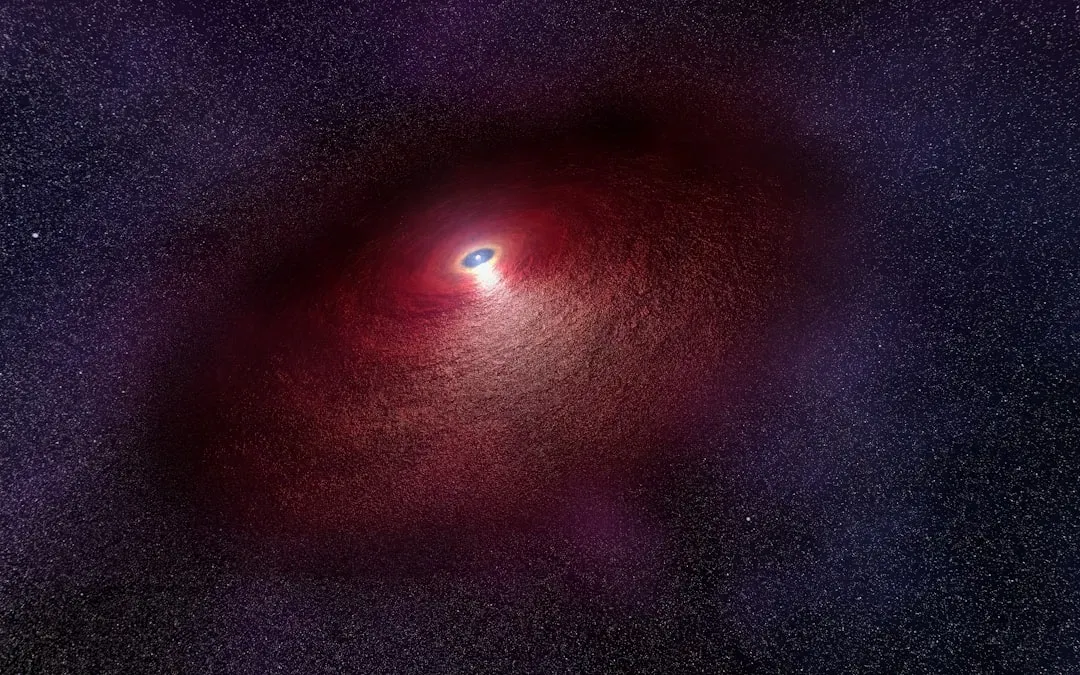
Let’s be real. This theory stretches across billions of years and connects events happening at scales ranging from subatomic particles to galactic structures. It’s ambitious, maybe even audacious. Yet the evidence keeps piling up that our existence depends on a cosmic assembly line that begins with gravitational waves drawing neutron stars together in their final, violent embrace.
While it’s true that all life is made of star stuff, it’s gravitational waves that made all that star stuff possible. This realization should fundamentally change how we think about our place in the universe. We’re not separate from these cosmic processes. We’re their direct consequence, the latest chapter in a story that began with ripples in the fabric of spacetime itself.
The next time you have a thought, remember that the very conditions allowing that mental spark trace back through an unbroken chain to colliding neutron stars billions of years ago. What do you think about this wild connection between gravity and consciousness? Does it change how you see human intelligence?