
You’ve probably never thought twice about going under anesthesia. The mask goes on, you count backward, and the next thing you know, you’re waking up hours later as if no time has passed. Simple, right? Here’s the thing: we don’t actually know what happens to your consciousness during those lost hours. For nearly two centuries, doctors have been putting patients under with anesthetics, yet the mechanism behind how these drugs work remains one of medicine’s most puzzling mysteries. Even stranger, some scientists now believe that anesthesia might be revealing something profound about the very nature of consciousness itself.
What if the moment you slip into unconsciousness isn’t just your brain shutting down, but rather a glimpse into the quantum fabric of reality? Let’s be real, that sounds like science fiction. Yet cutting-edge research is showing that the answer to where your consciousness goes might involve the bizarre world of quantum mechanics, strange spinning atoms, and microscopic structures inside your brain cells that could connect you to the cosmos.
The Xenon Mystery That Changed Everything
Researchers found that xenon isotopes with a property called spin are less potent than other isotopes, providing evidence that consciousness arises at the quantum level. This discovery came from a groundbreaking study that tested different versions of xenon, a noble gas used as an anesthetic. Think of isotopes like siblings of the same element, identical in almost every way except for one crucial difference: nuclear spin, a quantum property.
Xenon-131 and xenon-129 have nuclear spin, whereas the other nine isotopes do not. Xenon-129 has a nuclear spin of 1/2, which previous quantum physics research shows makes a particle most capable of entanglement. The results were startling. The two xenon isotopes with spin were less potent anesthetics than the isotopes without spin, and the researchers suggest that the xenon isotopes with spin may actually be prohibiting their own anesthetic action by promoting consciousness. It’s as if these spinning particles were fighting to keep you awake.
What Quantum Mechanics Has to Do With Your Brain
I know it sounds crazy, but quantum mechanics operating inside your warm, wet brain actually makes some sense when you dig deeper. Nuclear spin is a quantum property, and results are consistent with theories that implicate quantum mechanisms in consciousness. The implications are massive. Quantum processes typically require temperatures near absolute zero to function, which is why most physicists dismissed the idea that they could happen in living tissue.
If consciousness comes from quantum processes, our consciousness-generating particles could be entangled with other particles, meaning we could be intimately connected to the rest of the universe. Entanglement is that weird quantum phenomenon where particles become linked across space and time. Einstein famously called it “spooky action at a distance.” The idea that your thoughts might be entangled with the universe itself is both unsettling and weirdly beautiful.
Inside Your Neurons: The Microtubule Connection
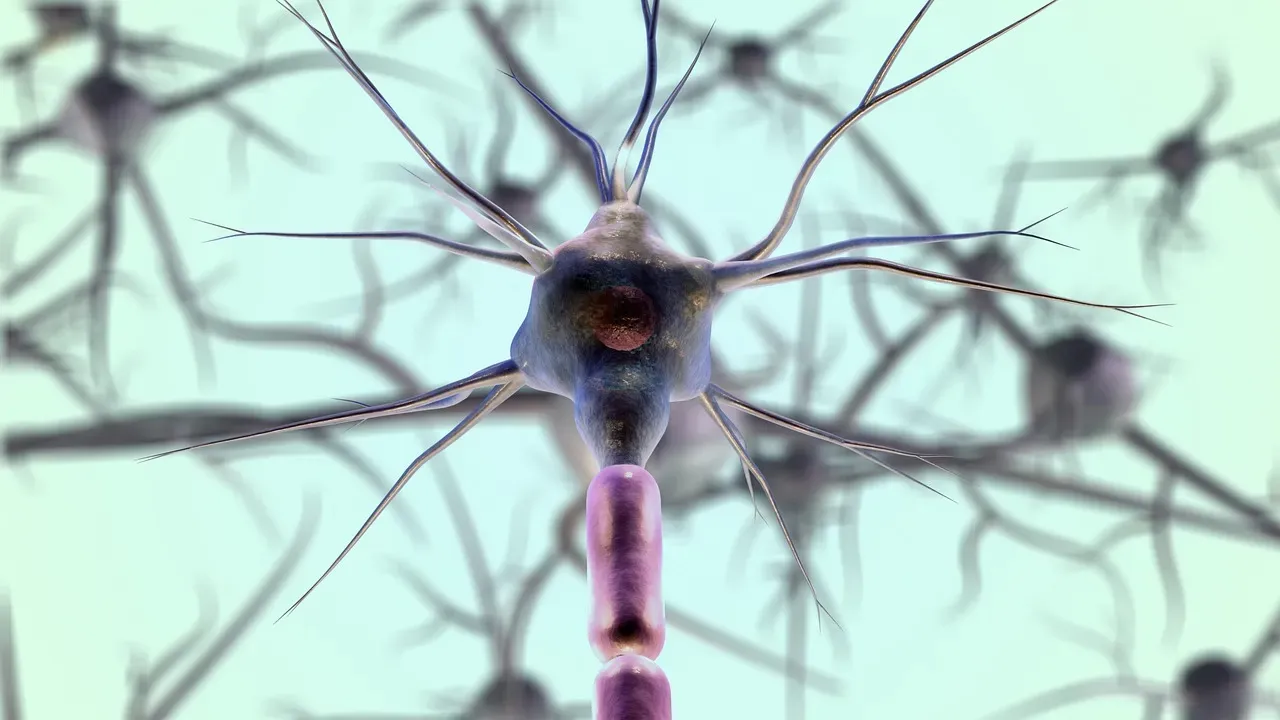
When rats were given a drug that binds to microtubules, it took them significantly longer to fall unconscious under an anesthetic gas. This 2024 study provided compelling support for a controversial theory that’s been around since the nineties. Microtubules are tiny protein structures inside neurons, and they’ve become central to understanding how consciousness might emerge from quantum processes.
The mechanism is held to be a quantum process called objective reduction that is orchestrated by cellular structures called microtubules, and the hypothesis was put forward by physicist Roger Penrose and anesthesiologist Stuart Hameroff. The theory, called Orchestrated Objective Reduction or Orch OR, suggests these microscopic tubes inside your brain cells are performing quantum computations. The team found that microtubule-stabilizing molecules kept rats conscious for longer, aligning neatly with Hameroff’s theory.
Why Anesthesia Is the Perfect Research Tool
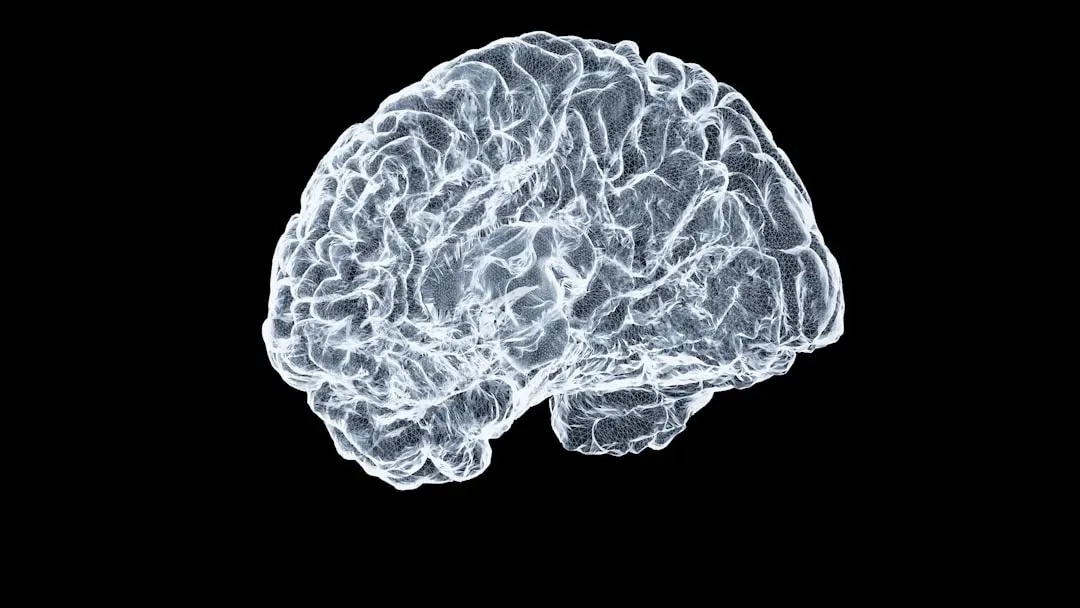
No one is exactly sure why anesthetics work, though we know that certain anesthetics temporarily alter ion protein channels and chemical messengers called neurotransmitters, blocking your brain from sending signals. That’s the official story, anyway. The mechanics remain elusive, which is precisely what makes anesthesia such a valuable window into consciousness research.
The experiments are easily replicable. Unlike studying near-death experiences or meditation states, you can put someone under anesthesia in a controlled environment and measure what happens. Mike Wiest, a professor at Wellesley College who studies the physical basis of consciousness, explains that anesthesia is a tool that magnifies an otherwise ambiguous world. It’s like having a switch that turns consciousness on and off, allowing scientists to isolate what makes us aware.
The Smoking Gun Experiment That Could Prove It All
Hartmut Neven, head of Google’s Quantum Artificial Intelligence Lab, mentioned the role spin may play when discussing his own quantum consciousness theory, saying if the relationship between spin and potency can be confirmed, then it’s a smoking gun experiment. The stakes couldn’t be higher. If researchers can definitively prove that quantum properties affect consciousness, it would revolutionize everything we know about the mind.
When it becomes accepted that the mind is a quantum phenomenon, we will have entered a new era in our understanding of what we are, and it would lead to improved understanding of how anesthesia works and shape our thinking about whether coma patients or non-human animals are conscious. Honestly, it’s hard to fully grasp how transformative this could be. We’re talking about fundamentally rewriting our understanding of human experience and our place in the universe.
Connected to the Cosmos: What It All Means
Should further research prove that consciousness arises at the quantum level, it could fundamentally alter our understanding of human experience, and some argue that our consciousness-generating particles could be entangled with other particles. This isn’t just academic speculation. The idea that your inner experience connects to the fundamental structure of reality has profound philosophical implications.
A quantum understanding of consciousness gives us a world picture in which we can be connected to the universe in a more natural and holistic way. For now, anesthesia remains a window shedding light on one of humankind’s greatest mysteries – but one day it may prove that you’re one with the cosmos. The next time you go under anesthesia, you might not just be losing consciousness. You could be briefly disconnecting from a quantum network that links you to everything else in existence.
Conclusion

Let’s be real, the idea that anesthesia reveals our quantum connection to the universe sounds like something out of a sci-fi novel. Yet here we are in 2026, with mounting scientific evidence suggesting it might actually be true. The xenon experiments, the microtubule research, the connection to quantum mechanics – it’s all pointing toward something extraordinary. We still don’t have all the answers, and the theory remains controversial in many circles. Still, the implications are staggering. If consciousness really does emerge from quantum processes in our brain cells, then every time you’ve gone under anesthesia, you’ve been temporarily unplugged from a cosmic network you didn’t even know existed.
What do you think about the possibility that your consciousness is quantum? Does it change how you see yourself in the universe? Share your thoughts in the comments.