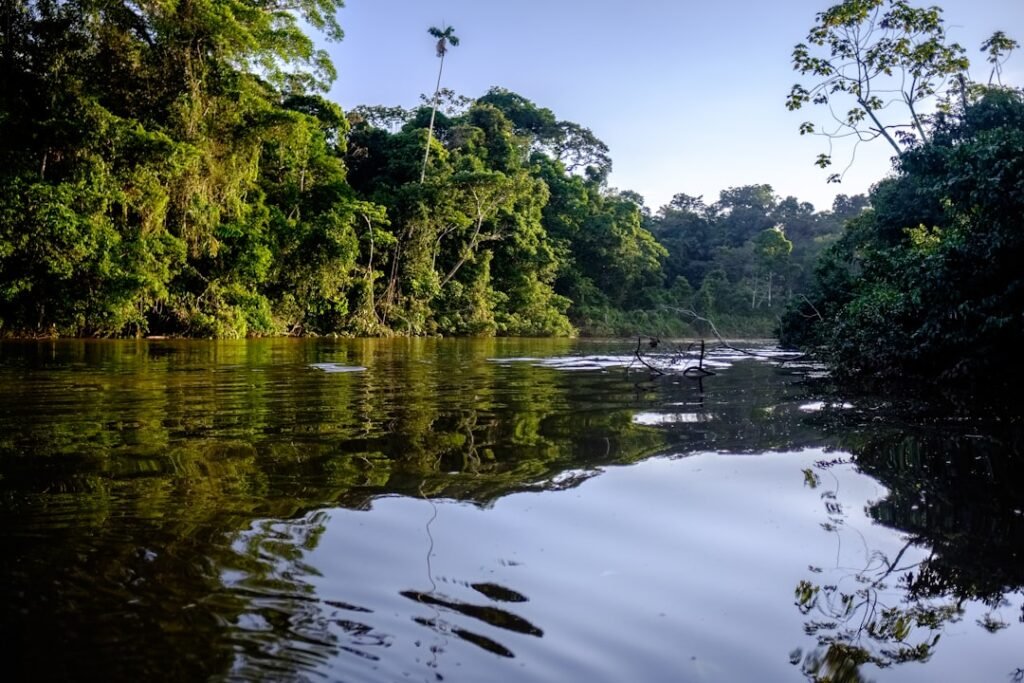


Underreporting Undermines Crisis Response (Image Credits: Unsplash)
Amazon biome – A recent study revealed more than 12,500 extreme climate events struck the region between 2013 and 2023, though significant gaps in national records left many disasters untracked.[1][2]
Underreporting Undermines Crisis Response
Researchers aggregated municipal reports from five Amazonian countries and identified 12,451 weather-related disasters. These incidents included floods, landslides, storms, droughts, and wildfires. The analysis highlighted how incomplete data skewed perceptions of the crisis’s scale.[2]
National governments in Venezuela, Suriname, Guyana, and French Guiana supplied no information on such events. This absence caused data to overrepresent Brazil and Bolivia. Liliana Dávalos, a conservation biology professor at Stony Brook University and study co-author, questioned the credibility of records. She noted satellite evidence of aridification contrasted sharply with missing heat wave reports from countries like Venezuela and Colombia.[1]
Without comprehensive tracking, policymakers struggled to grasp the full extent of threats to both human populations and the biome’s ecosystems.
Breakdown of Documented Disasters
Floods topped the list at 4,233 events, followed by landslides with 3,089 and storms at 2,607. Forest fires accounted for 2,016 cases, showing an upward trend across all analyzed countries. These figures stemmed from standardized reports submitted by municipalities to central governments.[3]
Droughts and heat waves proved problematic due to sparse reporting. Only 105 heat waves appeared in the data, with 97 percent in Brazil and 3 percent in Bolivia. Roughly 95 percent of droughts concentrated in those two nations, while Peru logged just over 4 percent. Researchers excluded both categories from deeper analysis because of these deficiencies.[1]
| Disaster Type | Number of Events |
|---|---|
| Floods | 4,233 |
| Landslides | 3,089 |
| Storms | 2,607 |
| Forest Fires | 2,016 |
Hotspots and Human Toll
The study pinpointed 41 municipalities that endured more than 50 disasters each over the decade. Ten locations exceeded 100 events, with eight in Ecuador plagued by landslides. Zamora in Ecuador recorded 313 incidents, while Trinidad in Bolivia saw 160 floods.[3]
These events affected over three million people in a single year and inflicted widespread damage on public infrastructure like roads, schools, and health centers. Remote and indigenous communities bore the brunt, facing disrupted food security and water access during events like the 2023 and 2024 droughts. Forest fires, often tied to agricultural expansion, released pollutants impacting 24 million residents and straining healthcare systems far beyond the immediate area.[3]
- Ecuador’s Andean piedmont municipalities led in landslides.
- Colombian border areas reported the most forest fires.
- Brazil dominated flood and storm records.
- Trends showed fires rising region-wide.
- Indigenous groups emerged as most vulnerable.
Calls for Regional Unity
Ane Alencar, scientific director at the Amazon Environmental Research Institute and co-author, emphasized the need for better data registration. She pointed out municipalities hit by events without official reports, especially in isolated areas. Improved monitoring would enable comparisons of national responses and targeted aid.[1]
Authors urged Amazonian nations to collaborate across borders, viewing the biome as a unified system. Such coordination could strengthen early warning systems and adaptation plans. The study, published in Environmental Research Letters, made its data available to organizations like the Amazon Cooperation Treaty Organization.
Key Takeaways
- Data gaps from four countries distort Amazon-wide risk assessments.
- Over three million people affected annually, with infrastructure losses mounting.
- Transnational data sharing offers a path to proactive conservation and resilience.
Persistent underreporting not only masks the escalating climate threats but also delays vital protections for the Amazon’s irreplaceable biodiversity and communities. Stronger data frameworks promise clearer strategies amid rising extremes. What steps should Amazon nations take next? Share your thoughts in the comments.