Satellites Leave Streaks Across Telescope Views (Image Credits: Cdn.mos.cms.futurecdn.net)
A new analysis of Amazon’s internet-beaming satellites highlights their potential to interfere with vital sky-watching efforts despite ongoing design improvements.
Satellites Leave Streaks Across Telescope Views
Nearly 2,000 observations formed the basis of a study that exposed the brightness issues with Amazon Leo satellites.[1]
Researchers led by Anthony Mallama, affiliated with the International Astronomical Union’s Center for the Protection of the Dark and Quiet Sky from Satellite Constellation Interference, examined the spacecraft orbiting at 391 miles (630 kilometers) above Earth. The average apparent magnitude measured 6.28, placing them beyond naked-eye visibility in most cases but detectable in 25 percent of instances without aid. Future models will descend to 366 miles (590 kilometers), likely amplifying their glow. Mallama noted that such brightness particularly troubles expansive surveys at ground observatories like the Vera C. Rubin Observatory, while even space-based instruments such as the Hubble Space Telescope face disruptions.[1]
These findings appeared on arXiv on January 12, 2026, ahead of peer review.The study builds on prior work from November 2025 published in Monthly Notices of the Royal Astronomical Society, which flagged multiple constellations for similar violations.
Comparing Constellation Glows
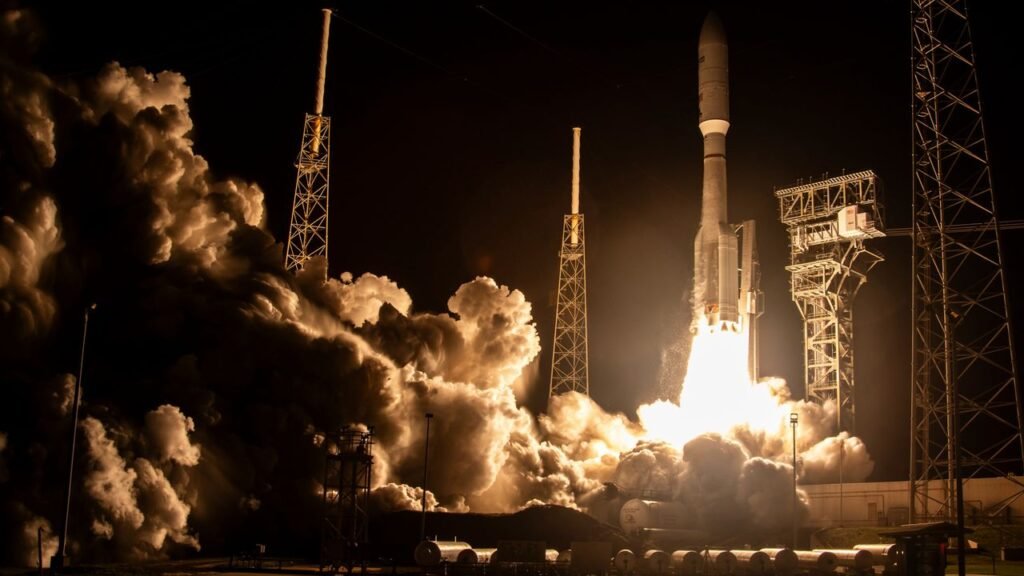
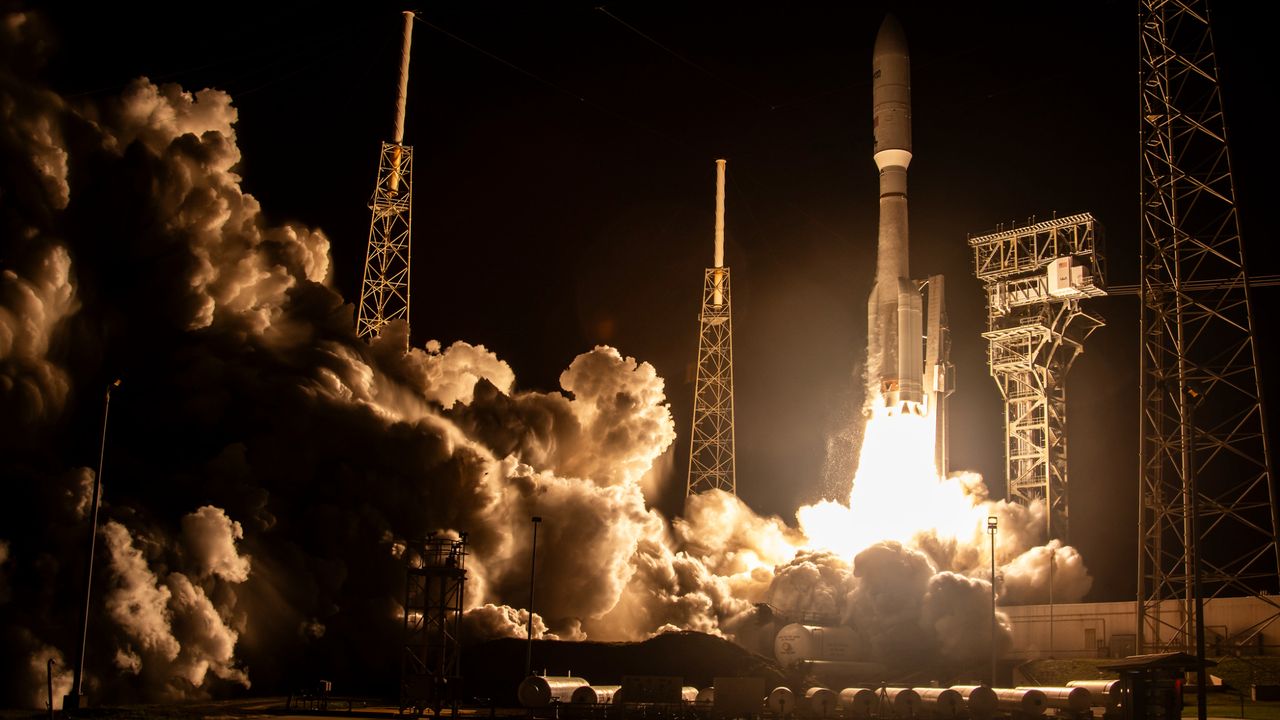
Amazon Leo satellites proved dimmer than AST SpaceMobile’s BlueBird arrays yet slightly fainter than typical Starlink units, though the latter often benefit from Earth’s shadow. Amazon plans to expand to more than 3,200 satellites, with 180 already in orbit by late 2025 following launches like the December 16 ULA Atlas V mission carrying 27 units.
| Constellation | Average Magnitude | Orbit Altitude (miles) |
|---|---|---|
| Amazon Leo | 6.28 | 391 (current) |
| Starlink | Slightly brighter | ~300 |
| BlueBird | Significantly brighter | Varies |
The International Astronomical Union recommends satellites stay fainter than magnitude 7 to minimize interference. Most major networks, including Amazon’s, surpass this threshold, echoing problems first seen with Starlink in 2019.
Observatories Face Mounting Challenges
Ground-based telescopes capture streaked images from passing satellites, ruining data for supernova hunts and galaxy mappings. The Vera C. Rubin Observatory stands especially vulnerable due to its wide-field Legacy Survey of Space and Time.
- Satellite trails obscure faint celestial objects.
- Radio emissions from onboard systems add further complications.
- Even amateur stargazers notice brighter night skies during twilight passes.
- Orbiting telescopes encounter similar glare during aligned observations.
John Barentine, an astronomer at Silverado Hills Observatory and dark sky advocate, observed that Amazon Leo satellites appear especially vivid at twilight. He praised the company’s proactive stance.
Progress in Darkening the Swarm
Amazon initiated talks with astronomers during early design phases, yielding tangible reductions since 2023 prototypes. Engineers applied mirror-like coatings to undersides, directing sunlight away from Earth, and adjusted orientations to shield sunlit surfaces from observers below.
SpaceX pursued parallel tactics for Starlink, darkening satellites over time. Barentine called Amazon Leo a positive example of collaboration. Still, lower future orbits demand continued refinements to meet IAU guidelines fully.
Key Takeaways
- Amazon Leo satellites average magnitude 6.28, exceeding IAU limits.
- They disrupt both ground surveys and space telescopes like Hubble.
- Early engagement with astronomers has dimmed them versus prototypes.
Astronomers welcome these steps yet urge stricter standards as megaconstellations proliferate, balancing global connectivity with pristine night skies. Ongoing dialogue offers hope for coexistence. What steps should satellite firms take next? Share your views in the comments.