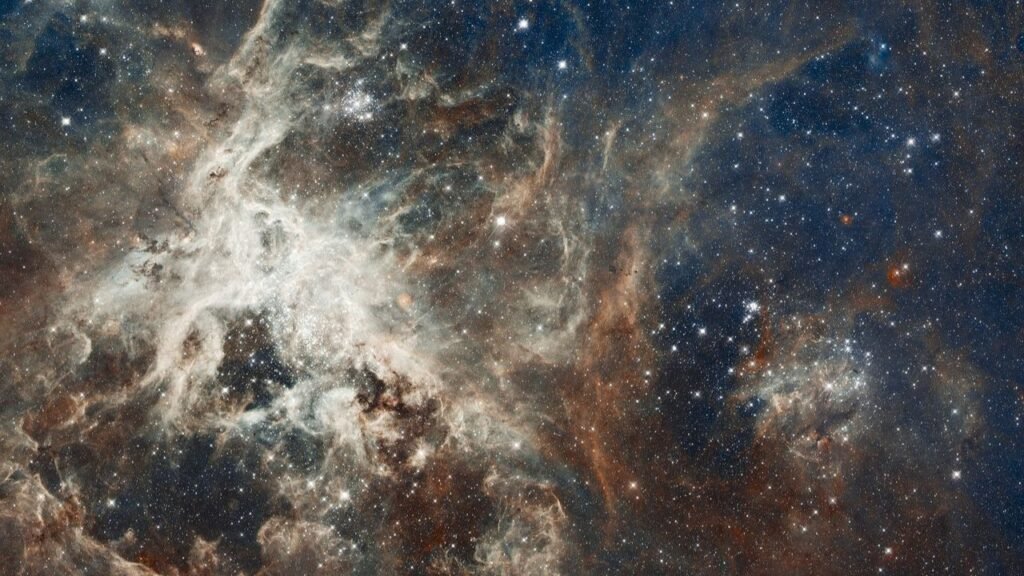

If you could turn the universe into sound and press play, you wouldn’t hear silence. You’d hear a ghostly hum, a fossilized whisper from when everything we know was crammed into a searing-hot, newborn cosmos. Those echoes are still all around you right now, washing through your body, filling every room you’ve ever been in, silently threading through the night sky.
Scientists spend their lives trying to decode those ancient fingerprints, because buried in them is the story of how time, space, and matter itself began. What’s wild is that this isn’t abstract philosophy: we’ve actually seen and measured these echoes, mapped them, argued about them, and used them to test some of the boldest ideas humans have ever had about reality. Let’s walk through what those echoes are, how we found them, and what they’re still trying to tell us.
The Cosmic Microwave Background: The Oldest Light You Can See
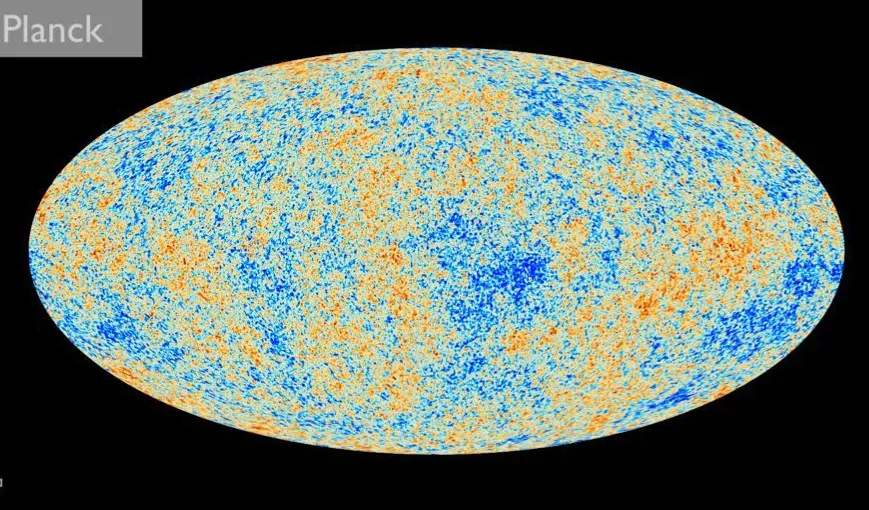
Imagine the universe as a baby, only about three hundred and eighty thousand years old, a fraction of a fraction of its current age. Back then, it was a glowing fog of particles and light so dense that photons kept bouncing around, unable to travel freely. When things finally cooled just enough, atoms formed, the fog cleared, and light broke free for the first time; that freed light is what we now call the Cosmic Microwave Background, or CMB.
Today, that ancient light has been stretched by the expansion of the universe into microwaves, a form of low-energy radiation that fills all of space. It is almost perfectly uniform, like the smooth background hiss on an old television tuned between channels, but with tiny temperature variations sprinkled across the sky. Those minuscule ripples are not random noise; they are the seeds of everything that would later become galaxies, stars, planets, and eventually us.
A Chance Discovery That Changed Our Picture of the Cosmos
In the mid-twentieth century, radio astronomers set up antennas expecting to study signals from our galaxy, only to be haunted by a stubborn, directionless static they couldn’t get rid of. They cleaned the equipment, checked for interference, even blamed pigeons roosting in the hardware, but the hiss remained. It turned out they’d accidentally stumbled onto the afterglow of the Big Bang itself, without initially realizing the scale of what they were hearing.
While theorists had predicted something like the CMB years earlier, this serendipitous observation forced cosmology out of the realm of abstract math and into hard measurement. Suddenly, the Big Bang was not just a theory but a story with direct, testable evidence stretching across the entire sky. This discovery didn’t just win awards; it reshaped the way scientists talked about the origin and evolution of the universe and sidelined competing ideas that couldn’t match the data.
Tiny Ripples, Huge Consequences: How Fluctuations Built Everything
When you look at detailed maps of the CMB, you don’t see a perfectly smooth glow; you see faint blotches, colder and hotter spots that differ by tiny fractions of a degree. These small variations in temperature correspond to slight differences in density in the early universe. Where there was just a bit more matter than average, gravity could get a foothold, pulling more material in and slowly building the cosmic structures we now see.
Over billions of years, those tiny enhancements grew into stars, star clusters, and sprawling filaments of galaxies stretching across space like a cosmic web. The contrast is almost absurd: the large-scale skeleton of the universe today traces back to fluctuations so delicate they barely stand out in the data. It’s like looking at the faint ripples on a pond and realizing that, given enough time, they will sculpt an entire coastline.
Inflation: The Cosmic Amplifier Behind the Echoes
One of the boldest ideas in modern cosmology is that, in a sliver of a moment after the Big Bang, the universe underwent a runaway growth spurt called inflation. In an unimaginably short time, space is thought to have ballooned faster than light can travel, smoothing out irregularities and stretching tiny quantum fluctuations to cosmic scales. Those stretched fluctuations are believed to be the original imprint that later shows up as the mottled pattern in the CMB.
The evidence for inflation is not a single smoking gun but a pattern of statistical fingerprints in those CMB ripples. The size distribution of hot and cold spots, their relative strengths, and their correlations all line up with what inflationary models predict, at least within the limits of current measurements. Scientists are still arguing over the details and alternatives, but inflation remains the leading story for how those early echoes got amplified enough to shape everything that followed.
Polarization and the Search for Primordial Gravitational Waves
The CMB does not just vary in temperature; its light is also slightly polarized, meaning the waves have a subtle preferred orientation. That polarization pattern encodes extra information about what was happening when the CMB formed and even earlier. In particular, certain swirl-like features, often called B-mode patterns, could be signs of gravitational waves rippling through the infant universe during inflation.
There have already been some headline-grabbing claims and corrections in the hunt for these primordial gravitational waves, reminding everyone how tricky this measurement is. Dust in our own galaxy can mimic the signal, and teasing the cosmic pattern out of all that foreground contamination is like trying to hear a faint melody under a roaring crowd. Still, each new experiment pushes the limits further, and if a clean signal is ever pinned down, it would be direct evidence that spacetime itself was ringing in those first moments.
Baryon Acoustic Oscillations: Frozen Sound Waves in Space
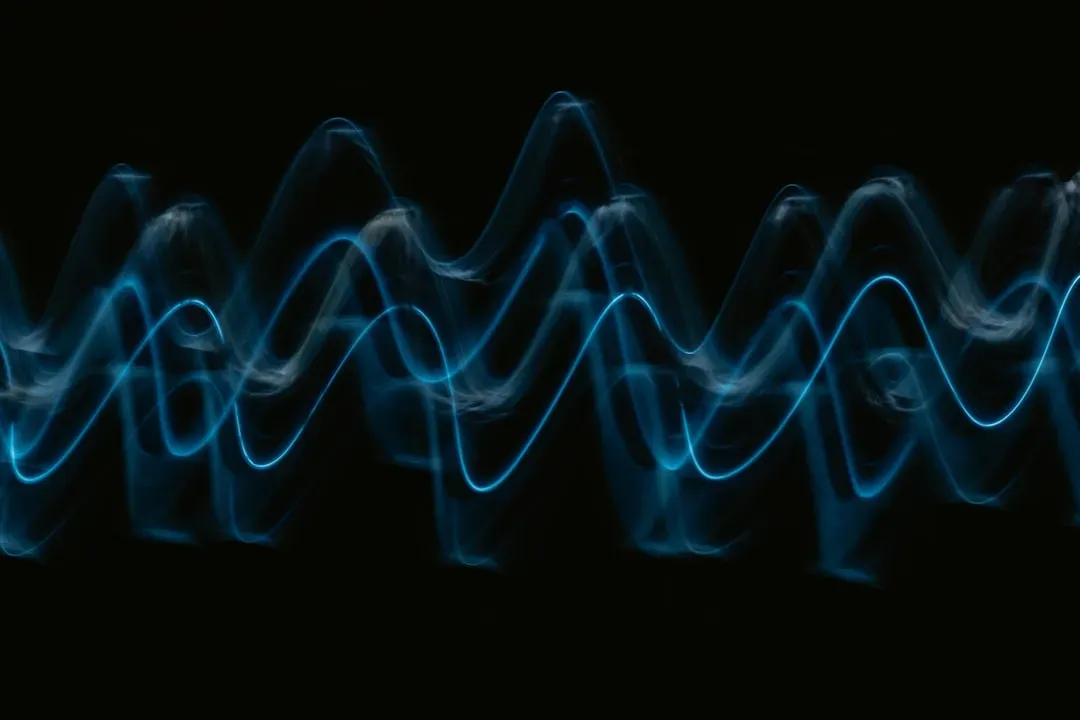
Before the CMB light broke free, the early universe was filled with a hot plasma where matter and radiation were tightly coupled, behaving somewhat like a fluid. Pressure from light and gravity tug-of-warred, driving waves through that medium in a way that is surprisingly similar to sound traveling through air. These waves, called baryon acoustic oscillations, left a preferred scale imprinted both in the CMB and in the distribution of galaxies we see today.
Billions of years later, astronomers can still spot that characteristic scale as a subtle bump in how far apart galaxies are, on average, compared to random expectation. It’s like discovering a frozen record of ancient cosmic sound waves etched into the large-scale structure of the universe. By studying this pattern, researchers can track how the universe’s expansion has changed over time and test ideas about dark energy, the mysterious driver behind the accelerating growth of space.
Why These Echoes Still Matter for Us Today
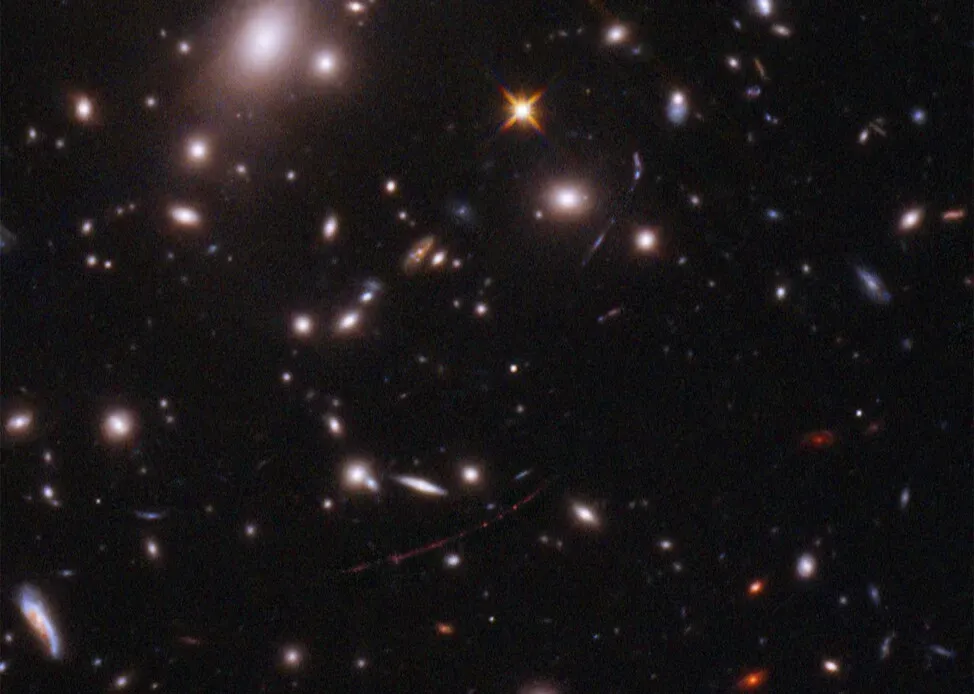
It’s tempting to think of the Big Bang as something that happened, finished, and now lives only in textbooks, but its echoes are literally the backdrop to every moment of your life. The CMB hums through your phone, your house, and your body, a barely-there glow that never turns off. Those minuscule early ripples decided where galaxies would form, which in turn decided where stars like our Sun could arise, ultimately making Earth possible at all.
On a more personal level, there’s something strangely grounding about knowing that our entire story unfolds inside a universe still carrying the marks of its own birth. The fact that we can measure, map, and model those marks with such precision is a testament to how far human curiosity has carried us. The universe is full of echoes from its first moments, and we are one of the many ways those echoes learned to listen.