
You’ve probably grown up believing gravity is just an invisible force that keeps your feet planted on the ground and makes apples fall from trees. But what if I told you that gravity isn’t actually a force at all? Let’s be real, this concept bends your mind almost as much as gravity bends space itself.
For centuries, scientists thought they had it all figured out, but the universe had other plans. What we’re about to explore challenges everything you thought you knew about the cosmos. From Einstein’s revolutionary insights to the latest theories emerging in 2026, the true nature of gravity remains one of science’s most fascinating puzzles. So let’s dive in.
Newton’s Gravity Was Only Part of the Story
In Newton’s view, all objects exert a force that attracts other objects, and that universal law of gravitation worked pretty well for predicting the motion of planets as well as objects on Earth. Picture it like invisible strings connecting everything in the universe, constantly tugging at each other. For over two hundred years, this explanation seemed sufficient.
Newton’s view of gravity didn’t work for some things, like Mercury’s peculiar orbit around the sun, which shifted faster than Newton predicted. Scientists even searched for a phantom planet called Vulcan to explain the discrepancy. It’s hard to say for sure, but this mysterious anomaly hinted that something fundamental was missing from our understanding of the universe.
Einstein Turned Everything Upside Down
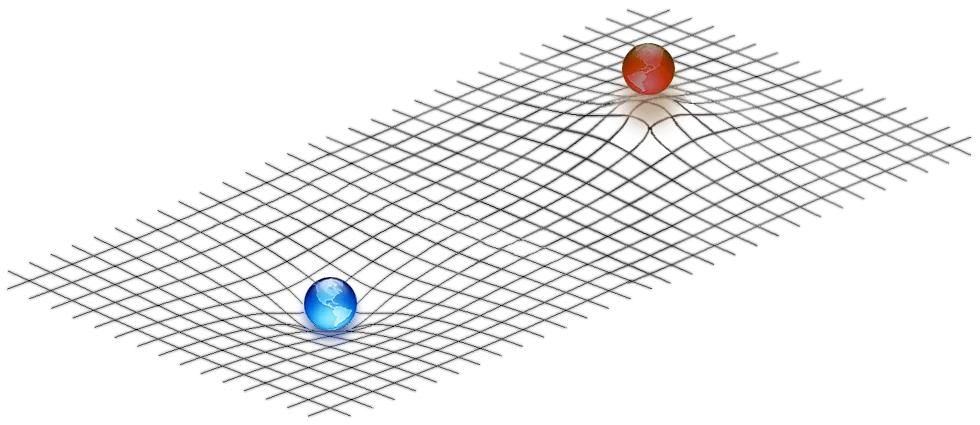
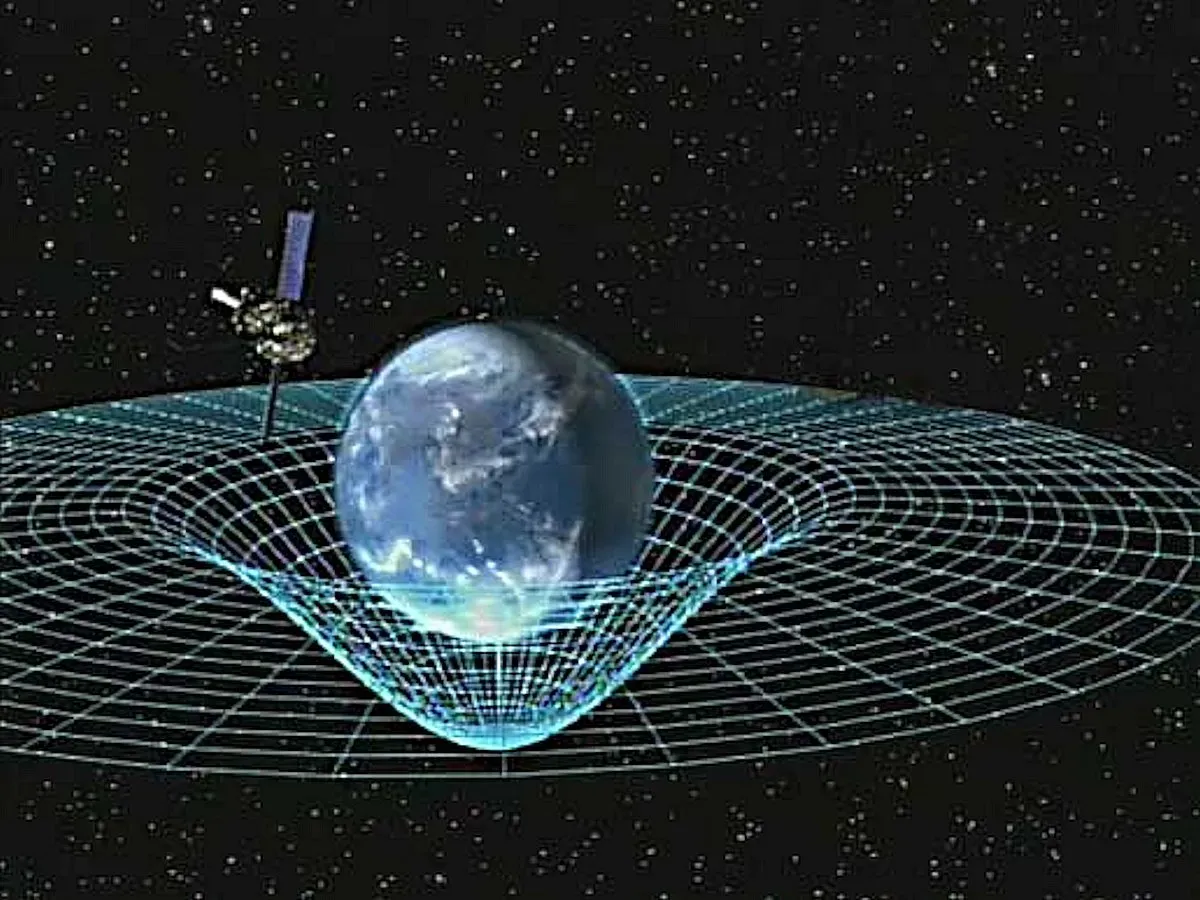
Whereas Newton thought that gravity was a force, Einstein showed that gravity arises from the shape of space-time. Think about that for a moment. What you experience as gravity pulling you down isn’t actually a pull at all. Massive objects cause a distortion in space-time, which is felt as gravity.
Einstein’s breakthrough came from a simple but profound realization. Gravity is not different from acceleration, so standing stationary on the Earth feels just the same as standing in a rocket ship accelerating at a constant 1G. This equivalence principle became the cornerstone of his general theory of relativity, published in 1915.
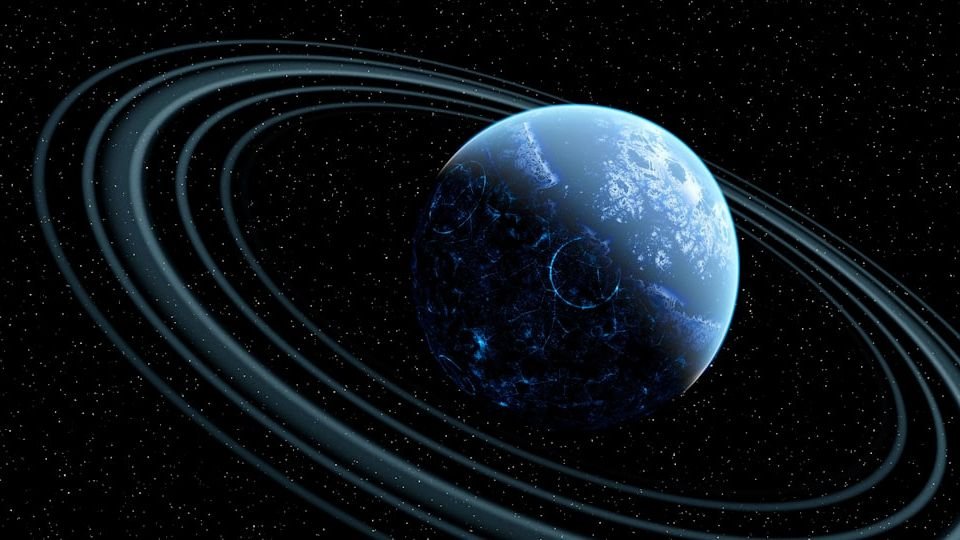
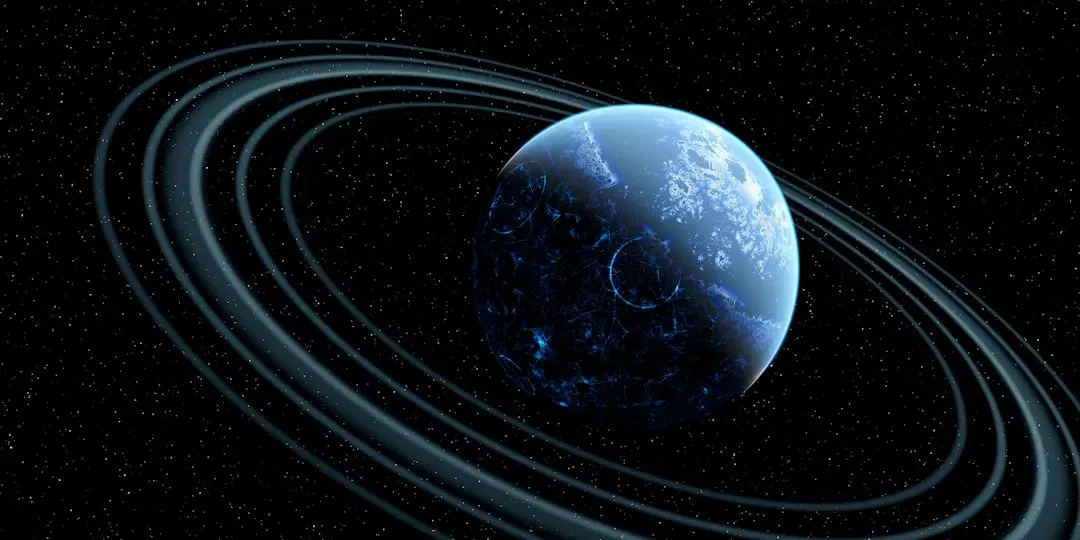
The rubber sheet analogy helps, though it’s imperfect. Considering space-time as a rubber sheet that can be deformed, in any region distant from massive cosmic objects such as stars, space-time is uncurved. Place a massive object like the sun on that sheet, and it creates a depression. Smaller objects nearby naturally roll toward that depression, not because they’re being pulled, but because they’re following the curved geometry of space itself.
Space-Time Isn’t Actually a Fabric
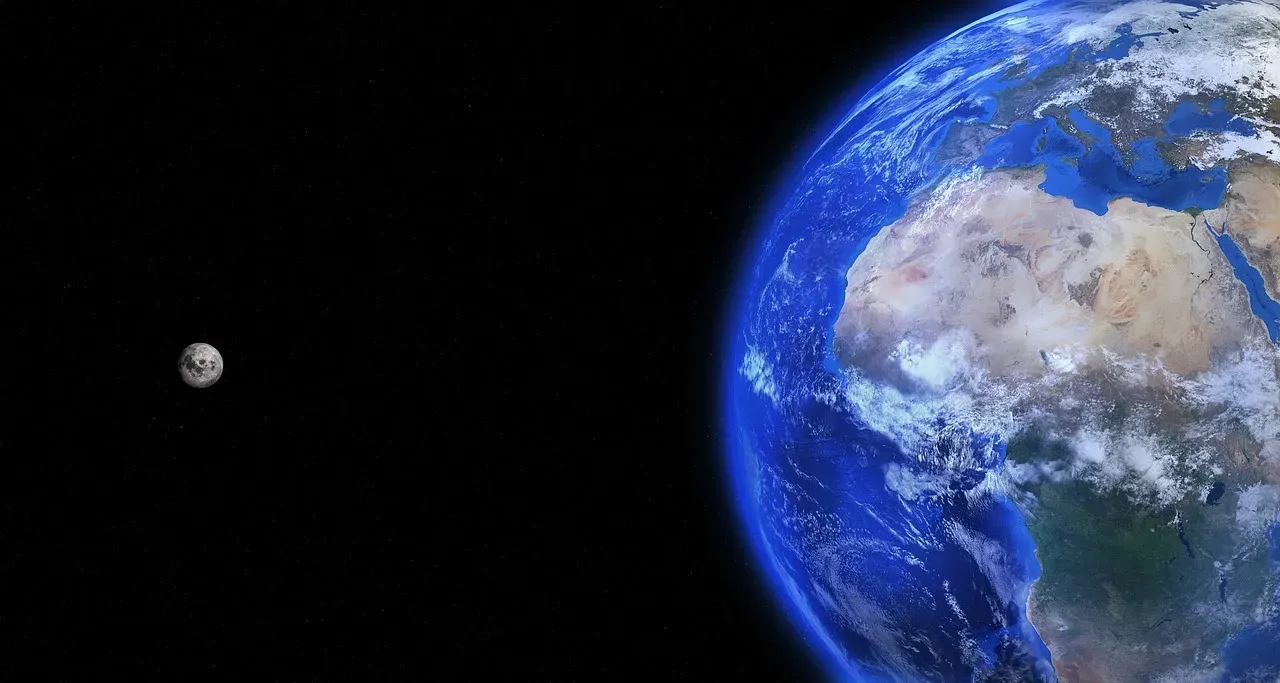
Here’s the thing: despite all the talk about the “fabric” of space-time, this metaphor can mislead you. Space-time is not a fabric, and space and time are not tangible things in the same way that water and air are, making it incorrect to think of them as a medium at all.
Einstein stated that space-time does not claim existence in its own right, but only as a structural quality of the gravitational field. Let that sink in for a second. What we call space-time might be more like a mathematical description of relationships between events rather than an actual physical substance. Honestly, wrapping your head around this requires abandoning most of your everyday intuitions about reality.
Mass and Energy Both Curve Space-Time
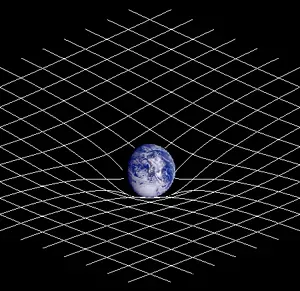
Einstein’s theory recognises that the source of gravity is not mass, as Newton believed, but energy, one form of which is mass, meaning that all forms of energy have gravity, and crucially, gravity itself is a form of energy, so gravity creates more gravity. This recursive quality makes Einstein’s equations notoriously difficult to solve.
Think about light for a moment. Photons have no mass, yet they’re still affected by gravity. Photons follow curved paths in spacetime as well, even though they have no mass. This was spectacularly confirmed during a solar eclipse in 1919, when starlight passing near the sun visibly bent, exactly as Einstein predicted.
The curvature of spacetime is directly related to the energy, momentum and stress of whatever is present, including matter and radiation. Your cellphone, a cup of coffee, even the heat radiating from your body, all contribute infinitesimally to the curvature of space-time around them.
Gravitational Waves Ripple Through the Cosmos
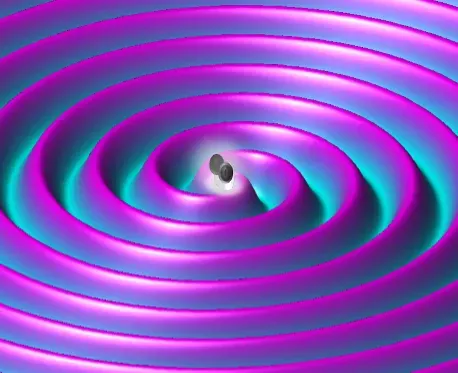
Scientists have observed ripples in the fabric of spacetime called gravitational waves, arriving at the earth from a cataclysmic event in the distant universe, confirming a major prediction of Albert Einstein’s 1915 general theory of relativity. The detection happened on September 14, 2015, using LIGO observatories. I know it sounds crazy, but imagine space itself vibrating like the surface of a pond after you toss in a stone.
LIGO now routinely observes roughly one black hole merger every three days, and the gravitational-wave-hunting network has captured a total of about 300 black hole mergers. What was once considered nearly impossible to detect has become routine science. These cosmic collisions release more energy in a fraction of a second than all the stars in the observable universe combined.
Quantum Mechanics Refuses to Play Nice with Gravity
We have two descriptions of the Universe that work perfectly well: general relativity and quantum physics, but they don’t work together. This represents perhaps the biggest headache in modern physics. Three of the four fundamental forces play by quantum rules, but gravity stubbornly resists.
Three of the four fundamental forces of nature are described within the framework of quantum mechanics and quantum field theory: the electromagnetic interaction, the strong force, and the weak force; this leaves gravity as the only interaction that has not been fully accommodated. Scientists have been wrestling with this incompatibility for nearly a century.
One of the issues with theories of quantum gravity is that their predictions are usually nearly impossible to experimentally test. The energies required to probe quantum gravitational effects are absurdly beyond our current technology. We’re talking about scales roughly twenty orders of magnitude smaller than an atom.
New Theories Challenge Einstein’s Framework
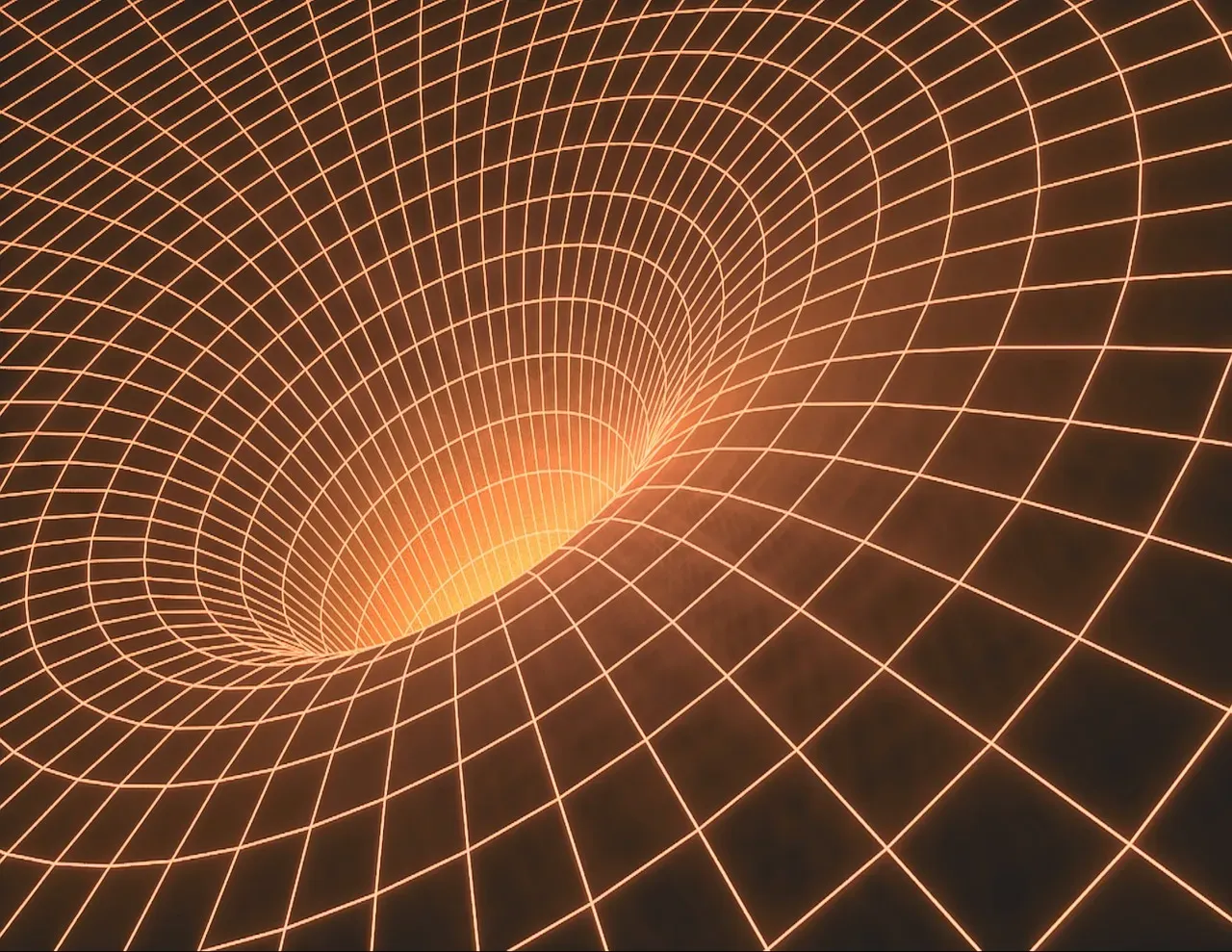
A new theory suggests that gravity could possibly be the result of entropy, which tries to reconcile Einstein’s theory of general relativity with quantum theory. Published in January 2026, this approach views gravity as emerging from quantum relative entropy rather than being a fundamental force.
An extension of general relativity known as Finsler gravity uses a broader description of spacetime geometry and can describe the gravitational behavior of gases more precisely. Scientists at the University of Bremen suggest this might explain cosmic acceleration without invoking dark energy. It’s hard to say for sure, but we might be witnessing the early stages of another revolution in physics.
Researchers suggest that fragments of energy, rather than waves or particles, may be the fundamental building blocks of the universe, with the bedrock of their theory being that energy is always flowing through space and time. This radical reimagining published in late 2025 challenges both particle physics and our understanding of space-time itself.
Black Holes Push Einstein’s Theory to the Limit
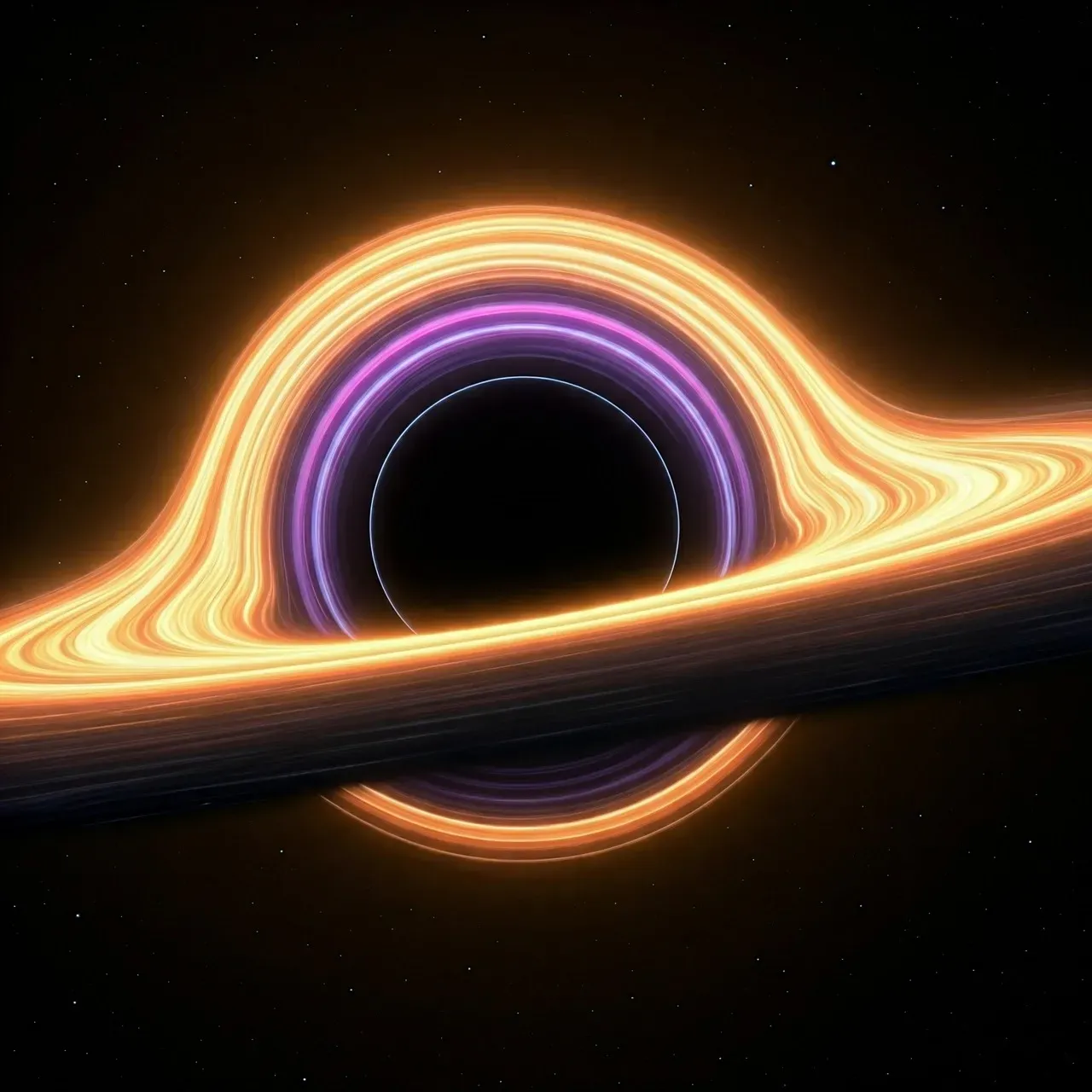
Scientists believe that within the inky depths of black holes, the laws of the universe fold in on themselves, and the elegant model of gravity laid out in Einstein’s general theory of relativity breaks down. These cosmic monsters represent the ultimate testing ground for our theories about gravity and space-time.
Gravity works just as Einstein predicted even at the very edge of a black hole, in this case Sagittarius A*, the supermassive black hole at the center of our Milky Way galaxy. Recent 2026 observations confirm Einstein remains undefeated at the event horizon. However, what happens deeper inside, at the singularity where density becomes infinite, remains a profound mystery.
Time Itself Flows Differently in Curved Space-Time

As gravity wells are distortions in spacetime, they also distort time as well as space, and if you take a clock into a gravity well, the spacetime between mirrors will be distorted and the clock will tick less frequently, meaning time runs more slowly the deeper inside a gravity well you are. This isn’t science fiction; it’s measurable reality.
GPS satellites must account for this effect. If they didn’t correct for the difference in time flow between satellites in orbit and receivers on Earth’s surface, your navigation would be off by kilometers within hours. Modern technology is built on such fundamental advances, for example, the GPS in your smartphone works thanks to Einstein’s theory of gravity.
Imagine two twins, one living on a mountaintop and one at sea level. The mountaintop twin would age ever so slightly faster because they’re farther from Earth’s center of mass and experience weaker space-time curvature. The difference is minuscule for Earth, but near a black hole, it becomes dramatic enough that someone falling in would appear to freeze at the event horizon from an outside observer’s perspective.
The Search for Quantum Gravity Continues
There are many possible models of quantum gravity, but so far, none have been proven, though quantum gravity can help us understand the physics within black holes and the moments right after the birth of the universe. String theory, loop quantum gravity, and dozens of other approaches compete for validation.
In string theory, graviton interactions with other particles are perfectly consistent with quantum principles, and the theory predicts the existence of ten spacetime dimensions. Six of those dimensions would be curled up so small we can’t perceive them. Other theories, like loop quantum gravity, suggest space itself might have a granular structure at the smallest scales, like pixels on a screen.
A unified theory combining gravity with the other fundamental forces is within reach, as bringing gravity into the fold has been the goal of generations of physicists. Researchers at various institutions published promising developments in 2025 showing new symmetry-based approaches to quantum gravity.
What This Means for Understanding Reality
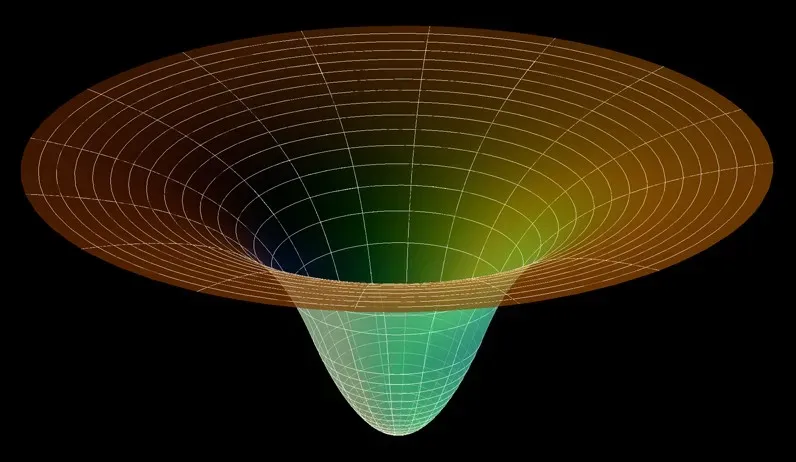
Matter tells space-time how to curve, and space-time tells matter how to move. This elegant formulation by physicist John Wheeler captures the mutual dance between mass-energy and geometry. You exist not in space and time, but as part of a dynamic, four-dimensional structure that bends and flexes with every movement.
What we perceive as gravity is just a consequence of the motion through the spacetime, and the larger the curvature of the spacetime the stronger gravity is. When you’re standing still on Earth’s surface, you’re not actually still at all in the space-time sense. The ground is constantly accelerating you upward through curved space-time, preventing you from following your natural geodesic path.
The implications extend far beyond academic physics. Understanding gravity more completely might unlock technologies we can barely imagine. It could reveal whether wormholes could ever be traversed, whether time travel has any basis in physical law, and what happened in the first moments after the Big Bang. Every answer raises ten new questions, and honestly, that’s what makes this journey through curved space-time so thrilling.
Gravity shapes galaxies, determines the fate of stars, and dictates the ultimate destiny of the universe itself. Yet after more than a century since Einstein’s revolution, we’re still uncovering its secrets. The fabric of space-time continues to surprise us, and the next breakthrough might completely overturn what we think we know today. What do you think about it? Does it blow your mind that gravity might not be a force at all?