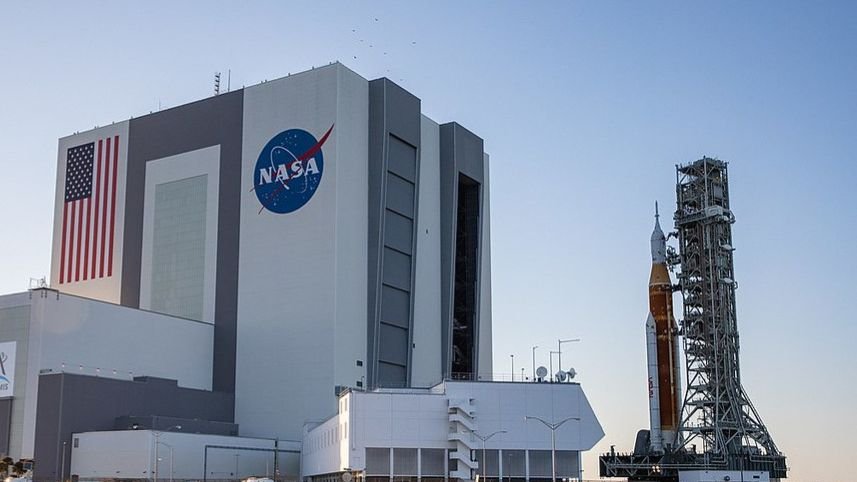
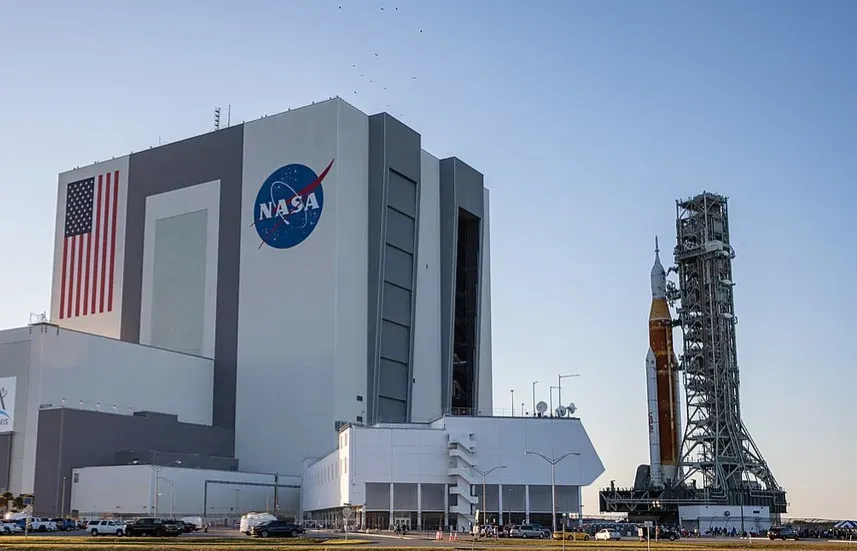
The massive Space Launch System rocket is finally standing tall at Kennedy Space Center, and it’s no longer just a concept or a test vehicle. This is the real deal, the machine that will carry four human beings around the Moon for the first time in over 50 years. Seeing it vertical on Launch Complex 39B feels almost surreal, especially after all the delays and technical hurdles that have pushed Artemis further and further into the future.
But here’s the thing: having the rocket on the pad doesn’t mean launch is imminent. There’s still a complex web of testing, reviewing, and validating that needs to happen before Reid Wiseman, Victor Glover, Christina Koch, and Jeremy Hansen climb aboard. The excitement is palpable, sure, but NASA is taking its time to get this absolutely right. Let’s dive in.
The Journey to the Launch Pad
The SLS rocket and Orion spacecraft made the roughly four-mile trek from the Vehicle Assembly Building to the launch pad aboard the massive crawler-transporter. This isn’t a quick trip. The crawler moves at a pace that makes rush-hour traffic look lightning-fast, taking several hours to complete the journey while carrying millions of pounds of hardware.
Once positioned, the rocket underwent initial checkouts to ensure everything survived the move intact. It’s a delicate operation despite the hardware’s robust design. Engineers are looking for any signs of stress or anomalies that might have occurred during transport, even though this route has been traveled many times before during the Apollo and Space Shuttle eras.
What Testing Still Remains
NASA has a comprehensive checklist of tests that need to happen before declaring the vehicle ready for its crew. The fuel loading demonstration stands as one of the most critical remaining milestones. This test, called a wet dress rehearsal, involves filling the rocket’s tanks with super-cold liquid hydrogen and liquid oxygen while running through the entire countdown sequence, stopping just short of ignition.
During Artemis 1, this particular test caused significant headaches. Hydrogen leaks plagued multiple attempts, forcing engineers back to the drawing board. The team has implemented fixes, but proving those solutions work under real conditions is essential. There’s also the matter of verifying all ground systems, communication networks, and emergency procedures with the actual flight hardware in place.
The Crew’s Preparation Timeline
The four Artemis 2 astronauts have been training for this mission for years now, but their preparation intensifies as launch approaches. They’re running simulations of every phase of flight, from the violent eight-minute ascent through main engine cutoff to the delicate maneuvers required for lunar trajectory. Each crew member has specific responsibilities, and they need to function as a seamless unit when things go wrong.
Reid Wiseman, the mission commander, brings experience from his previous ISS mission, but commanding a deep space flight is entirely different. Victor Glover will become the first person of color to leave Earth orbit. Christina Koch already holds the record for the longest single spaceflight by a woman, and Jeremy Hansen represents Canada’s space ambitions. Their chemistry as a team could prove just as important as their individual skills when they’re hundreds of thousands of miles from home.
Why the Launch Date Keeps Shifting
Originally, Artemis 2 was supposed to fly in 2024. Then it moved to 2025. Now we’re looking at April 2026 at the earliest, and honestly, even that feels optimistic given NASA’s recent track record. The delays aren’t due to one single problem but rather a cascade of technical issues discovered after Artemis 1’s successful uncrewed flight.
The Orion heat shield didn’t perform exactly as expected during reentry, with more material charring away than predicted. That’s a massive concern when you’re bringing humans home at roughly 25,000 miles per hour. NASA engineers need absolute confidence in that shield because there’s no margin for error. Beyond that, issues with Orion’s life support systems, batteries, and other crew-critical components have required additional scrutiny and modifications.
The Bigger Picture of Artemis
Artemis 2 represents just one piece of NASA’s ambitious lunar architecture. The mission serves as a crucial test of systems that will eventually support Artemis 3, the first crewed lunar landing since Apollo 17 in 1972. That landing mission faces its own complications, including the development of SpaceX’s Starship Human Landing System, which has yet to complete all its demonstration milestones.
There’s also the matter of building Gateway, the small space station that will orbit the Moon and serve as a staging point for future missions. Congress and the incoming administration will play significant roles in determining funding levels and priorities. Some critics question whether the current timeline is realistic or whether NASA is setting itself up for more disappointment by promising dates it can’t keep.
What Success Looks Like
If everything goes according to plan, Artemis 2 will send its crew on a roughly ten-day mission around the Moon. They’ll venture farther from Earth than any humans since Apollo, testing Orion’s systems in the harsh environment of deep space. The flight path will take them beyond the far side of the Moon before swinging back toward Earth for a Pacific Ocean splashdown.
Success means proving that NASA can safely transport people to lunar distances and back. It validates the entire Artemis architecture and paves the way for boots on the Moon again. Failure, on the other hand, could set the program back years and potentially threaten its political support. The stakes couldn’t be higher, which explains why NASA is being so methodical despite the external pressure to fly sooner.
It’s hard not to feel a mix of excitement and impatience watching this unfold. We’re tantalizingly close to seeing humans venture beyond low Earth orbit again after half a century of staying relatively close to home. Artemis 2 could reignite the public’s passion for space exploration or become another chapter in promises made and deadlines missed. What do you think? Is NASA being appropriately cautious, or should they accept more risk to maintain momentum?