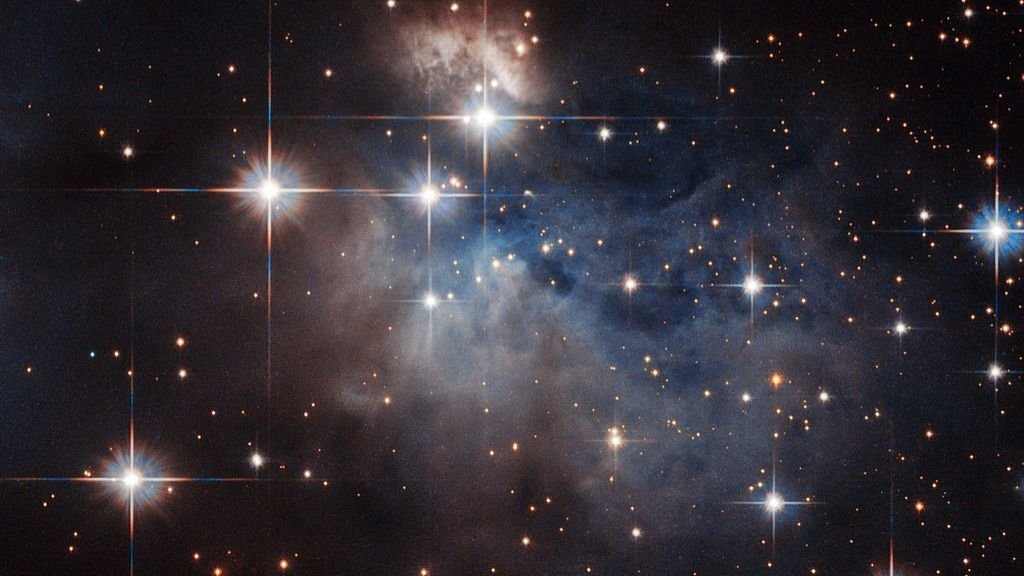

Somewhere above the noise of everyday life, the universe is quietly talking. Not in words, not in anything like human speech, but in pulses of light, ripples in space-time, and faint radio hums traveling for billions of years. When astronomers say they are “listening to the cosmos,” they really mean they’re trying to decode this secret language written into the fabric of reality.
What makes it so haunting is that most of these messages were sent long before Earth even formed. Every star that explodes, every galaxy that collides, every particle that zips across the void leaves a mark, a tiny whisper in the dark. The more we learn to read these signs, the more the universe stops feeling like an empty, cold silence and starts to look like a vast, ongoing conversation we’ve only just tuned into.
The Cosmic Microwave Background: The Universe’s Baby Photo
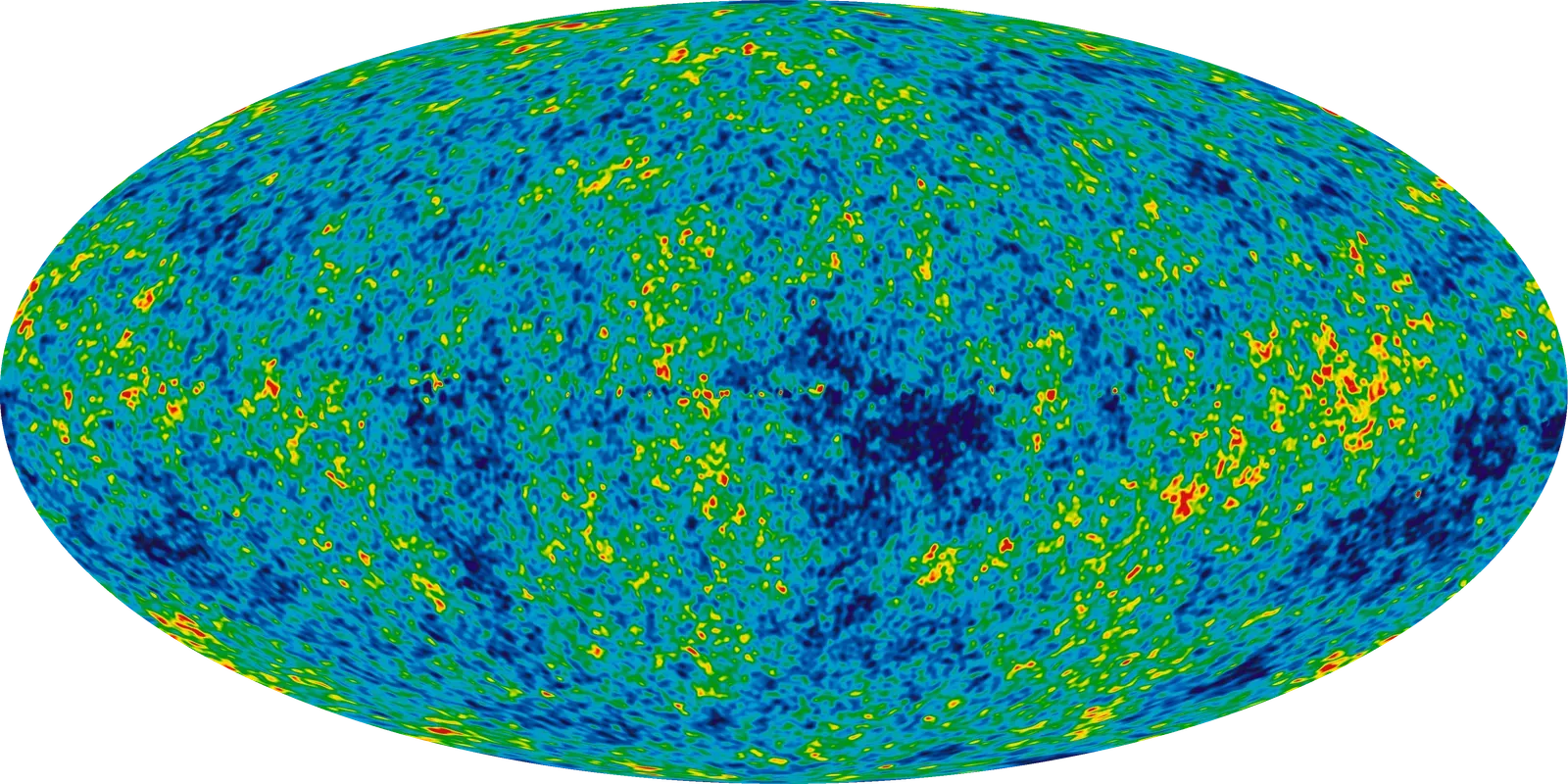
Imagine if you had a recording of your own heartbeat from before you were born. That’s roughly what the cosmic microwave background, or CMB, is for the universe: the faint afterglow of the Big Bang, still washing over us from every direction. This radiation has been traveling for nearly the entire age of the cosmos, a ghostly, almost-uniform glow only a few degrees above absolute zero.
Hidden inside that glow are tiny temperature variations, differences so small they’re more like a whisper inside a whisper. Using incredibly sensitive satellites, scientists have mapped these patterns and found they spell out the early structure of the universe: where matter clumped, where it spread out, how fast everything was expanding. From this one ancient signal, we’ve learned the universe is dominated by dark energy and dark matter, and that it’s about 13 and a half billion years old. It’s like reading a birth certificate that also sketches out most of your family history.
Starlight as Code: Reading the Spectrum of the Stars
At first glance, starlight just seems like a simple glow, but spread that light out into a spectrum and it turns into a bar code full of information. Every element in a star’s atmosphere absorbs specific colors of light, leaving dark lines in its spectrum that act like fingerprints. By studying those lines, astronomers can figure out what a star is made of, how hot it is, how fast it’s moving, and even whether it has planets tugging on it.
This is how we discovered the universe is mostly hydrogen and helium, with heavier elements forged in stars and spread by supernovae. It’s also how we found many of the exoplanets known today: tiny wobbles in a star’s light that give away the presence of hidden worlds. What looks like a distant pinprick becomes, under the right lens, a detailed report filled with chemistry, motion, and history. Starlight is more than a glow; it’s a letter from a faraway furnace, written in colors our eyes can’t quite see until we learn the trick of decoding them.
Gravitational Waves: Ripples in Space-Time
For over a century, the idea that massive objects could send ripples through space-time sounded almost like science poetry. That changed in 2015, when detectors on Earth finally picked up gravitational waves from colliding black holes – subtle distortions of distance itself stretching and squeezing our planet by less than the width of a proton. It was like suddenly realizing you’d been deaf in one ear your entire life and someone had just switched on that missing channel.
These waves carry information that light alone can’t always deliver, especially from regions where light gets trapped, like around black holes. By studying the shape of the wave signals, scientists can tell how massive the objects were, how fast they spun, and how violently they merged. It’s a completely different dialect of the universe’s language, one that doesn’t use photons at all but still tells stories of cataclysms we’d never see otherwise. Space stops being just a quiet, empty stage and becomes something more like a vast, vibrating drum skin.
Fast Radio Bursts and Mysterious Signals
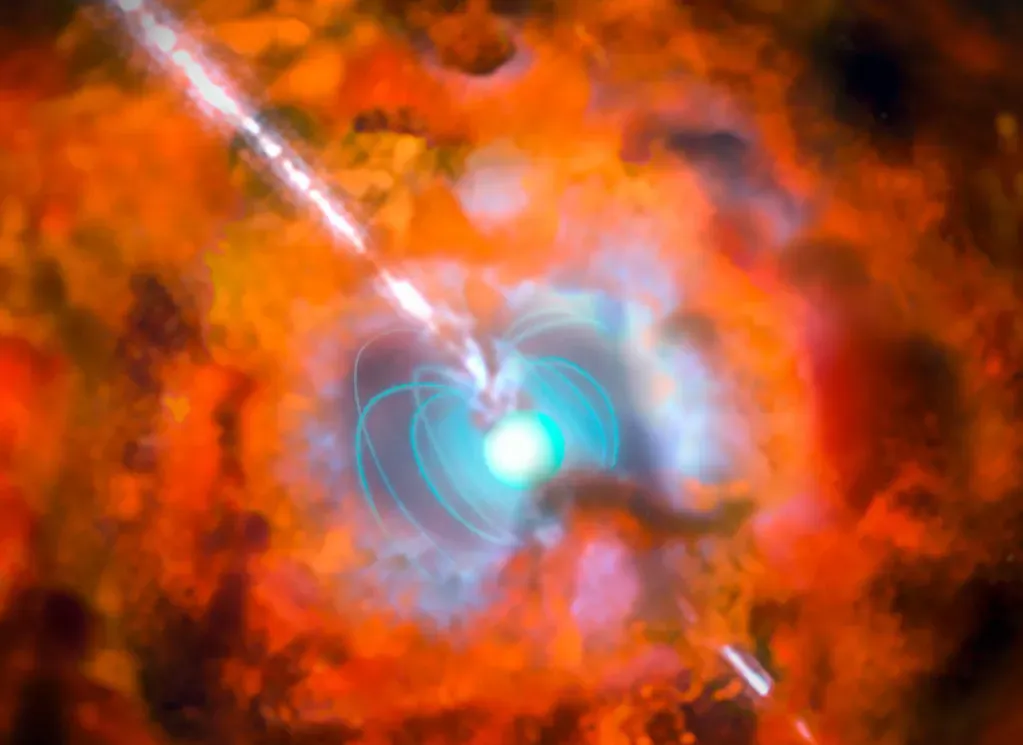
Every so often, the universe lets out a shout instead of a whisper. Fast radio bursts, or FRBs, are incredibly brief but intense flashes of radio waves coming from far beyond our galaxy. They last only a fraction of a second, yet in that instant can release as much energy as our Sun emits over days. For years we had no idea what caused them, and even now the picture is only partly clear.
Most evidence points toward extreme objects like magnetars – neutron stars with mind-bending magnetic fields – as likely culprits, but not every burst fits neatly into a single explanation. Some repeat, some don’t, and their patterns carry clues about the environment they pass through. These signals get stretched and scattered by cosmic gas and plasma, changing their arrival times at different frequencies. By analyzing those delays, astronomers can probe the invisible matter between galaxies, turning these strange flashes into probes of the cosmic web itself. They started as a mystery; they’ve become a new set of tools.
The Language of Gravity: Orbits, Lensing, and Cosmic Maps
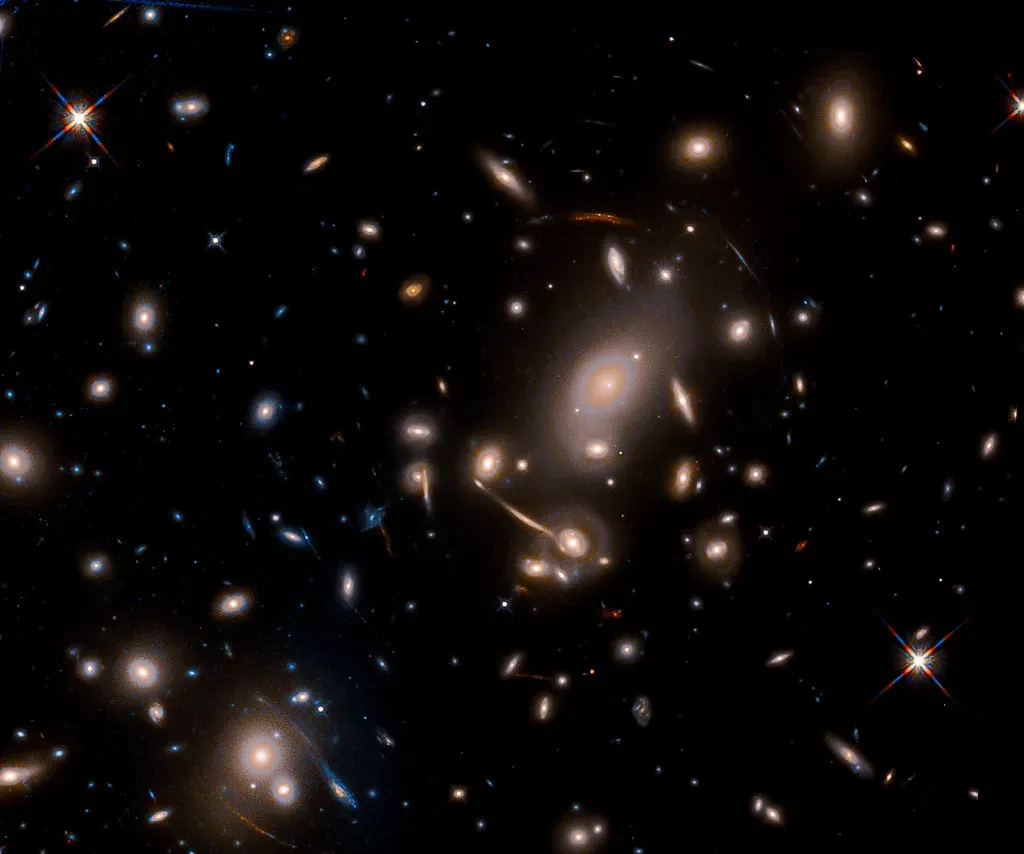
Even without exotic detectors, gravity itself is a silent storyteller. The way stars orbit inside galaxies, and galaxies orbit within clusters, makes no sense if we count only visible matter. Their motions are too fast to be held together by the gravity of what we can see, which led to the idea of dark matter – an unseen component outweighing normal matter by several times. In that sense, a galaxy’s rotation curve is like a line of text saying something important is there, even if it refuses to show up in photographs.
Gravity also bends light, a phenomenon called gravitational lensing. Massive objects like galaxy clusters distort the space around them so strongly that background galaxies appear stretched, duplicated, or warped into arcs. By carefully measuring this warped light, scientists can create maps of invisible mass, almost like feeling the shape of a sculpture while blindfolded. These maps have revealed sprawling structures of dark matter that connect galaxies like threads in a cosmic spiderweb, sketching out the large-scale architecture of the universe.
On the largest scales, the cosmic web itself encodes how gravity and dark energy have battled over billions of years. Galaxies cluster along filaments, leaving vast voids between them. Surveys that plot their positions build three-dimensional maps that act like a record of cosmic evolution. The pattern of those clusters whispers how fast the universe has been expanding and how that rate has changed, a quiet but relentless hint about the nature of dark energy.
Time as a Message: Looking Backwards to See Forwards
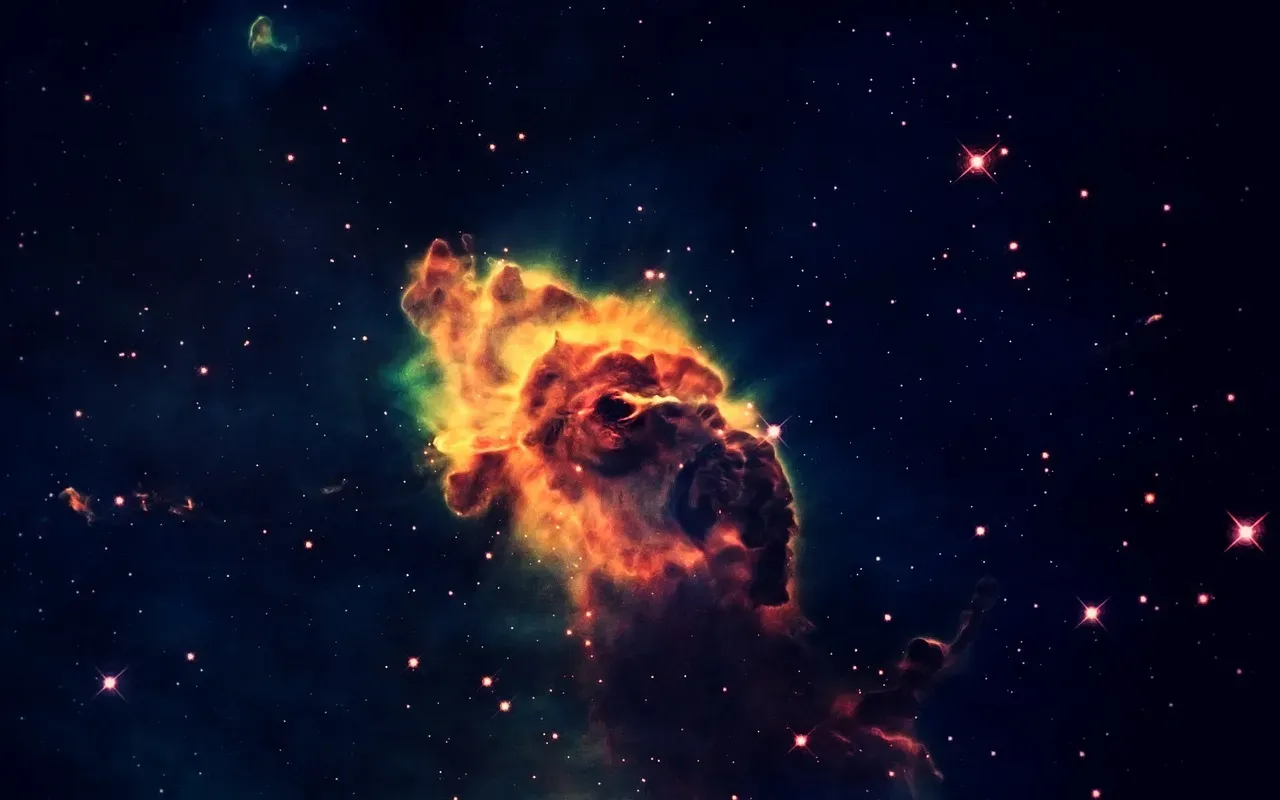
The wildest thing about astronomy is that every observation is a trip into the past. Light and other signals take time to travel, so when we look at nearby stars we’re seeing them as they were years ago, and distant galaxies as they were billions of years ago. Telescopes are less like cameras and more like time machines, catching up on scenes that played out long before humans existed.
This time delay means the universe has left us a record of its own life story, frozen into the sky at different distances. By comparing young galaxies far away with more mature ones nearby, scientists can reconstruct how stars formed, merged, and died across cosmic history. It’s similar to flipping through a photo album where each page shows a different stage of someone’s life, except the person in this case is the entire universe. The deeper we look, the earlier the chapter we’re reading.
Are We Part of the Message? Life, Intelligence, and Cosmic Context
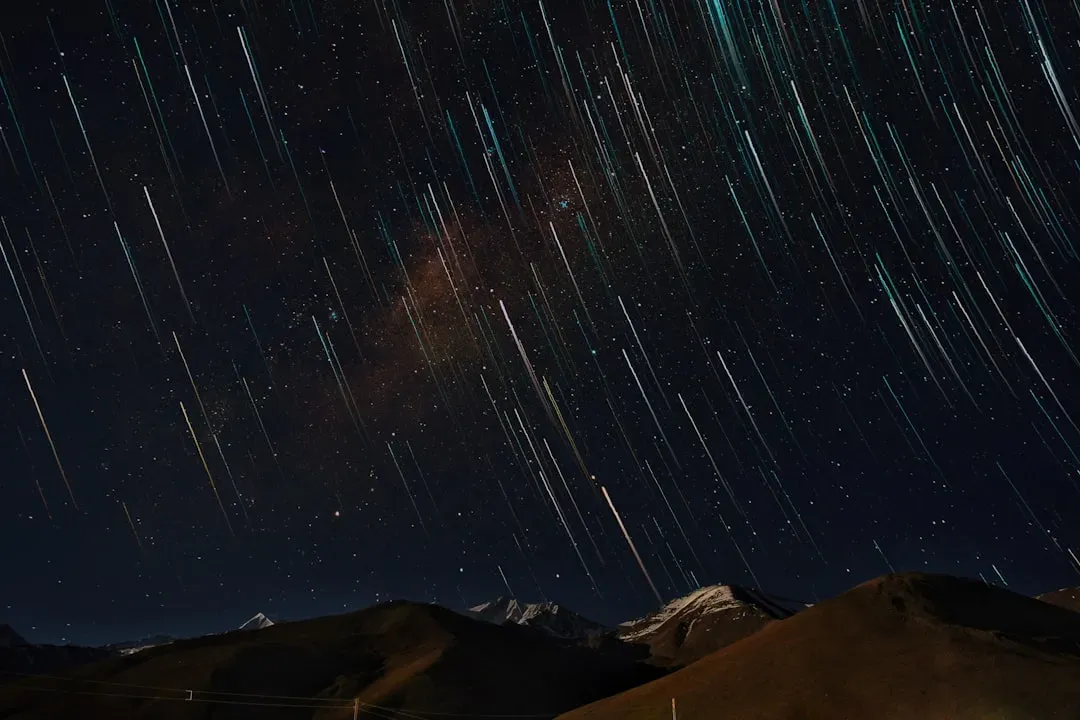
Once you realize the universe is sending out all these signals, it’s hard not to wonder whether life and intelligence are part of that language too. On Earth, life rewrote the planet’s atmosphere, leaving chemical fingerprints – like high oxygen levels – that would be obvious to a distant observer with good instruments. In that sense, biology itself becomes a message, a sign that something complex and self-organizing has taken hold of a world.
When we scan the skies for technosignatures – radio transmissions, unusual light patterns, or atmospheric clues that hint at industry – we’re basically asking whether the universe has developed other ways of speaking through conscious agents. So far, there’s no confirmed signal from another civilization, and it’s entirely possible we’re listening to an otherwise quiet channel. Still, our own broadcasts, spacecraft, and potential future megastructures would all be part of the universe’s evolving story. Whether anyone hears them or not, they’re new lines in a script that started long before us and will continue long after we’re gone.
Learning to Listen: How Our Tools Shape What We Hear
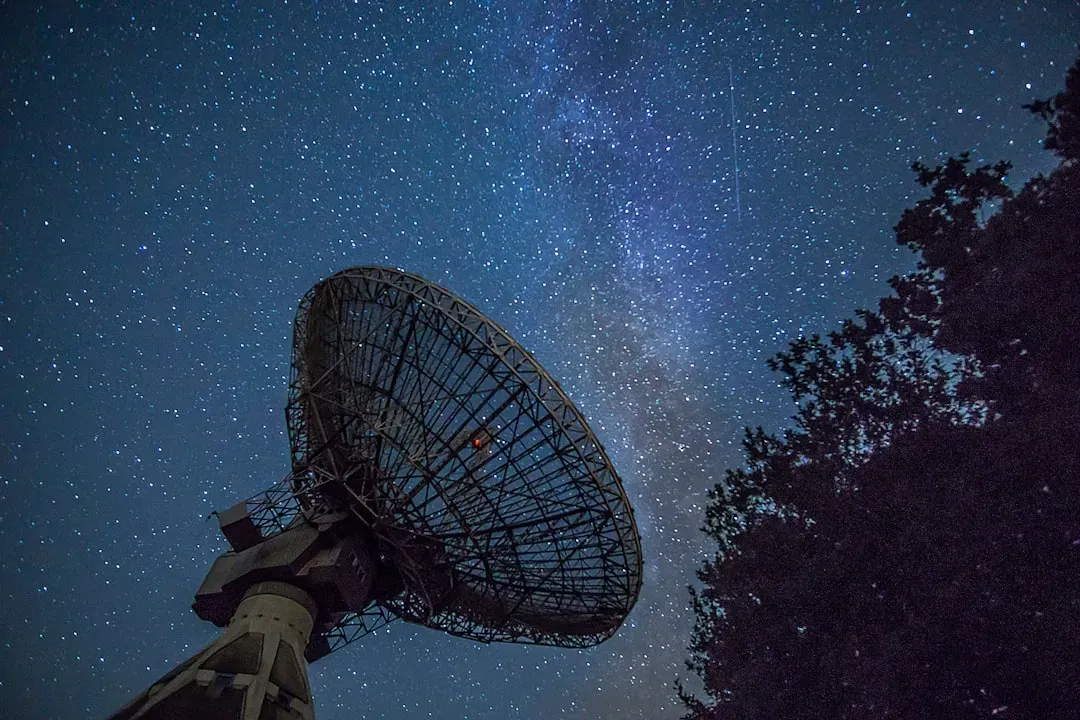
The secret language of the cosmos isn’t hidden because the universe is trying to be mysterious; it’s hidden because we’re only just building the right ears and eyes. Radio dishes, space telescopes, neutrino observatories, gravitational-wave detectors – each one opens up a different “sense” for us. I still remember the first time I listened to data sonified from a pulsar, turned into sound waves. It felt eerie, like eavesdropping on a lighthouse in deep space keeping its own relentless time.
As new instruments come online that can scan huge swaths of the sky or catch incredibly brief events, we keep stumbling over things we didn’t even know to look for. Our technology sets the boundaries of what we can notice, kind of like trying to appreciate music with cheap headphones versus a full sound system. The universe has been sending out these messages the whole time; we’re just slowly, awkwardly, learning to tune in.
The Universe Is Speaking – Slowly
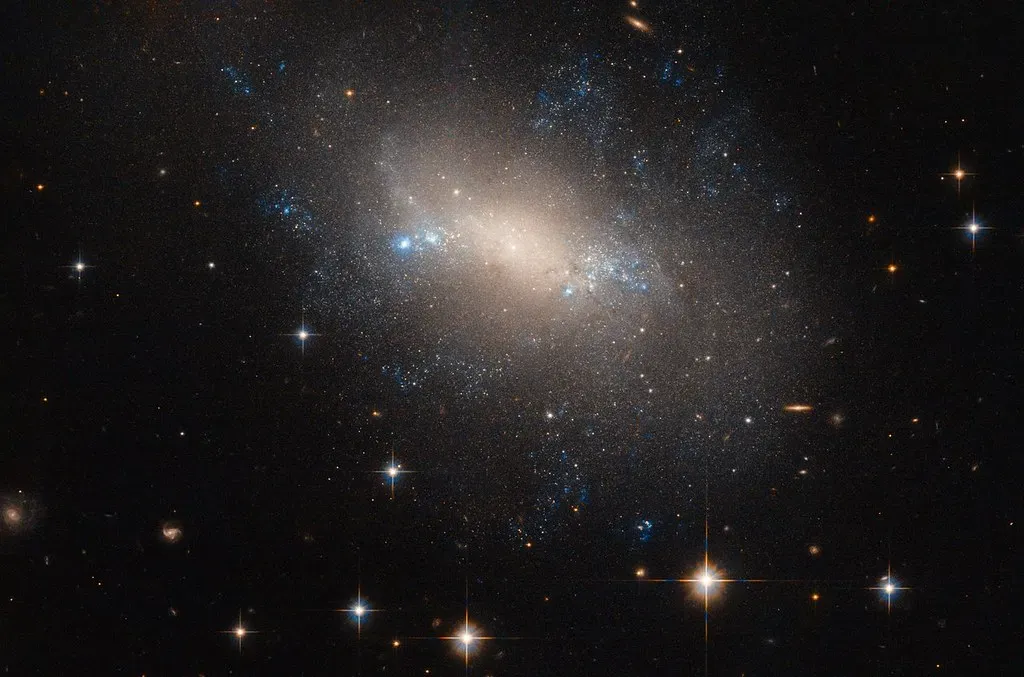
When you put all these signals together – the afterglow of the Big Bang, the coded light of stars, the ripples of gravity, the sudden radio flashes, the warped paths of photons, and the time-delayed glow of distant galaxies – you start to see the universe as something more than a backdrop. It’s an enormous archive of messages, each one shaped by the laws of physics and the accidents of cosmic history. None of them were “meant” for us in any human sense, yet they’re there, waiting for any curious mind that learns how to read them.
What we call progress in cosmology and astrophysics is really just getting better at decoding this vast, ancient script. Every new detection method feels like adding another letter to an alphabet we’re still learning, and it’s likely that there are entire “sentences” we don’t even know how to recognize yet. The universe isn’t shouting; it’s quietly, patiently, consistently speaking in patterns of energy and structure. The real question is how much more of that language we’ll be able to understand before our own brief line in this story comes to an end.