
Every autumn and spring, the sky quietly fills with tiny athletes performing some of the most extreme journeys on Earth. A songbird that weighs less than a slice of bread can cross entire oceans and continents, often returning to the same patch of forest or even the same backyard tree. For a long time, people chalked this up to instinct or mystery, as if birds carried some invisible map in their heads that we could never hope to understand.
Now, thanks to satellite tracking, tiny GPS tags, and a lot of clever experiments, scientists are finally piecing together how birds pull off these epic trips. It turns out they use a combination of tools more advanced than any smartphone: a built‑in compass, a sense for the Earth’s magnetic field, memory anchored to the landscape, and even the stars themselves. The more we learn about avian migration, the more it feels like opening a secret manual for how the planet really works.
The Mind‑Blowing Distances Birds Travel
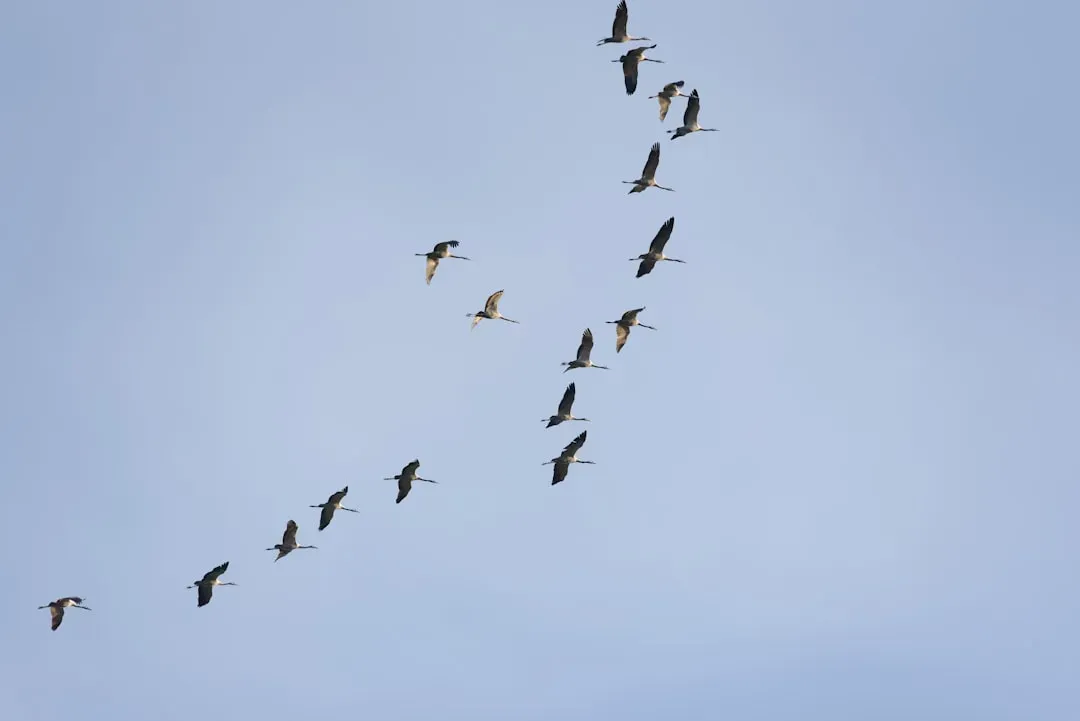
Some birds migrate so far that the raw numbers feel almost unreal. The Arctic tern, for example, travels from the Arctic to Antarctica and back again each year, adding up to a round trip that can span tens of thousands of kilometers. That means over its lifetime, a single small bird may cover a distance comparable to flying to the moon and back several times, powered only by fat reserves, clever timing, and a lot of flapping.
Other species perform nonstop flights that sound almost impossible if you imagine yourself trying to do the same thing on foot. Bar‑tailed godwits have been tracked flying across the Pacific Ocean for over a week without landing, cutting straight over deep water with no chance to rest. Swallows, swifts, and warblers make marathon journeys at night, slipping past predators while you sleep, leaving no trace except a faint movement on a radar screen and the first songs of spring when they return.
Following the Sun, Moon, and Stars
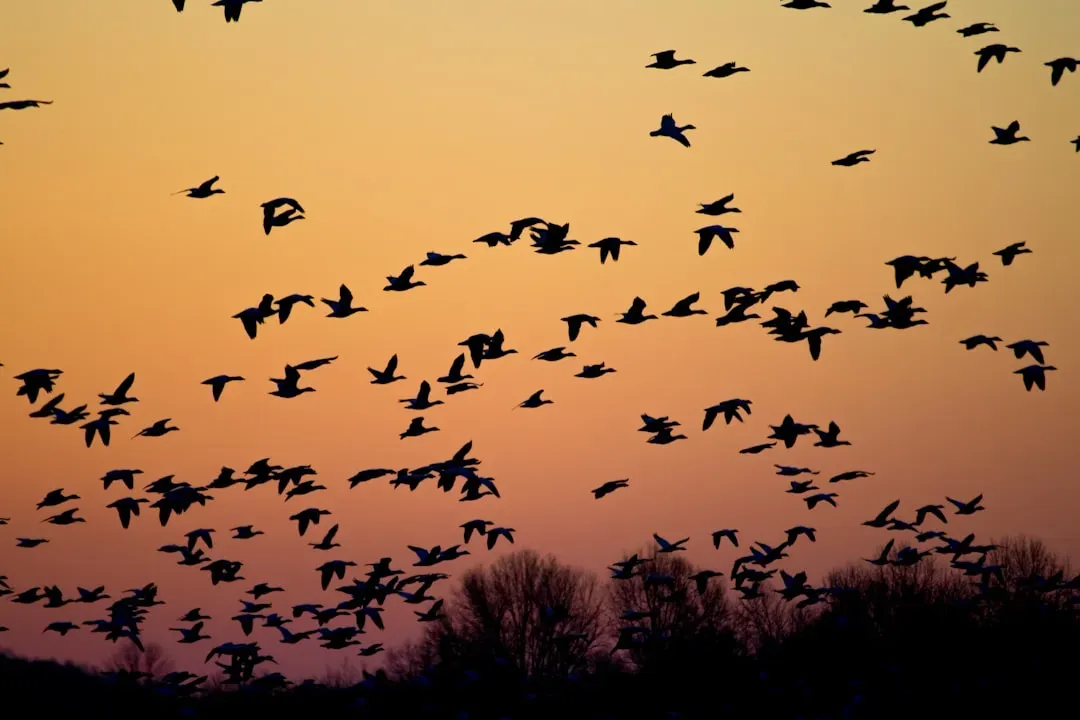
One of the most elegant tricks birds use is celestial navigation, a fancy way of saying they read the sky like a map. Many migrating birds travel at night and orient themselves using stars, particularly the pattern of stars that rotate around the North Star in the northern hemisphere. Experiments in planetariums have shown that when scientists shift the artificial “night sky,” the birds change direction as if they’re following the stars, not the building they’re standing in.
Daytime migrants lean on the sun instead, using its changing position across the sky to keep a steady heading, adjusting for the time of day with an internal clock. Even the moon can provide cues on bright nights, though it’s not as critical as starlight and sunlight. It’s a bit like driving on a highway using road signs and billboards – only their road signs are light years away, and they’re reading them while dodging storms, predators, and mountains in the dark.
The Hidden Magnetic Compass Inside a Bird
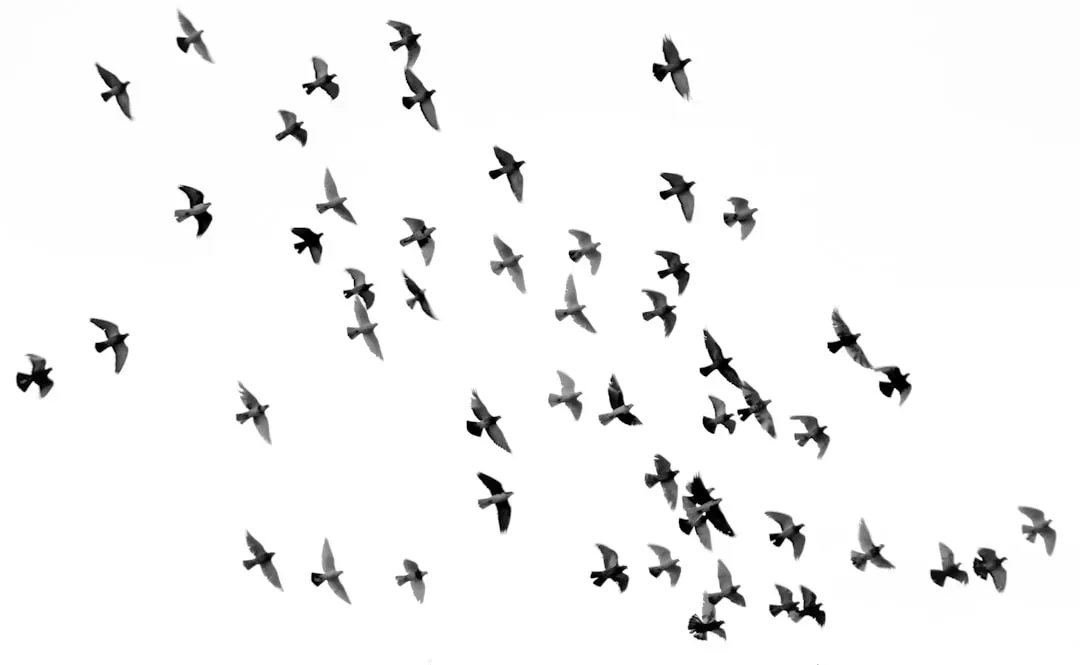
As if using the stars wasn’t impressive enough, birds also carry a built‑in magnetic compass that senses the Earth’s magnetic field. This field, generated by the planet’s molten iron core, creates invisible lines that curve between the magnetic poles. Evidence suggests many birds can detect both the direction and sometimes the inclination (the tilt) of these lines, helping them figure out if they’re flying toward the poles or the equator. It’s like having a compass and a rough latitude marker inside their bodies.
Scientists have been slowly untangling where this sense lives in a bird’s body. There are signs that parts of the eye might host light‑sensitive molecules affected by magnetism, letting birds “see” a faint magnetic pattern superimposed on their vision. Other research points to magnetically sensitive cells in the beak or inner ear. The details are still debated, but the big picture is clear: birds are not just looking at the landscape; they’re flying through an invisible magnetic grid and somehow feeling its shape.
Maps in Their Minds: Landmarks, Smells, and Memory
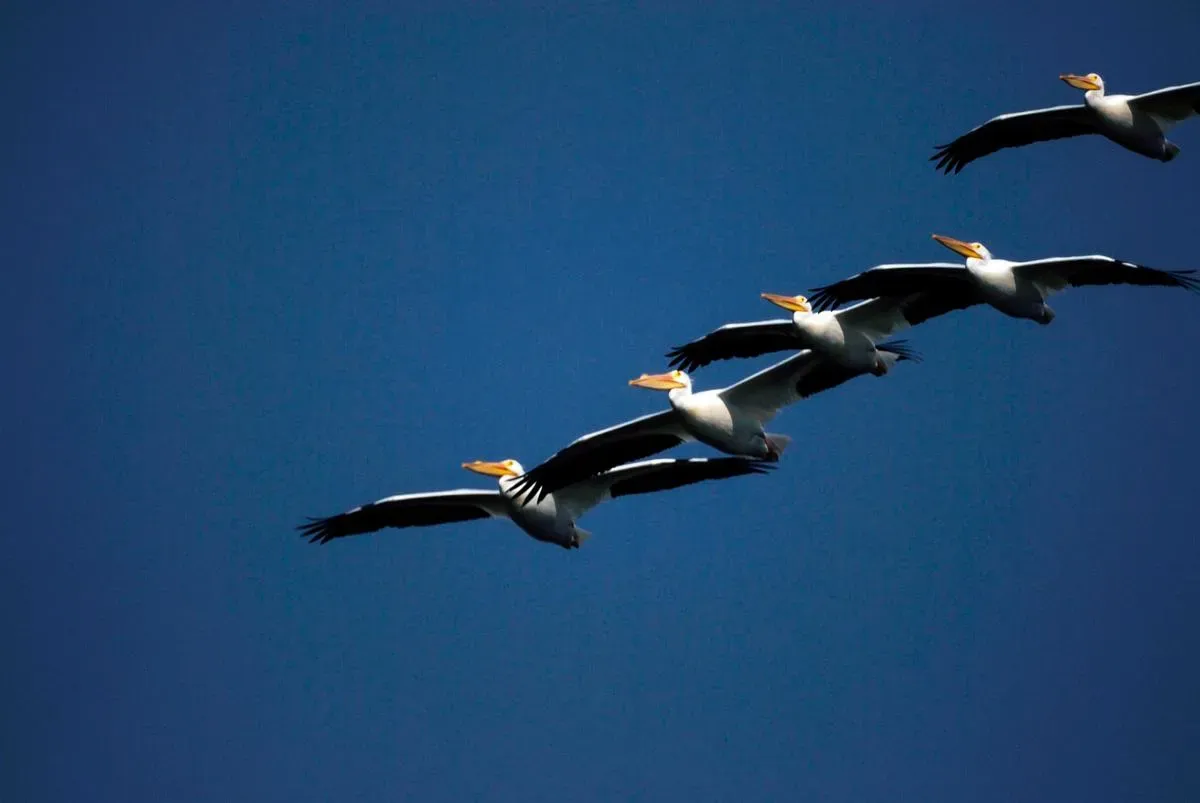
Once birds have their compass, they still need a map, and this is where their sense of place becomes astonishing. Many species learn the layout of coastlines, mountains, rivers, and even human‑made structures to guide their journeys. Pigeons, for example, have been shown to follow highways and railways, as if someone handed them a road atlas. Long‑distance migrants often combine large‑scale landmarks – like mountain chains or broad river valleys – with small, specific features near their breeding or wintering grounds.
Smell plays a surprisingly big role too, especially for birds like pigeons and some seabirds. Experiments where researchers gently interfered with birds’ sense of smell caused them to lose their way, even though their other senses were fine. Over time, birds build up a kind of “odor map” of the world, recognizing regional scent patterns carried by the wind. Layer this on top of visual memory – year after year of flying the same routes – and you start to see how a bird can return to the same nesting cliff or marsh patch with an almost eerie accuracy.
Instinct vs. Learning: What Birds Are Born Knowing

One of the most fascinating questions in avian migration is what comes preinstalled at birth and what has to be learned. Many young birds, especially long‑distance migrants like some warblers and shorebirds, take off on their first journey without any parents to guide them. They fly an inherited route, with a built‑in direction and rough distance, almost like genetic instructions telling them: head southwest for this many weeks, then stop. That alone is wild – navigation encoded in DNA.
But the story doesn’t stop with instinct. Older birds often improve their routes over time, finding better stopover sites, safer detours around storms, and more efficient flight paths. They might shift traditional routes as climates warm or habitats change, and younger birds can copy these adjusted patterns. So migration is this constantly updated negotiation between ancient instincts and real‑time experience, like using a traditional paper map that keeps getting annotated with smarter, hand‑drawn shortcuts.
Riding the Winds: Weather, Altitude, and Flight Tactics
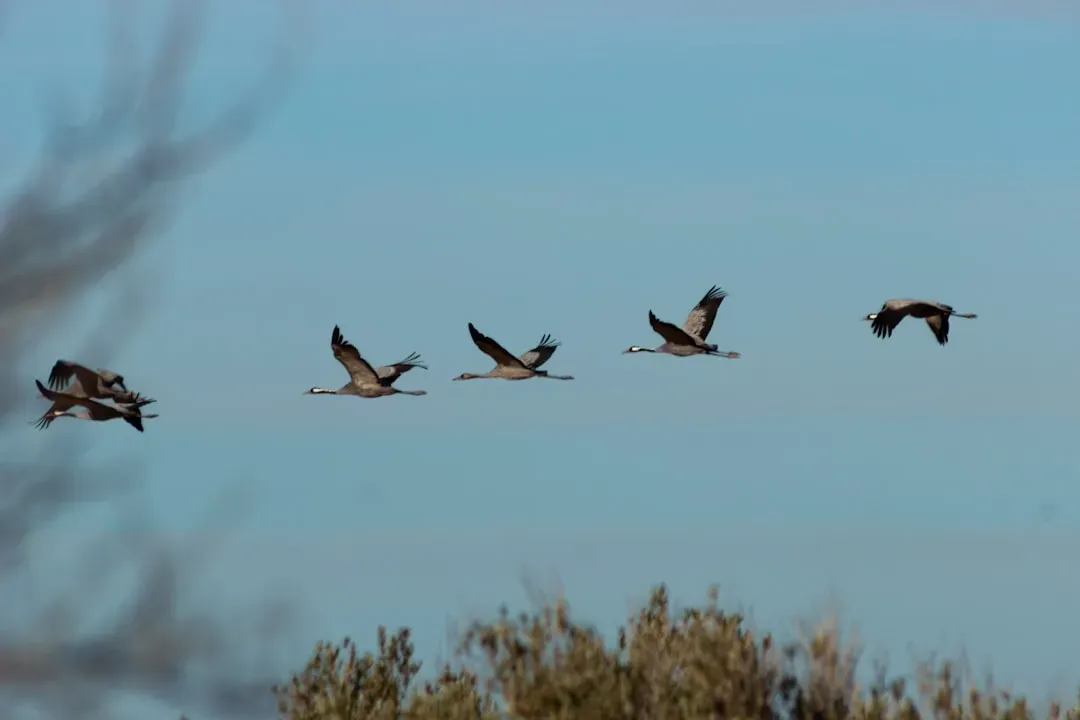
Navigation is not just about knowing where to go – it’s also about knowing when and how to get there. Birds time their departures to ride favorable winds, often waiting for tailwinds that will carry them farther with less effort. Over oceans and deserts, this matters a lot, because there are no safe places to land if they run out of energy. Radar and tracking studies show birds adjusting their altitude and direction mid‑flight to take advantage of helpful wind layers, almost like surfers reading waves.
Some species take this to extremes by flying incredibly high when conditions demand it. Bar‑headed geese, for instance, cross the Himalayas at altitudes where the air is thin and cold, yet they sync their climbs with specific wind patterns to conserve energy. Others migrate at night when the air is calmer and cooler, lowering the risk of overheating and predation. These decisions are all part of the navigation toolkit: not just “where is my goal?” but “what’s the smartest way to reach it today?”
Challenges in a Changing World
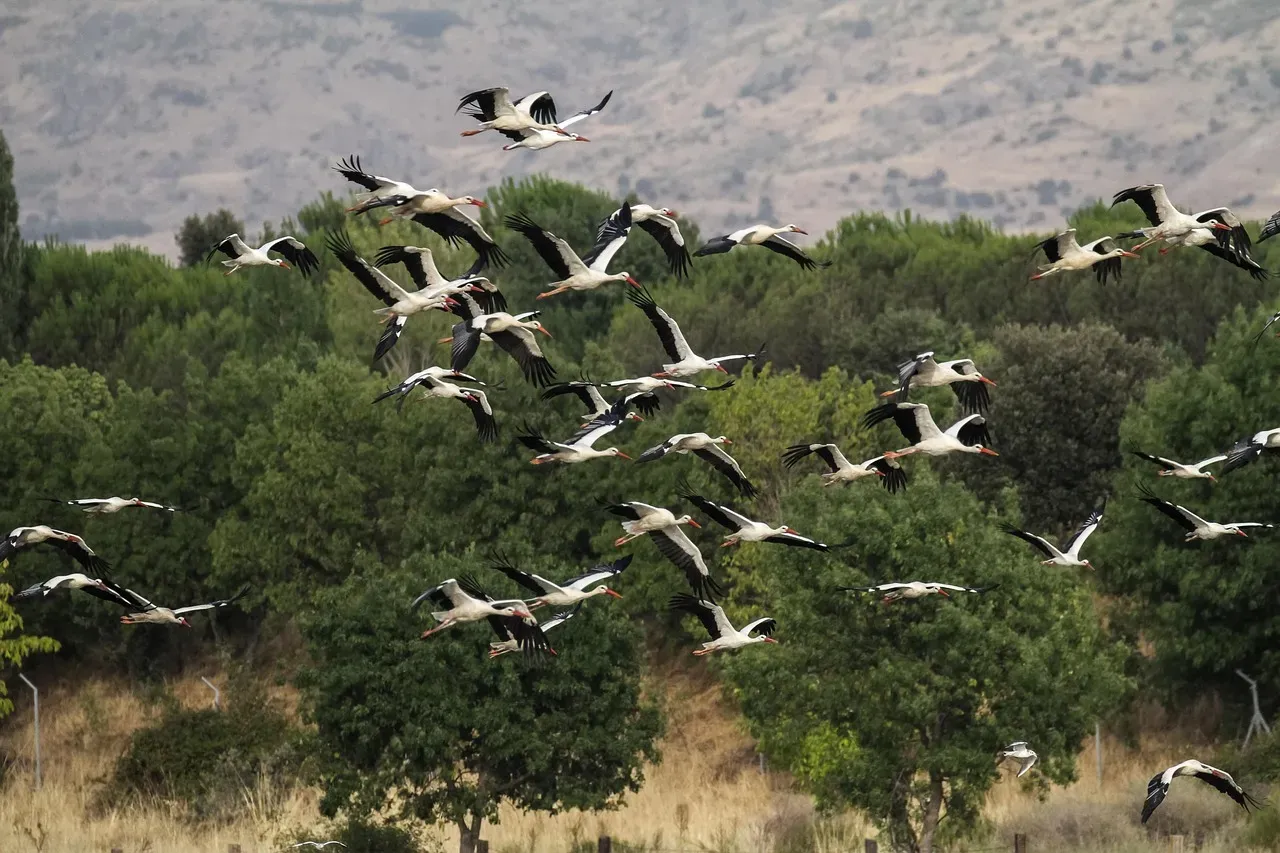
For all their skill, migrating birds are running a gauntlet that’s getting tougher every year. Habitat loss wipes out crucial stopover sites where they refuel, like wetlands and coastal mudflats. Light pollution from cities can disrupt night migrants that rely on stars, pulling them off course or luring them into dangerous collisions with buildings. Wind turbines and power lines add new obstacles along ancient flyways, turning once‑safe routes into risky corridors.
Climate change adds another layer of difficulty by shifting seasons and food availability. Birds that time their migrations based on day length might arrive at their breeding grounds to find that peak insect hatches or plant blooms are already over. Some species are adjusting their timing and routes, but others are struggling to keep pace with the speed of change. The same instincts that once guaranteed their success can become a trap if the world they evolved for no longer exists in the same form.
What Avian Migration Teaches Us About the World
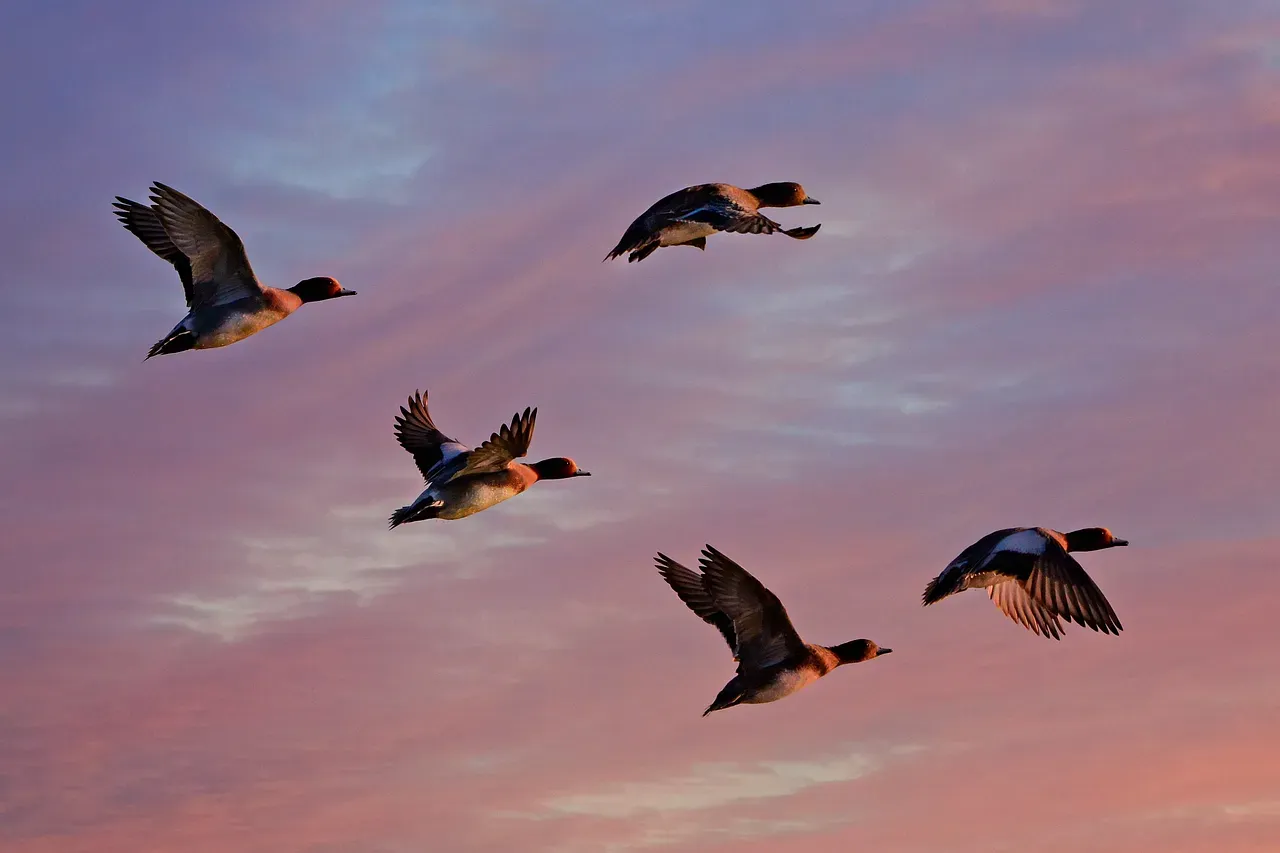
When you zoom out, bird migration is more than just an animal behavior – it’s a living map of the planet’s health. Migration routes connect Arctic tundra to tropical forests, oceans to inland wetlands, remote islands to sprawling cities. When a species starts to decline along these routes, it’s often an early warning that something is breaking down in the shared systems we all depend on: clean water, stable climates, intact habitats. Watching birds is, in a way, watching the pulse of the Earth.
There’s also something quietly humbling about realizing how small we are in their story. With all our technology, we still struggle to fully explain how a bird finds its way from one side of the globe to the other, often with more precision than our first explorers managed with maps and compasses. Next time you see a swallow skimming over a field or a flock of geese tracing a V across the sky, it might be in the middle of a journey longer than most of us will ever take. Knowing even a little about how they navigate makes that glimpse feel less ordinary and more like witnessing a tiny miracle in motion.