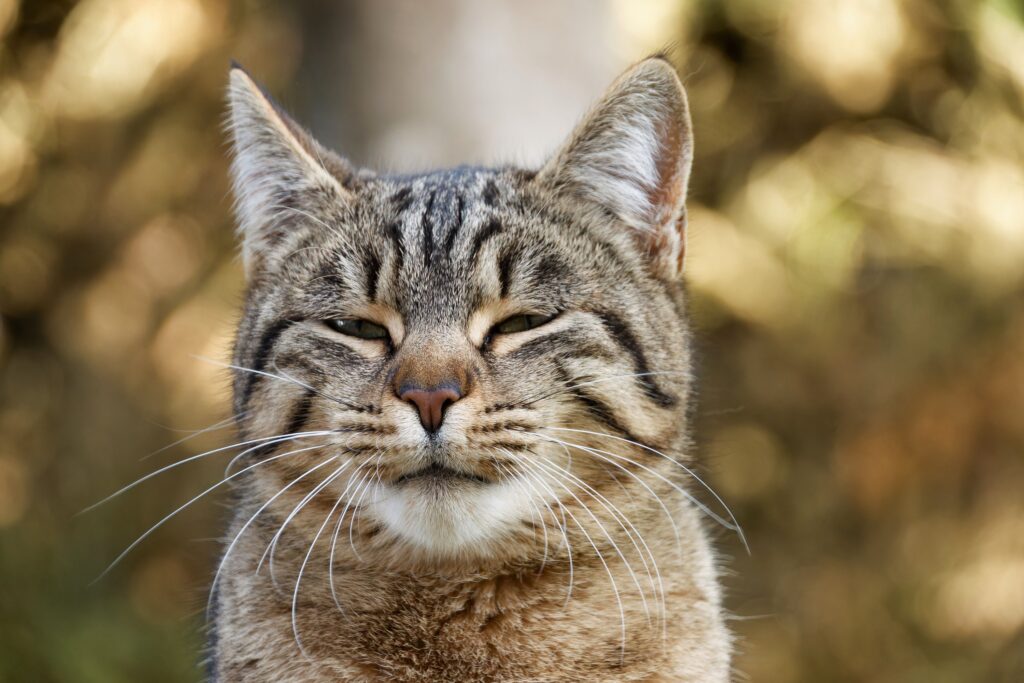

Have you ever noticed how your skin suddenly turns into a tiny landscape of bumps just because a song hit you hard, a cold breeze slipped under your jacket, or a scary scene flashed on your screen? Goosebumps feel strangely powerful for something so small and automatic. They can make a quiet moment feel intense, and a memory feel almost painfully real, as if your body is reacting long before your mind catches up.
What’s wild is that this odd little skin reaction is not random at all. It’s a deeply wired survival mechanism with roots stretching back millions of years, shared with animals that puff up their fur when threatened or cold. In a way, every time you get goosebumps, you’re seeing your inner animal show through for a second. The real question is: why would evolution keep such a dramatic reaction around in humans, long after most of its original purpose faded?
The Strange Little Muscles Behind Every Goosebump
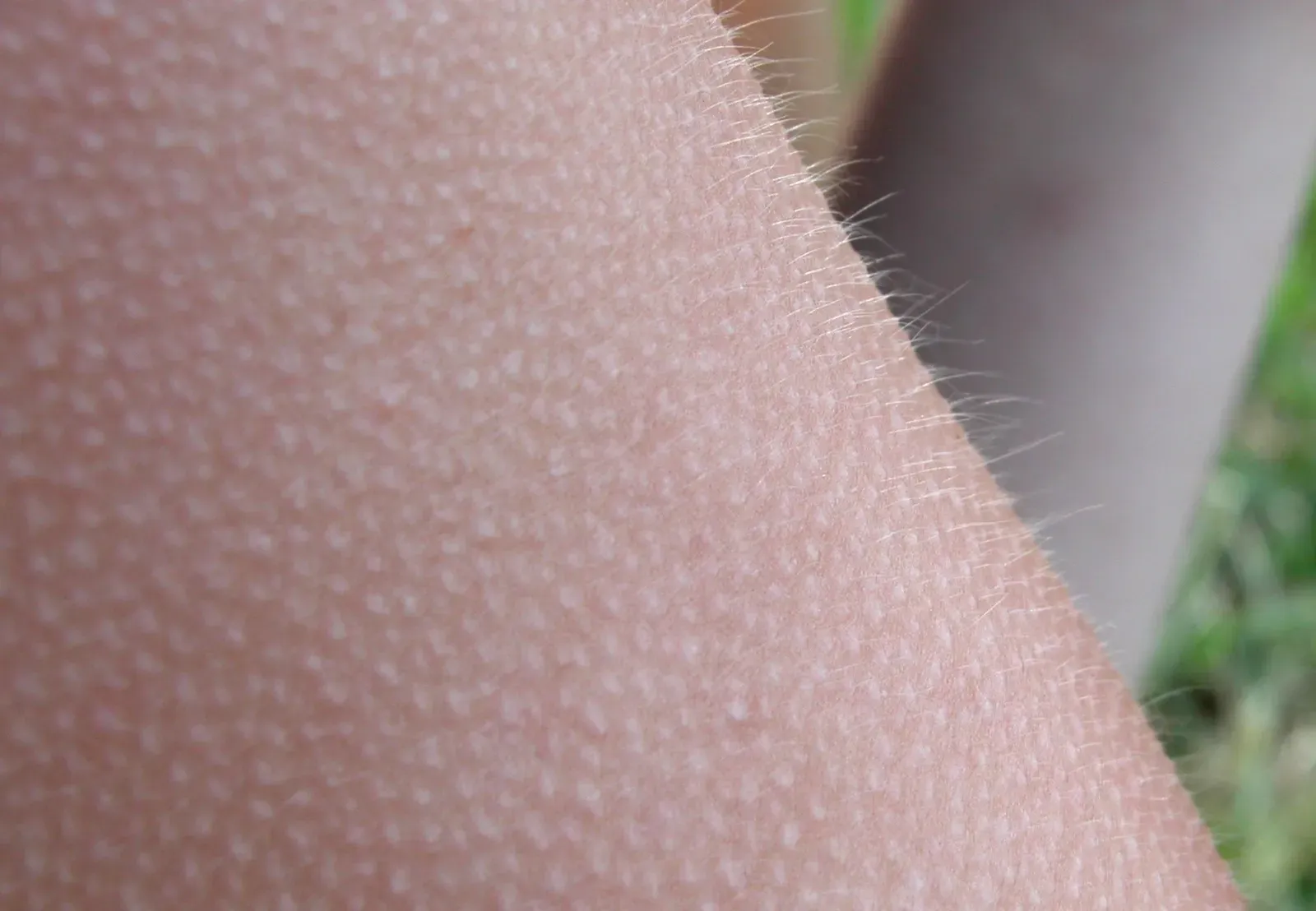
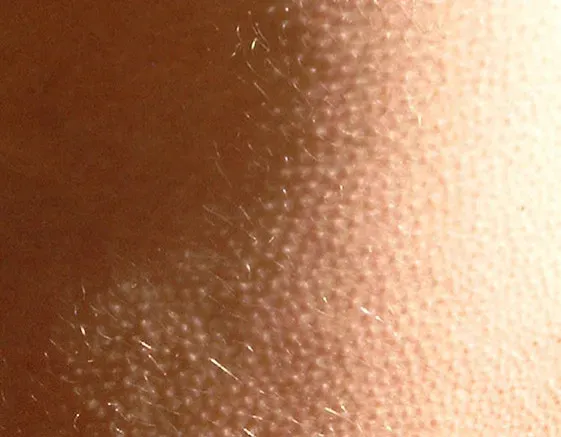
Each tiny bump on your skin is actually a miniature muscle flexing. At the base of every hair follicle, there’s a microscopic muscle called the arrector pili. When your nervous system fires a certain kind of signal, those muscles contract, tugging each hair so it stands more upright and pushing the surrounding skin into a small raised bump. It’s automatic, outside of conscious control, much like your heartbeat speeding up when you’re scared.
Even if you shave your arms or have very fine body hair, the machinery is still there and still works. That’s why you can feel goosebumps even if you don’t see much hair standing up. It’s a bit like having an old mechanical feature in a modern car that no longer does much, but still clicks and whirs whenever the right button is pressed. Our skin, in that sense, is full of old switches evolution never fully removed.
An Ancient Fur-Coat Trick We Inherited

To really understand goosebumps, you have to picture a furry animal, not a mostly hairless human. In mammals with thick fur, raising the hairs traps a layer of air close to the skin, creating insulation and helping them stay warm. When a cold wind hits a cat or a dog, their fur fluffs up; our goosebumps are basically the leftover version of that same reaction. It’s an attempt to build a natural, automatic puffy jacket using nothing but hair and air.
For humans, who lost most of our dense body hair over evolutionary time, the effect is more symbolic than practical. Goosebumps don’t really keep us warm anymore, but the wiring still runs the show. It’s like living in a house with radiators that barely work: the heating system turns on, hisses and clanks, but doesn’t actually heat the room very well. Our ancestors, though, likely felt a real temperature boost when their thicker body hair stood on end.
From Looking Bigger to Looking Dangerous
Goosebumps weren’t just about staying warm; they were also about survival in scary moments. When an animal is threatened, raising its fur makes it look larger and more intimidating, like a cat puffing up when it encounters another cat or a dog bristling along its back. This visual signal can be enough to make a predator hesitate or a rival back down. The body’s instinct, in those moments, is to shout without words: I’m bigger than you think, don’t try me.
Humans still trigger that same system when we feel fear, panic, or intense stress. Our hair rises, but without a thick fur coat the effect on our appearance is tiny. The nervous system, though, hasn’t updated the feature to match the new reality. It’s running software designed for a hairier version of us. The feeling of goosebumps during fear is a trace of that old bluffing strategy, a leftover threat display in a body that no longer needs to puff up to survive.
Why Emotions Like Music and Memories Give Us Goosebumps

One of the most surprising things about goosebumps is how often we get them when nothing dangerous is happening at all. A powerful chorus, a moving speech, or a painful memory can all send that same chill down your arms. This happens because the system that controls goosebumps is wired into deep emotional and reward centers in the brain. When your brain experiences a strong emotional shift, especially from tension to release, it can activate the same pathways once used for survival.
In that sense, goosebumps are like a physical echo of emotional intensity. Some people even use them as a personal emotional barometer: if a piece of music gives them goosebumps, they take it as a sign that it really hits home. It’s your nervous system treating beauty, meaning, or awe as something almost as important as danger or cold. The fact that a song can use the same circuitry as a threat says a lot about how powerfully our brains respond to art and connection.
How the Fight-or-Flight System Pulls the Strings
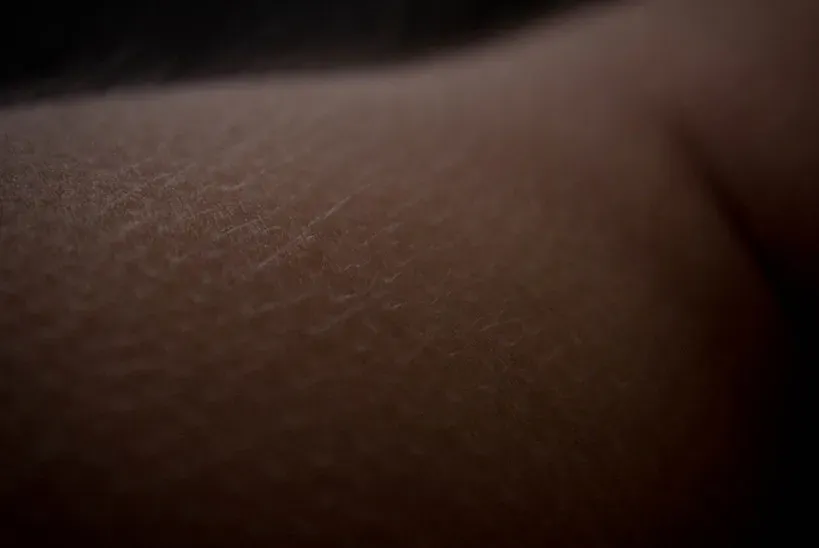
Goosebumps sit squarely under the control of the sympathetic nervous system, the same branch that powers the classic fight-or-flight response. When your brain senses danger, or even just anticipates it, this system floods the body with adrenaline-like signals. Your heart beats faster, your breathing changes, blood flow is redirected to muscles, and those tiny arrector pili muscles receive their marching orders to contract. All of this happens in a coordinated surge, often before you consciously realize what’s going on.
Because this system is tuned for speed rather than nuance, it sometimes fires in situations that aren’t truly threatening. A sudden loud noise, a plot twist in a movie, or the swell before a big musical drop can all trigger versions of the same response. Goosebumps end up being one of the more visible and tangible signs that your body has flipped into high-alert mode for a moment. It’s a reminder that your physiology is always scanning the world, quietly reacting in the background, often long before your thoughts catch up.
Why We Still Have Goosebumps in the Modern World

From a strict efficiency standpoint, goosebumps in humans might seem almost useless today. They barely warm us and certainly don’t make us look much scarier. So why didn’t evolution just get rid of them entirely? The answer is that evolution doesn’t clean house unless there’s a strong reason to. As long as a trait isn’t seriously harming survival or reproduction, it can hang around as leftover wiring, especially if it’s tied into other systems that still matter.
Because those tiny muscles and their control circuits are interwoven with crucial processes like temperature regulation and emotional arousal, trimming them out would be more like rewiring a whole house than flipping off one switch. Instead, they persist as harmless relics with occasional side effects. In a strange way, they might also help bond us socially: shared stories of goosebumps from music, fear, or awe give us common emotional ground, turning an ancient survival reflex into a tiny point of human connection.
Goosebumps as a Window Into Who We Are

When you step back and look at goosebumps from a distance, they start to feel like a small but revealing clue about what kind of creature a human really is. We’re not purely rational beings choosing every reaction; we’re layered, with primal systems stitched underneath conscious thought. Each goosebump is a quiet signal that those older layers are still alive, still sensitive, still reacting to cold, fear, beauty, and meaning, often in ways we can’t fully explain.
I still remember sitting in a dim room, listening to a song I’d heard a hundred times, and suddenly getting goosebumps so strong it felt like my skin was trying to tell me something urgent. Nothing dramatic was happening, but it felt like a collision of memory, mood, and sound. That moment made me realize how physical our inner life really is. The next time your skin prickles for no obvious reason, it might be worth pausing and asking: what part of me, ancient or modern, just woke up?