
You walk past them. Touch them. Use them every single day without a second thought. The glass in your window, the rubber band on your desk, even the water you drink.
These materials seem ordinary, almost boring if you think about it. Yet beneath the surface lurks science so strange, so fascinating, that it challenges everything you thought you understood about the world around you. Some of these everyday materials can withstand forces that would shatter steel. Others defy the basic laws of physics you learned in school. Honestly, when scientists first discovered some of these properties, they could barely believe their own measurements. What makes these materials truly extraordinary isn’t just what they can do. It’s that they’ve been hiding in plain sight all along.
Water’s Bizarre Expansion When Frozen

You’ve probably seen what happens when you leave a full water bottle in the freezer too long. The container cracks or bulges outward in strange ways. That’s water doing something almost no other material on Earth does.
Most materials contract and become denser as they cool, but water is an anomaly that actually expands when it freezes due to the formation of a crystalline structure in ice that’s less dense than liquid water. This counterintuitive property is responsible for everything from rocks breaking apart in winter to burst pipes in your home during cold snaps. The ice crystals form a hexagonal lattice structure where molecules are held farther apart than in the liquid state. Think about that for a moment. Solid ice literally floats on liquid water because of this unusual density shift.
This isn’t just a quirky science fact. It’s fundamental to life on Earth. If ice sank like most solids, lakes and oceans would freeze from the bottom up, killing aquatic ecosystems. Nature’s weird physics saved the planet.
Rubber That Shrinks When Heated

Rubber contracts when heated and expands when cooled, exhibiting the opposite behavior seen in most materials. Stretch a rubber band quickly and hold it to your lips. You’ll feel it warm up. Let it relax, and it cools down. This reverse thermal behavior baffled scientists for years.
The explanation lies in rubber’s long-chain polymer molecules, which are normally all scrunched up. When you stretch a rubber band, you straighten the molecules and pull them apart, and when you let go, cross-link bonds between the polymers help to snap them back into place. Heat gives these tangled molecules more energy to wiggle and coil tighter, causing the material to contract rather than expand. It sounds crazy, but it’s real.
This property makes rubber invaluable for applications requiring consistent performance across temperature ranges. From car tires to industrial seals, rubber’s strange thermal response keeps our modern world running smoothly.
Glass: The Liquid That Thinks It’s Solid

Here’s something that might blow your mind. The glass in your windows isn’t technically a solid. It’s an amorphous material stuck in a state between liquid and solid.
Glass is often considered the epitome of transparency and rigid structure, but scientifically, it presents a complex puzzle because it is an amorphous solid, which means its molecules are arranged irregularly like those of a liquid, rather than in the orderly lattice typically seen in crystals. This weird molecular arrangement gives glass its unique properties. It can shatter like a solid but flows imperceptibly over extremely long periods. Though the myth that medieval window glass is thicker at the bottom due to flow has been debunked, glass’s molecular structure remains fascinatingly disordered.
The development of specialized glasses like Gorilla Glass for smartphones shows how understanding this material’s quirks leads to innovation. Scientists manipulate glass at the molecular level to create versions that are incredibly thin yet remarkably resistant to damage.
Spider Silk Enhanced With Graphene

Spider silk alone is already remarkable, stronger pound for pound than steel. Natural spider silk is already amazingly strong stuff, and scientists have developed synthetic versions of the material. What happens when you combine nature’s engineering marvel with the world’s strongest synthetic material?
Researchers fed spiders water dispersed with microscopic flakes of graphene or carbon nanotubes, and graphene, taking the form of a one-atom-thick sheet of linked carbon atoms, is currently the world’s strongest material. The result was stunning. The strongest silk produced had a fracture strength up to 5.4 gigapascals and a toughness modulus up to 1,570 joules per gram, compared to normal spider silk with a fracture strength of around 1.5 GPa and a toughness modulus of around 150 J/g, making this the highest fiber toughness discovered to date and a strength comparable to that of the strongest carbon fibers or limpet teeth.
The spiders likely ingested the water along with the carbon-based materials which were then incorporated into the fiber as it was spun, with the nanotubes and graphene ending up in the central part of each fiber where they can have the biggest impact on its strength. Imagine parachutes or cables made from this material. We’re talking about a fusion of biology and nanotechnology that creates something neither could achieve alone.
Carbon’s Dramatic Transformation Under Pressure
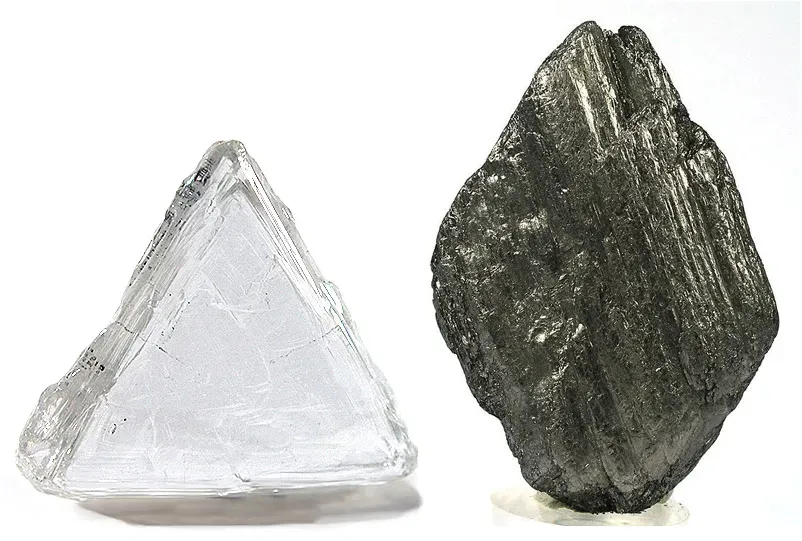
You use carbon every day when you write with a pencil. Soft, brittle graphite that crumbles and leaves marks on paper. Yet this same element becomes something entirely different under extreme conditions.
Under high pressure, carbon can transform its structure to form diamonds, a transformation that is a natural occurrence deep within the Earth’s mantle and is replicated in synthetic processes controlled for industrial purposes. The atoms don’t change. Only their arrangement shifts, and suddenly the softest writing material becomes the hardest substance in nature. This metamorphosis happens when carbon atoms rearrange from flat sheets into a tetrahedral crystal lattice.
The same element, completely different properties. It’s like discovering your neighbor leads a double life as a superhero. Industrial applications now exploit this transformation to create synthetic diamonds for cutting tools, electronics, and even potential quantum computers.
Metal Fatigue From Everyday Stress
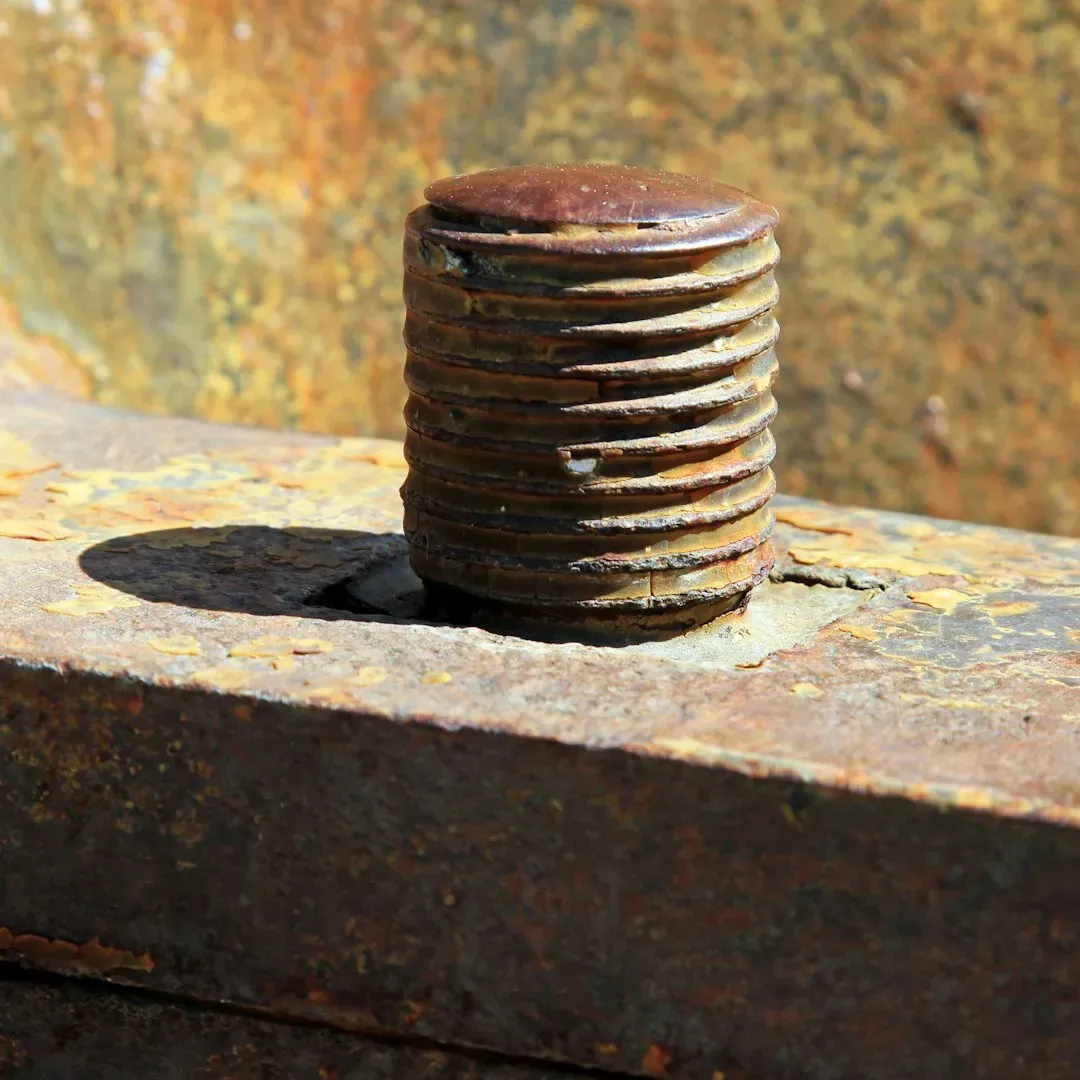
Metal fatigue happens when tiny cracks inside a metal gradually grow into bigger ones until the whole thing snaps in half, and when you bend a paperclip first one way and then another, you’re subjecting it to giant deformations much bigger than the ones most everyday metal objects experience. That innocent little paperclip is undergoing catastrophic structural failure at the microscopic level.
Metals seem permanent and unchanging. Yet repeated stress causes invisible damage that accumulates over time. Aircraft wings, bridge supports, even the humble paperclip all suffer from this phenomenon. The metal remembers every bend, every twist, storing that mechanical history in growing fractures too small to see.
Engineers must account for metal fatigue in everything from skyscrapers to surgical implants. Understanding how metals fail under repeated stress has prevented countless disasters. Next time you break a paperclip after bending it back and forth, you’re witnessing the same process that aerospace engineers spend billions trying to prevent.
Ice’s Mysterious Slipperiness

A century and a half of scientific inquiry has yet to determine why ice can make you fall down, though scientists agree that a thin layer of liquid water on top of solid ice causes its slipperiness, and that a fluid’s mobility makes it difficult to walk on even if the layer is thin, but there’s no consensus as to why ice, unlike most other solids, has such a layer. Here’s the thing. We still don’t completely understand it.
Theorists have speculated that it may be the very act of slipping making contact with the ice that melts its surface, while others think the fluid layer is there before the slipper ever arrived and is somehow generated by the inherent motion of surface molecules. Ice skating, winter driving, the danger of icy sidewalks. All depend on a phenomenon scientists are still debating after more than 150 years of research.
This humbling fact reminds us how much we still don’t know. Something as common as slipping on ice involves physics complex enough to stump the brightest minds. The everyday world holds mysteries we haven’t solved.
The Brazil Nut Effect in Your Snack Bowl
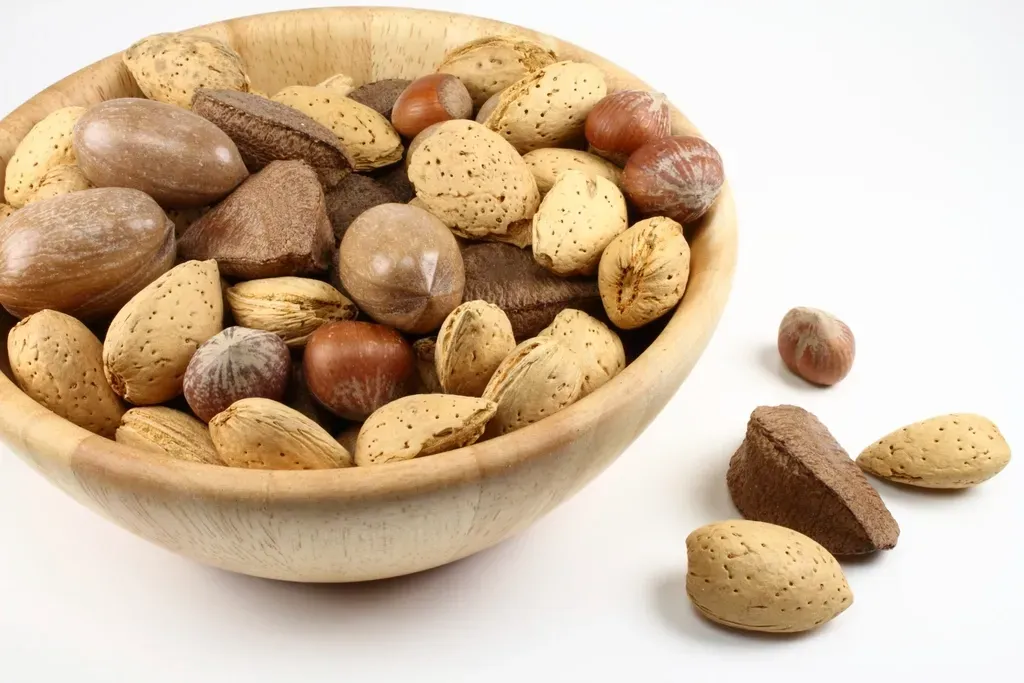
Open a can of mixed nuts and the largest ones always seem to end up on top. You’ve probably noticed this countless times without thinking much about it. Turns out, this simple observation connects to one of physics’ unsolved mysteries.
This is known as the “Brazil nut effect,” and the seemingly mundane phenomenon is actually one of the biggest unsolved mysteries in many-body physics, the science that describes large quantities of interacting objects. When containers of mixed particles are shaken, larger particles migrate upward against gravity. Scientists have proposed various mechanisms involving particle size, density differences, and void filling, but no single theory explains all observed cases.
Physicists have figured out some extremely fine details of the universe, from the radius of black holes to the behavior of subatomic particles neither of which we can even see, yet they lack explanations or have only recently stumbled upon them for many common phenomena we observe in daily life, and some of the most mysterious things of all may be those that seem mundane. Your snack bowl contains physics puzzles that challenge our understanding of how matter behaves in groups.
Conclusion

The materials surrounding you right now are far stranger than they appear. Water that expands when frozen. Rubber that defies thermal logic. Glass suspended between states of matter. These aren’t exotic substances locked away in laboratories. They’re in your home, your car, your kitchen.
Science reveals that the ordinary is extraordinary when you look closely enough. The next time you fill an ice tray or stretch a rubber band, remember you’re witnessing physics that still surprises researchers. Some of these materials harbor properties we’re only beginning to understand, while others combine in ways that create entirely new possibilities.
What other everyday materials are hiding secrets in plain sight? The world around you is full of scientific wonders waiting to be noticed. Did you expect that something as simple as a bowl of mixed nuts could stump physicists? What do you think about it? Tell us in the comments.