
You’ve had that moment before. Someone you haven’t heard from in months pops into your mind, and within minutes your phone rings with their name on the screen. Or you walk into a room and instantly sense the tension without a word being spoken. These aren’t just coincidences your grandmother used to talk about over tea. They might be breadcrumbs leading to something far more profound about how our minds actually work together.
Here’s the thing. What if we’ve been looking at consciousness all wrong? What if your thoughts and feelings aren’t trapped inside your skull like some isolated echo chamber, but instead ripple outward into something bigger, something shared? Scientists are finally starting to take this idea seriously, and the implications are honestly mind-bending. Let’s dive into what might be one of the most fascinating questions about human existence.
The Ancient Idea Getting a Modern Makeover
Long before neuroscience entered the picture, Greek philosophers pondered a universal logos, a hidden order of mind beneath appearances, with Plato even imagining a realm where ideal forms existed independently of perception. Think about that for a second. People thousands of years ago, without brain scanners or laboratory equipment, somehow intuited that our minds might connect to something universal.
In recent years, mainstream neuroscience has quietly begun to broach a subject Swiss psychiatrist Carl Jung proposed more than a century ago: that humans share a collective unconscious, a kind of hidden mental layer that stores universal symbolic archetypes that shape dreams, myths, and inner experiences across civilizations. What makes this shift so intriguing is that hard science is now examining what mystics and philosophers have been saying all along. Patterns of consciousness may not live only inside individual brains; they could also inhabit something like a shared informational field, a kind of collective memory that our minds can access.
When Strangers See the Same Strange Things

Across cultures, centuries, and altered states, people have reported encountering strikingly similar figures: tricksters, guides, watchful presences, or shadowy beings, often taking familiar forms from animals like coyotes and monkeys to clowns, jesters, or mischievous humanlike figures that seem to interact with the person before them. Let’s be real, that’s weird. How do people who’ve never met, living continents apart, describe nearly identical experiences?
Honestly, it’s hard to dismiss this as pure chance. Studies suggest that our neural architecture might be accessing a shared realm of consciousness that causes people across time and civilizations to see the same figures during altered states. A recent study of shamanic rituals found that archetypal symbols – masks, totems, and other culturally charged forms – significantly shaped participants’ states of consciousness, suggesting that collective cultural symbols can shape experiences beyond one’s own person. Your brain might literally be tuning into channels that have existed for millennia.
Your Brain Might Have a Hidden Layer
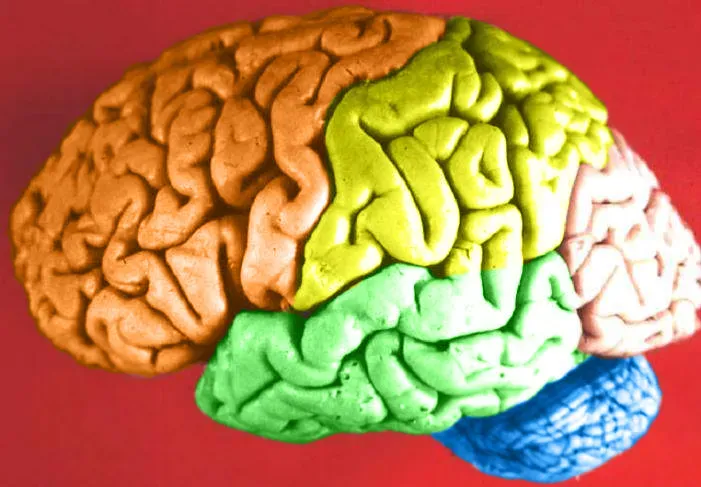
Proponents of the collective unconscious theory in neuroscience suggest that mental commonalities in humans originate especially from the subcortical area of the brain, specifically the thalamus and limbic system, which link the brain to the rest of the nervous system and are said to control vital processes including emotions and long-term memory. So we’re not talking about mystical energy fields here, at least not entirely. There’s actual brain hardware involved.
Recent review reframes Jung’s work as the interaction between brains: neural patterns that may be shared across individuals and shaped by social learning and neural attunement. What catches my attention is how this bridges the gap between the biological and the experiential. Mirror neurons respond to intentions and emotions, and there is speculation that these neurons could be central in fostering collective experiences, playing a significant role in the emergence of language and reflective self-consciousness. Your neurons might literally be mirroring what’s happening in someone else’s mind.
The Global Consciousness Project’s Bizarre Discovery

This is where things get really strange. The Global Consciousness Project, which began in 1998, is a parapsychology experiment attempting to detect possible interactions of global consciousness with physical systems by monitoring a geographically distributed network of hardware random number generators to identify anomalous outputs that correlate with widespread emotional responses to world events or periods of focused attention by large numbers of people. Yes, you read that correctly. They’ve got machines detecting when millions of people focus on the same thing.
After testing 500 formally defined events over nearly 20 years of this project, the odds against chance for the outcome was above a trillion to one, indicating that something happened, though firmly establishing the nature of that something is not yet clear. Critics argue it’s pattern matching, but a trillion to one? That’s not easy to brush off. The hypothesis is that there will be structure in what should be random data, associated with major global events that engage our minds and hearts.
Quantum Weirdness in Your Neurons
I know it sounds crazy, but stay with me. A new study from Shanghai University submits evidence that one particular process of the human brain exhibits behavior akin to quantum entanglement, a phenomenon when two particles become inextricably linked even across vast distances. Einstein famously called this “spooky action at a distance,” and now researchers think it might be happening in your head.
Shanghai University physicists explain how entangled photons emitted by carbon-hydrogen bonds in nerve cell insulation could synchronize activity within the brain. Still skeptical? Recent findings revealed that the entanglement of qubits in stimulus configurations explained roughly one eighth of the variance in accuracy within the experimental group, the Q coefficient captured up to nearly one third increase in variance across twin responses, while neuroplasticity markers explained about one quarter increase in cognitive performance under entangled conditions, providing robust evidence that quantum entanglement enhances conscious experience. The numbers are starting to add up.
The Heart’s Invisible Reach
Your heart isn’t just a pump. Just as our brain emits an electromagnetic field detected by devices such as electroencephalogram, so too does the heart, with the heart’s electrical field around 60 times greater in amplitude than the brain and detectable from several feet away from the body. Think about the last time you walked into a tense room and immediately felt it. That wasn’t imagination.
This field of energy might help explain why we can sometimes feel someone else’s energy or sense the energy of a room upon entering it. From an evolutionary standpoint, this makes perfect sense. It makes sense that we should be able to quickly process danger or safety, threat or warmth, without making elaborate cognitive appraisals. Your heart and brain might be constantly reading invisible signals from the people around you.
The Collective Mind at Work
Recent theoretical and empirical research suggests that humans often represent a collective mind, both as the perspectival origin and its target. This isn’t just philosophical musing anymore. Research suggests that representations of a collective mind cause psychological amplification of co-attended stimuli, create relational bonds, and increase cooperation among co-attendees.
Collective consciousness is baked into the architecture of the human mind, at the foundation of a uniquely human psychology wherein homo sapiens have the intent and the capacity to cooperate with beings that are living and dead, human and otherwise. Look around at how humans coordinate in massive groups, build civilizations, and create culture. Maybe we’ve been underestimating the mechanism that makes all this possible. Representing oneself as part of a collective mind strengthens relational bonds and increases cooperation, especially when it functions as both the origin and target of a representation.
What This Means for Your Daily Life

The idea of collective consciousness, where minds merge to share a unified experience, may no longer be the realm of philosophy or science fiction, as with advancements in neurotechnology including brain-computer interfaces and quantum communication, we are on the cusp of making this extraordinary concept a reality. We’re standing at the edge of something transformative.
Subtle but real effects of consciousness are important scientifically, but their real power is more immediate as they encourage us to make essential healthy changes in the great systems that dominate our world, and knowing that large scale group consciousness has effects in the physical world, we can intentionally work toward a brighter, more conscious future. Imagine what happens when we collectively understand that our thoughts and intentions genuinely influence reality beyond our individual skulls. The way we approach conflict, cooperation, and community could fundamentally shift.
Where We Go From Here
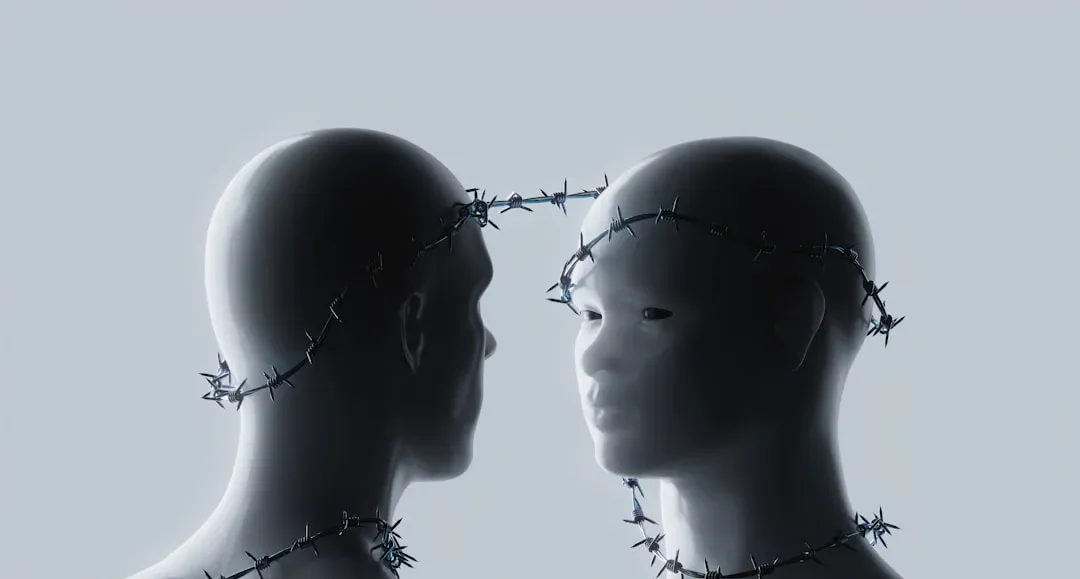
The evidence keeps piling up from multiple directions. Neuroscience finds shared neural patterns. Quantum physics discovers entanglement in biological systems. Psychology confirms that groups can think and feel as unified wholes. Ancient wisdom traditions suddenly don’t seem so mystical anymore.
Yet we’re only scratching the surface. The mechanisms remain murky, and mainstream science still approaches this territory with appropriate skepticism. That’s healthy. Extraordinary claims need extraordinary evidence, and researchers are working hard to provide it. The beautiful thing is that this isn’t about proving magic exists. It’s about understanding consciousness in ways we never imagined possible, about recognizing that the boundaries between self and other might be far more permeable than we thought.
So the next time someone randomly pops into your head right before they call, pay attention. You might be tapping into something that connects all of us in ways science is only beginning to understand. What do you think happens when humanity fully grasps that we’re not isolated islands of consciousness? What changes when we realize we’re all connected to something bigger?