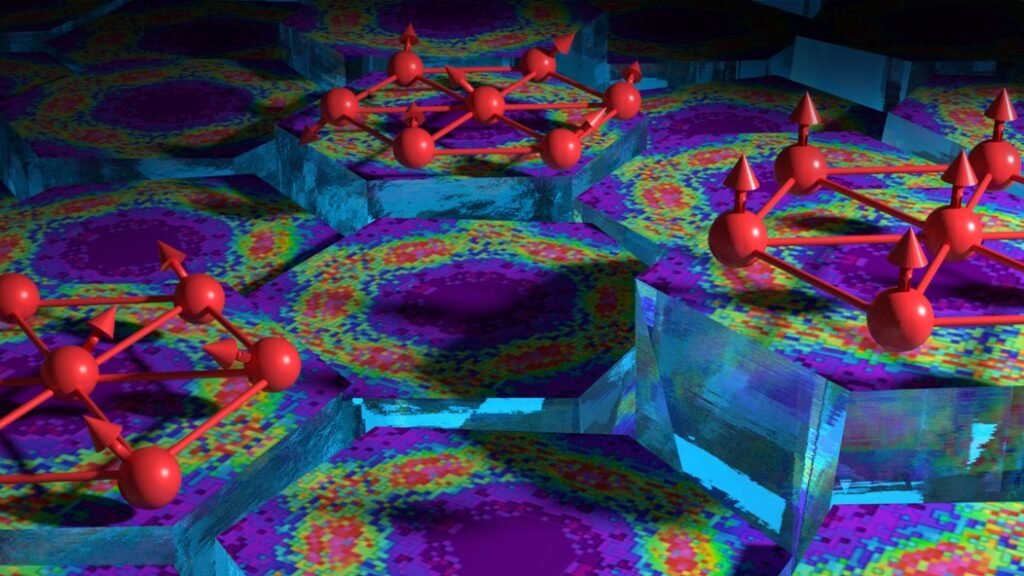

Imagine discovering something that simply shouldn’t be there. Like finding a shadow that refuses to be cast away by light, or a door that opens into a room that can’t physically fit inside the building. That’s essentially what happened when researchers stumbled upon a state of matter that defies our most trusted theoretical predictions. Theoretical physics told us it was impossible, yet there it was, sitting right in front of them in the lab.
A material called CeRu4Sn6 managed to retain its topological state despite losing particle behavior and quantum criticality. To understand how shocking this is, you need to grasp that topological materials were supposed to need these very properties to exist. The conventional wisdom has been flipped completely upside down. Let’s dive into what makes this discovery so unsettling for physicists, and why it might just rewrite what you thought you knew about the quantum world.
The Impossible Material That Breaks the Rules
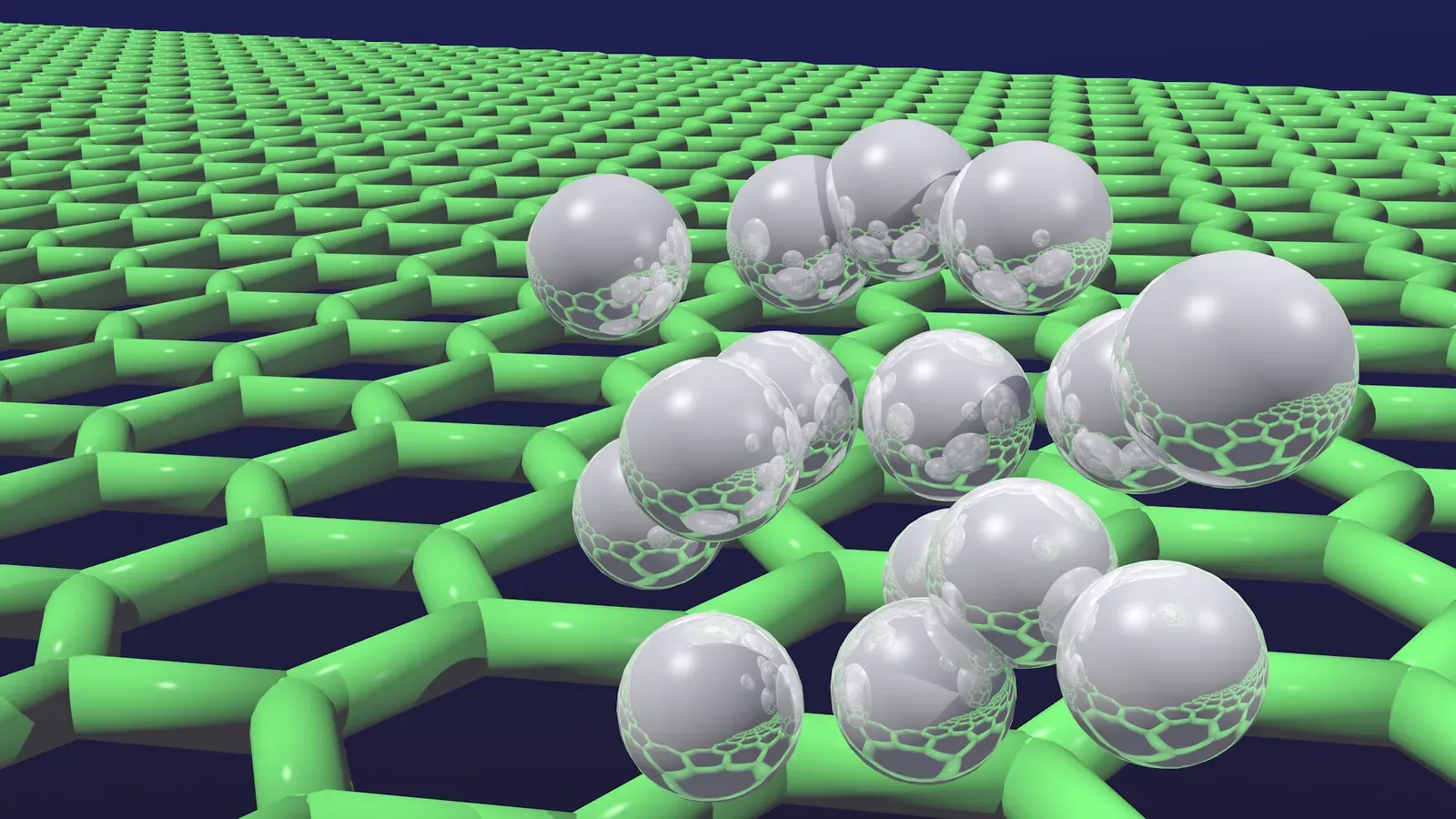
Scientists studying the material CeRu4Sn6 found that despite losing particle behavior and quantum criticality, the material retains its topological state, creating a new kind of semimetal that redefines topological states. This shouldn’t happen according to simple theoretical models that predicted topological characteristics would require these particle-like properties. Yet here we are, staring at experimental evidence that says otherwise.
In this case, no magnetic field was needed for the Hall effect deflection, instead coming from the material’s own topological properties, suggesting that a particle picture is not required to generate topological properties. Think of it like discovering you can bake bread without flour. The fundamental ingredient everyone thought was essential turns out to be optional under certain conditions. It’s hard to say for sure what this means for the future, but the implications are staggering.
Quantum Liquid Crystals at the Edge of Reality
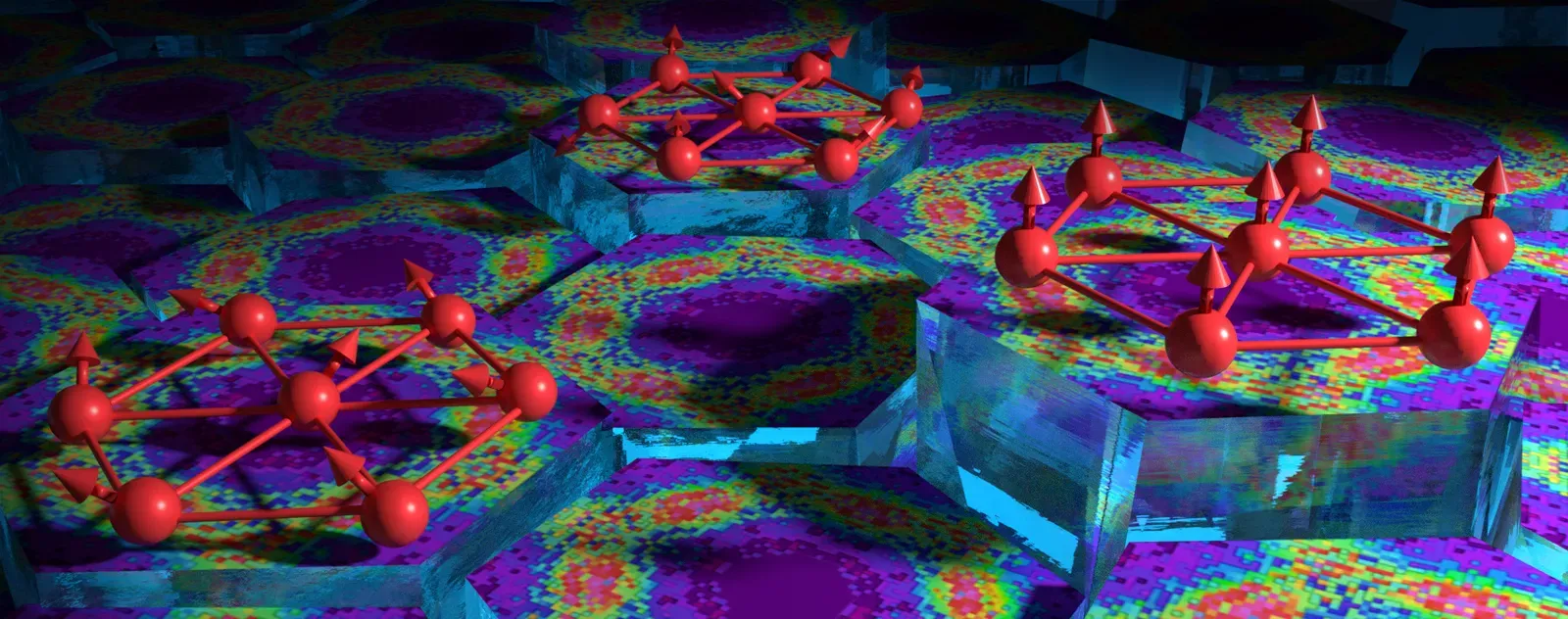
At the edge of two exotic materials, scientists have discovered a new state of matter called a quantum liquid crystal, where a conductive Weyl semimetal and a magnetic spin ice meet under a powerful magnetic field, causing electrons to flow in odd directions and break traditional symmetry. The behavior is completely unlike anything observed before. You could describe it as electrons deciding to play by their own set of rules, ignoring the instruction manual physicists have been writing for decades.
This interaction leads to a very rare phenomenon called electronic anisotropy where the material conducts electricity differently in different directions, and when the magnetic field is increased, electrons suddenly start flowing in two opposite directions. Honestly, when electrons start behaving this unpredictably, you know you’re dealing with something fundamentally new. The team spent over two years just trying to understand what their experiments were showing them.
Excitons That Shouldn’t Hold Together
The newly discovered state is a new phase of matter, similar to how water can exist as liquid, ice or vapor, but it’s only been theoretically predicted and no one has ever measured it until now. This phase involves electrons and holes pairing up to form excitons, which then do something completely unexpected. Unusually, the electrons and holes spin together in the same direction.
Creating this quantum state required exposing the material to magnetic fields of up to 70 Teslas, and as the magnetic field increased, the researchers observed a sharp drop in the material’s electrical conductivity, indicating the system had shifted into the exotic exciton state. It’s like watching a perfectly choreographed dance where the dancers are quantum particles moving in impossible synchronization. The most exciting part? This state could revolutionize how we think about energy efficiency in computing.
Time Crystals That Mock Thermodynamics
Here’s where things get really wild. Time crystals are quantum systems of particles whose lowest-energy state is one in which the particles are in repetitive motion, and the system cannot lose energy to the environment and come to rest because it is already in its quantum ground state. Let’s be real, this sounds like something pulled straight from science fiction.
A no-go theorem rules out the possibility of time crystals in the ground state or in the canonical ensemble of a general Hamiltonian, which consists of not-too-long-range interactions. Theory explicitly said these couldn’t exist. New research showed that time crystals could still exist in theory, but only if there was some external driving force that would bring the time regularity to life, which solved the paradox of perpetual motion. Scientists essentially found a loophole in the laws of physics.
The Chiral Mystery in Bose Liquids
The discovery of the chiral bose-liquid state opens a new path in the age-old effort to understand the nature of the physical world. This state emerges from something called quantum frustration, which sounds like what you might feel trying to understand quantum physics in the first place. If you cool quantum matter in a chiral state down to absolute zero, the electrons freeze into a predictable pattern, and the emergent charge-neutral particles in this state will all either spin clockwise or counterclockwise, and you can’t alter its spin.
When an outside particle smashes into one of the particles in the chiral edge state, instead of sending just one particle flying like expected, all 15 particles would react in exactly the same way. Imagine hitting one domino and having every single one respond identically without falling. That’s not how classical physics works, but apparently it’s how the quantum realm operates.
Wigner Crystals That Melt and Don’t Melt
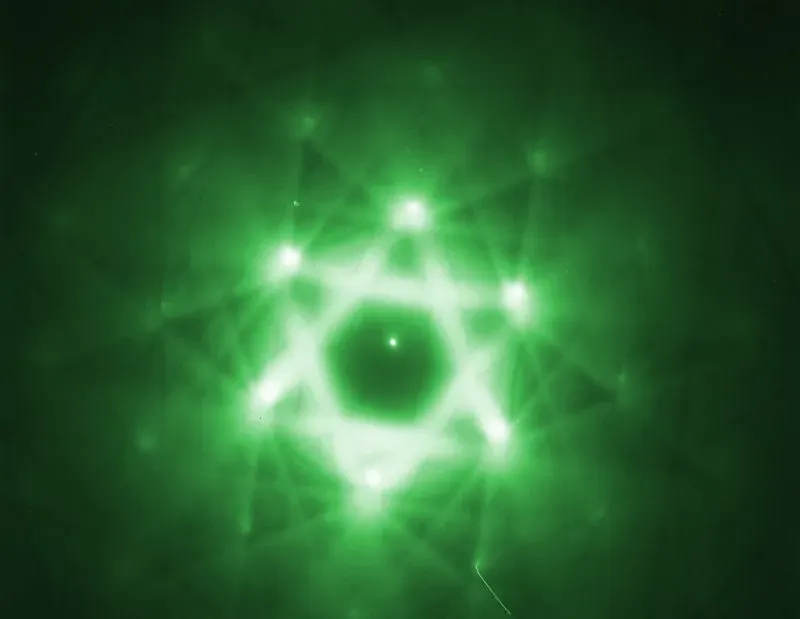
A team of physicists has shown the conditions necessary to stabilize a phase of matter in which electrons exist in a solid crystalline lattice but can melt into a liquid state, known as a generalized Wigner crystal. Think about ice that can be solid and liquid simultaneously, refusing to commit to just one state. That’s essentially what these electrons are doing.
A new state of matter was discovered in which conducting and insulating properties coexist due to unusual electron behaviors, where the generalized Wigner crystal can partially melt while some electrons remained frozen and other electrons began moving around the system. The researchers called this the “pinball phase,” which is surprisingly accurate. Some electrons stay put like pins while others zoom around them. It’s a bizarre hybrid that challenges our understanding of what states of matter can actually be.
Fractional Excitons That Defy Classification
Findings point toward an entirely new class of quantum particles that carry no overall charge but follow unique quantum statistics, unlocking a range of novel quantum phases of matter and opening up new possibilities in quantum computation. These fractional excitons don’t behave like bosons or fermions, the two fundamental categories all particles are supposed to fall into. They’re breaking the classification system itself.
Fractional excitons could represent an entirely new class of particles with unique quantum properties, and some of these excitons arise from the pairing of fractionally charged particles, creating fractional excitons that don’t behave like bosons. You’re watching physicists realize that the periodic table of particles might need some serious expansion. The rules we thought were absolute are turning out to be more like guidelines.
What This Means for the Future
The findings address a gap in condensed matter physics by demonstrating that strong electron interactions can give rise to topological states rather than destroy them, revealing a new quantum state with substantial practical significance. This isn’t just academic curiosity. This discovery may allow signals to be carried by spin rather than electrical charge, offering a new path toward energy-efficient technologies like spin-based electronics or quantum devices, and this new quantum matter isn’t affected by any form of radiation, making it ideal for space travel and computers that are going to last.
With this connection between topological properties and quantum-critical behavior established, the team of scientists has come to believe that many more emergent materials are just waiting to be discovered. The door has been kicked wide open. What we thought was impossible is turning out to be just the beginning of understanding matter at its most fundamental level. These discoveries suggest that the universe has far more tricks up its sleeve than our theories accounted for, and honestly, that’s both terrifying and thrilling in equal measure.
The fact that these states exist despite theoretical prohibitions tells us something profound about the limits of our understanding. Theory is a map, but the territory of quantum reality is proving to be far stranger than the map suggested. What other impossible things are waiting to be discovered in your laboratories right now? Did you expect that the laws of physics had this many loopholes? Tell us what you think in the comments.