
You’ve probably wondered at some point whether you’re the only one truly aware. Maybe you’ve looked at your dog and questioned if it really feels joy or fear, or glanced up at the stars and pondered if awareness extends beyond your skull. These questions aren’t just philosophical daydreams anymore. They’re becoming central to cutting-edge science, and the answers might completely reshape how you see yourself and everything around you.
Here’s the thing. The more scientists dig into consciousness, the stranger things get. What if awareness isn’t something your brain creates from scratch? What if it’s been woven into the fabric of reality this whole time, waiting for the right conditions to light up? Let’s dive in.
The Ancient Idea Making a Stunning Comeback
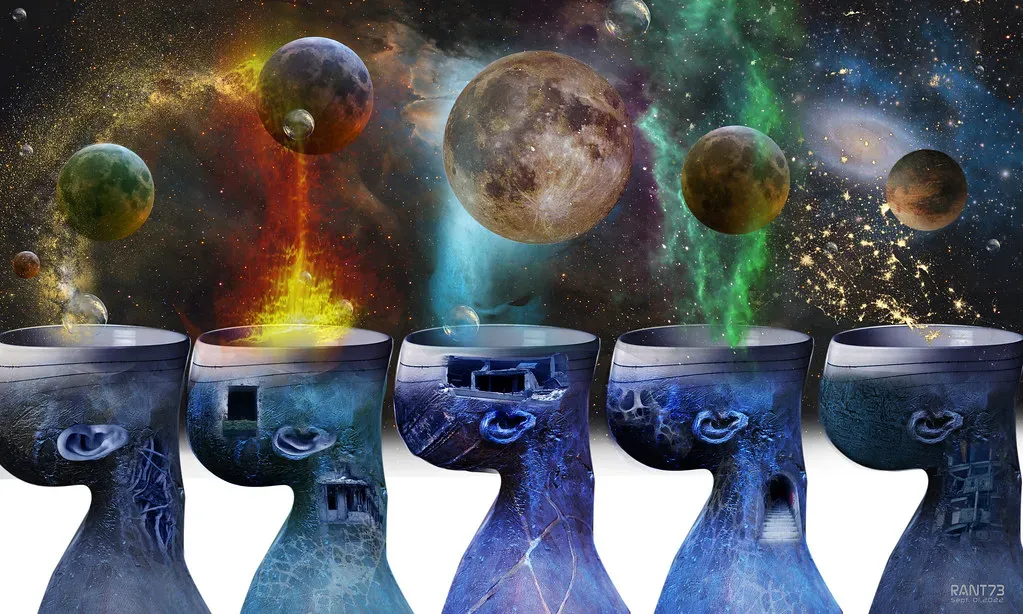
Panpsychism is the view that the mind or consciousness is a fundamental and ubiquitous feature of reality, described as existing throughout the universe. This isn’t some fringe New Age concept cooked up last Tuesday. Philosophers including Thales, Plato, Spinoza, Leibniz, Schopenhauer, William James, Alfred North Whitehead, and Bertrand Russell have all ascribed to it in some form.
The wild part? Recent interest in the hard problem of consciousness and developments in neuroscience, psychology, and quantum mechanics have revived interest in panpsychism in the 21st century. It’s not just old philosophers in dusty libraries anymore. Modern scientists and thinkers are seriously reconsidering whether consciousness runs deeper in nature than anyone previously imagined. Philip Goff notes that panpsychism used to be laughed at, but now we are in the midst of a full-blown panpsychist renaissance.
Why Your Brain Might Not Create Consciousness After All
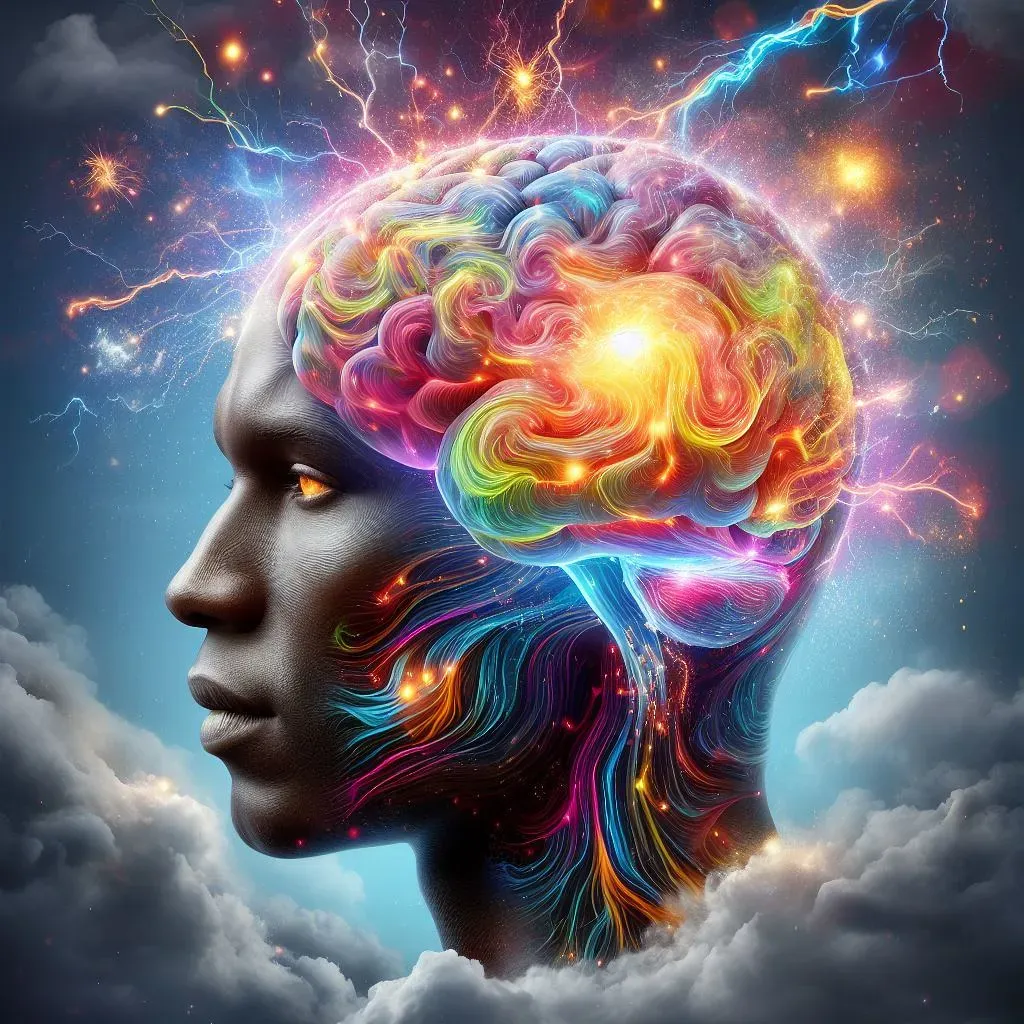
Think about it this way. Your brain weighs roughly three pounds of soggy tissue. It’s incredible at processing information, sure. Still, how does wet matter suddenly become your vivid experience of tasting coffee or hearing music?
Philosopher Colin McGinn described this mystery as somehow the water of the physical brain being turned into the wine of consciousness. Scientists can map every neuron firing when you see the color blue, yet they cannot explain why blue feels the way it does to you. Part of the appeal of panpsychism is that it appears to provide a workaround: we no longer have to worry about how inanimate matter forms minds, because mindedness was there all along, residing in the fabric of the universe.
Let’s be real. The standard explanation that consciousness emerges from complex brain activity sounds plausible until you really examine it. Emergence works for things like wetness from water molecules. Consciousness? That’s a whole different beast.
Consciousness as a Fundamental Force Like Gravity
The concept proposes that consciousness is a fundamental aspect of reality, like mass or electrical charge. Stop and absorb that for a second. Gravity doesn’t emerge from anything simpler. It just is. Mass just is. Some scholars have suggested consciousness is a fundamental aspect of the universe, and asking why there is consciousness is akin to asking why there are laws in physics.
David Chalmers has embraced a form of panpsychism, suggesting that individual particles might be somehow aware, with a photon possibly having some element of raw, subjective feeling, some primitive precursor to consciousness. Honestly, it sounds bizarre at first. A photon being aware? Yet when you consider the alternative explanations fall flat on their face trying to bridge the gap between neurons and subjective experience, maybe bizarre is exactly where the truth lives.
From Cosmos Down to Quarks
For the priority monist there is one and only one fundamental thing: the universe, and if we combine priority monism with constitutive panpsychism we get constitutive cosmopsychism, the view that all facts are grounded in consciousness-involving facts at the cosmic level. This version flips the whole script. Instead of tiny particles each having their own bit of awareness that somehow adds up to your experience, the entire cosmos might be one unified consciousness that fragments into individual perspectives.
Standardly the panexperientialist holds that this diminishing of the complexity of experience continues down through plants, and through to the basic constituents of reality, perhaps electrons and quarks. Your consciousness wouldn’t be fundamentally different from the universe’s consciousness. Just more localized, more complex, more differentiated. Kind of wild when you think about it.
Quantum Weirdness Meets Awareness
Here’s where things get truly strange. The notion that quantum physics must be the underlying mechanism for consciousness emerged in the 1990s, when Nobel Prize-winning physicist Roger Penrose and anesthesiologist Stuart Hameroff popularized the idea that neural microtubules enable quantum processes in our brain, giving rise to consciousness.
If this quantum theory of consciousness tied to microtubules turns out to be correct, it could revolutionize our understanding of consciousness and even strengthen the theory that, on a quantum level, consciousness is capable of being in all places at the same time. Recent experiments in 2026 continue to pile up evidence. Lab evidence for long-lived quantum states inside microtubules keeps stacking, with Jack Tuszynski’s team watching coherence last five nanoseconds, thousands of times longer than textbook estimates, and colleagues at the University of Central Florida detecting re-emission for up to a second.
Animals, Plants, and the Expanding Circle

You’re not the only one potentially tapping into cosmic consciousness. The New York Declaration of Animal Consciousness acknowledges strong scientific support of conscious experience in birds and mammals, and the realistic possibility of conscious experience in all vertebrates and many invertebrates including, at minimum, cephalopod mollusks, decapod crustaceans, and insects.
In the last two years alone we’ve learned that bees display apparent play behavior, zebrafish show signs of curiosity, and fruit flies have active and quiet sleep, with social isolation disrupting their sleep patterns. If consciousness is fundamental, then it makes sense we’d find it showing up in all sorts of unexpected places. The Cambridge Declaration on Consciousness unequivocally asserted that humans are not unique in possessing the neurological substrates that generate consciousness, with non-human animals, including all mammals and birds, and many other creatures, including octopuses, also possessing these neural substrates.
The Theory That Measures Consciousness Mathematically
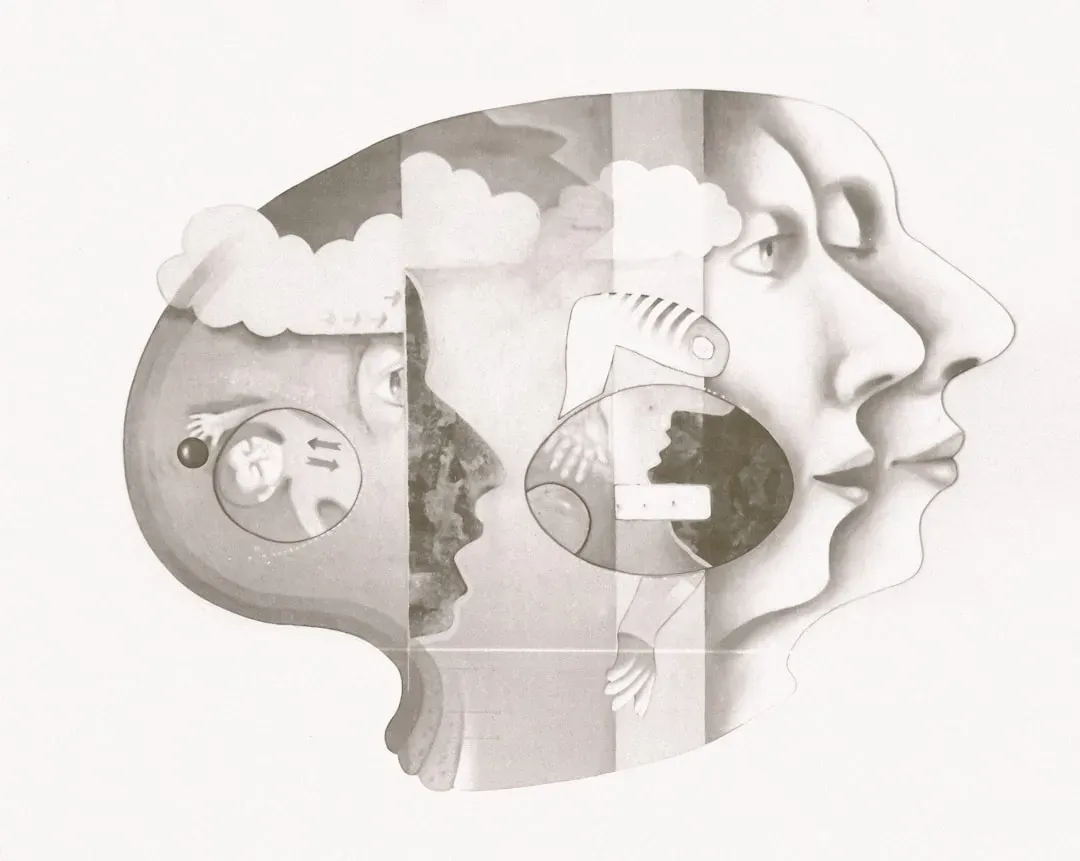
The integrated information theory of consciousness, proposed by neuroscientist and psychiatrist Giulio Tononi in 2004 and since adopted by other neuroscientists such as Christof Koch, postulates that consciousness is widespread and can be found even in some simple systems. IIT doesn’t just philosophize. It attempts to quantify awareness through something called phi, which measures how much integrated information a system possesses.
According to IIT, integrated information corresponds to the quantity of consciousness, meaning a system’s consciousness (what it is like subjectively) is conjectured to be mathematically described by the system’s causal structure. The implications are enormous. According to IIT, consciousness probably goes all the way down, and as long as particles have some phi above zero that is not surpassed by some greater system, particles must nevertheless enjoy some very basic form of subjective experience.
A Universe Where Everything Might Be Aware
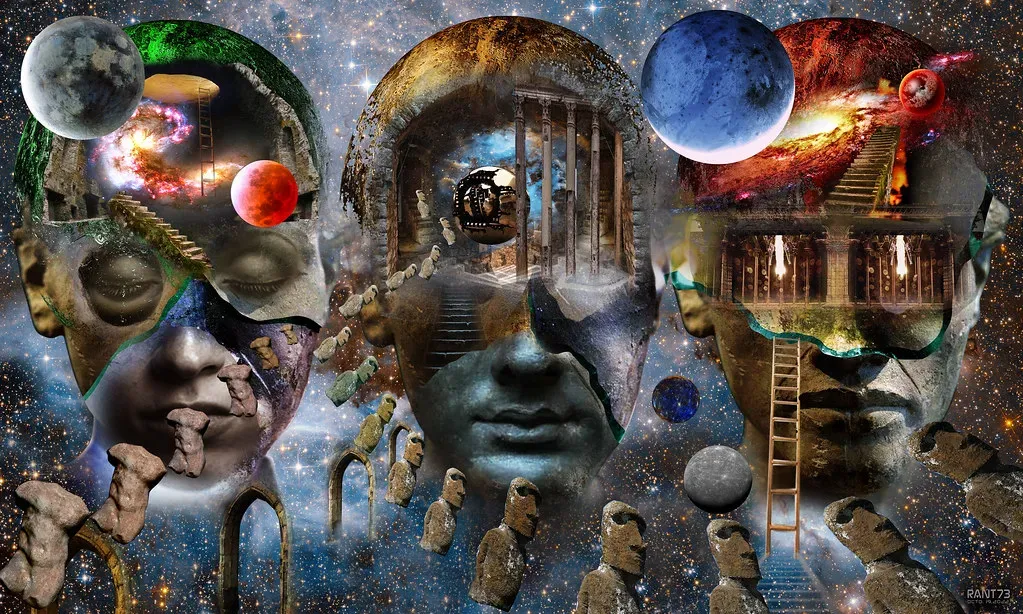
A framework proposes consciousness is not viewed as a byproduct of brain activity, but as a fundamental field underlying everything we experience – matter, space, time, and life itself, a theory in which consciousness comes first, and structures such as time, space and matter arise afterwards. This November 2025 theoretical model published by physicist Maria Strømme turns everything you learned in science class on its head.
The theory suggests that our individual consciousness does not cease at death, but returns to the universal field of consciousness from which it once emerged, formulated in quantum-mechanical terms. Whether you find that comforting or unsettling probably depends on your worldview. Either way, it’s a radical reimagining of existence that serious scientists are now exploring with mathematical rigor, not just poetic speculation.
Conclusion: Rethinking Your Place in Reality
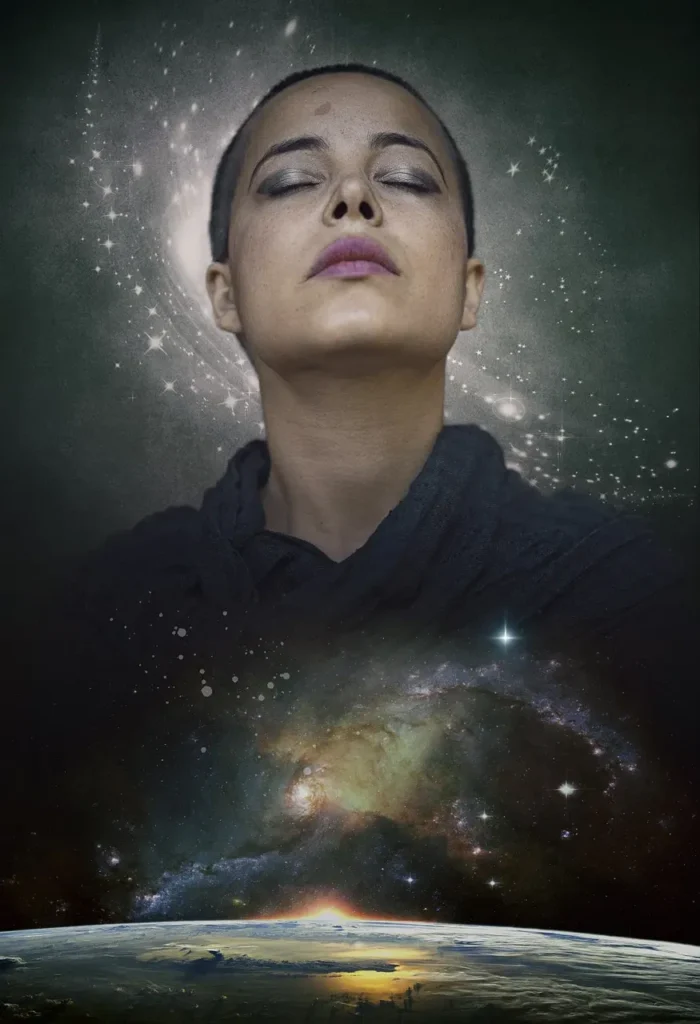
So where does all this leave you? Standing at a crossroads between two radically different visions of reality. One where consciousness is a lucky accident, a byproduct of evolution that happens to exist in your skull and nowhere else. The other where awareness permeates everything, from subatomic particles to the cosmos itself, with you being one particular expression of something far vaster.
The honest truth? Nobody knows for certain yet. Science is still wrestling with these questions, running experiments, building theories, arguing passionately in academic journals. What’s changed is that the idea of consciousness as fundamental is no longer dismissed out of hand. It’s being taken seriously by neuroscientists, physicists, and philosophers alike.
Maybe your intuition that there’s something deeply mysterious about awareness, something that can’t be reduced to firing neurons, has been right all along. The universe might be far stranger and more meaningful than the mechanistic worldview suggests. What do you think? Does the possibility that consciousness runs through everything change how you see your morning coffee, your pet, even the ground beneath your feet?