
You’ve probably heard of string theory, that ambitious attempt to unify all of physics under one elegant framework. For decades, theorists have been wrestling with a frustrating problem. The math worked beautifully for certain types of universes, but our own cosmos seemed to sit just outside the theoretical fence. Let me explain why this matters more than you might think.
Dark energy, discovered by astronomers in 1998, fundamentally transformed how we understand the cosmos and simultaneously created a major challenge for string theory. Two physicists recently offered a formula showing how string theory could finally give rise to a universe similar to ours, one undergoing accelerated expansion. This isn’t just abstract mathematics. It’s about whether our most promising theory of everything can actually describe the universe we inhabit.
The Dark Energy Dilemma That Haunted String Theory
Dark energy represents a positive energy causing our universe to expand at an accelerating rate. Here’s the thing, though. The best-understood models of string theory could only describe universes with energy that is either negative or zero. Think about that for a moment. Your most elegant theory of quantum gravity simply couldn’t accommodate the type of universe we actually observe.
String theory appeared useful only for describing a universe with a negative anti-de Sitter geometry, whereas we live in a universe with a positive de Sitter geometry. Physicists call this geometric distinction crucial because it determines whether spacetime curves inward or expands outward. Our universe does the latter, and for years, string theory struggled to explain why.
A Breakthrough From Madrid Changes Everything
Bruno Bento and Miguel Montero of the Institute for Theoretical Physics in Madrid described a universe with dark energy that should weaken over time, matching preliminary cosmic observations from recent years. Their work represents the very first example from string theory of an explicit de Sitter space. Honestly, that’s a monumental achievement after decades of theoretical dead ends.
The researchers didn’t just pull this out of thin air. Bento and Montero applied thinking about the Casimir effect to the process of compactification, where the 10-dimensional physics of string theory becomes the four-dimensional realm we inhabit. In selecting a geometry for the compact extra dimensions, they chose a space resembling a torus, which Bento described as a simple shape.
The Casimir Effect Becomes the Missing Puzzle Piece
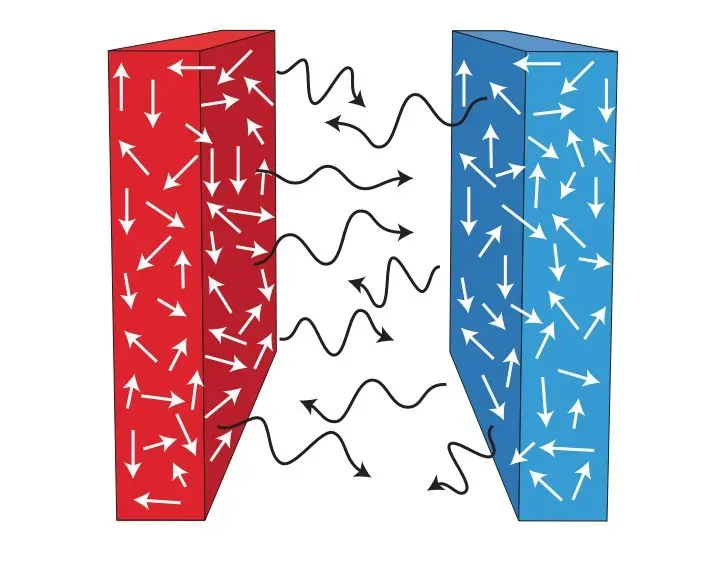
You might be wondering what quantum vacuum fluctuations have to do with cosmic expansion. In a vacuum, space is never completely empty, with particles popping in and out of existence and tiny fluctuations causing quantum fields to do the same. Dutch physicist Hendrik Casimir recognized in 1948 that in the narrow space between two conducting plates, not all quantum fields can pop into existence, as long wavelengths get cut off, leading to lower energy density inside the plates than outside.
The mismatch of energies creates a force that tries to push the plates together. Bento and Montero cleverly adapted this principle to string theory’s hidden dimensions. The result? A mechanism that could generate the positive energy we observe as dark energy while maintaining mathematical consistency.
Dark Energy That Changes Over Time
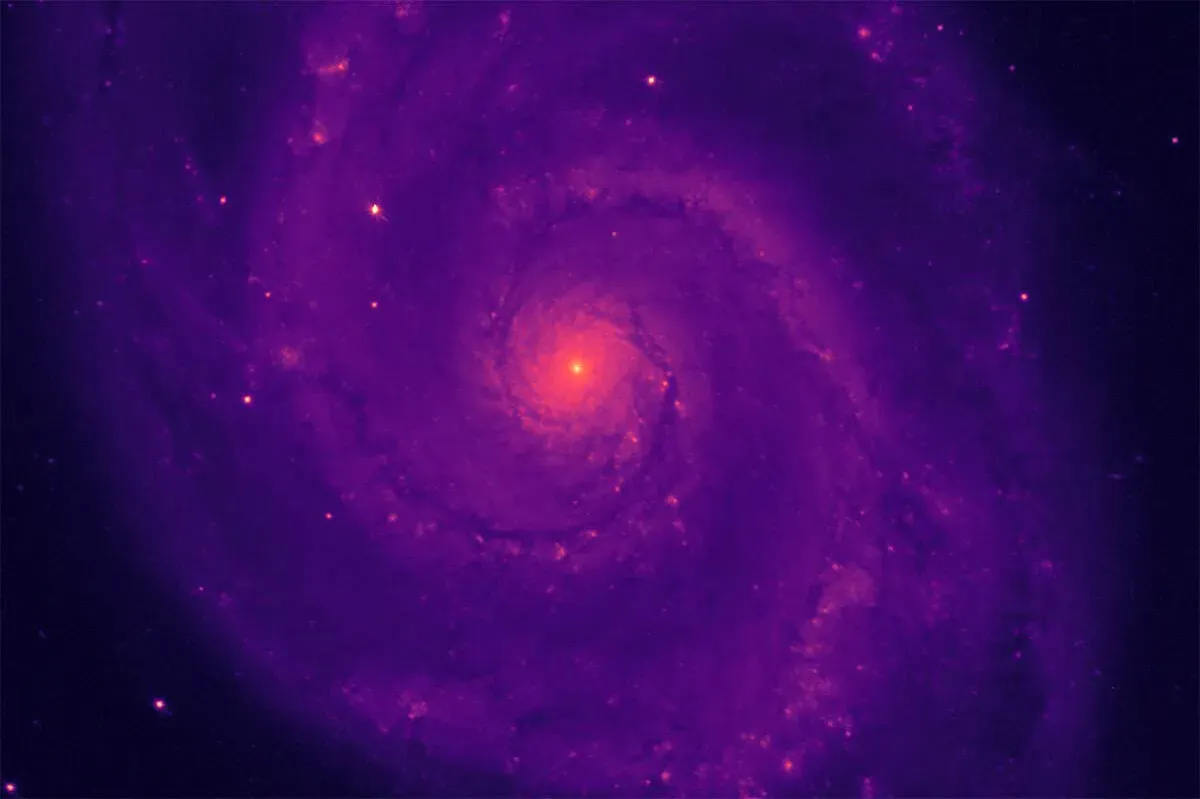
Their de Sitter solution is unstable, with dark energy that, though positive, will diminish over time, which is much easier to obtain from string theory than a fixed dark energy. The period of stability shouldn’t last much longer than a Hubble time, roughly 14 billion years, the estimated age of the universe. This prediction turns out to be testable.
Until recently, most observations were consistent with a universe containing a constant amount of dark energy, but recent results suggest that dark energy may be changing, with the Dark Energy Spectroscopic Instrument presenting tentative evidence in April 2024 that dark energy is weakening. Recent results from DESI suggest that dark energy is changing in time in a way consistent with string theory models, although this is yet to be fully verified by further measurements.
The Universe They Describe Isn’t Quite Ours
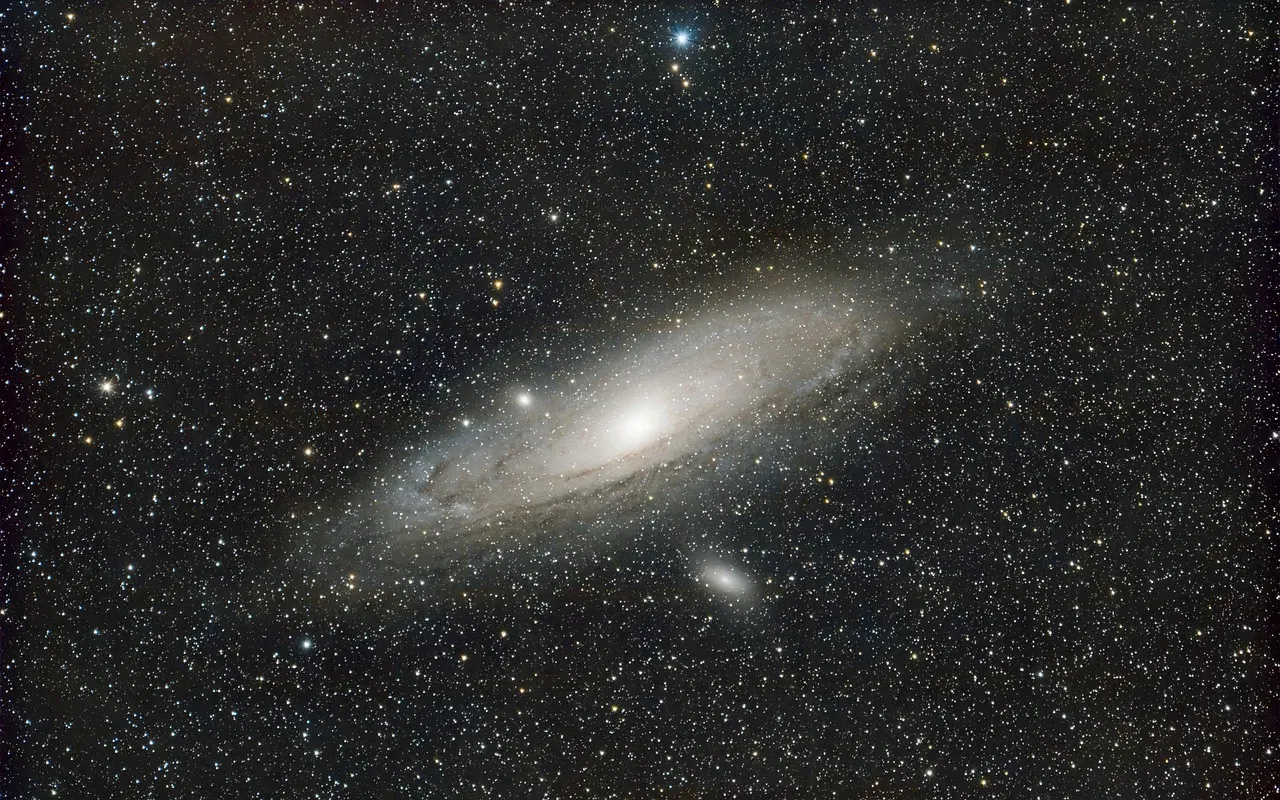
Let’s be real here. This solution isn’t perfect. The universe they describe is not exactly like ours, as their original hope was to reduce the high-dimensional world of string theory to our own four-dimensional world, but they ended up with an extra dimension, giving them a 5D de Sitter solution when we don’t live in 5D. That’s a significant caveat you need to understand.
Still, the theoretical community recognizes the importance of this work. Their achievement opens up a new frontier to finding explicit de Sitter solutions in string theory. Sometimes progress in theoretical physics means taking two steps forward and one step back. The extra dimension represents the step back, but the ability to describe positive dark energy at all? That’s the giant leap forward.
Connecting the Smallest and Largest Scales
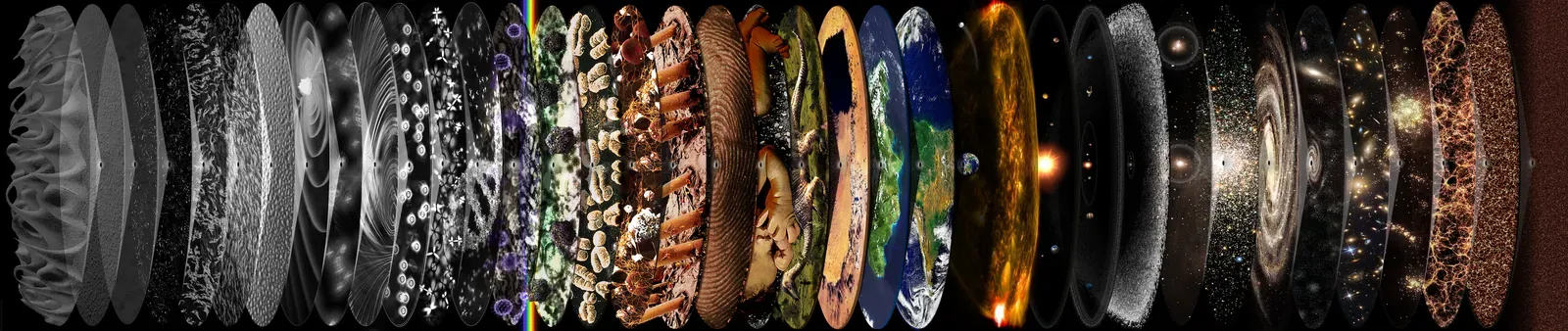
String theory allowed researchers to explore spacetime at the quantum level, with their explanation for dark energy linking the tiniest thing we can imagine, the Planck length related to quantum gravity, with the biggest thing we know, the size of the entire universe. This kind of connection is a big deal in physics, hinting that spacetime is non-commutative.
What does non-commutative mean? The coordinates of spacetime do not commute, meaning the order in which they appear in equations affects the outcome. It’s similar to how measuring a particle’s position before its velocity gives you a different result than measuring velocity first. This quantum behavior of spacetime itself could be what drives cosmic acceleration.
What Comes Next for String Theory and Cosmology
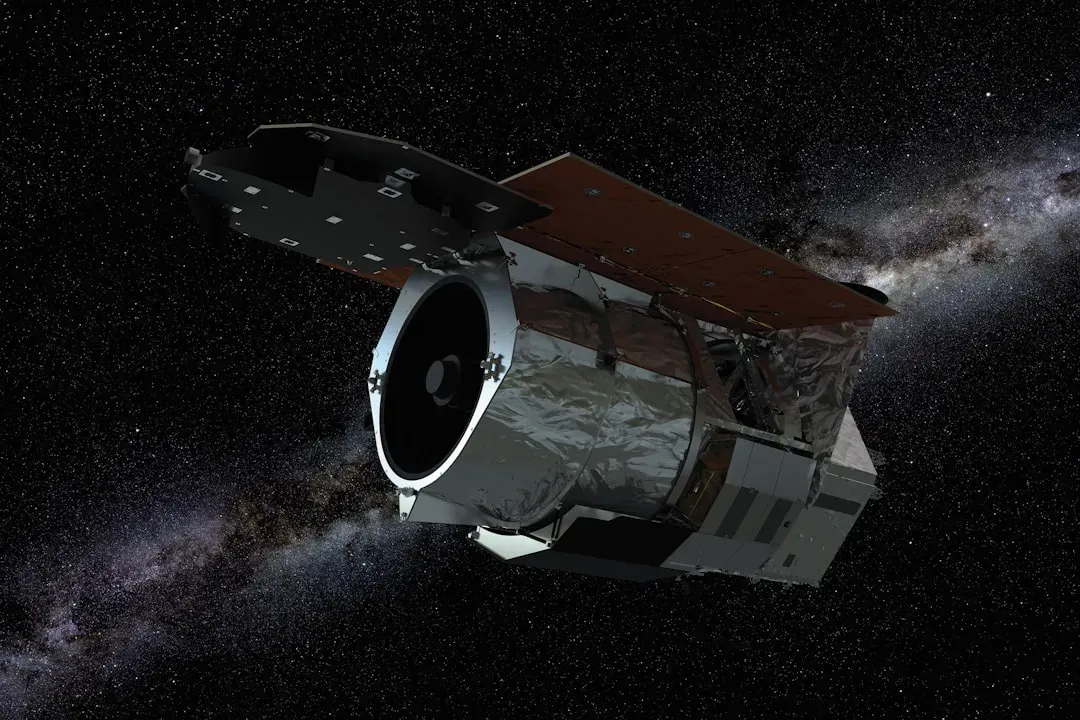
Euclid and Roman telescopes will make very precise measurements and will be able to exclude many theories of dark energy and some specific versions of string theory, helping to narrow down the bits theorists should focus on. The next few years will be crucial. We’re entering an era where observations can genuinely test theoretical predictions about the fundamental nature of reality.
NASA is preparing to launch the Nancy Grace Roman space telescope in 2027. These instruments won’t just collect data. They’ll serve as referees in one of the most important debates in theoretical physics. Can string theory truly describe our universe, or will observations force theorists back to the drawing board?
The Bigger Picture for Physics
The core challenge stemmed from string theory’s traditional frameworks, which favored universes with zero or negative vacuum energy, clashing with observations of our expanding cosmos, where dark energy comprises about 68% of the universe’s energy density and propels galaxies apart at an increasing rate, a phenomenon first detected in 1998. For nearly three decades, this tension festered.
Bento and Montero’s work introduces a de Sitter universe model within string theory, incorporating positive dark energy density and offering a stable, expanding framework. This stability is crucial, as it allows the universe to persist long enough for structures like galaxies and life to form, aligning with our observed reality. Without solutions like this, string theory risked becoming an elegant mathematical framework describing hypothetical universes but not our own.
String theory’s journey from crisis to potential breakthrough reveals something fundamental about how science progresses. The most promising ideas often face their darkest moments right before major advances. Scientists struggled to make string theory compatible with the expanding universe. Now, they’ve found at least one pathway forward. Whether this particular solution survives further scrutiny remains to be seen, but the door has been opened.
What do you make of a theory that required nearly 30 years to catch up with observations? Share your thoughts in the comments.