
You’ve probably had moments where inspiration strikes from nowhere, a sudden breakthrough that feels like it came from somewhere beyond your mind. What if those flashes of insight actually did come from somewhere else? The idea sounds like science fiction, yet a growing number of physicists and neuroscientists are seriously exploring whether consciousness might connect to dimensions we can’t see or touch.
Michael Pravica, a professor of physics at the University of Nevada, Las Vegas, believes that we should be looking at hidden dimensions to explain consciousness. His theory links consciousness to hyperdimensionality, suggesting our awareness might transcend the physical world during moments of heightened creativity. Whether this turns out to be revolutionary science or an elaborate thought experiment, the implications are staggering. Let’s dive into this mind bending territory where physics meets philosophy.
The Physics Behind Hidden Dimensions
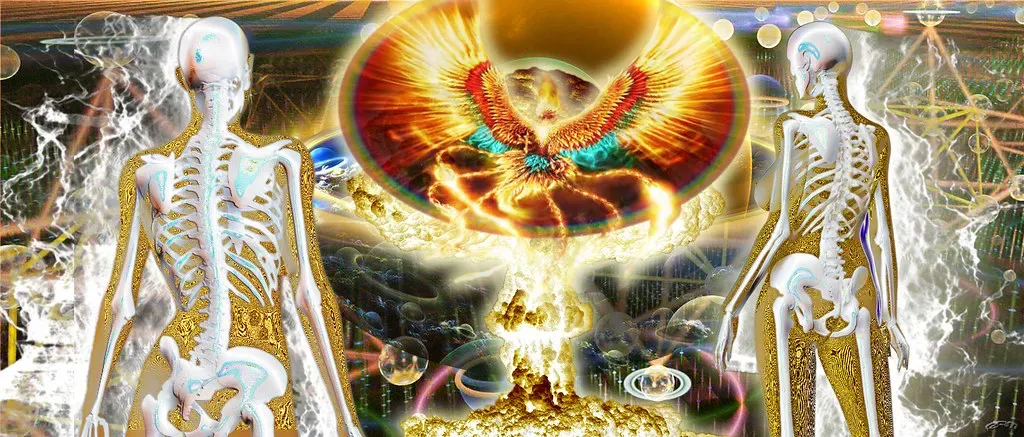
Central to this theory is the concept of hyperdimensionality – the intriguing possibility that our universe harbors more dimensions than the four we can perceive (three spatial dimensions and one of time). String theory has already introduced physicists to this idea, proposing that our universe might contain as many as ten or eleven dimensions in total. Most of these extra dimensions would be compacted so tightly that we simply can’t detect them with our current instruments.
Here’s the thing, though. String theory requires additional spatial dimensions, and these new dimensions extend beyond the three we experience daily. The math works beautifully on paper, describing how tiny vibrating strings could form the basis of all matter and energy. Yet the leap from theoretical physics to human consciousness is where things get really interesting, or really controversial, depending on who you ask.
When Creativity Transcends Physical Reality
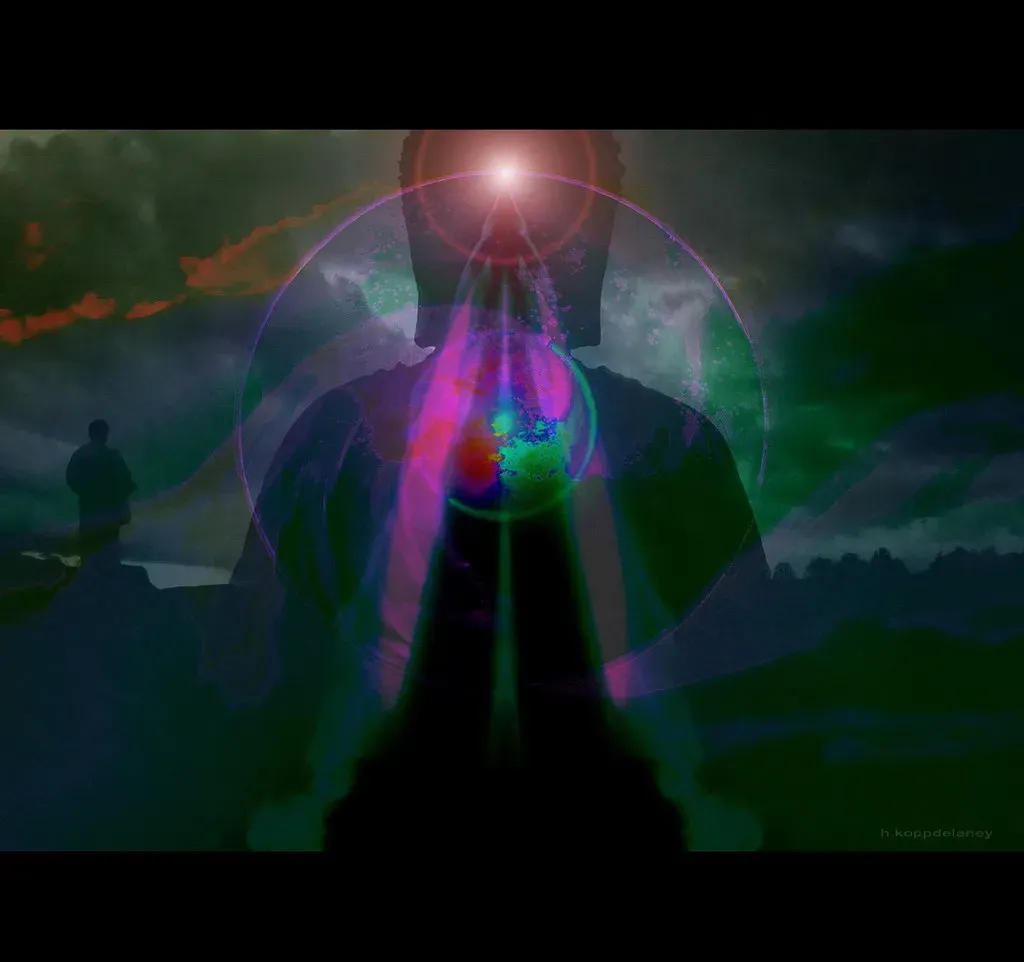
In his view, consciousness has the ability to transcend the physical world in moments of heightened awareness. Think about your own experiences with sudden insights or creative breakthroughs. They often feel qualitatively different from regular thinking, almost as if your mind briefly accessed something outside itself.
Moments of heightened awareness allow our consciousness to synchronize with these hidden dimensions, providing a flood of inspiration. You might recognize this phenomenon as flow states or those rare eureka moments when complex problems suddenly unravel. Could these experiences represent genuine interactions with higher dimensional reality rather than just interesting brain chemistry? The possibility challenges everything we assume about where our thoughts actually come from.
The Quantum Connection to Awareness
Quantum physics keeps appearing in consciousness research, which shouldn’t surprise us given how strange both subjects are. Today there is accumulating evidence in the study of consciousness and cognition that quantum concepts like complementarity, contextuality, entanglement, dispersive states, and non-Boolean logic play significant roles in mental processes. This isn’t just wild speculation anymore.
Recent studies have explored whether quantum effects might genuinely operate inside our brains despite the warm, wet environment that should theoretically destroy such delicate phenomena. Resonant glutamate-ZPF coupling results in the formation of coherence domains where a large number of molecules vibrate in unison, and these domains are protected by energy gaps, making quantum coherence surprisingly stable in the warm, noisy brain. It’s hard to say for sure, but evolution has had billions of years to exploit every possible physical phenomenon.
The Brain as a Dimensional Interface
From his work in Brane cosmology – a branch of cosmology that builds on the higher dimensions of string theory and M-theory – Carr argues that it is completely reasonable to argue that consciousness relates to from which spacetime emerges. Bernard Carr, a distinguished professor who studied under Stephen Hawking, proposes that consciousness doesn’t emerge from the brain but rather interfaces with it.
Imagine your brain as something like a radio receiver rather than the source of the broadcast. In this model, physical brain activity would filter or tune consciousness rather than generate it. Our brains do not produce consciousness, they ‘filter’ it and consciousness is related to the higher dimensions in string theory. This perspective flips conventional neuroscience on its head, suggesting that neurons are necessary but not sufficient for awareness.
The Scientific Skepticism Problem
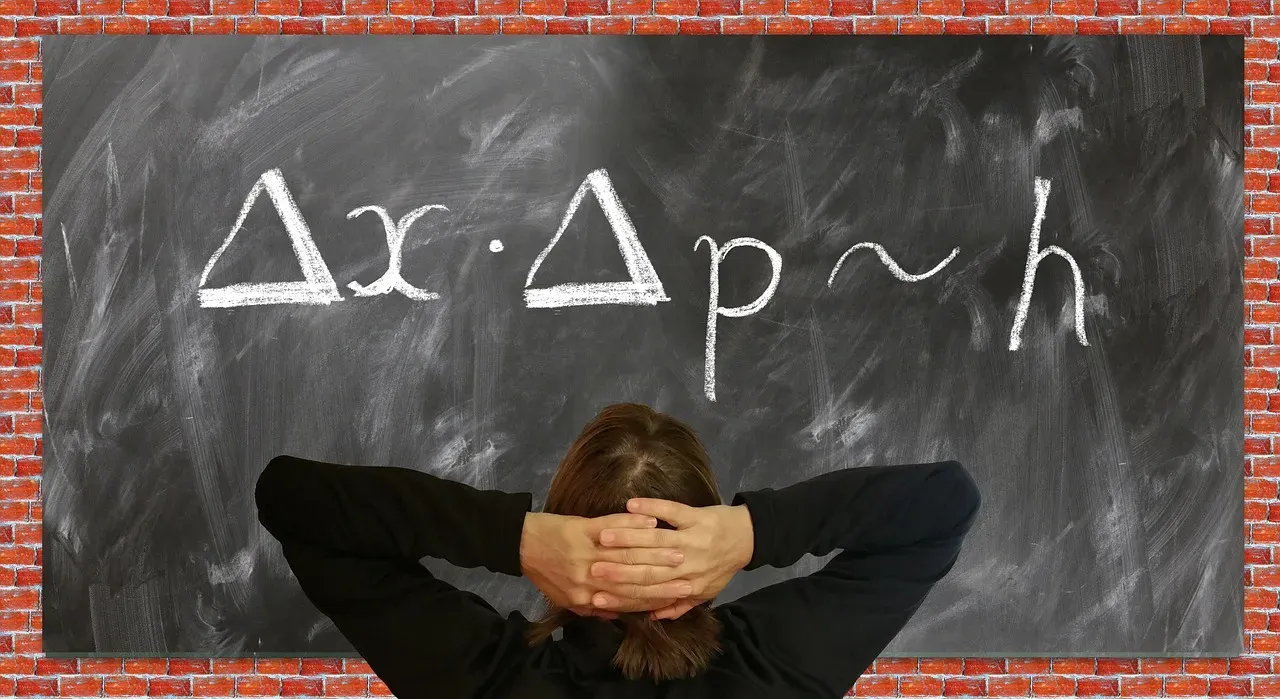
Let’s be real: most neuroscientists remain deeply skeptical of these ideas. Some scientists, including Stephen Holler, an associate professor of physics at Fordham University, express skepticism, with Holler suggesting that the cornerstone of Pravica’s theory “borders on science fiction.” The criticism isn’t entirely unfair, considering how little empirical evidence currently exists.
Koch notes the profound differences between the frigid conditions necessary for today’s quantum computers – colder than the vacuum of outer space – and the brain’s warm, wet environment, and many believe that setting simply can’t sustain quantum processes. Temperature destroys quantum coherence almost instantly in most systems. How could biological tissue maintain such effects? Honestly, it seems unlikely at first glance, yet nature has surprised us before.
Consciousness as Foundational Rather Than Emergent
A radical recent proposal turns everything upside down. The article presents a framework in which consciousness is not viewed as a byproduct of brain activity, but as a fundamental field underlying everything we experience – matter, space, time, and life itself. Maria Strømme, a materials scientist, published this theory linking quantum physics with ancient philosophical traditions.
It is a theory in which consciousness comes first, and structures such as time, space and matter arise afterwards. This makes consciousness the primary reality from which physical existence emerges, rather than the other way around. The model offers testable predictions, though actually testing them poses enormous practical challenges. Still, the fact that a credentialed physicist would propose this shows how far consciousness studies have evolved.
Evidence From Unusual Brain Conditions

Some of the most compelling evidence comes from people living with extraordinary neurological conditions. There are reports that people born without most or all of their neocortex can feel upset, play, recognise people or show enjoyment of music, suggesting that they are having some sort of conscious experience. Medical textbooks said these individuals should be essentially unconscious, yet they demonstrate clear awareness.
Across mammals – from rats to cats to monkeys – surgically removing the neocortex leaves them still capable of an astonishing number of things, as they can play, show emotions, groom themselves, parent their young and even learn. These findings challenge theories that place consciousness exclusively in the newest brain regions. Maybe the ancient subcortical structures connecting us to the earliest vertebrates hold more secrets than we suspected.
The Zero Point Field Hypothesis
Evidence indicates that conscious states may arise from the brain’s capacity to resonate with the quantum vacuum – the zero-point field that permeates all of space, with macroscopic quantum effects at play inside our heads. The zero-point field represents the lowest possible energy state of quantum fields, but it’s not empty, it seethes with virtual particles constantly appearing and disappearing.
If the model proves correct, consciousness arises not merely from electrochemical signaling but from a bottom-up orchestration involving the brain’s resonant coupling to the ZPF, with awareness tied to the selective excitation of ZPF modes. This would mean your thoughts literally interact with the fundamental fabric of reality at the quantum level. I know it sounds crazy, but the mathematics apparently supports testable predictions that could settle the question within years.
Where Consciousness Research Goes From Here
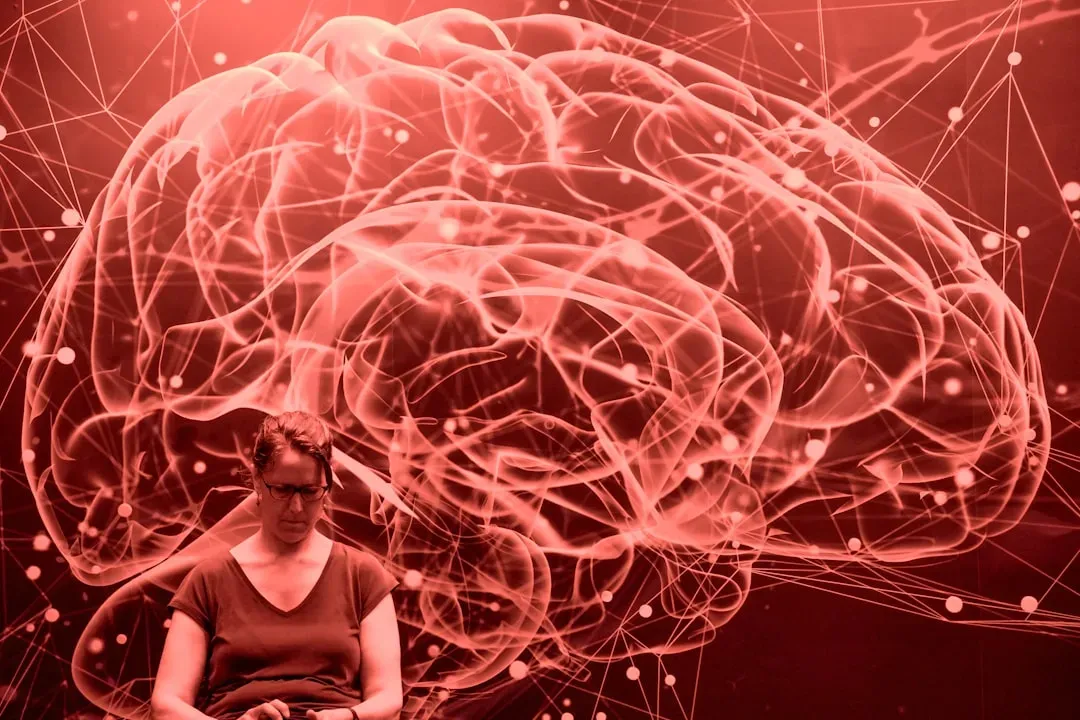
The Cogitate Consortium project, which began in 2018, set out to pit the theories’ predictions against each other at multiple labs run by theory-neutral teams, using three different brain-imaging techniques to observe the brains of 256 participants. The results didn’t definitively support either leading theory of consciousness, which tells us how incredibly complex this puzzle remains.
The findings de-emphasize the importance of the prefrontal cortex in consciousness, suggesting that while it’s important for reasoning and planning, consciousness itself may be linked with sensory processing and perception. We’re learning that intelligence and consciousness might be fundamentally different phenomena. A computer can be incredibly intelligent without any flicker of inner experience, while even simple creatures might possess rich conscious lives. Understanding the distinction could unlock everything.
The question of whether consciousness connects to higher dimensions remains spectacularly unresolved. Physics has shown us that reality contains far more than our senses detect, from invisible electromagnetic waves to the quantum realm where particles exist in multiple states simultaneously. Could consciousness represent yet another dimension of existence that transcends our ordinary three dimensional experience? The honest answer is we simply don’t know yet, though the journey toward finding out might transform how we understand both the universe and ourselves. What do you think happens to your awareness when you close your eyes for the final time?