
Breakthrough Findings Challenge Traditional Views (Image Credits: Pixabay)
Recent laboratory simulations have demonstrated that the fundamental chemistry for proteins can emerge in the harsh environment of deep space.
Breakthrough Findings Challenge Traditional Views
Researchers conducted experiments mimicking interstellar conditions and discovered that simple amino acids link together to form peptides directly on dust grains. These building blocks of proteins appeared under temperatures near absolute zero and intense radiation bombardment. The process occurred without the warmth or liquid water typically associated with planetary surfaces.
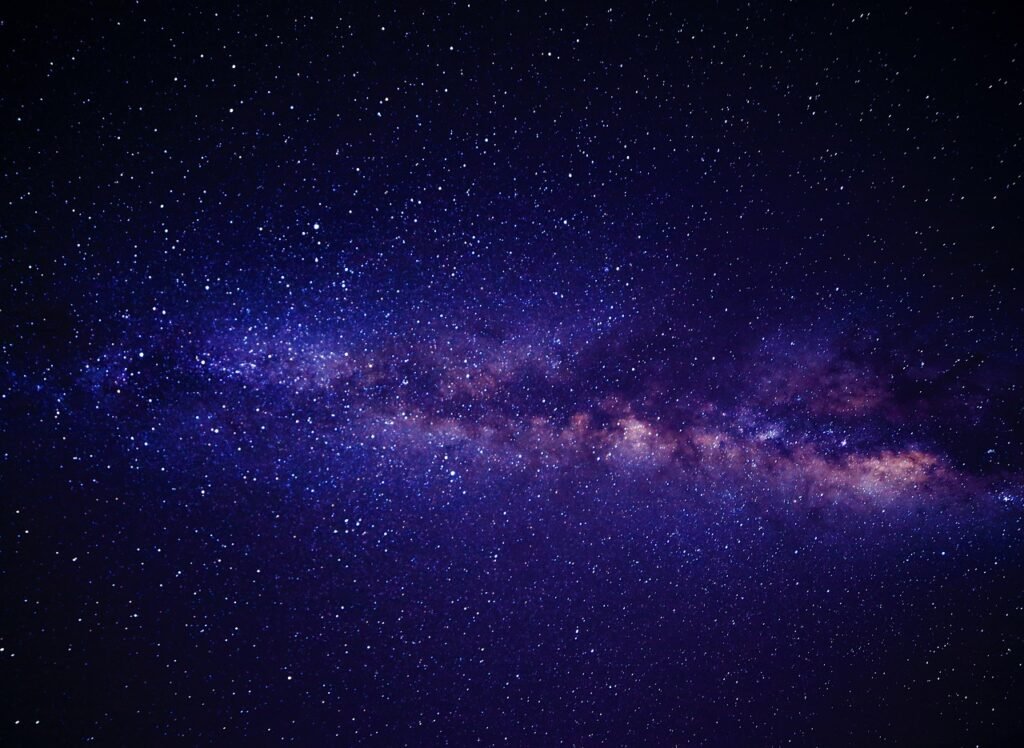
This revelation upends the long-held assumption that complex organic molecules require stable planetary environments to assemble. Instead, the chemistry unfolds in the vast, starless voids between nascent stellar systems. Scientists noted that such reactions proceed efficiently on the icy surfaces of microscopic dust particles prevalent throughout the galaxy.
The Mechanics of Cosmic Chemistry
In these simulations, amino acids adsorbed onto cold dust grains and overcame energy barriers through radiation-induced excitation. Bonds formed between the molecules, creating short peptide chains that serve as precursors to proteins essential for life. The experiments highlighted how ultraviolet radiation and cosmic rays provide the necessary energy in space’s frigid vacuum.
Dust grains act as catalysts, offering stable platforms where molecules can meet and react over extended timescales. This mechanism predates the formation of stars and planets, suggesting that life’s chemical toolkit assembles during the universe’s early, chaotic phases.
Implications for the Ubiquity of Life
The discovery elevates the prospects for organic molecules permeating the cosmos. Interstellar dust clouds, abundant across galaxies, could deliver prebiotic compounds to emerging planets via comets and meteorites. This panspermia-like process implies that the raw materials for biology arrive ready-made from space.
Astronomers now anticipate detecting these peptides in observations of molecular clouds using telescopes like the James Webb Space Telescope. Such widespread distribution reduces the uniqueness of Earth’s origin story and broadens the search for extraterrestrial life.
Key Processes in Peptide Formation
The experiments outlined several critical steps in this interstellar synthesis:
- Amino acids stick to the cold surfaces of silicate or carbon-rich dust grains.
- Cosmic radiation energizes the molecules, enabling bond formation.
- Peptides grow into chains, stable even at temperatures below -250°C.
- These chains resist destruction by further radiation exposure.
- Accumulation occurs over millions of years in dense interstellar regions.
Each stage underscores the resilience of organic chemistry in space’s unforgiving realm.
Key Takeaways
- Protein precursors form on interstellar dust under extreme cold and radiation.
- This process precedes star and planet formation, challenging planet-centric models.
- Life-friendly molecules likely abound throughout the universe, aiding astrobiology quests.
These findings reshape our understanding of life’s origins, positioning deep space as a prolific laboratory for biochemistry. As evidence mounts, the cosmos appears ever more hospitable to the sparks of complexity. What implications do these revelations hold for the search for life beyond Earth? Share your thoughts in the comments.