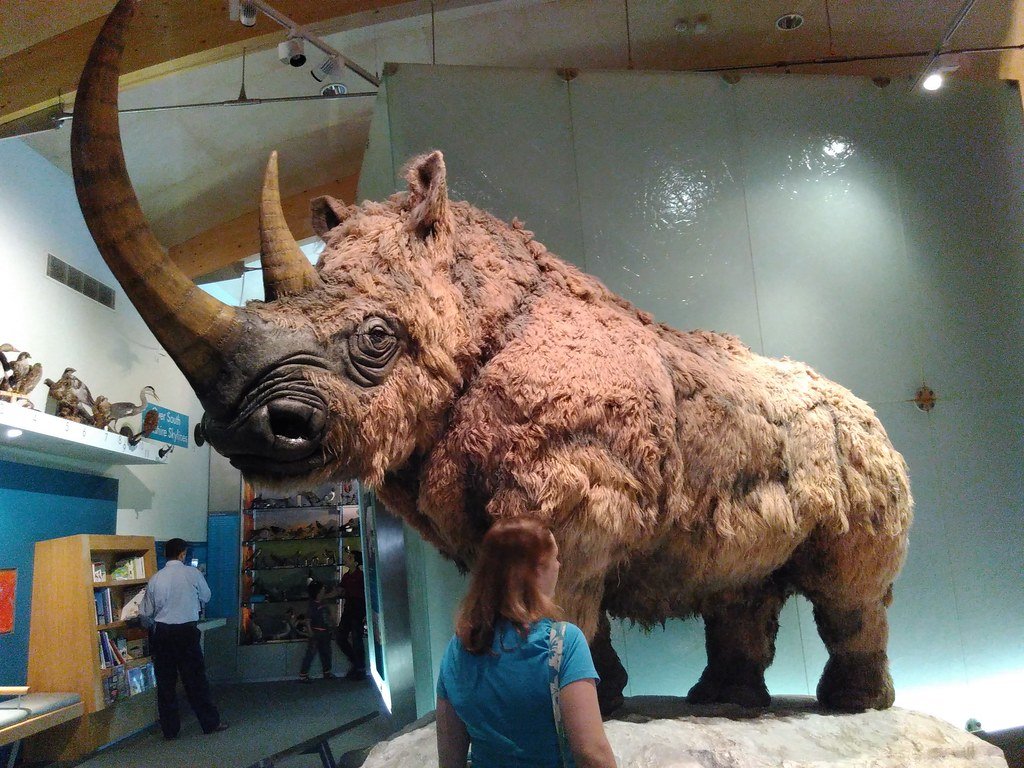

A Predator’s Stomach Holds Ancient Secrets (Image Credits: Flickr)
Researchers unearthed woolly rhino tissue preserved in the stomach of a 14,400-year-old frozen wolf, providing fresh evidence of the species’ swift extinction.
A Predator’s Stomach Holds Ancient Secrets
The discovery stunned scientists when they examined the well-preserved remains of the wolf. Inside its stomach lay undeniable traces of woolly rhino, a massive Ice Age herbivore long thought to have vanished gradually. This find, dated to approximately 14,400 years ago, challenges previous assumptions about the rhino’s decline.
Genomic analysis of the tissue confirmed the rhino’s identity and revealed details about its final days. The wolf, frozen in permafrost, acted as a natural time capsule. Such preservation allowed experts to study biological material that would otherwise have degraded over millennia.
Genomics Unlocks Timeline of Extinction
Advanced DNA sequencing played a pivotal role in interpreting the discovery. Scientists extracted genetic material from the rhino tissue and compared it to known samples. Results indicated that woolly rhinos disappeared abruptly rather than through a prolonged fade-out.
This rapid extinction timeline aligns with environmental shifts at the end of the Pleistocene epoch. The wolf’s meal offered a snapshot of predator-prey dynamics just before the rhinos vanished from the fossil record. Researchers noted the tissue’s condition suggested the rhino died recently relative to the wolf’s preservation.
Implications for Ice Age Megafauna
The find sheds light on broader patterns among Ice Age giants. Woolly rhinos roamed vast northern landscapes until climatic upheavals disrupted their habitats. Predators like wolves scavenged or hunted these behemoths, leaving rare clues in their digestive systems.
Experts suggest this evidence supports theories of sudden population crashes triggered by multiple stressors. The discovery prompts reevaluation of extinction models for other megafauna, such as mammoths.
Methods Behind the Breakthrough
Teams recovered the wolf from permafrost, a common source of Ice Age specimens. Initial dissection revealed the stomach contents, prompting detailed lab work. Here’s how they pieced it together:
- Thawed and examined the wolf under controlled conditions to prevent contamination.
- Identified bone fragments and soft tissue visually and via microscopy.
- Conducted genomic sequencing to match DNA against woolly rhino databases.
- Dated the remains using radiocarbon methods for precise age confirmation.
- Analyzed stable isotopes to infer the rhino’s diet and health at death.
These steps ensured the findings withstood scientific scrutiny. The process highlighted permafrost’s value for paleontological research.
Key Takeaways
- Woolly rhino tissue in a 14,400-year-old wolf stomach proves recent predation.
- Genomics confirm the rhinos’ extinction occurred rapidly.
- Permafrost preservation offers vital windows into Ice Age ecosystems.
Preserved predators like this wolf continue to rewrite our understanding of prehistoric extinctions. For more details, see the original report on EarthSky. This breakthrough reminds us how fragile megafauna populations proved against environmental change – what lessons does it hold for today’s wildlife? Share your thoughts in the comments.