Time used to feel like the one solid thing we could count on: it ticks forward, second by second, never stopping, never looping back. Yet the deeper physicists dig into the quantum world, the more that comforting picture starts to crack, and what sits behind it is far stranger than anything we experience on a clock or a calendar. In the last few years, experiments and theories in quantum gravity, quantum information, and ultra-precise timekeeping have started to hint that time might not be a universal backdrop at all, but something that emerges from more fundamental, invisible processes.
That might sound abstract, but it touches everything from how the universe began to how your phone navigates you through a city. I still remember the first time I read that, in some equations, time simply disappears; it felt almost offensive, like being told your own memory of yesterday was some kind of convenient illusion. Yet as unsettling as it is, this new way of thinking about time is also deeply exciting: it suggests that our everyday experience is just the tip of a much richer, layered reality, where time can run differently, mix with space, and even blur into something like information itself.
The Illusion of a Single Universal Clock
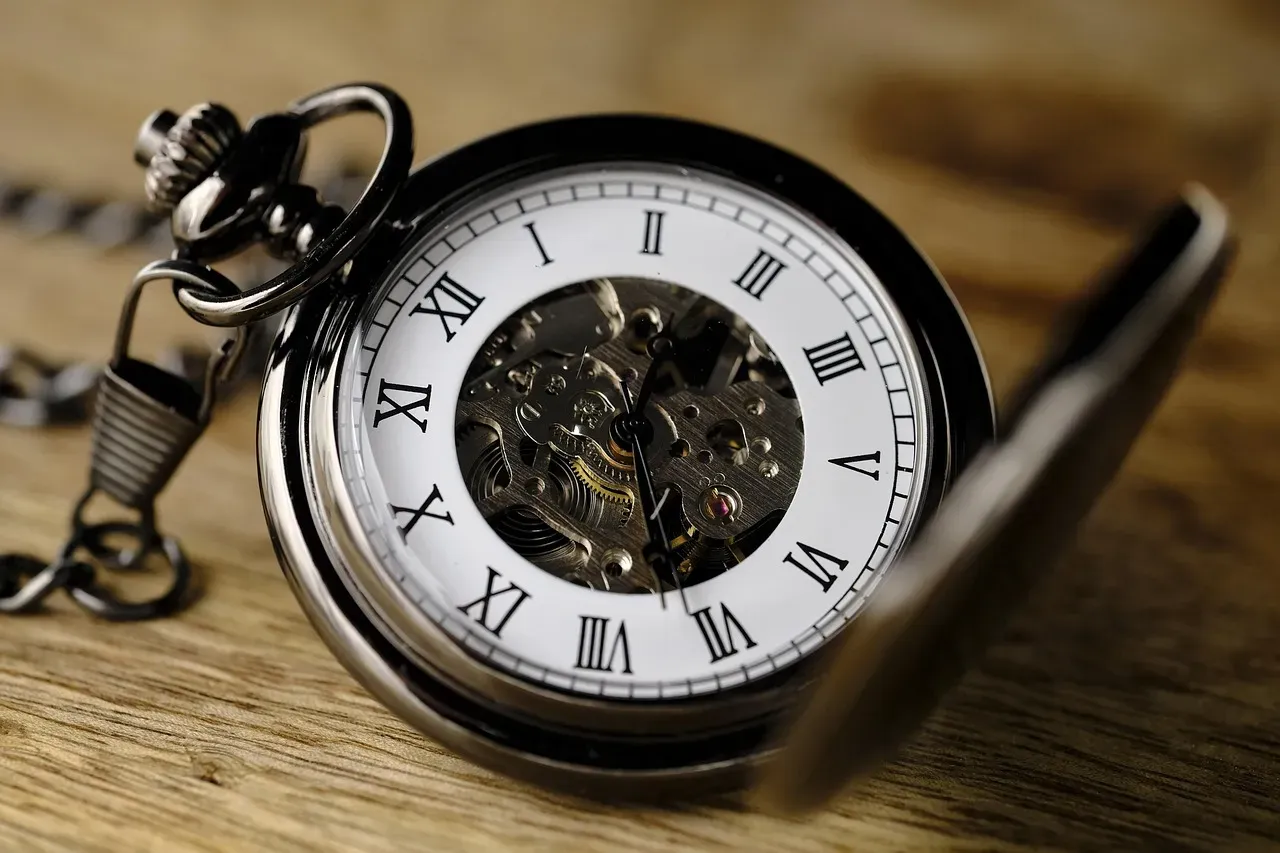
Have you ever agreed to “meet at three,” secretly assuming that everyone’s three o’clock is the same everywhere in the universe? Quantum research is piling on top of Einstein’s relativity to tell us that there is no single cosmic clock ticking above everything. In relativity, time is already woven with space and runs differently depending on speed and gravity; now, quantum experiments with ultra-precise atomic clocks are showing that time can disagree over absurdly tiny distances, even across a lab bench. Clocks separated by just a few centimeters at different heights in Earth’s gravitational field are now measurably out of sync.
What’s new is how quantum mechanics sharpens that picture: time isn’t just relative, it becomes fuzzy when we push our measurements to the limit. When you try to track time with atomic transitions, the quantum nature of the atoms themselves introduces fundamental uncertainty. In some modern experiments, it’s not even meaningful to talk about one “true” time; you have many slightly different times coexisting, each tied to a different quantum system or observer. The idea that we all share the same ticking background is starting to look more like a useful story than a basic fact of reality.
Quantum Entanglement and the Weird Linking of Moments
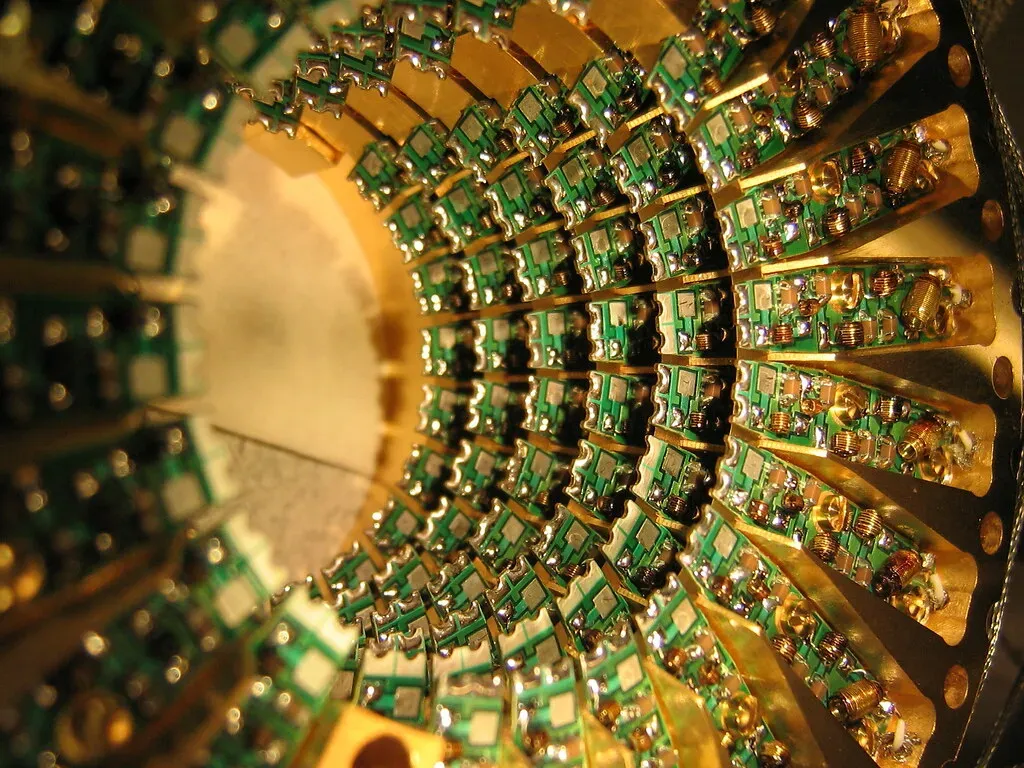
Entanglement is already strange enough: two particles separated by kilometers behave like a single system, their properties mysteriously linked. But newer work is showing that entanglement isn’t just about space; it has deep implications for how we think about time itself. When systems are entangled, their histories and futures can’t be fully described in isolation, as if their “when” is tied together just as much as their “where.” In some cutting-edge experiments and thought experiments, events don’t line up in a neat before-and-after sequence the way we assume in everyday life.
One particularly mind-bending idea is that entanglement might actually give rise to the flow of time we experience. In some models, the arrow of time emerges from how quantum systems become correlated with their environment, gradually losing track of their pure, delicate states. Instead of time being the stage on which entanglement plays out, entanglement could be the script that makes a stage like time even make sense. It’s as if our sense of “now” is stitched together by invisible threads of entanglement connecting countless microscopic events.
When Cause and Effect Lose Their Order
Most of us live by the rule that causes come first and effects come later: you flip the switch, then the light turns on, never the other way around. In the quantum world, though, experiments are now exploring scenarios where the order of events becomes genuinely indefinite. Using devices called quantum switches, researchers can put operations into a superposition of happening in different orders, like having A-before-B and B-before-A layered together at once. This isn’t just a trick of language; the results of measurements depend on this strange, orderless structure.
This challenges our intuition that time is simply a line we move along from left to right. Instead, time in some quantum processes looks more like a network where connections can weave in ways that don’t respect a single, global sequence. It doesn’t mean you can send a message to your past self and change history, but it does suggest that at the deepest level, nature doesn’t always care about the tidy timelines we sketch in our heads. Cause and effect, which we often take as the bedrock of reality, turn out to be more context-dependent than we ever imagined.
Is Time an Emergent Property, Not a Fundamental One?
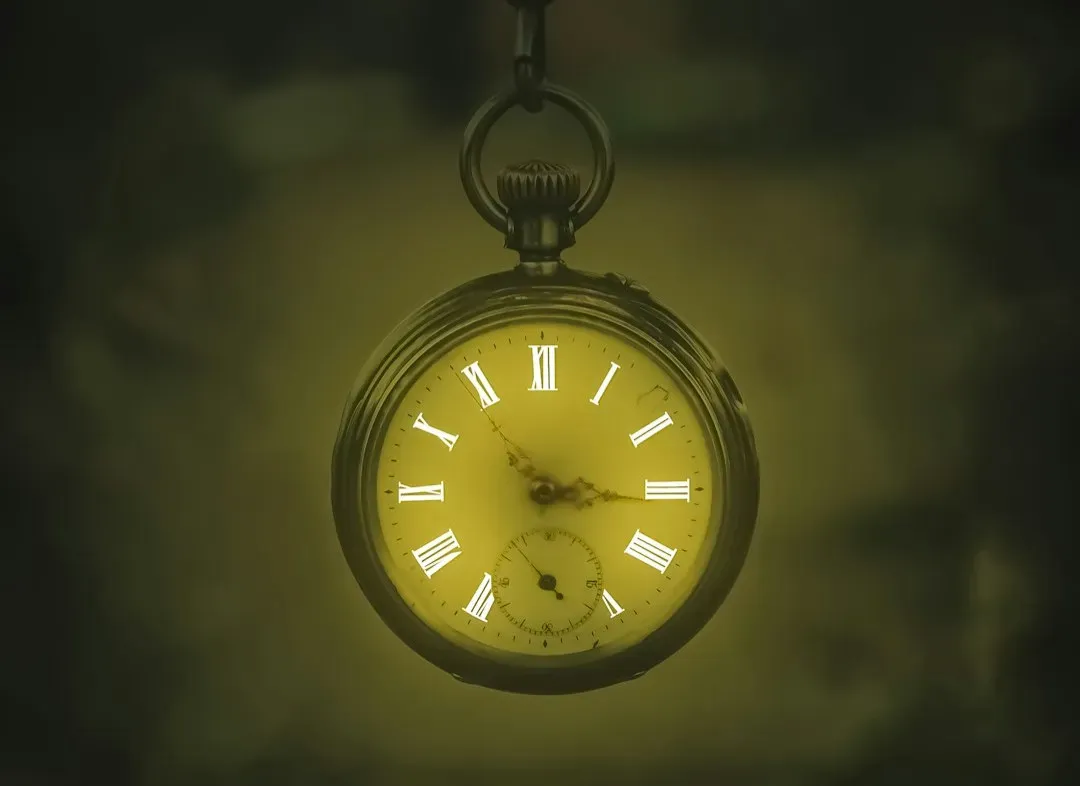
One of the most radical ideas to gain traction is that time might not be fundamental at all. In some approaches to quantum gravity, when physicists try to combine general relativity with quantum mechanics, the usual time parameter simply vanishes from the core equations. Instead of starting with time and space and putting matter inside them, these theories start with abstract relationships between quantum states, and time appears only when you zoom out and look at large, complex systems. It’s like discovering that temperature doesn’t exist for a single molecule; it only shows up when you have many particles together.
From this perspective, time could be more like a collective habit of the universe, emerging from the dance of countless microscopic pieces. Some researchers model this using ideas from quantum information, where the flow of information between subsystems creates something that looks like a timeline. It’s a deeply humbling thought: what feels like the most basic ingredient of reality might be more like a side effect of deeper, timeless laws. Our everyday experience of minutes, hours, and years could be a kind of macroscopic mirage created by underlying quantum bookkeeping.
The Thermodynamic Arrow and the Quantum Past
We usually explain the direction of time using entropy: cups shatter, but shards never spontaneously jump back together; eggs scramble, but don’t un-scramble in your frying pan. This “arrow of time” seems to come from the tendency of closed systems to move from more ordered to more disordered states. Quantum mechanics complicates this story, because at the microscopic level, the basic equations are almost perfectly reversible. Run them forward or backward, and they make just as much mathematical sense, which raises a sharp question: why does time feel like a one-way street in our actual lives?
Recent quantum experiments that carefully track tiny systems over time are starting to explore this tension directly. When you watch just a handful of particles, you occasionally see small “violations” of the usual entropy trend, where things get a bit more ordered by chance. But as systems get larger and interact more with their environment, those reversals become vanishingly rare, and the arrow of time becomes overwhelmingly strong. The emerging picture is that the past and future are not built into the microscopic rules themselves; instead, they arise from the improbable, low-entropy beginning of the universe and how quantum information spreads and gets irreversibly smeared out.
Ultra-Precise Quantum Clocks Are Bending Our Intuition
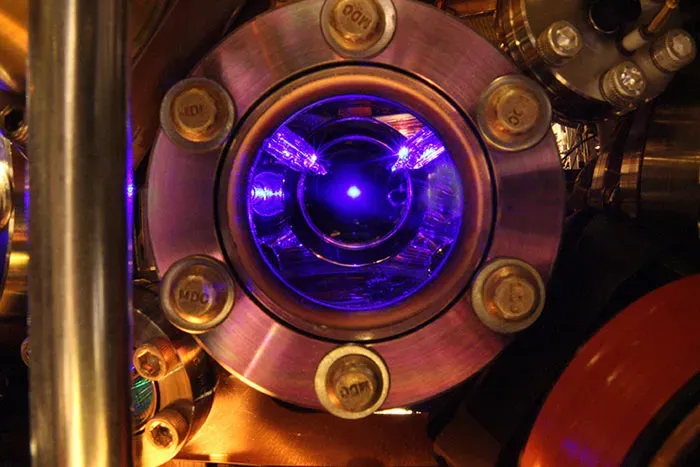
While some of these ideas sound like they belong on a whiteboard in a basement lab, quantum time research is already quietly changing real-world technology. Next-generation atomic clocks, using quantum control of atoms and ions, are so precise that they would lose or gain less than a second over billions of years. These clocks can detect tiny changes in gravity and motion, turning time into a probe of the shape of spacetime itself. They’re giving us tools to test fundamental theories in ways that were impossible just a decade ago.
At the same time, the very act of building such clocks forces us to confront the quantum nature of time. When you localize atoms more tightly to improve a clock, you run into quantum limits on how well you can define their energy levels, which anchor the ticking. There are proposals that future networks of quantum clocks could even map the Earth’s gravitational field in extreme detail, or reveal subtle hints of physics beyond current theories. We tend to think of clocks as simple counting devices, but in this new era, they’re more like experimental microscopes for time itself.
How These Ideas Could Transform Our View of Reality
It’s tempting to treat all of this as abstract philosophy, but reshaping our understanding of time changes how we think about almost everything else. If time is emergent, then questions like “What happened before the Big Bang?” might be as ill-posed as asking what is north of the North Pole. If the order of events can be indefinite at the quantum level, then building future quantum technologies will mean dealing with processes that don’t fit cleanly into traditional time-ordered circuits. The basic stories we tell ourselves about beginnings, middles, and ends start to look like convenient narratives rather than literal descriptions of the universe.
On a more personal level, I find there’s something strangely liberating in this. If the flow of time and the direction of history are not carved into the deepest layers of reality, then our experience of time is partly a human-scale pattern we impose to make sense of things. That doesn’t make it meaningless; if anything, it makes our moments feel more precious, like temporary ripples in a vast, almost timeless sea of possibilities. The cutting-edge research in quantum mechanics isn’t just tweaking equations; it’s inviting us to rethink what it means to exist in time at all.
Living in a Universe Where Time Is Not What It Seems
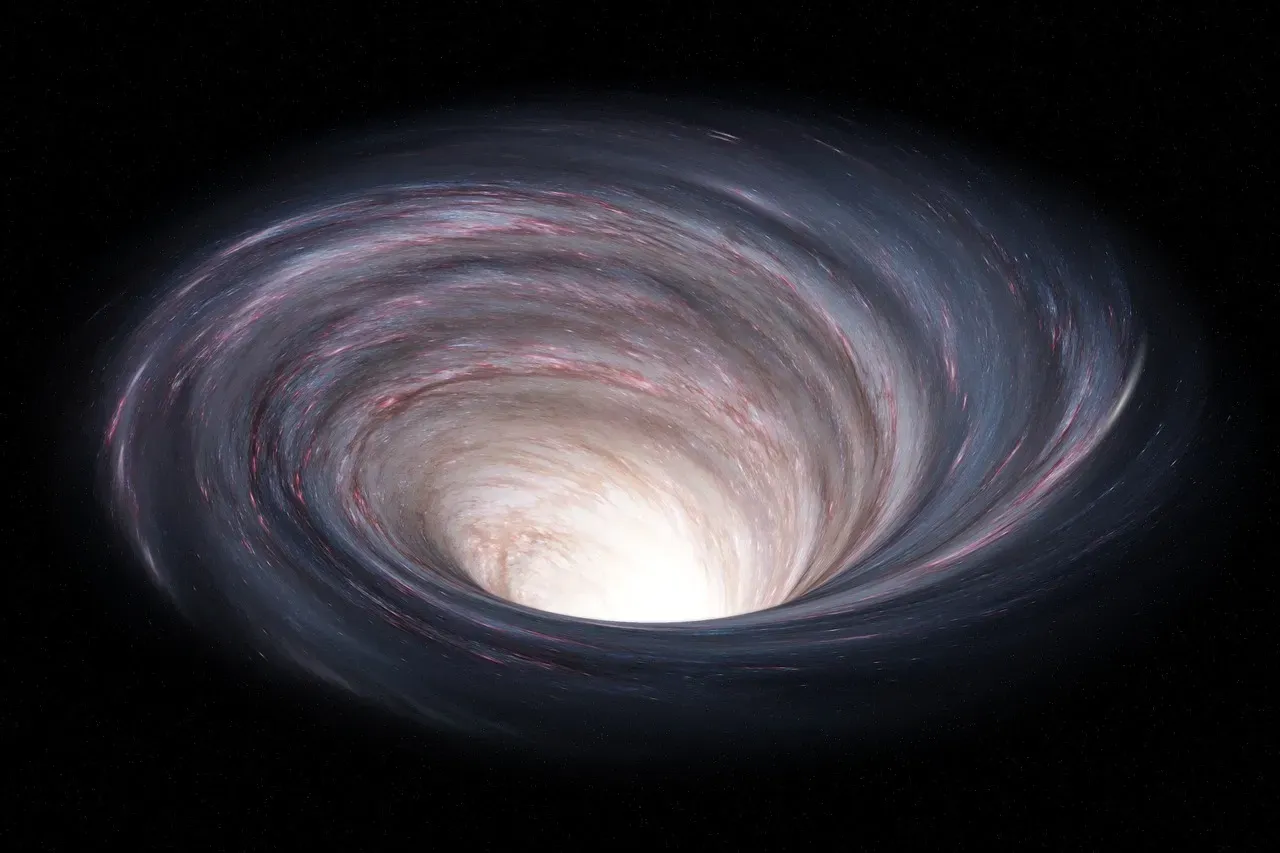
Bit by bit, quantum mechanics is pulling the rug out from under the simple, comforting image of time as a universal, ever-ticking background. From entanglement tying together distant events, to indefinite causal order, to theories where time emerges from deeper, timeless structures, the message is becoming impossible to ignore: the way we experience time is not the full story. Ultra-precise quantum clocks and delicate experiments are no longer just confirming old ideas; they’re revealing cracks in our assumptions and suggesting that the universe plays a subtler game than we grew up imagining.
We might still live our daily lives by alarms, schedules, and anniversaries, but in the background, physics is quietly rewriting the rules of the cosmic clock. The more we learn, the less time looks like a simple river and the more it resembles a complex, shifting web woven from information, probability, and interaction. As theories sharpen and experiments probe deeper, our picture of reality will keep evolving around this new, stranger understanding of time itself. What kind of universe do you imagine, if time is no longer the solid foundation you once thought it was?