You look up at the night sky and marvel at the vastness of space. Stars flicker, planets wander, and maybe you can make out the faint smudge of a neighboring galaxy if conditions are right. For centuries, humans believed these glowing points were the ultimate markers of cosmic scale.
Then telescopes got better. Much better. What you’re about to discover will make you rethink everything about the size and structure of our universe. Hidden within the darkness between galaxies lies architecture so massive, so incomprehensibly vast, that even entire galaxies become tiny dots barely worth noticing. Let’s dive in.
The Cosmic Web That Holds Everything Together
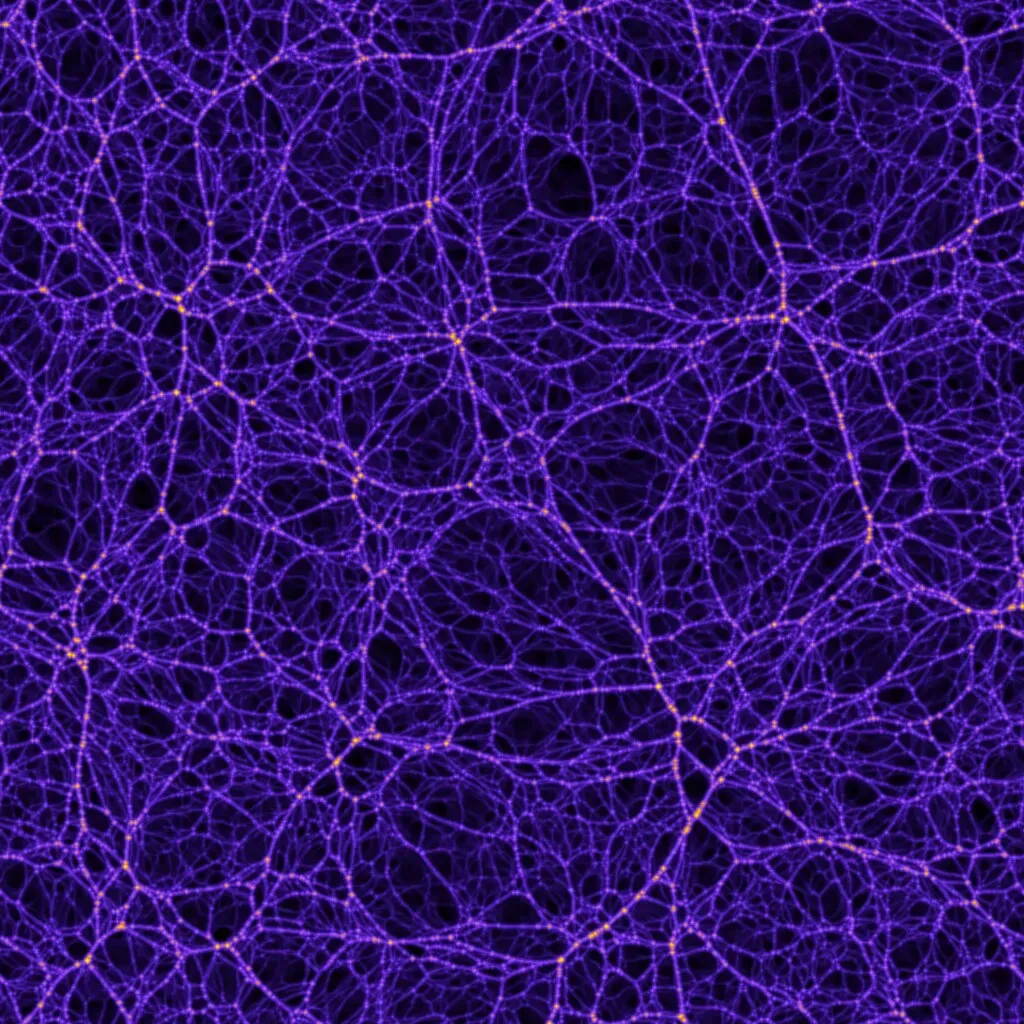
Picture galaxies, galaxy groups and clusters, superclusters, and galactic walls arranged in twisting, threadlike structures called the cosmic web. The web forms as the gravitational attraction of the universe’s matter draws larger and larger objects together. Think of it like the skeleton of the universe itself, organizing hundreds of billions of galaxies into an interconnected network.
Under the influence of gravity, dark matter forms an intricate cosmic web composed of filaments, at whose intersections the brightest galaxies emerge. This cosmic web acts as the scaffolding on which all visible structures in the Universe are built. What makes this particularly mind-bending is that you can’t actually see most of it directly. The web is composed largely of invisible dark matter and diffuse hydrogen gas, yet it dictates where every visible structure you observe forms and evolves.
Galaxy Filaments Stretching Across Hundreds of Millions of Light Years
In cosmology, galaxy filaments are the largest known structures in the universe, consisting of walls of galactic superclusters. These massive, thread-like formations can commonly reach 50 to 80 megaparsecs, with the largest found to date being Quipu at 400 megaparsecs. To put that in perspective, a single megaparsec equals roughly three million light years. Quipu alone would take light over a billion years to traverse its full length.
With lengths of hundreds of millions of light years but thicknesses of only roughly 20 million light years, galactic filaments are some of the largest known structures in the Universe and are partially responsible for the honeycomb appearance evident in maps of galaxy distribution. These aren’t solid objects, though. They’re more like cosmic highways where galaxies cluster along invisible threads of dark matter, creating patterns that resemble soap bubbles or neural networks when viewed from afar.
The Sloan Great Wall
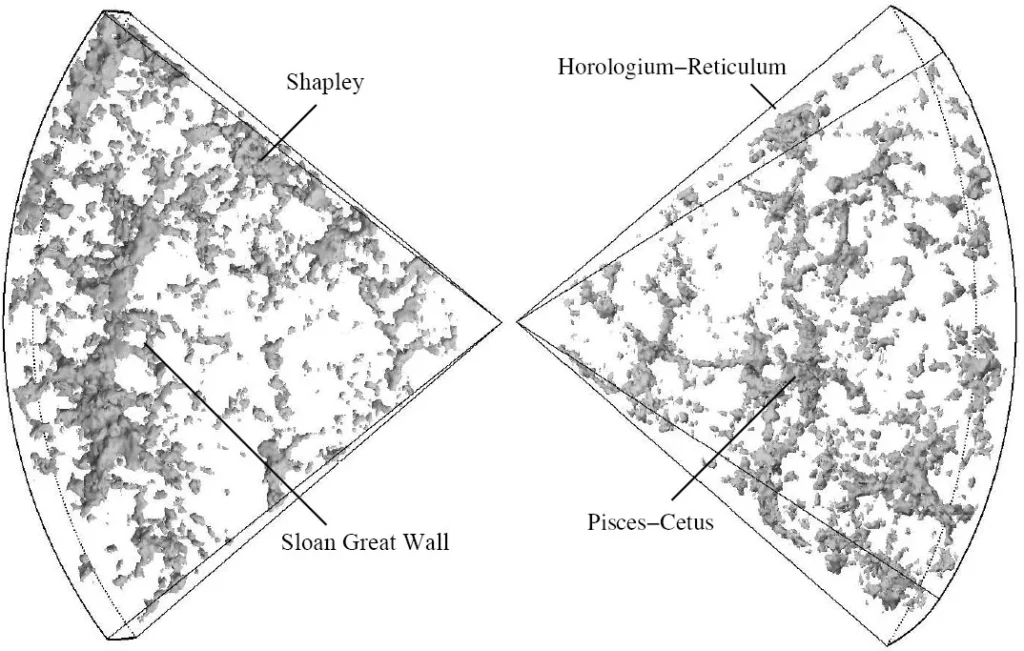
The Sloan Great Wall is a cosmic structure formed by a giant wall of galaxies. Its discovery was announced from Princeton University on October 20, 2003, by J. Richard Gott III, Mario Jurić, and their colleagues, based on data from the Sloan Digital Sky Survey. The wall measures 1.37 billion light-years in length, located approximately one billion light-years away.
Let’s be real here. When you hear “billion light years,” your brain might just shut down trying to process it. The lower limit of the total mass of the SGW is approximately 2.5 × 10^16 solar masses. That’s thousands upon thousands of galaxy clusters strung together, forming one of the most impressive structures ever mapped. These superclusters range in mass from about 10^15 solar masses to a few 10^16 solar masses, one to ten thousand times the mass of the Milky Way. Some structures contain thousands of galaxies each, all arranged along filaments that connect across distances our minds struggle to comprehend.
The Mysterious Hercules Corona Borealis Great Wall
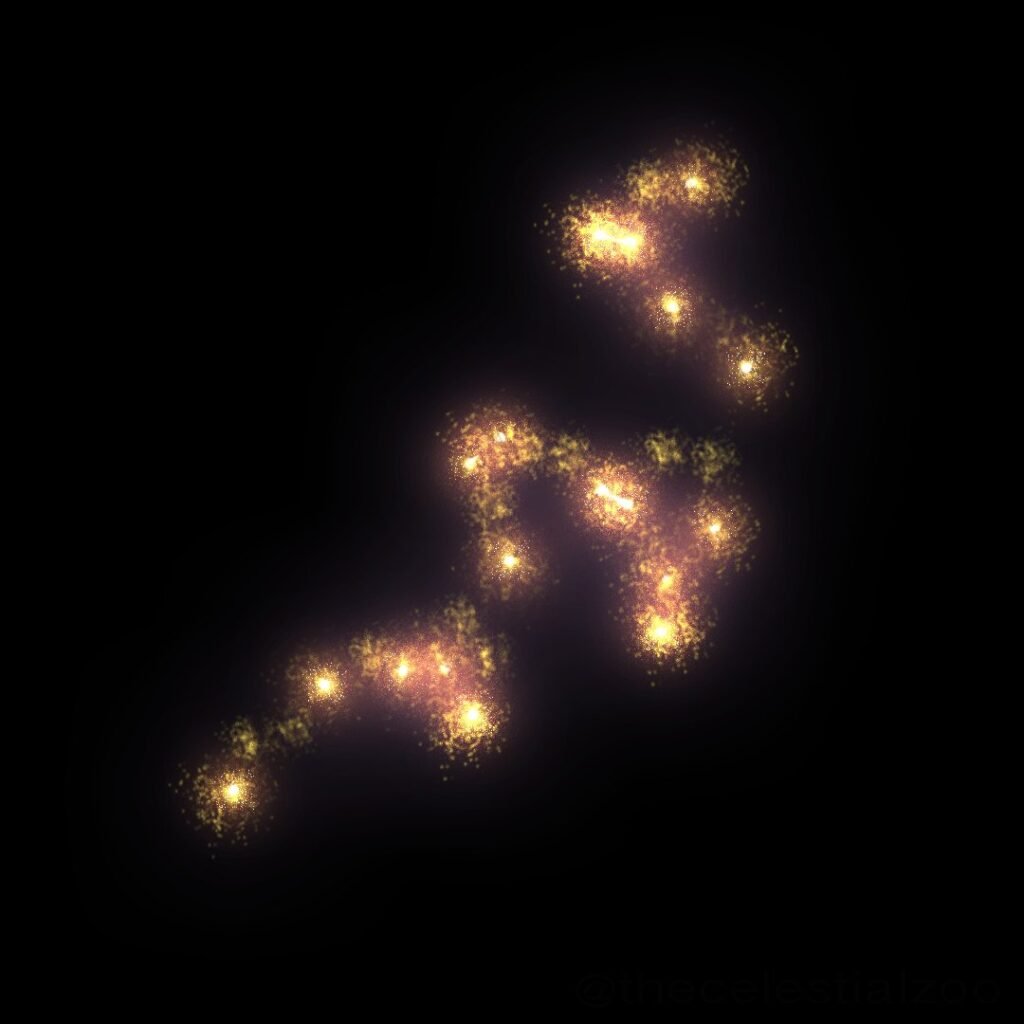
Here’s where things get controversial. The Hercules–Corona Borealis Great Wall is a putative galaxy filament that, if confirmed, would be the one of the largest known structures in the observable universe, measuring approximately 10 billion light-years in length. Ten billion light years. Light from one end of this structure would take nearly the entire age of the universe to reach the other side.
This massive superstructure is a region of the sky seen in the data set mapping of gamma-ray bursts that has been found to have a concentration of similarly distanced GRBs that is unusually higher than the expected average distribution. It was discovered in early November 2013 by a team of American and Hungarian astronomers led by István Horváth, Jon Hakkila and Zsolt Bagoly. The debate rages on about whether it’s a genuine single structure or just a statistical fluke.
The cosmological principle suggests the universe is homogeneous and isotropic on large scales, meaning it should look the same in all directions. According to the cosmological principle, any cosmic structure larger than 1.2 billion light-years long shouldn’t have had sufficient time in the 13.8 billion-year-old universe to form if the spread of matter is homogeneous and isotropic. This thing shatters those expectations by nearly tenfold.
Superclusters Where Millions of Galaxies Congregate
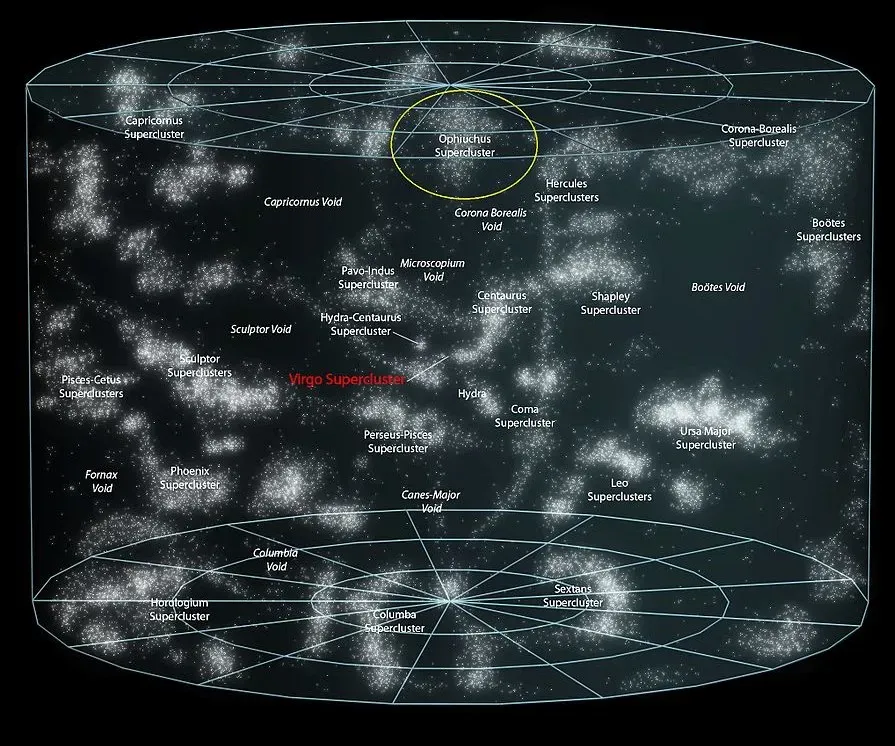
A supercluster is a large group of smaller galaxy clusters or galaxy groups; they are among the largest known structures in the universe. The Milky Way is part of the Local Group galaxy group, which in turn is part of the Virgo Supercluster, which is part of the Laniakea Supercluster. You yourself are sitting inside these nested structures right now, like Russian dolls of cosmic organization.
Laniakea, our supercluster, extends over 500 million light-years and includes the Milky Way galaxy. Superclusters form through gravitational collapse of regions of space and consist of multiple galaxy clusters and groups. Honestly, it’s hard to say for sure how all these components interact over such vast timescales. What researchers do know is that galaxies within these structures aren’t randomly scattered but follow predictable patterns dictated by invisible gravitational forces pulling on them from every direction.
Giant Rotating Filaments
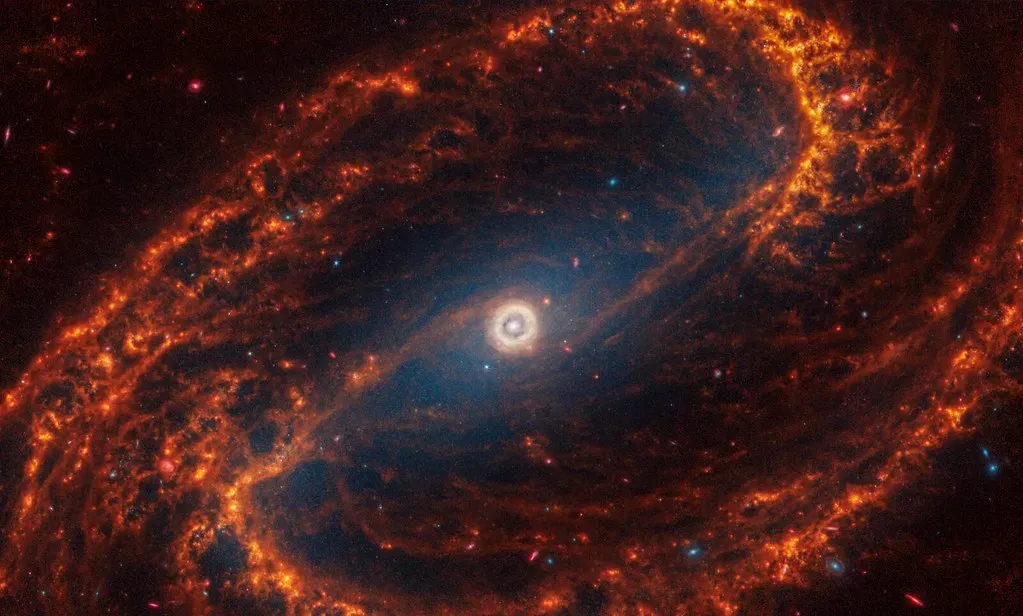
Scientists have discovered a giant cosmic filament where galaxies spin in sync with the structure that holds them together. The razor-thin chain of galaxies sits inside a much larger filament that appears to be slowly rotating as a whole. That’s right – these structures aren’t just static collections. They’re spinning.
Researchers identified 14 nearby galaxies rich in hydrogen gas arranged in a narrow, elongated line measuring about 5.5 million light years in length and roughly 117,000 light years across. This thin structure lies within a much larger cosmic filament that stretches about 50 million light years and contains more than 280 additional galaxies. This pattern indicates that the entire filament is rotating as a single structure. By applying models of filament dynamics, the researchers estimated a rotation speed of about 110 km/s. The implications are staggering. You have threads of galaxies hundreds of millions of light years long spinning like cosmic ropes, influencing how galaxies within them evolve and acquire their own rotations.
The Quipu Superstructure
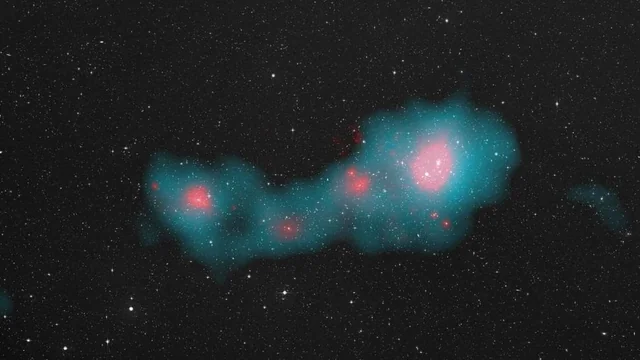
It’s essentially a giant cluster of galaxy clusters stretching approximately 1.3 billion light-years long – more than 13,000 times the length of our Milky Way. It consists of 200 quadrillion solar masses. Quipu represents one of the newest additions to our catalog of cosmic giants, and researchers are still debating its exact boundaries and whether all its components are gravitationally connected.
At ten billion light-years long, the Hercules Corona-Borealis Great Wall is technically the largest known structure in the universe, with a catch: It hasn’t been confirmed as a single, interconnected thing. The scientific community remains divided. Some astronomers question whether statistical methods used to identify these megastructures might be creating patterns where none truly exist, while others point to increasingly robust datasets supporting their reality.
What This All Means for Our Understanding of the Universe
Despite these challenges, cosmological simulations suggest that cosmic filaments contain over 50% of the universe’s matter. Understanding these structures is therefore essential for a comprehensive view of the universe, and to know how galaxies form and evolve within this large interconnected web. Nearly everything you see when you look through a telescope exists because of these invisible threads.
At temperatures between 100,000 and 10 million Kelvin, it is a web of cosmic filaments that are regions of hot, diffuse gas stretching between galaxies. These cosmic filaments, also called galactic filaments, are the largest structures known in the universe, commonly 150 to 250 megaparsecs long. Together they form the cosmic web, and they form the boundaries between cosmic voids, enormous regions of empty space containing almost no galaxies. The matter flowing along these filaments fuels star formation, feeds black holes, and determines the fate of entire galactic empires over billions of years.
The discovery of structures this enormous challenges fundamental assumptions about how the universe works. It raises questions about what happened in those first fractions of a second after the Big Bang, and whether forces we haven’t yet identified might be operating at scales beyond our current comprehension. What would you have guessed the biggest thing in the universe could possibly be? Whatever you imagined, these cosmic titans probably exceeded it. Tell us what surprises you most about these structures in the comments.