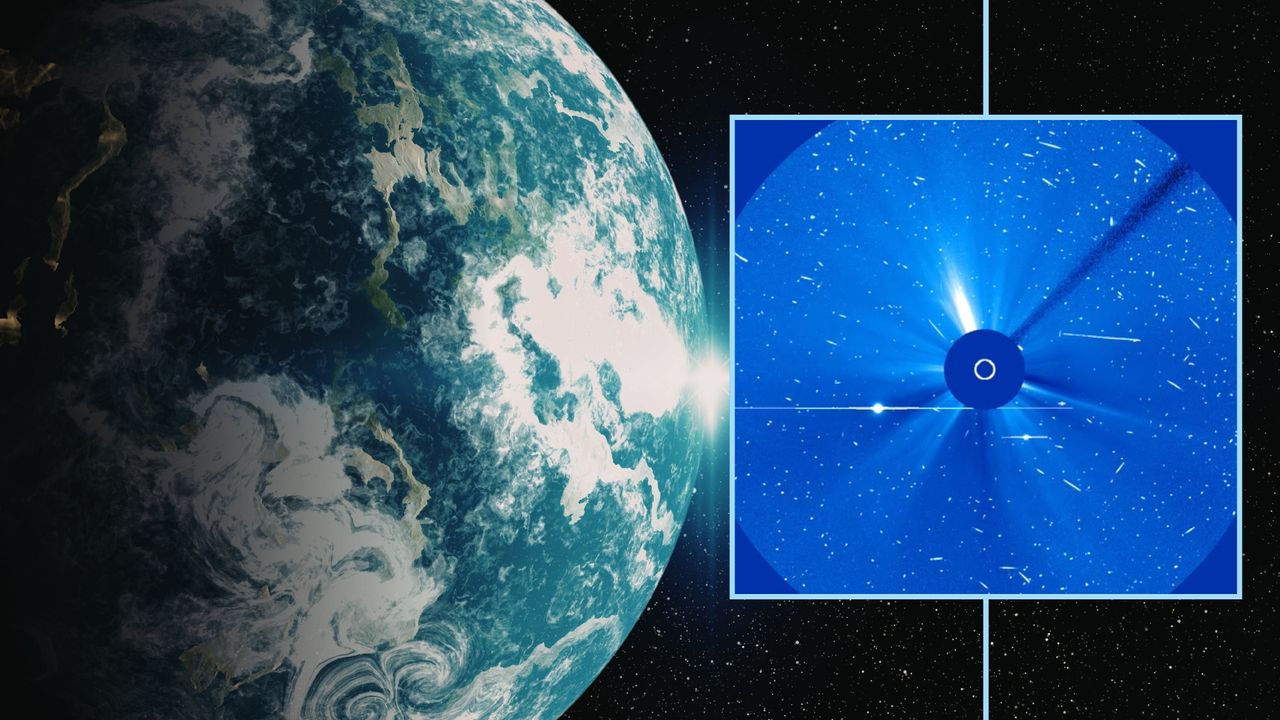
A Solar Eruption Like No Other (Image Credits: Cdn.mos.cms.futurecdn.net)
Earth recently endured a powerful barrage from the sun, marking the strongest solar radiation storm observed in more than 20 years.
A Solar Eruption Like No Other
On January 18, 2026, the sun unleashed an X1.9-class solar flare from a highly active region on its surface. This intense burst of energy propelled a coronal mass ejection toward Earth at high speeds. The event escalated quickly, with the radiation storm reaching S4 levels by January 19. Forecasters at the Space Weather Prediction Center had tracked the flare’s potential for days. The storm’s intensity surpassed anything recorded since 2003, compressing Earth’s magnetosphere dramatically. Scientists noted the plasma and charged particles arrived sooner than anticipated, intensifying the geomagnetic disturbances.
Unlike milder solar activity, this storm involved a direct hit from high-energy protons. The radiation peaked during the late hours of January 19, affecting the planet’s outer atmosphere. Experts classified it as a rare occurrence during the current solar maximum phase. Monitoring stations worldwide registered elevated particle fluxes for hours. The event highlighted the sun’s unpredictable nature, even with advanced predictive tools in place.
Auroral Displays Reach Uncommon Heights
One of the most striking outcomes emerged in the night skies, where auroras painted vivid colors far beyond their usual polar confines. The geomagnetic storm, rated G4 in severity, fueled northern lights visible across northern U.S. states and parts of Europe. Witnesses reported green and purple hues dancing overhead in regions like Ohio and the Midwest. This visibility stemmed from energized particles colliding with atmospheric gases, a process amplified by the storm’s force. Skywatchers captured the phenomenon on cameras, sharing glimpses of the ethereal light show.
The auroras served as a natural indicator of the storm’s power, extending to mid-latitudes rarely touched by such events. Conditions persisted into January 20, offering prime viewing opportunities under clear skies. While beautiful, the displays underscored the underlying solar dynamics at play. Astronomers encouraged public observation, noting it as a once-in-a-generation spectacle. The event reminded observers of the interconnectedness between solar activity and Earth’s environment.
Navigating Technological Vulnerabilities
Beyond the visual wonders, the storm posed real challenges to modern infrastructure reliant on space-based systems. Satellite operators reported temporary disruptions in communications and navigation signals. High-frequency radio blackouts affected aviation and maritime routes, particularly at high latitudes. GPS accuracy dipped for users in affected areas, prompting warnings for precise positioning needs. Power grids monitored for induced currents, though no widespread outages occurred.
Space agencies like NASA and NOAA issued alerts to mitigate risks for astronauts and high-altitude flights. The radiation surge increased exposure levels for those in orbit, though shielding protected crews effectively. Ground-based systems experienced minimal direct impacts, thanks to preparedness measures. Experts reviewed the event to refine future response strategies. Overall, the storm tested resilience without causing major failures.
- Radio blackouts: Interfered with shortwave communications for several hours.
- Satellite drag: Slight orbital adjustments needed for low-Earth orbit craft.
- GPS anomalies: Temporary signal degradation in polar regions.
- Aviation rerouting: Polar flights diverted to avoid radiation peaks.
- Power monitoring: Utilities on alert for geomagnetic-induced currents.
Lessons from a Solar Wake-Up Call
This solar radiation storm arrived amid the sun’s 25th activity cycle, which remains near its peak. Historical comparisons to events like the 2003 storm revealed similarities in intensity but differences in technological preparedness. Today’s satellite constellations and grid protections fared better than in past decades. Researchers analyzed data streams to understand particle acceleration mechanisms. The event reinforced the need for ongoing investment in space weather forecasting.
Looking ahead, similar storms could recur as solar maximum continues through 2026. International collaborations aim to enhance early warning systems. The incident provided valuable data for modeling future risks. Scientists emphasized that while disruptive, such events drive scientific progress. Public awareness grew, blending awe with caution about solar influences.
Key Takeaways
- The storm’s S4 rating marked the highest radiation levels since 2003, driven by an X1.9 flare.
- Auroras expanded to lower latitudes, offering rare viewing but signaling geomagnetic unrest.
- Tech sectors managed disruptions through alerts, highlighting improved global readiness.
As Earth recovers from this solar onslaught, it serves as a reminder of our planet’s delicate balance with the cosmos. The beauty of the auroras contrasted with the subtle threats to daily life, urging greater vigilance. What aspects of this event intrigue you most? Share your thoughts in the comments.