
History is supposed to be neat and organized: timelines in textbooks, tidy migration routes, clear stories of who arrived where and when. But every so often, something turns up in the ground that doesn’t fit the script at all. These finds are like grit in the gears of the past, stubbornly refusing to slide into the story we think we know.
In North America, a handful of discoveries have done exactly that. They’re not fringe theories or wild conspiracy material; they’re real, excavated, documented objects, bones, and structures that serious researchers still argue about today. Each one raises a question no one can fully answer: Who was here first, how did they get here, and what did they leave behind that we’ve barely begun to understand?
1. The Cerutti Mastodon: Humans in California Over 100,000 Years Ago?
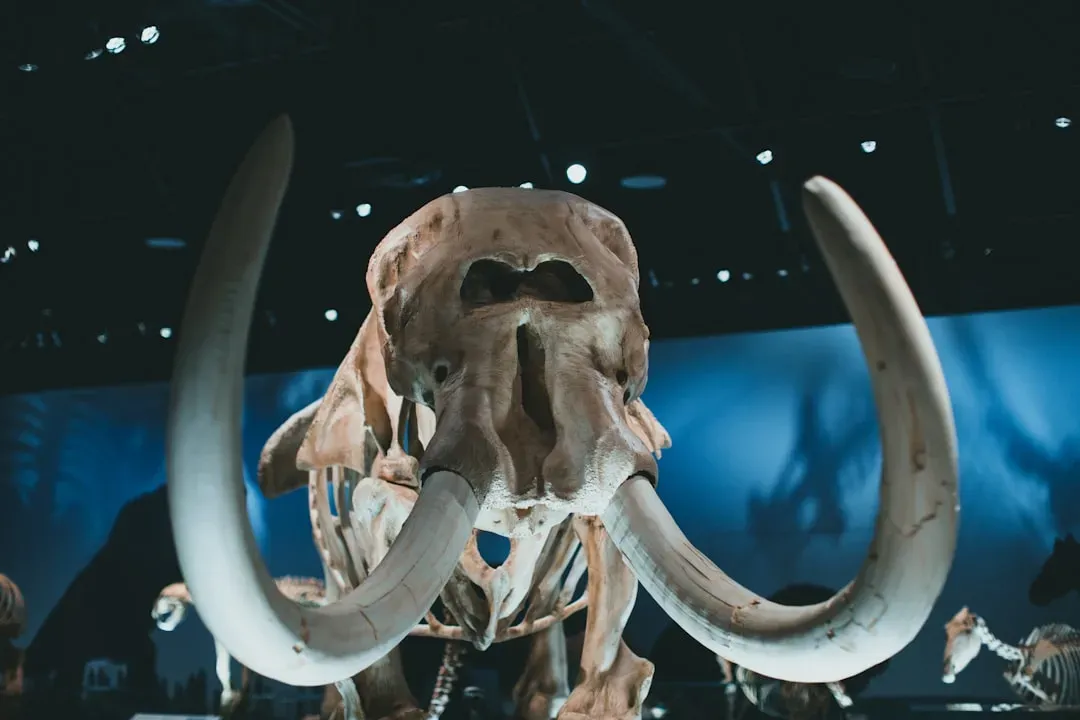
Imagine finding out that humans may have been in California ten times earlier than most history books allow. That’s more or less what the Cerutti Mastodon site suggests, and the idea still sends shockwaves through archaeology. Discovered during highway construction near San Diego, the remains of a mastodon were found with broken bones and large stones that some researchers argue were used as tools.
What makes this so explosive is the proposed date: around one hundred and thirty thousand years ago, far earlier than the widely accepted arrival of humans in the Americas. The bones appear broken in patterns consistent with marrow extraction and tool-making, not with natural processes like trampling or river movement. Critics argue that geologic forces could explain the damage, and that no clear-cut stone tools were found, only battered rocks. Yet the combination of breakage patterns and the positions of the stones keeps the debate alive and forces a hard question: if people were here that early, how many chapters of human presence in North America have completely vanished?
2. Cerutti-Like Signals at Other Early Sites: Old Crow Basin and Bluefish Caves
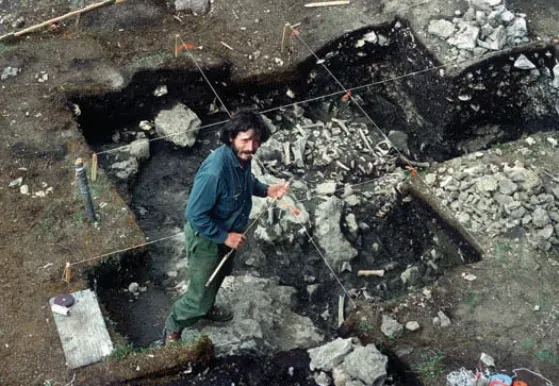
The Cerutti Mastodon doesn’t stand alone in raising uncomfortable questions about how early humans might have reached North America. Other sites, like the Bluefish Caves in Yukon and possible early layers at locations such as Old Crow Basin and Broken Mammoth in Alaska, hint at human activity stretching back more than twenty thousand years, maybe even farther. Taken separately, each site can be brushed aside as ambiguous, but together they form a pattern that’s getting harder to ignore.
At Bluefish Caves, for example, some animal bones show cut marks that many researchers interpret as human-made, suggesting butchering long before the end of the last Ice Age. Skeptics say erosion, gnawing, and other natural forces can mimic cut marks, and they demand stronger proof. Still, the growing list of strange, possibly human-altered bones and stones in early layers across the continent keeps piling up. It feels a bit like seeing fingerprints everywhere but never catching the person who left them, hinting that our story of the “first Americans” might be drastically compressed compared to what really happened.
3. The Newport Tower in Rhode Island: Colonial Windmill or Ancient Mystery?
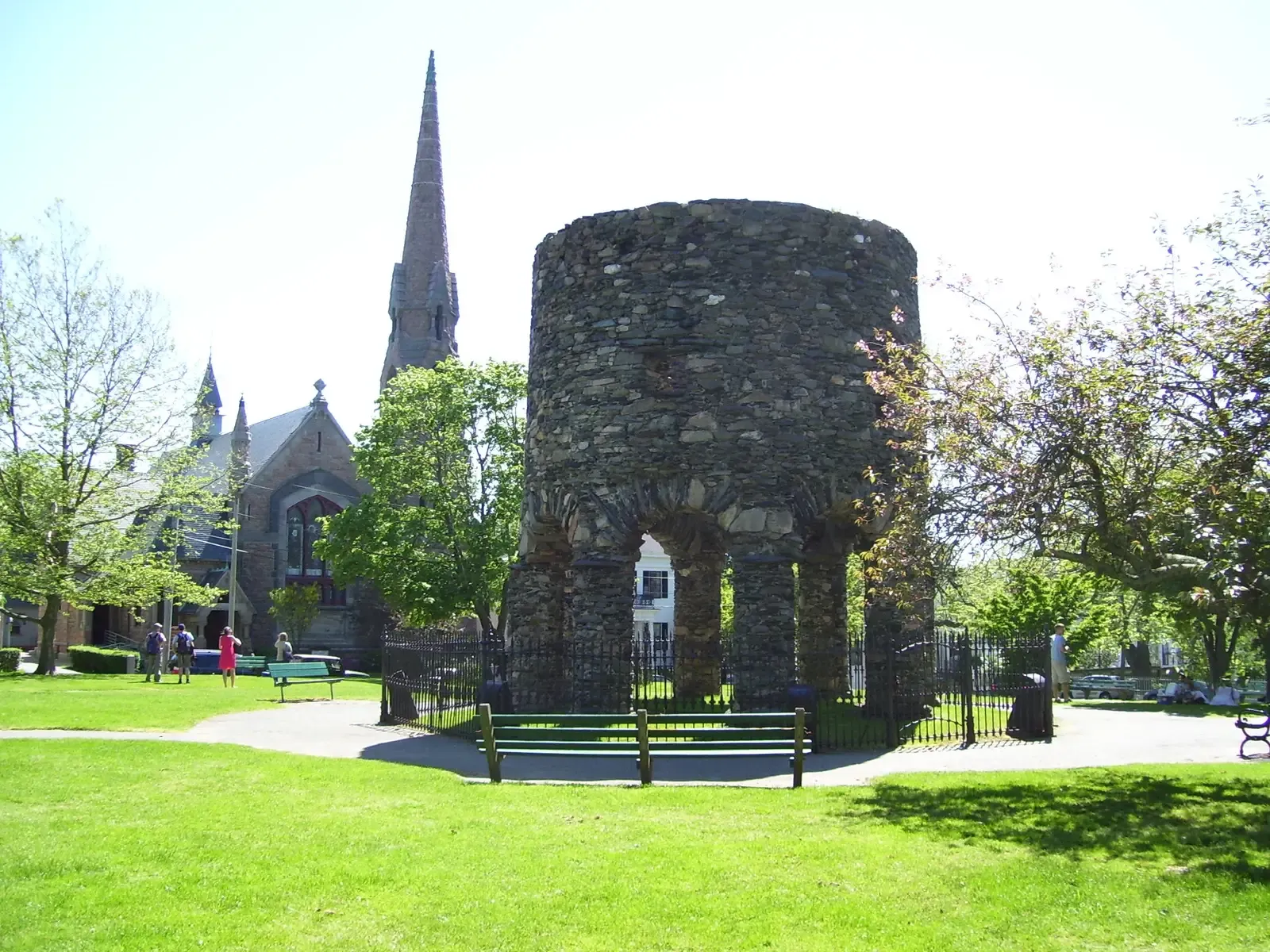
Walk into Touro Park in Newport, Rhode Island, and you’ll find a stone tower that looks like it wandered in from another continent. It’s circular, built on columns, and made of rough stone and mortar, standing out sharply from the surrounding colonial-era buildings. Local lore has long claimed it’s far older than the seventeenth century, with theories tying it to medieval Europeans, Knights Templar, or even much earlier transatlantic visitors.
Most professional historians argue the tower was likely a seventeenth-century windmill linked to Governor Benedict Arnold, citing records and architectural comparisons. Yet the structure’s odd proportions, its alignment, and the fact that it doesn’t quite match typical English windmill designs keep mystery enthusiasts unconvinced. Some point to possible astronomical alignments and Old World stylistic echoes as evidence of a pre-Columbian origin. The Newport Tower sits there, silent and stubborn, a small stone argument about whether Old World sailors may have reached these shores long before the voyages we celebrate in textbooks.
4. The Kensington Runestone: Viking Carving or Clever Hoax in Minnesota?
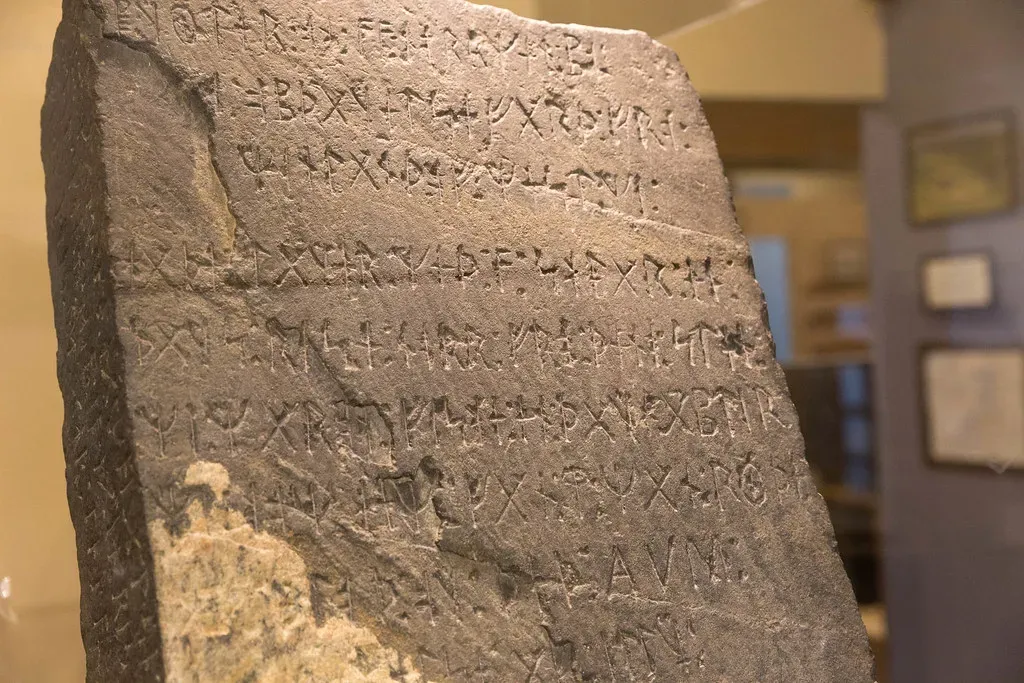
In a farm field in Minnesota in the late nineteenth century, a stone slab covered in runic inscriptions turned up tangled in tree roots. The Kensington Runestone, as it’s now known, tells a brief story of Norse explorers traveling deep into the interior of North America in the fourteenth century. For some, it’s a tantalizing piece of evidence that Vikings didn’t just touch Canada’s east coast but penetrated far into the continent.
From the beginning, though, linguists and historians have raised serious doubts. The style of the runes and the language on the stone seem to include forms that did not exist in medieval times, suggesting a modern carving rather than a genuine fourteenth-century artifact. Yet despite strong scholarly consensus leaning toward a hoax, a devoted group of supporters insists it’s real, pointing to weathering patterns and local Scandinavian immigrant lore. The stone has become less about text on rock and more about how we decide what counts as legitimate history, and who gets the final say.
5. The Great Serpent Mound of Ohio: Who Built This Enormous Earthwork and Why?
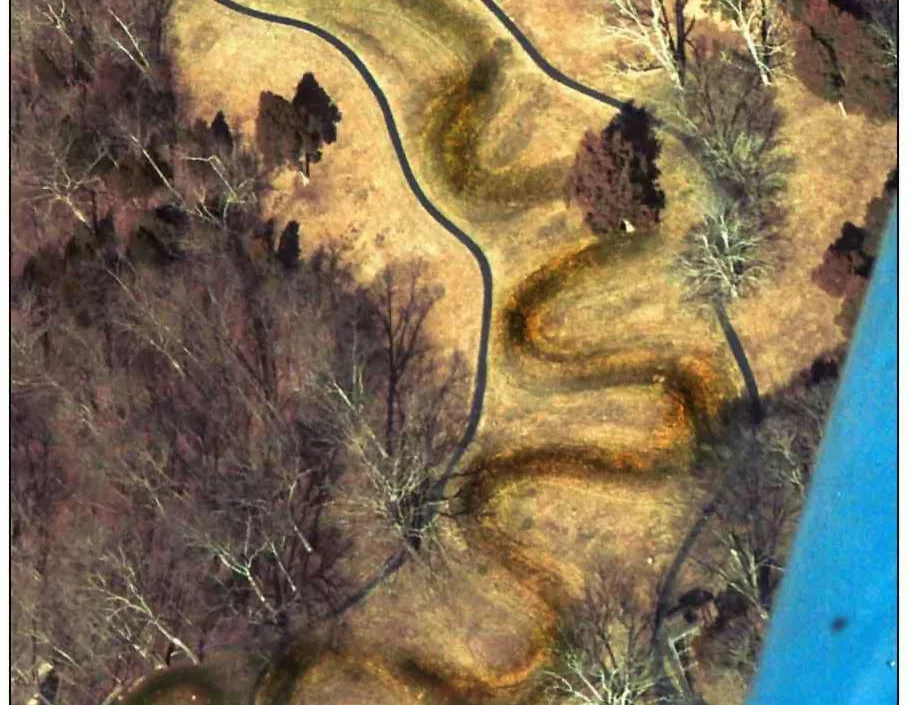
High above the rolling landscape of southern Ohio lies one of the most striking earthworks on the continent: the Great Serpent Mound. Seen from the air, it’s a long earthen serpent more than a quarter of a mile in length, tightly coiled with an open mouth seeming to swallow or cradle an egg-shaped mound. Stand on the ground and you only get fragments of the shape, but from above it’s almost unnervingly deliberate, as if someone drew a massive symbol into the land itself.
The big questions are who built it, when, and for what purpose. For many years it was attributed to the Adena culture, then later research and radiocarbon dates suggested a Mississippian-era construction, but debate continues over its exact age and cultural affiliation. Some researchers see astronomical alignments, especially with solstices and lunar events, suggesting a complex understanding of the sky and ritual time. The sheer scale and precision challenge older stereotypes that Indigenous societies of the region were simple or unsophisticated. Instead, the Serpent Mound forces recognition of an advanced, symbol-rich world that was thriving here long before European contact, with levels of planning and cosmology we still don’t fully grasp.
6. Cahokia’s Monks Mound: A Lost North American City That Rivaled Medieval Europe
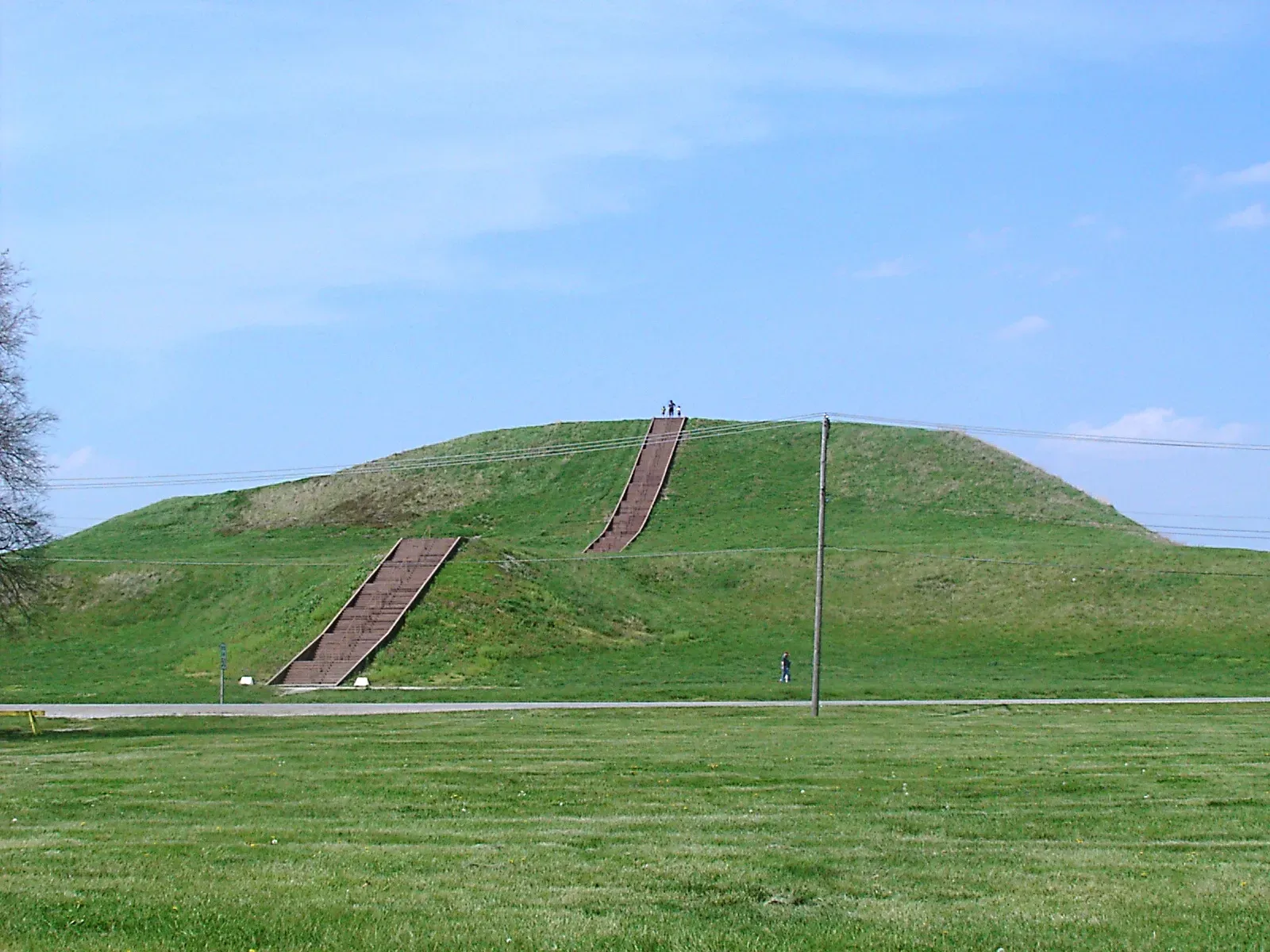
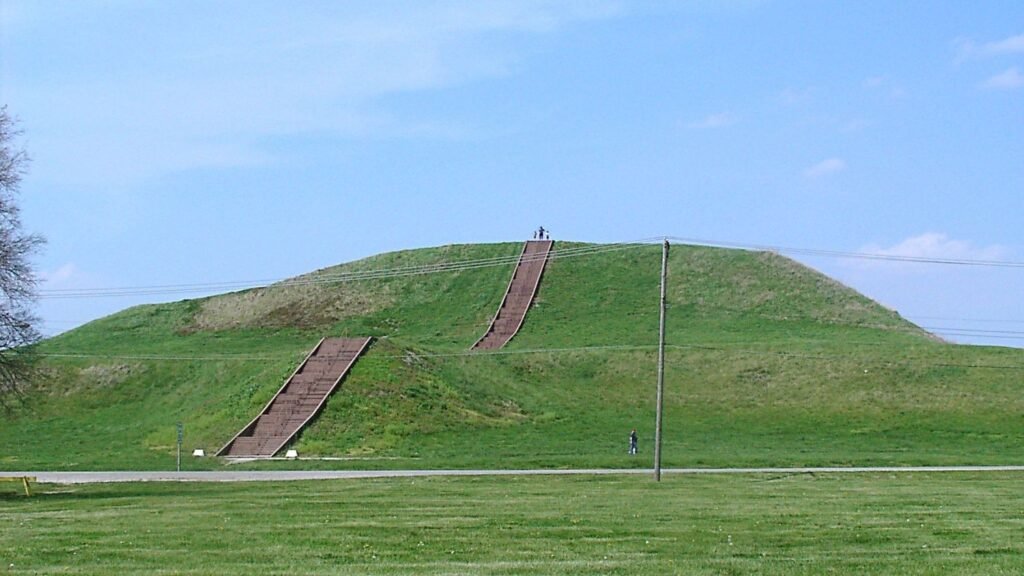
Just across the Mississippi River from present-day St. Louis sits the remains of a city that many people in North America have never heard of: Cahokia. At its height around a thousand years ago, it held a population comparable to or larger than many European cities of the same period, with plazas, neighborhoods, defensive structures, and an enormous central platform known as Monks Mound. Climbing that mound today, it’s hard not to feel like you’re standing on top of a story that was never properly told.
Monks Mound itself is a feat of construction, built by hand with layer upon layer of carefully moved earth, rising taller than many European cathedrals of its era. Evidence of long-distance trade, complex social hierarchies, and sophisticated urban planning has steadily overturned the old myth that pre-contact North America was mostly scattered small villages. Yet no written records from Cahokia’s inhabitants survive, and the reasons for the city’s decline remain murky: climate shifts, resource strain, social unrest, or some combination of many forces. What’s clear is that Cahokia rewrites the idea of what Indigenous North America looked like – a continent not waiting to be “discovered,” but already home to powerful, urban civilizations whose stories we’re only beginning to reconstruct.
When the Ground Refuses to Match the Textbook
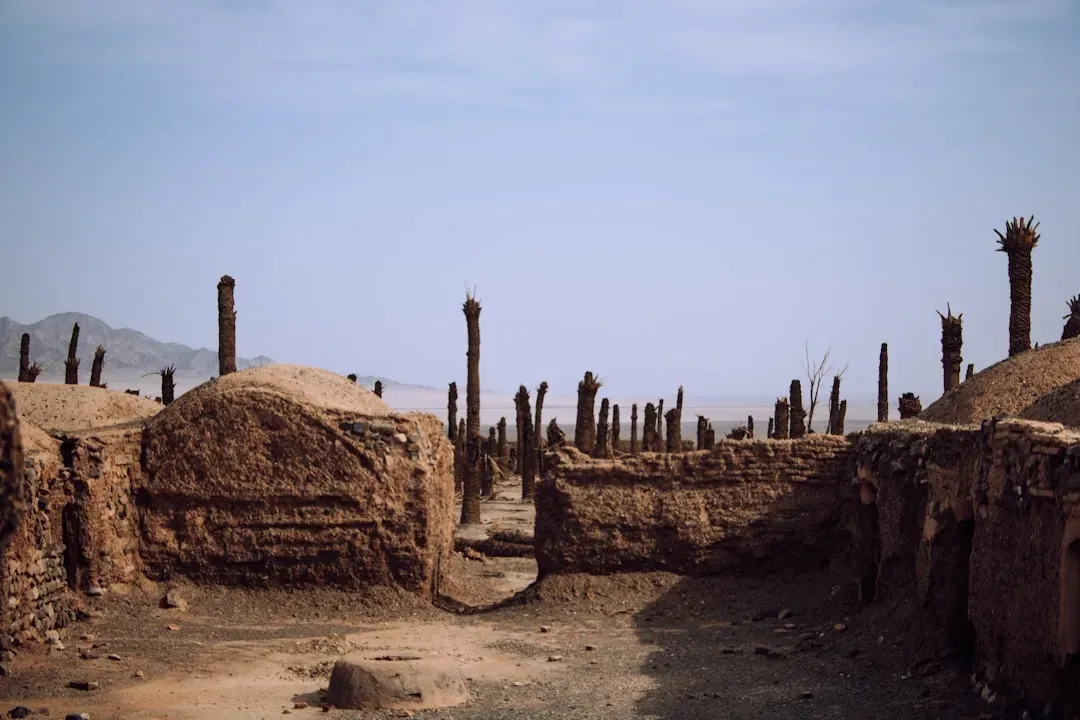
Each of these discoveries pulls on a loose thread in the story of North America’s past, and together they start to unravel the old simple narrative. Whether it’s a mastodon site that hints at human presence far earlier than most scholars accept, a mysterious tower that won’t quite fit its supposed colonial role, a disputed runestone that tests how we judge authenticity, or monumental earthworks and cities that reveal a level of Indigenous complexity many were never taught about, the message is the same. The ground keeps telling us that human history here is deeper, stranger, and more layered than the versions that made it into school lessons.
In the end, the unanswered questions may be more important than any single solution: Who stood on these mounds first, who carved these symbols, who walked these landscapes tens of thousands of years before us, and how much of their world has already slipped away beyond recovery?