
There’s a quiet kind of shock that hits you the first time you really grasp what quantum physics is claiming about reality. Particles that are also waves, choices made in the present that seem to rewrite the past, objects that influence each other instantly across vast distances – it sounds like science fiction, yet it’s tested, measured, and repeatable. The lab has become the strangest place in the universe, not some distant galaxy.
What follows isn’t just a list of neat physics tricks. These are experiments that force us to question ideas we usually treat as rock solid: What is “real”? Does the world exist in a definite way when no one’s looking? Is time as one-directional as it feels? As we walk through these ten experiments, you might find your everyday sense of reality quietly crumbling – and that’s where the fun really starts.
The Double-Slit Experiment: When Observation Creates Reality
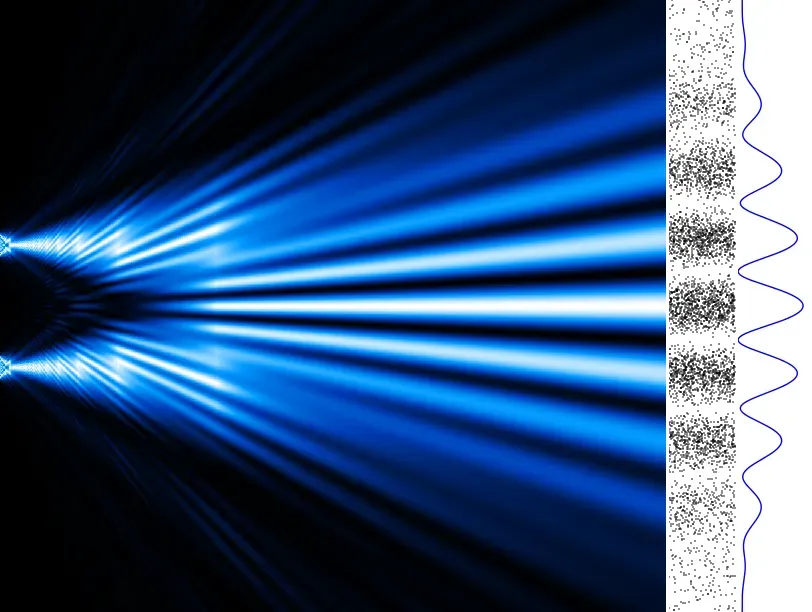
Imagine firing tiny particles, like electrons or photons, at a wall with two narrow slits and watching where they land on a screen behind it. If they were just little billiard balls, you’d expect two bright bands where they came through the slits. But that’s not what happens: when nobody keeps track of which slit each particle goes through, they build up an interference pattern, like ripples on a pond, as if each particle went through both slits at once.
The real shock comes when you add a detector to check which slit each particle passes through. The moment you try to “peek,” the interference pattern disappears and the particles act like ordinary bullets, not waves. It’s as if the universe refuses to decide on a definite path until a measurement forces its hand. This simple-looking experiment is still one of the clearest demonstrations that, at the quantum level, the act of observing doesn’t just reveal reality – it helps create it.
Quantum Entanglement: Spooky Connections Across Space
Quantum entanglement starts with two particles created together in such a way that their properties are linked, no matter how far apart they later travel. Measure the spin of one particle, and the other’s spin is instantly fixed, even if it’s on the other side of the planet. This isn’t just a matter of hidden information; decades of tests have ruled out simple “they-decided-in-advance” explanations.
Modern experiments have pushed this to almost absurd lengths, sending entangled photons between ground stations and satellites, and still finding the same eerie correlations. It looks like nature is ignoring our everyday idea that influences must travel through space gradually, step by step. Entanglement doesn’t let you send messages faster than light, but it does force you to give up something deep – either locality, realism, or the comforting idea that the world exists in a clear-cut way independent of our questions.
Bell Test Experiments: The Death of Local Hidden Variables
For a long time, many physicists hoped that quantum weirdness was just a sign of hidden variables we hadn’t discovered yet – some deeper layer where particles had definite properties and everything was local and sensible. Bell’s theorem turned that hope into a specific test: if local hidden variables were real, certain inequalities about entangled measurements should always hold. If quantum mechanics was right, those inequalities should be violated.
Starting in the late twentieth century and continuing into the twenty-first, experiments kept finding violations of Bell’s inequalities under increasingly strict conditions. In the past decade, so-called “loophole-free” Bell tests have closed the most important escape routes, confirming that nature really does behave in a nonlocal quantum way. These experiments don’t just say “quantum theory works”; they corner us into admitting that any deeper theory has to abandon at least one cherished intuitive idea about how reality fits together.
Delayed-Choice Experiments: Do Future Measurements Rewrite the Past?
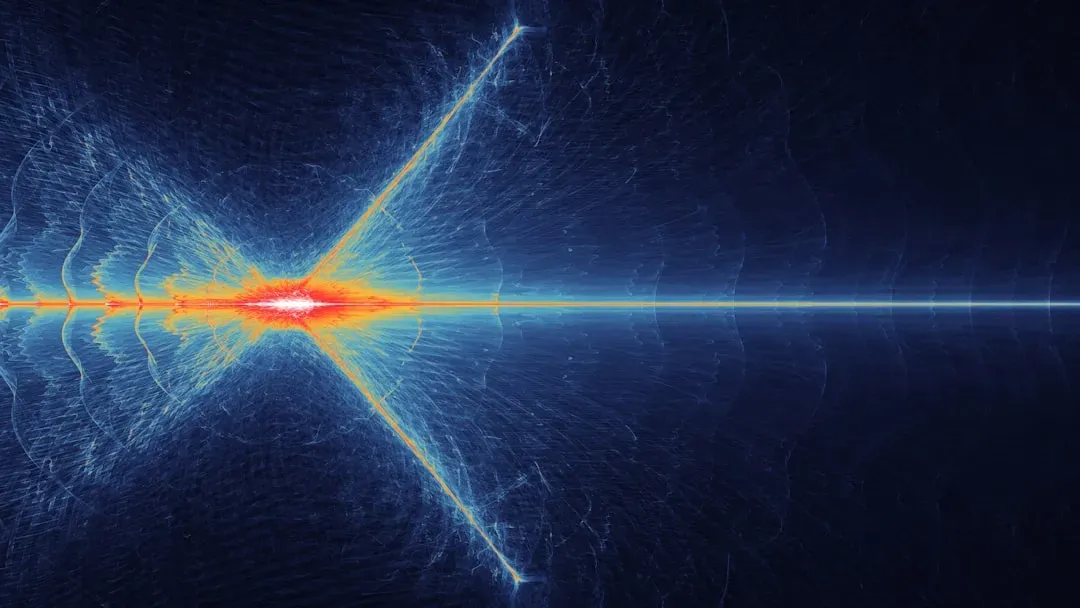
Delayed-choice experiments take the double-slit idea and crank up the weirdness. Instead of deciding in advance whether to measure particles as waves or as particles, experimenters make that choice after the particle has already entered the apparatus. Astonishingly, the results still line up as if the particle “knew” what kind of measurement was coming and adjusted its past behavior accordingly.
Modern versions, including delayed-choice quantum eraser experiments, go even further by allowing information about which path a particle took to be erased or preserved after the fact. The patterns on the detector screen change depending on whether that information is available, not when it’s recorded. It’s tempting to say the future is reaching back and editing the past, but a more careful view is that the quantum world doesn’t give you a solid story of “what really happened” until the entire experimental context is fixed.
Quantum Eraser: When Information Itself Changes Reality
In quantum eraser setups, photons go through a double-slit-like arrangement where, in principle, their path could be known. Whenever that “which-path” information is available, the interference pattern vanishes, just like in the classic double-slit. But here’s the twist: by cleverly interfering or filtering the photons later, experimenters can erase the which-path information, and the interference pattern reappears in the correlations.
The key point isn’t that anyone is literally traveling back in time. Instead, the experiment shows that what matters is not whether a path was physically taken, but whether the universe keeps track of which path it could have taken in a measurable way. Information – what can, even in principle, be known – turns out to be just as real a player in quantum physics as particles and fields. Reality looks less like a fixed movie and more like a story that only settles when all its questions are decided.
Quantum Tunneling: Escaping Through Impossible Barriers
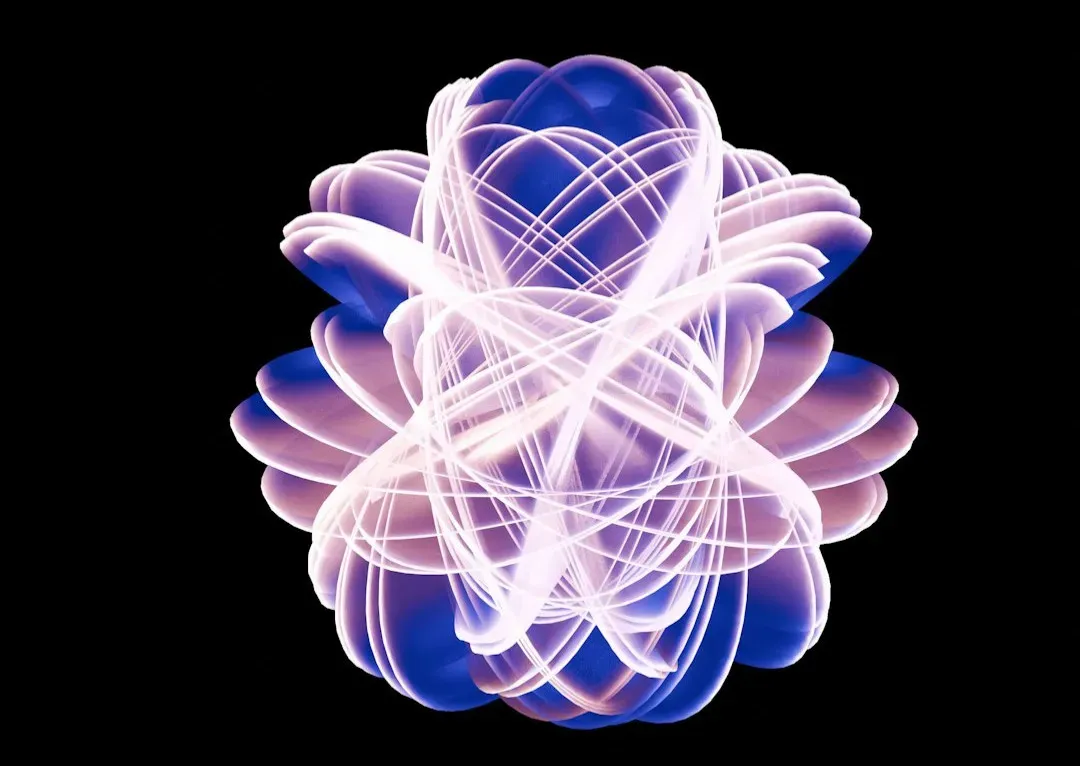
Quantum tunneling is like watching a ball roll up a hill that’s taller than the energy you gave it, only to find it somehow on the other side. Classically, that should never happen: if you don’t have enough energy to clear the barrier, you bounce back. At the quantum level, though, particles are described by wavefunctions that leak into and through barriers, giving a small but real chance of appearing on the forbidden side.
This isn’t just a theoretical oddity; tunneling is built into the fabric of modern technology and even the life of stars. Devices like tunnel diodes and scanning tunneling microscopes rely on electrons jumping through barriers they shouldn’t beat, and nuclear fusion in stars is made possible by tunneling through the repulsion between atomic nuclei. When you realize that the engines of the cosmos and your everyday electronics both depend on the universe allowing the “impossible” to happen, the classical picture of solid, predictable barriers starts to feel like a comforting illusion.
Macroscopic Quantum States: Superconductors and Superfluids
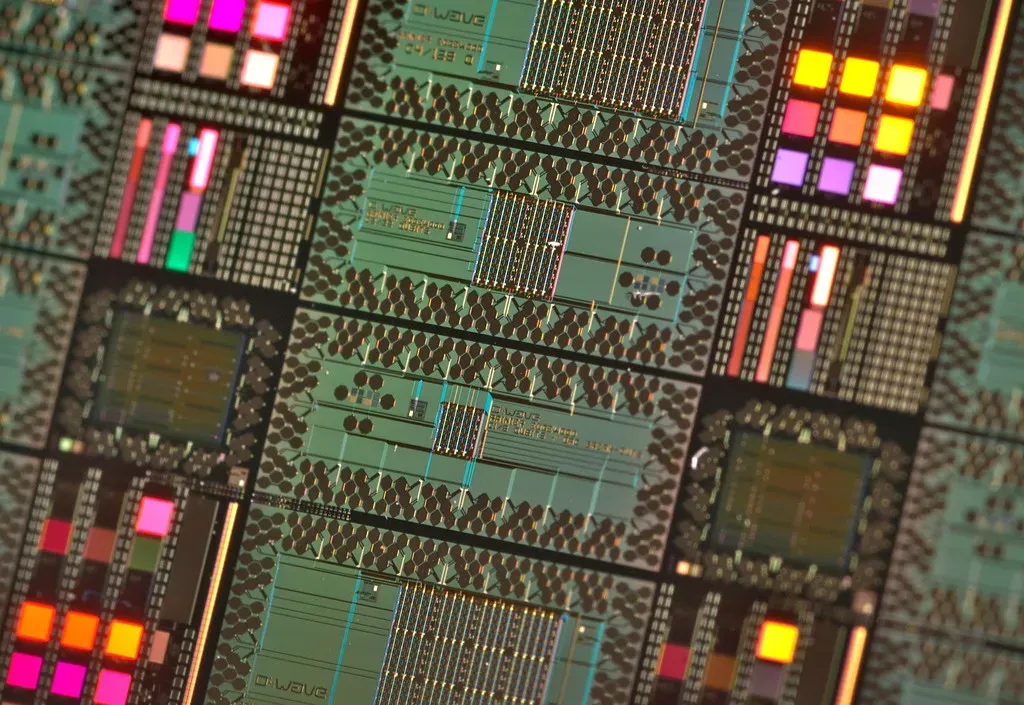
Quantum mechanics is often described as a theory of the very small, but some of its most striking experiments involve huge numbers of particles acting as a single coherent quantum state. In superconductors, electrons pair up and move through a material with zero electrical resistance, flowing indefinitely in loops without losing energy. This behavior can persist over macroscopic distances, making it impossible to shrug off as a tiny microscopic fluke.
Superfluids, like ultra-cold liquid helium, show a similar kind of organized quantum weirdness. They can climb the walls of a container or flow through tiny channels without friction, behaving more like a single, coordinated wave than a collection of individual atoms. These experiments prove that quantum effects don’t just vanish when you scale up; under the right conditions, they swell into phenomena you can see with your own eyes and measure with everyday instruments.
Schrödinger’s Cat Realized: Massive Objects in Superposition
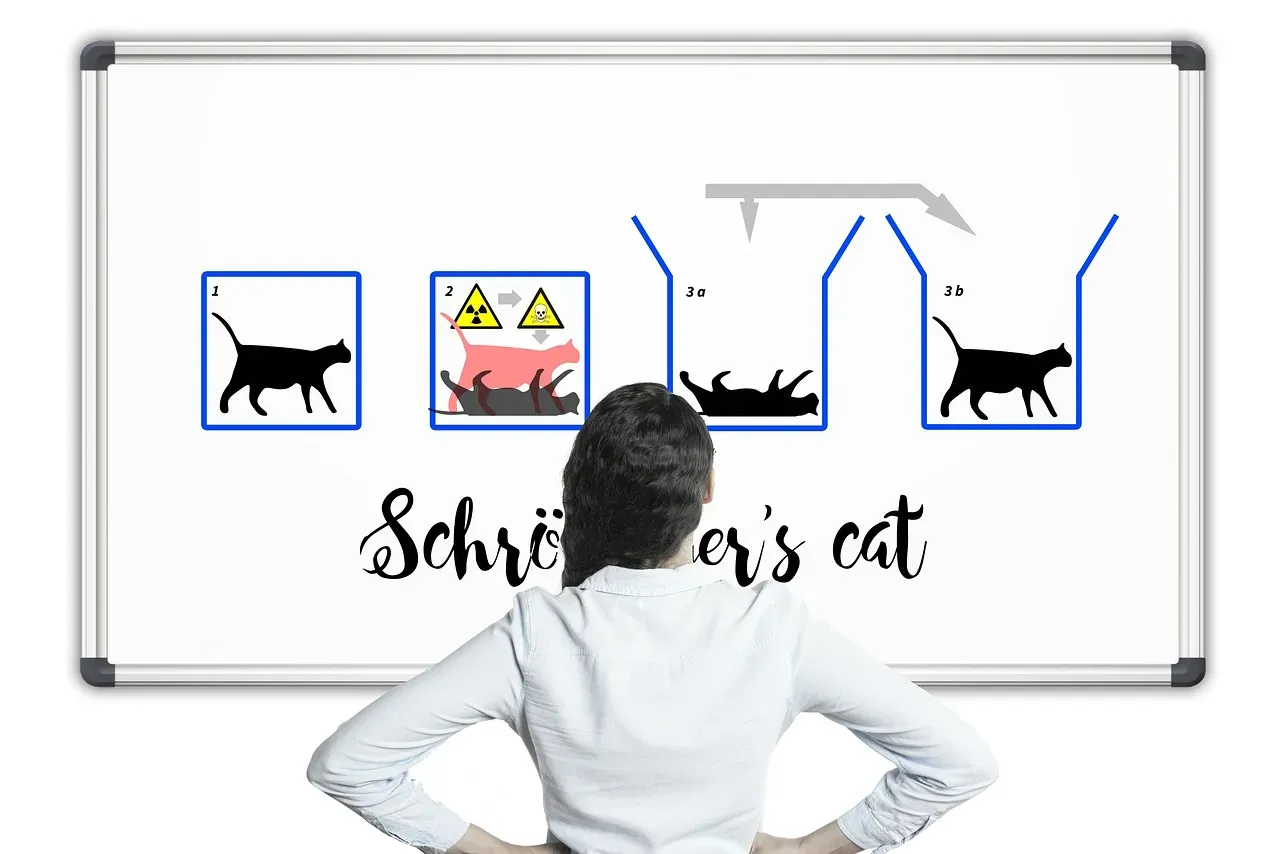
The thought experiment of Schrödinger’s cat – both alive and dead until observed – was meant to highlight how ridiculous it sounds to apply quantum rules to everyday objects. Yet over the past couple of decades, researchers have pushed superposition into the realm of increasingly large and complex systems. Tiny mechanical resonators, containing enormous numbers of atoms, have been cooled and manipulated into quantum states where they’re vibrating and not vibrating at the same time in a measurable way.
Experiments with large molecules, made of dozens or even hundreds of atoms, have shown clear interference patterns that can only be explained if these hefty objects travel multiple paths at once. While no one has put an actual cat into a quantum superposition, the gap between microscopic and macroscopic has shrunk dramatically. The eerie lesson is that the quantum rules do not seem to draw a clear line; instead, our everyday reality emerges gradually as systems grow, heat up, and become too tangled with their surroundings to stay weird in a controlled way.
Quantum Teleportation: Moving States, Not Stuff
Quantum teleportation sounds like it belongs in a sci-fi movie, but the real version is both more limited and more profound. In these experiments, the complete quantum state of a particle at one location is transferred to another distant particle, typically using entanglement and a special kind of joint measurement. The original state is destroyed in the process, and no matter or energy travels faster than light, but the information that defines the quantum state is recreated elsewhere.
Over the years, scientists have teleported quantum states across laboratory tables, through optical fibers spanning city-scale distances, and between ground stations and satellites. This is not about beaming people up; it’s about perfectly copying fragile quantum information that can’t simply be measured and written down. Teleportation experiments force us to rethink what it means for something to “be” somewhere, when the essential identity of a quantum system can be disassembled here and reassembled over there without any classical carrier bringing the details along.
Quantum Randomness: When Nature Really Has No Script
In our everyday world, randomness often feels like a placeholder for ignorance; a dice roll looks random because we don’t know all the forces nudging it on the way down. Quantum experiments with single particles tell a harsher story. Even when you fix every possible detail about a setup – same particle, same device, same conditions – the outcomes of some measurements are fundamentally unpredictable. All you can do is give probabilities, and the universe calmly follows them.
Physicists have tested this by building quantum random number generators that draw directly on measurement outcomes no hidden variable theory can reproduce without clashing with known results like Bell tests. These generators are now used for tasks like cryptography, where genuine unpredictability is crucial. Quantum randomness isn’t just “very complicated”; the evidence says nature, at its core, leaves some events without a deeper cause, and that’s a direct challenge to the old dream of a clockwork universe.
Living With a Stranger Universe Than We Hoped For
Looking across these experiments, a pattern emerges: every time we try to push reality back into a neat, classical box, quantum physics quietly kicks the walls out again. Particles act like waves until we look, connections stretch across space without clear carriers, and even time and cause-and-effect bend under the pressure of careful measurement. The lab has become a mirror showing us that our everyday intuitions are local customs, not universal laws.
What’s most unsettling – and strangely liberating – is that these results are not fringe or speculative; they sit at the heart of technologies we already rely on and the physics we keep confirming in ever more demanding tests. We are living in a universe where information shapes what can exist, where certainty is rationed, and where the line between possibility and reality is thinner than we like to admit. When you stare at that picture, which part of your old idea of “reality” would you let go of first?