Time feels so obvious when you look at a clock, but the closer scientists stare at it, the stranger it becomes. In the last few years, new experiments and theories have started to chip away at our everyday idea that time simply “flows” from past to future like a river you can’t swim against.
Some of these breakthroughs sound like science fiction at first glance: time running at different speeds in different places, computers that treat time as something to be rewound, and even the idea that time might not be fundamental at all. Yet these ideas are grounded in real data and serious mathematics. Let’s walk through five breakthroughs that are quietly rewriting what “time” even means.
1. Atomic Clocks Are Proving Time Is Not the Same Everywhere
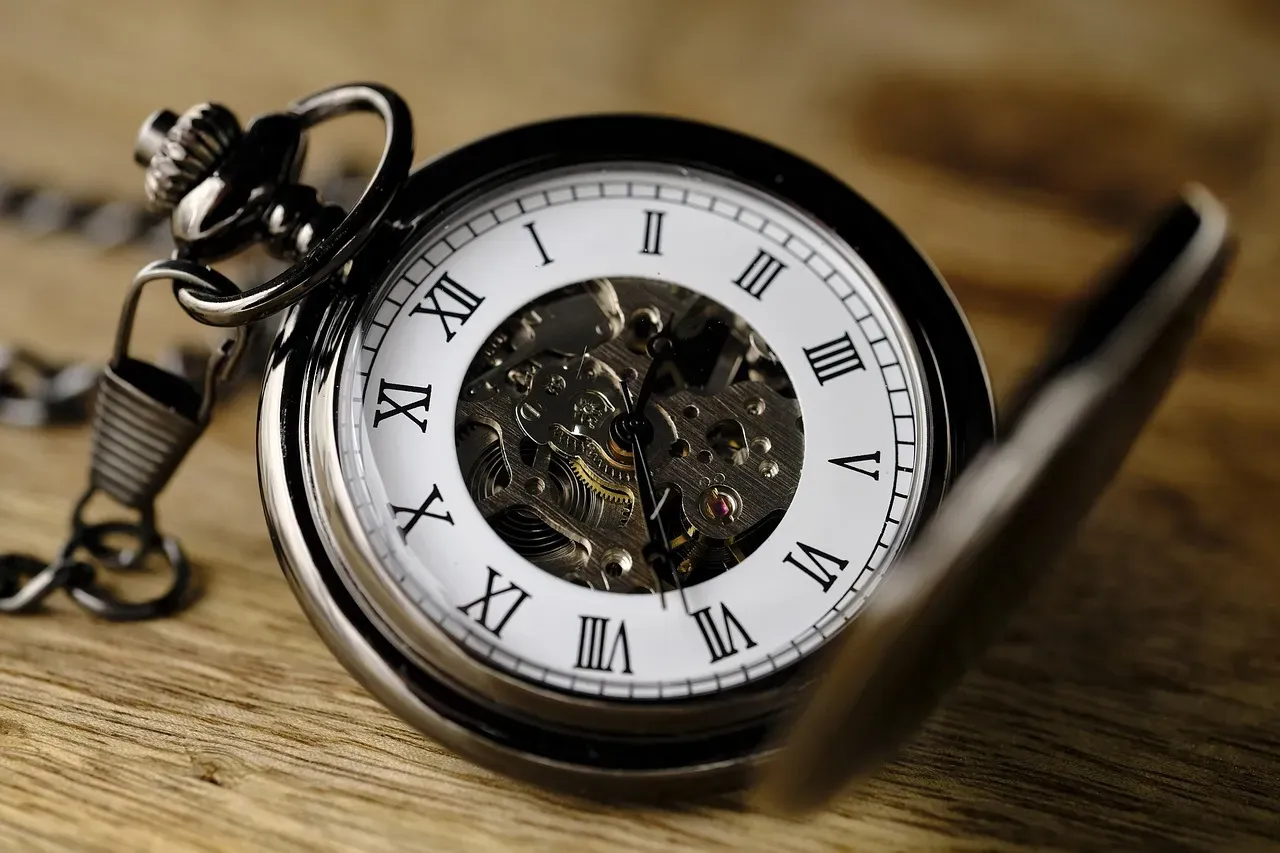
Imagine two identical twins standing just a few centimeters apart and aging at slightly different rates. That sounds like a bizarre thought experiment, but it’s getting close to what modern atomic clocks are testing in laboratories. Over the last decade, next‑generation optical lattice clocks have become so precise that they can detect the difference in time between heights of only a few millimeters in Earth’s gravitational field.
These clocks confirm a key prediction of Einstein’s general relativity: gravity literally bends time. A clock placed higher above Earth’s surface, where gravity is slightly weaker, ticks a bit faster than a clock closer to the ground. The differences are tiny, but they’re real and measurable. This isn’t just a physics curiosity either; satellite navigation systems already have to correct for these effects. As clock technology keeps improving, it could force us to rewrite how we define time zones, altitude measurements, and even what we mean by “now” in different locations on our planet.
2. Quantum Entanglement Is Challenging the Idea of a Single Shared “Now”
Quantum physics has long been famous for making reality feel slippery, and time is no exception. In entanglement experiments, particles separated by large distances appear to connect in ways that seem to ignore normal cause‑and‑effect. When one measurement is made, the outcome at the other end is correlated instantly, with no signal traveling between them in the usual sense.
Modern tests of entanglement, loophole‑free Bell experiments, and quantum networks have pushed this phenomenon from speculation into something engineers can actually use. In doing so, they’ve raised a disturbing possibility: there may not be a single, universal “now” that everyone shares. Instead, what counts as “simultaneous” can depend on how you’re moving and what you’re measuring. I remember the first time I really sat with this idea – it felt like realizing that the stage of reality has seams, and we’ve just started tugging the threads at the edge.
3. The Arrow of Time Is Being Rebuilt from Entropy and Information
We all feel time as an arrow: eggs break, but they don’t spontaneously unbreak; you remember yesterday but not tomorrow. For a long time, that arrow depended on a fuzzy idea that “entropy increases,” which basically means disorder tends to grow. Lately, though, physicists and information theorists have begun tying the arrow of time more tightly to information, memory, and what can actually be known about a system.
Recent work in statistical mechanics and quantum information suggests that the direction of time we experience might emerge from the way information gets copied and spread through the universe. Some experiments even show that under very controlled conditions, tiny systems can temporarily run “backward” with entropy decreasing, though only in a probabilistic and limited way. It’s like watching a short clip of a glass reassembling itself from shards – possible in principle on very small scales, but overwhelmingly unlikely in ordinary life. The big shift here is that time’s arrow looks less like a built‑in cosmic rule and more like a story written by statistics, environment, and information flow.
4. Loop Quantum Gravity and Other Theories Hint Time May Not Be Fundamental
When scientists try to stitch together quantum mechanics and general relativity into a single theory of quantum gravity, time starts to look dangerously optional. In loop quantum gravity and related approaches, space itself is made of discrete “chunks” or networks at unimaginably tiny scales. In some versions of these models, the equations describing the universe don’t contain time as a basic ingredient at all.
Instead, time might be something that only appears at larger scales, the way temperature appears from the motion of many molecules, even though no single molecule “has” a temperature. This is a disturbing idea because it clashes hard with the way we experience life as a sequence of moments. Yet it could help solve long‑standing puzzles like what happens to time at the center of a black hole or at the very beginning of the universe. Thinking about this always reminds me of realizing, as a kid, that a movie is just a sequence of still frames – continuous motion is an illusion stitched together by my brain. Some physicists suspect time works in a similar way.
5. Reversible Computing and Quantum Simulations Are Testing Time in the Lab
Most of our machines treat time as a one‑way street: you do a calculation, lose some energy as heat, and move on. But a growing field called reversible computing asks what happens if you design computers and algorithms so that, in principle, every step could be run backwards without losing information. Quantum computers naturally lend themselves to this idea, because many quantum operations are reversible by design.
Researchers are now using programmable quantum devices and special classical circuits to simulate systems evolving both forward and backward in time, at least mathematically. They are not time machines, but they do let scientists explore what “reversing” a process really means and where the arrow of time becomes unavoidable. These experiments touch everything from the limits of energy-efficient computing to fundamental questions about why forgetting information seems tied to time moving forward. In a quiet way, each new result chips away at the comforting idea that time is just a background stage and not a player in the story.
Living Inside a Mystery We’re Only Starting to See
Put together, these breakthroughs sketch a picture of time that’s far messier, richer, and more fragile than the ticking of a wristwatch. Atomic clocks show that time bends; quantum experiments hint that “now” is not universal; new theories suggest time might emerge from something deeper; and cutting‑edge computers let us probe what it even means to go forward or backward.
We still live our lives according to alarms, calendars, and aging bodies, but beneath that everyday layer, time looks more like a patchwork of local rules, probabilities, and information flows. That gap between how we feel time and how physics describes it might be one of the strangest tensions in modern science. As these ideas keep evolving, one question lingers in the background: how different will our grandchildren’s idea of time be from ours?