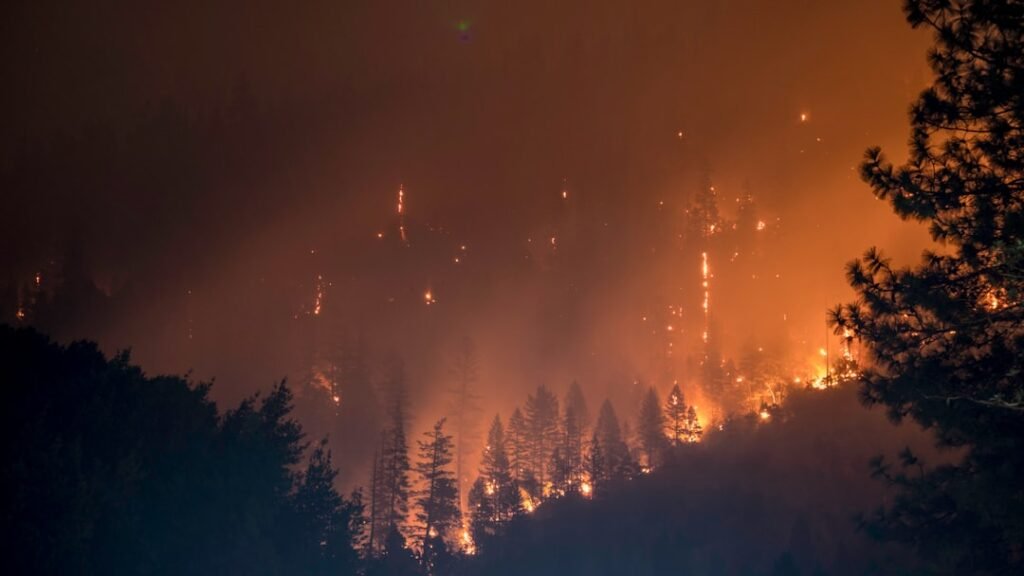

Origins of the 2025 Policy Overhaul (Image Credits: Unsplash)
Eastern Washington – Federal policy changes in 2025 transformed the U.S. Forest Service’s approach to wildfire management, raising concerns among conservationists about the balance between suppression efforts and ecological restoration in fire-adapted landscapes.
Origins of the 2025 Policy Overhaul
The White House introduced sweeping directives that consolidated federal firefighting resources under a new framework, aiming to streamline operations across agencies like the Forest Service. These changes, outlined in executive orders issued mid-year, sought to prioritize immediate fire suppression over long-term prevention strategies. Officials argued that the reforms would enhance efficiency during peak wildfire seasons, drawing from recommendations in draft national plans reviewed earlier that spring.
Implementation began swiftly, with the Forest Service adapting to reduced budgets for prescribed burns and local district teams facing personnel cuts. In Eastern Washington, where dry forests have long relied on controlled fires to maintain health, the shift marked a departure from established practices. Local coordinators noted that the emphasis on rapid response left less room for proactive measures, potentially altering the rhythm of forest ecosystems.
Effects on Wildfire Management Practices
District teams in national forests such as the Okanogan-Wenatchee reported diminished capacity to conduct prescribed fires, a tool essential for reducing fuel loads in ponderosa pine stands. The 2025 Washington Forest Action Plan, coordinated by the state Department of Natural Resources, highlighted how federal cuts complicated these efforts, with funding for restoration projects halved in some areas. Firefighters expressed frustration over the loss of specialized roles, as resources funneled toward suppression aviation and inter-agency coordination.
During the 2025 fire season, the policy’s impact became evident when smaller blazes near communities strained local responses. Experts pointed to the consolidation as a return to outdated models, echoing concerns from early proposals that centralized control at the expense of on-the-ground expertise. Washington’s Prescribed Fire Program, launched in 2021 to restore dry forests, saw its momentum slowed, with fewer burns completed across central and eastern regions.
Implications for Wildlife Conservation
Conservation groups warned that the reforms threatened wildlife habitats in Eastern Washington’s national forests, where species like mule deer and lynx depend on diverse understories maintained by periodic low-intensity fires. Reduced prescribed burning increased the risk of high-severity wildfires, which can devastate mature trees and fragment ecosystems. The U.S. Fish and Wildlife Service faced its own budget reductions, limiting monitoring of endangered populations amid these changes.
Project 2025’s influence on public lands amplified these worries, as accelerated logging and fossil fuel development proposals encroached on protected areas. Organizations like Conservation Northwest documented how the policy sidelined collaborative restoration, potentially harming biodiversity in fire-adapted zones. Tribal land managers, who have used prescribed fire for generations, found federal partnerships strained, underscoring a disconnect between national directives and regional needs.
Community and Stakeholder Responses
Rural communities in Eastern Washington voiced mixed reactions, with some welcoming faster suppression tactics to protect homes and infrastructure. Others, including forest coordinators, criticized the changes for overlooking the cultural and ecological value of managed burns. Posts on social media platforms reflected broader sentiment, with firefighters lamenting the end of traditional hotshot crews under the Forest Service.
State lawmakers addressed the issue in early 2026 sessions, pushing for increased matching funds to bolster local programs. The Council of Western State Foresters issued updates emphasizing the need for balanced approaches, while advocacy groups rallied against further cuts. These responses highlighted a growing call for policies that integrate suppression with prevention.
- Consolidation of firefighting agencies to reduce redundancy.
- Budget shifts prioritizing aviation over ground-based prevention.
- Challenges to prescribed fire programs in dry forest ecosystems.
- Potential long-term risks to wildlife habitats from unmanaged fuels.
- Increased reliance on state and tribal initiatives for restoration.
Key Takeaways
- Federal reforms in 2025 centralized wildfire response but curtailed local prevention efforts.
- Eastern Washington’s forests face heightened risks without sustained prescribed burns.
- Conservation advocates urge a return to collaborative, ecosystem-focused management.
As 2026 unfolds, the legacy of these White House directives serves as a reminder that effective forest stewardship requires harmony between immediate action and sustainable conservation. Stakeholders continue to adapt, but the path forward demands renewed investment in tools like prescribed fire to safeguard both communities and wildlife. What steps do you believe are needed to restore balance in national forest management? Share your thoughts in the comments.