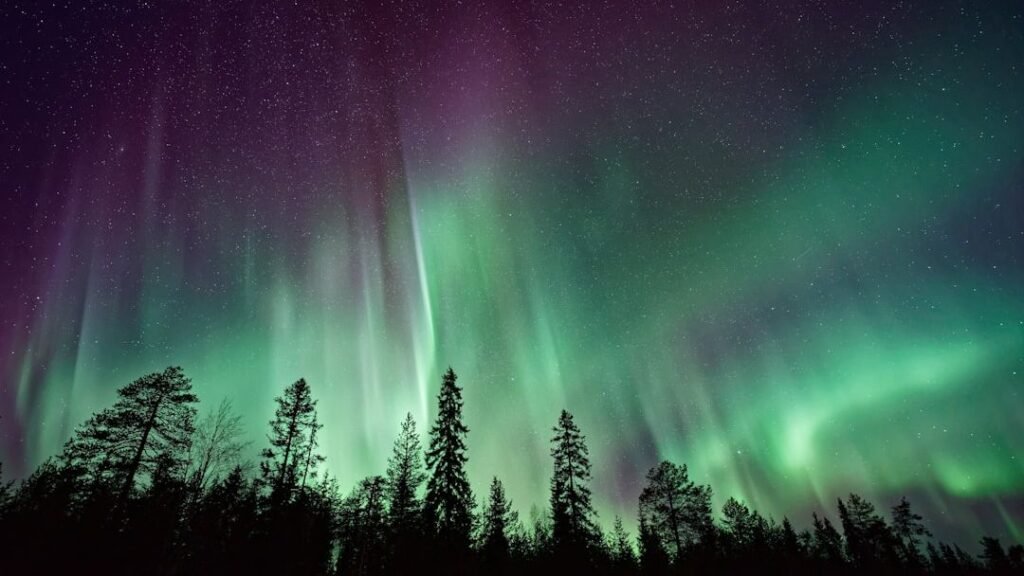

If you’ve ever seen a photo of the northern lights that looks too magical to be real, you’re not alone. Those glowing curtains of green, red, and purple across the sky feel like something out of a fantasy movie, not a physics lesson. Yet behind that beauty is a harsh, invisible battle between our planet and a constant stream of charged particles from the Sun.
What makes it even more mind‑bending is this: the Earth doesn’t just reflect sunlight in those moments; it actually helps create its own light high in the atmosphere. The planet becomes a kind of giant neon sign, powered by space weather. Once you realize what’s really going on, the sky at night never looks quite the same again.
The Sun’s Invisible Storm: Where Auroras Really Begin
The story of auroras doesn’t start on Earth at all; it starts on the Sun. Our star constantly throws off a stream of charged particles called the solar wind, made mostly of electrons and protons. Most days, this wind is relatively steady, but when the Sun erupts in solar flares or coronal mass ejections, it can hurl massive clouds of energized particles toward us at incredible speeds.
By the time those particles reach Earth, they’ve traveled more than one hundred million kilometers through space. You can’t see or feel them directly, but they carry energy and electric charge, and they’re absolutely relentless. When they slam into the region around Earth controlled by our magnetic field, known as the magnetosphere, they start to reshape it and stuff it with energy, like someone overfilling a water balloon.
Earth’s Magnetic Shield: The Hidden Sculptor of the Lights
Earth’s magnetic field acts like a protective bubble, deflecting most of the solar wind so it doesn’t slam straight into the atmosphere and strip it away. You can imagine it like an invisible force field, wrapped around the planet, pushing the majority of those charged particles off to the side. Without that field, our sky wouldn’t be filled with dancing lights; it might be too damaged to host life at all.
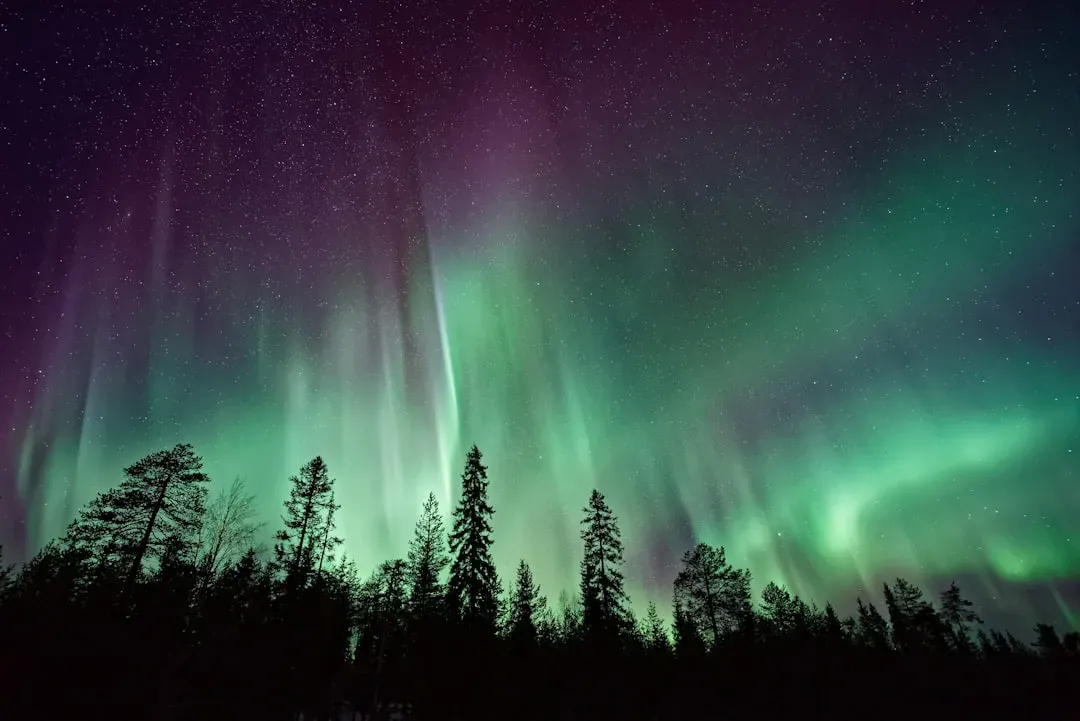
But this shield isn’t perfect; it’s more like a flexible net than a solid wall. The magnetic field lines curve from one pole to the other, and some of the solar wind particles get trapped and guided along those lines. Instead of hitting Earth everywhere equally, these particles are funneled toward the polar regions, where the field lines dive into the atmosphere. That’s why auroras usually cluster around the Arctic and Antarctic, forming what scientists call auroral ovals around each pole.
From Particles to Glow: How the Atmosphere Turns Energy Into Light
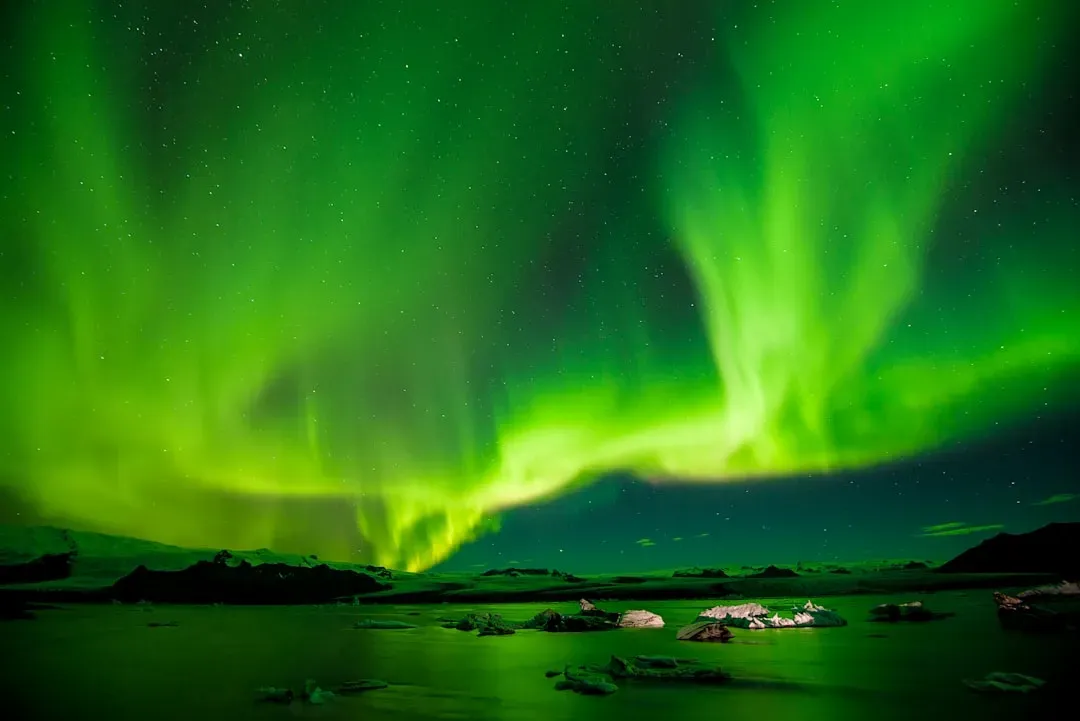
Once those charged particles are steered down into the atmosphere, the real light show begins. High above the ground, typically between about eighty and several hundred kilometers up, they start smashing into atoms and molecules of oxygen and nitrogen. These atmospheric particles absorb the incoming energy, pushing their electrons into a higher, excited state, kind of like pulling back the string on a bow.
But nothing stays that excited forever. When those electrons drop back down to their normal energy levels, they release the extra energy as light. That’s the glow we see as auroras: excited atoms and molecules calming down and shining as they do it. In that moment, the Earth is genuinely creating its own visible light, powered by the Sun but produced in the thin, cold air above our heads.
Why Auroras Are Green, Red, and Purple Instead of Just One Color
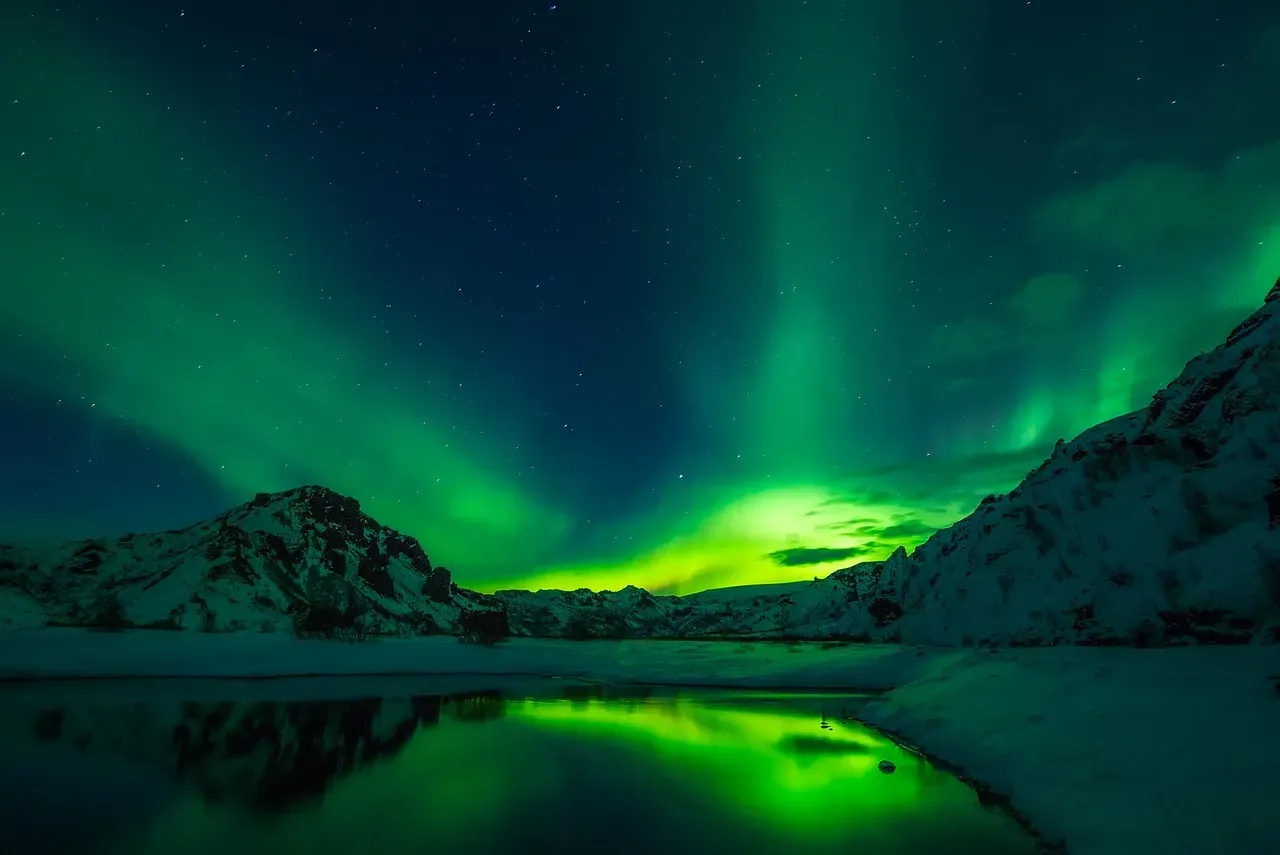
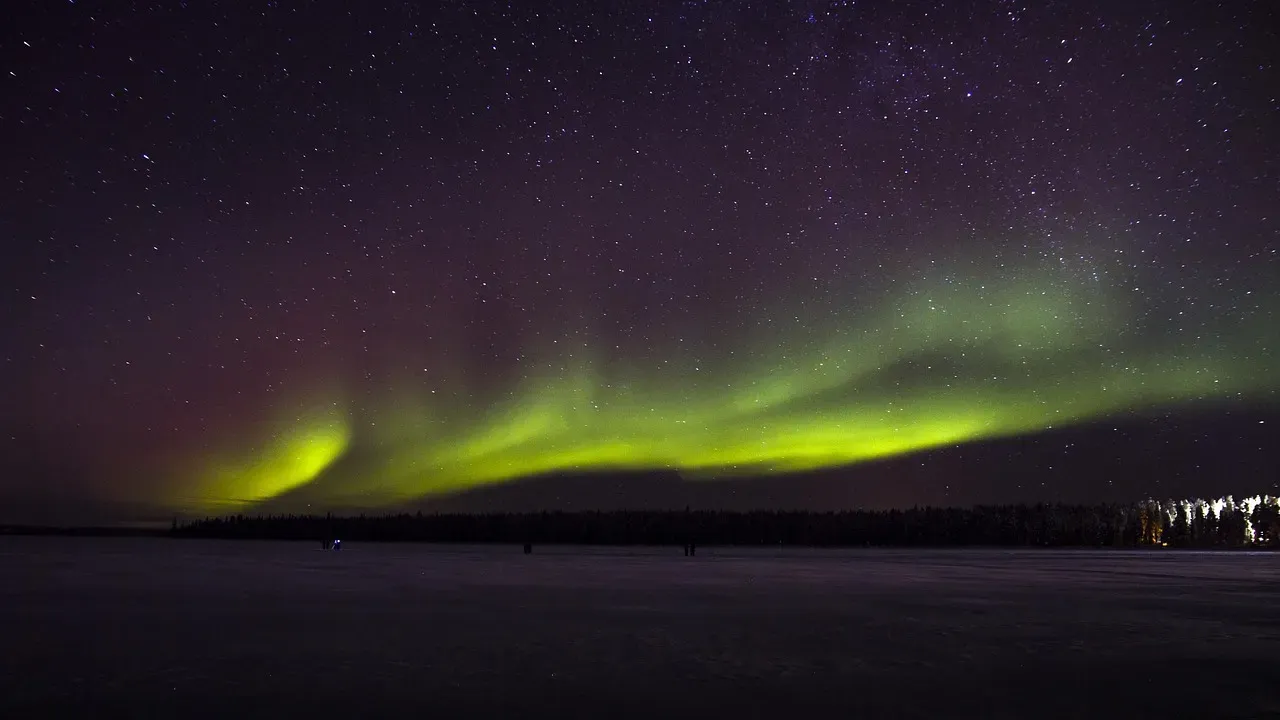
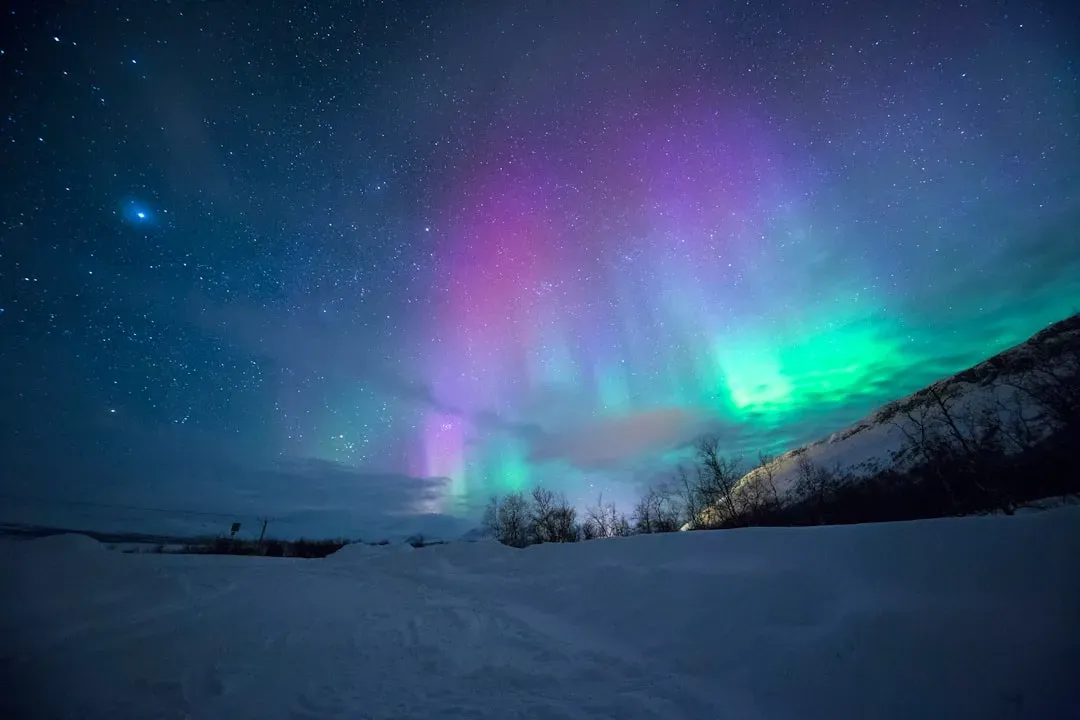
The colors of the aurora are not random; they’re a direct result of which gas is being excited and at what height in the atmosphere. Oxygen atoms at higher altitudes tend to emit a soft red light, while lower down they glow with a bright, almost electric green that most people associate with the northern lights. Nitrogen molecules add purples, pinks, and sometimes faint blues, blending with oxygen’s glow like layers of paint in the sky.
The altitude, energy of the incoming particles, and the density of the atmosphere all change the mix of colors. Higher up, where the air is thinner, atoms can stay excited longer before releasing their light, which can favor deeper reds. Lower down, the collisions happen more frequently, giving rise to more intense green bands and edges. That’s why sometimes the aurora looks like a soft green mist, and other times it explodes into multicolored ribbons and rippling arcs.
The Dance of the Lights: Why Auroras Move and Flicker
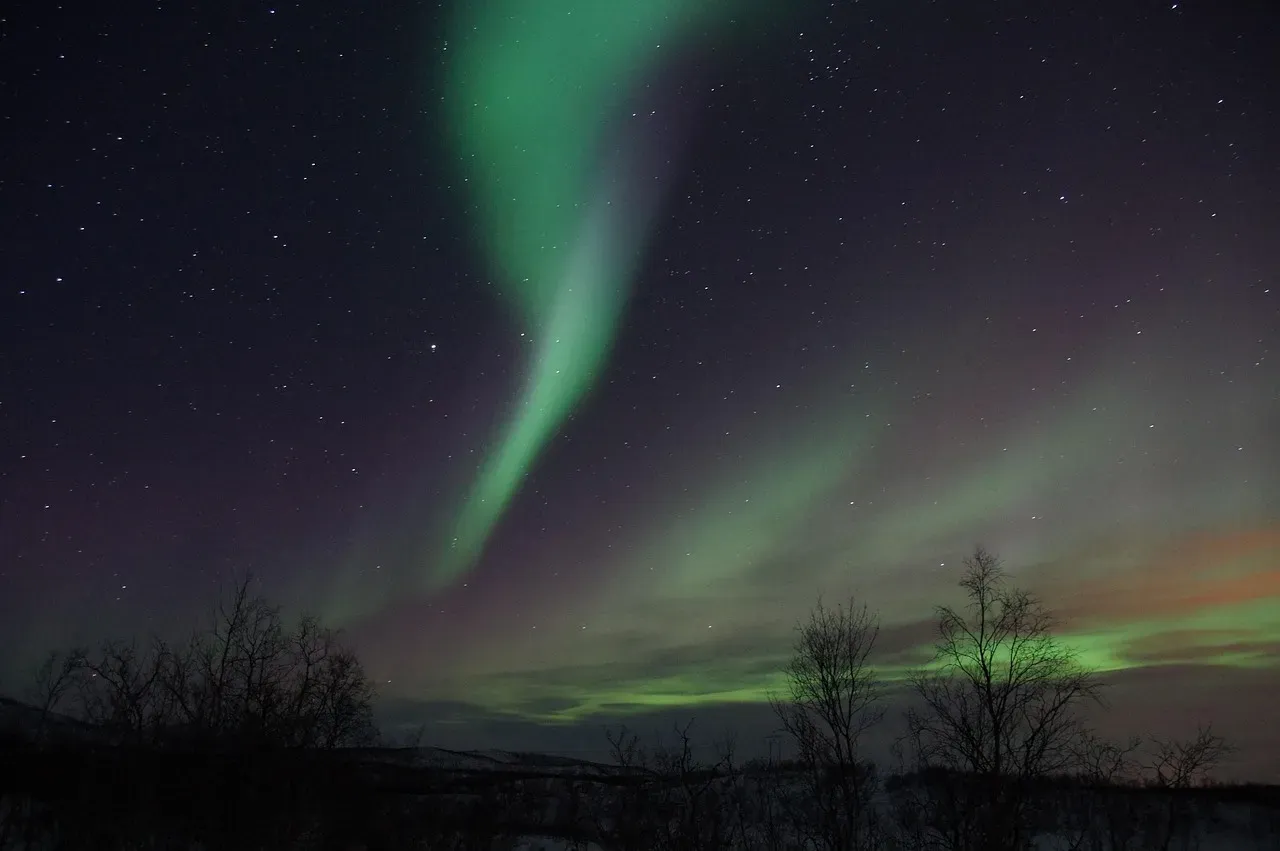
If auroras were just static glowing patches, they’d still be impressive, but their movement is what makes them feel almost alive. The flickering, pulsing, and sudden bursts of brightness are all tied to changing conditions in Earth’s magnetosphere. As the solar wind pushes and stretches the magnetic field, energy is stored and then suddenly released, a process scientists call magnetic reconnection.
When that stored energy is dumped into the upper atmosphere, you get sudden brightening, fast-moving arcs, and swirling patterns that can shift from horizon to horizon in minutes. From the ground, it can feel like the sky is reacting in real time to some invisible cosmic conductor. I remember standing in northern Norway one winter night, watching the lights twist overhead like green smoke being stirred by a giant hand, and it was hard not to feel tiny and oddly connected at the same time.
Beyond the Poles: Why Auroras Sometimes Appear Far From the Arctic
Most of the time, you need to be pretty far north or south to see a strong aurora. But during intense solar storms, those auroral ovals around the poles can expand dramatically toward the equator. When the Sun fires off a particularly powerful outburst, the magnetosphere gets compressed and shaken so hard that auroras can spill into regions that rarely see them, surprising people in cities much farther south.
In recent years, there have been nights when people across parts of Europe, the continental United States, and even regions closer to the tropics reported faint auroral glows. These events are a sign of strong geomagnetic activity, and they can coincide with disruptions to radio signals, satellites, and even power grids. The same forces that paint the sky can quietly interfere with the technology we depend on, which is why space weather forecasts have become as important to governments and power companies as regular weather forecasts.
Auroras on Other Worlds: Earth’s Light Show Is Not Alone
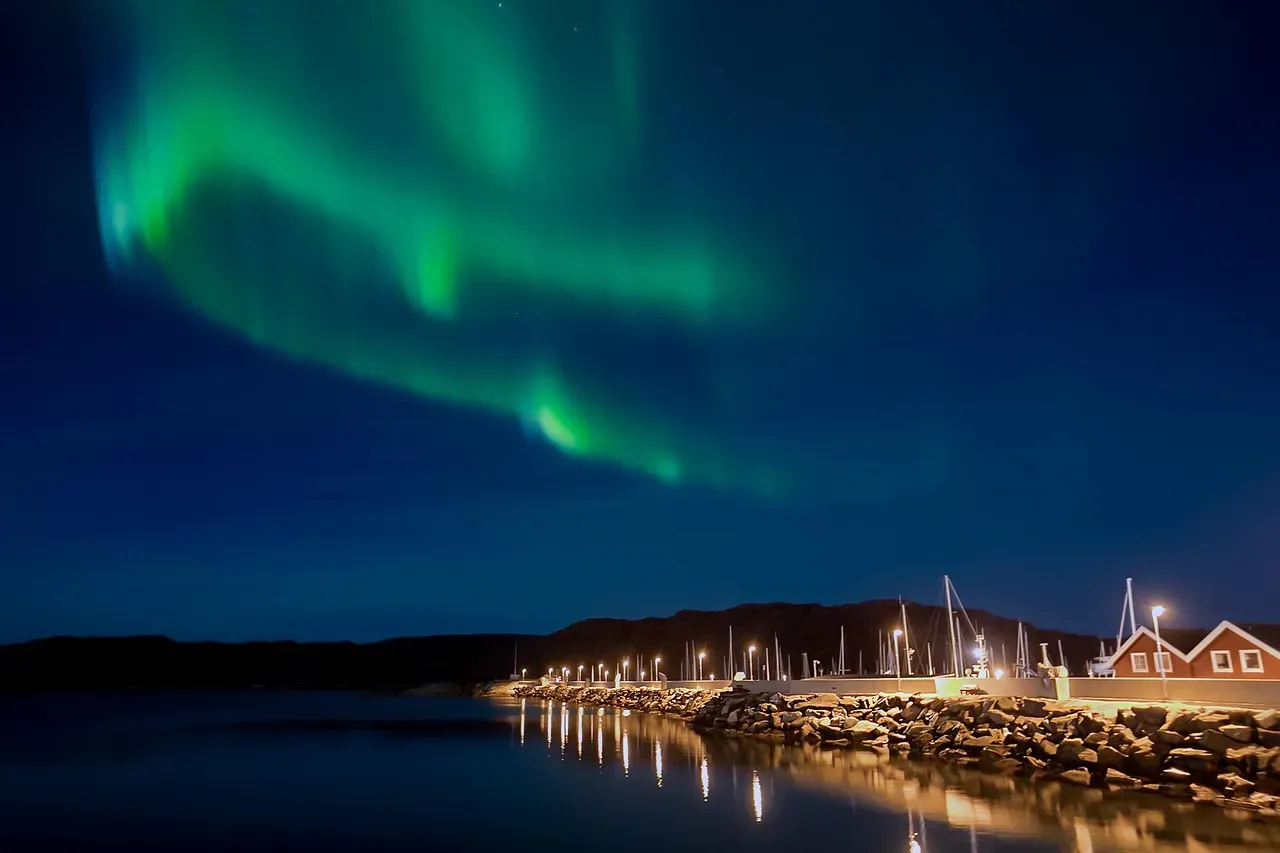
Earth isn’t the only planet that creates its own light through auroras. Jupiter and Saturn both have massive magnetic fields and thick atmospheres, and spacecraft have observed powerful auroral displays near their poles. In some ways, Jupiter’s auroras are more intense than Earth’s because its magnetic field is so strong and it interacts not just with the solar wind but also with material from its volcanic moon Io.
Even Mars, with its weaker and patchy magnetic field, shows localized aurora-like glows where crustal magnetic fields intersect with the thin atmosphere. Seeing auroras elsewhere in the solar system is a reminder that this phenomenon is not a rare Earth-only trick but a natural consequence of a magnetic field facing a stream of charged particles. The same basic physics plays out across different worlds, just with different flavors and intensities.
What Auroras Reveal About Our Planet and Ourselves
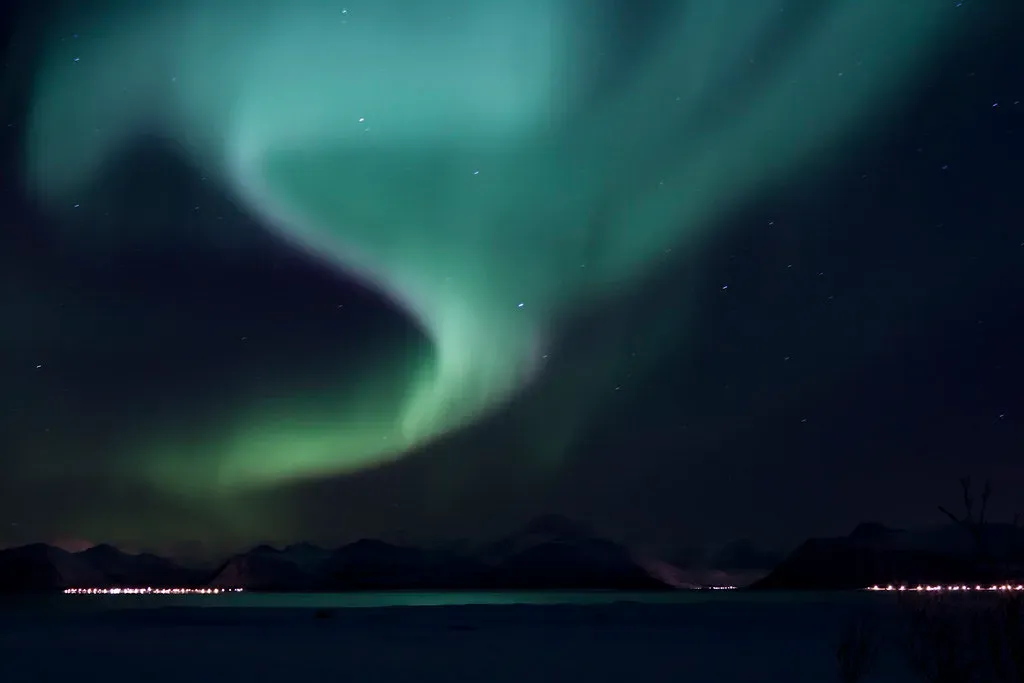
Underneath the beauty, auroras are like a glowing diagnostic screen for the entire Earth–Sun relationship. They show us where energy is entering our atmosphere, where the magnetic field is being stressed, and how space weather is interacting with our planet. Scientists use measurements from ground cameras, satellites, and even citizen photos to track how these lights change and what that says about our near‑space environment.
On a more personal level, auroras have a strange way of pulling you out of your daily worries and into a much bigger picture. Standing under that shimmering sky, it hits you that you’re watching the planet respond to the Sun in real time, like a living system reacting to its environment. The Earth is not just a rock floating in space; it’s a dynamic, glowing world, shaped by forces that are invisible most of the time but impossible to ignore when the sky suddenly lights up.