
Have you ever thought about what it would be like to hold a book you can’t read? Not because the language is difficult, just because no one alive today truly understands it. The ancient world left behind countless mysteries etched in stone, stamped into clay, and painted onto parchment. Some have been cracked wide open, their secrets spilling into our textbooks. Others remain stubbornly silent.
Let’s be real, there’s something absolutely thrilling about an unsolved puzzle, especially one that’s thousands of years old. The texts we’re about to explore aren’t just academic curiosities. They’re windows into civilizations that rose and fell before recorded history even began in many parts of the world. Think about the voices trapped inside those symbols, waiting for someone smart enough or lucky enough to set them free. So let’s dive in.
The Voynich Manuscript: A Medieval Enigma Written in an Unknown Alphabet
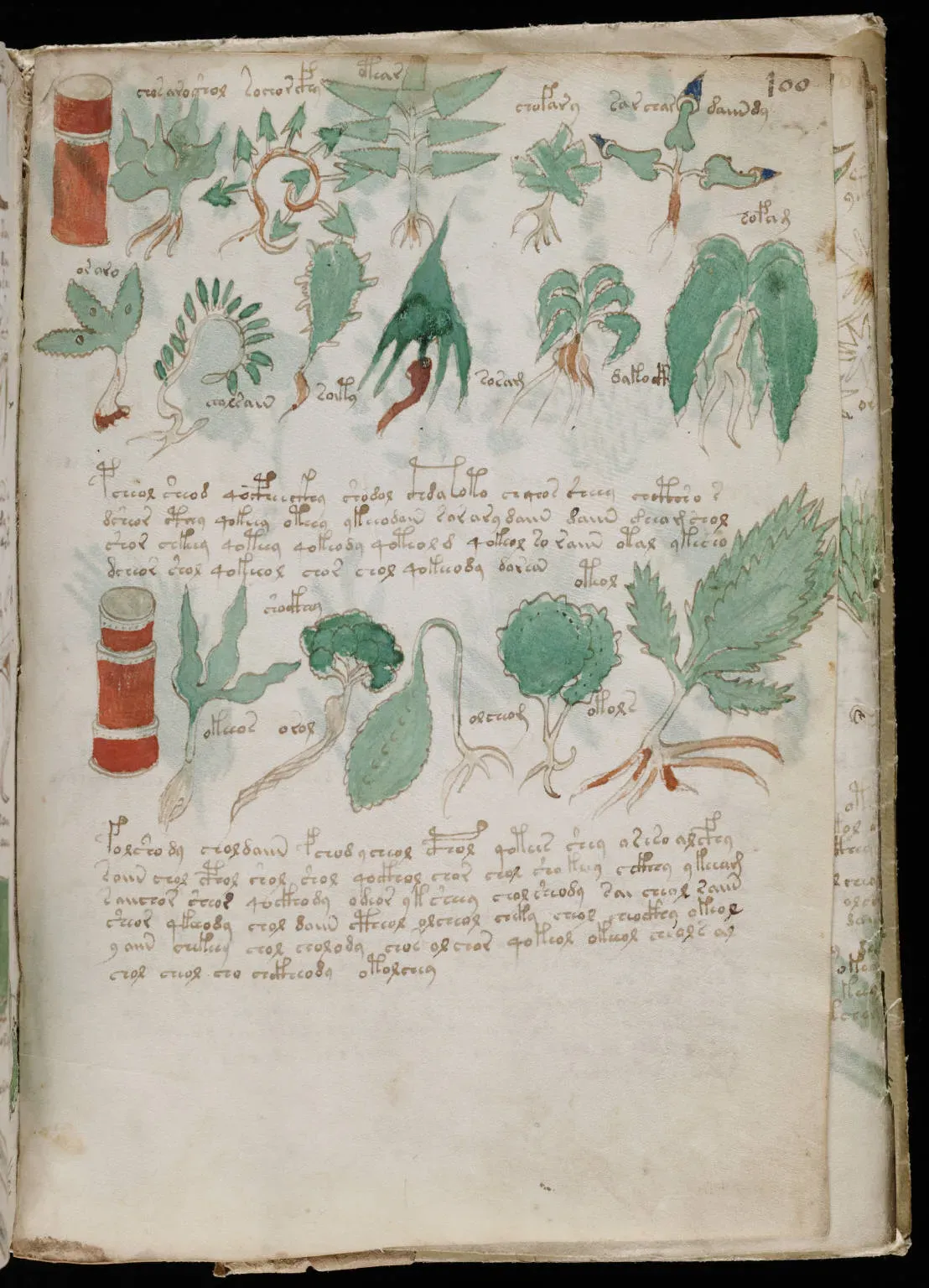
Often described as the world’s most mysterious book, the Voynich Manuscript is written in an unknown script by an unknown author and has no clearer purpose now than when it was rediscovered in 1912. The manuscript was named after Polish-American antiquarian bookseller Wilfrid M. Voynich, who acquired it in 1912, and its origin, language, and date are still being debated as vigorously as its puzzling drawings and undeciphered text. Picture this: roughly 240 pages of vellum covered in looping characters that look vaguely alphabetic, accompanied by bizarre illustrations of plants that don’t seem to exist, naked women bathing in green pools, and strange astronomical diagrams.
The manuscript has been studied by both professional and amateur cryptographers, including American and British codebreakers from both World War I and World War II, and codebreakers Prescott Currier, William Friedman, Elizebeth Friedman, and John Tiltman were unsuccessful. Even Alan Turing and the FBI took a crack at it. A recent study published in Cryptologia shows that the manuscript could plausibly have been produced using a cipher that was within medieval technological capabilities, and the results indicate that the long-debated cipher hypothesis remains viable. Still, here we are in 2026, and the Voynich Manuscript guards its secrets as jealously as ever. Honestly, it’s hard to say for sure whether it’s an encrypted message, an invented language, or an elaborate medieval prank.
The Indus Valley Script: Asia’s Greatest Linguistic Riddle
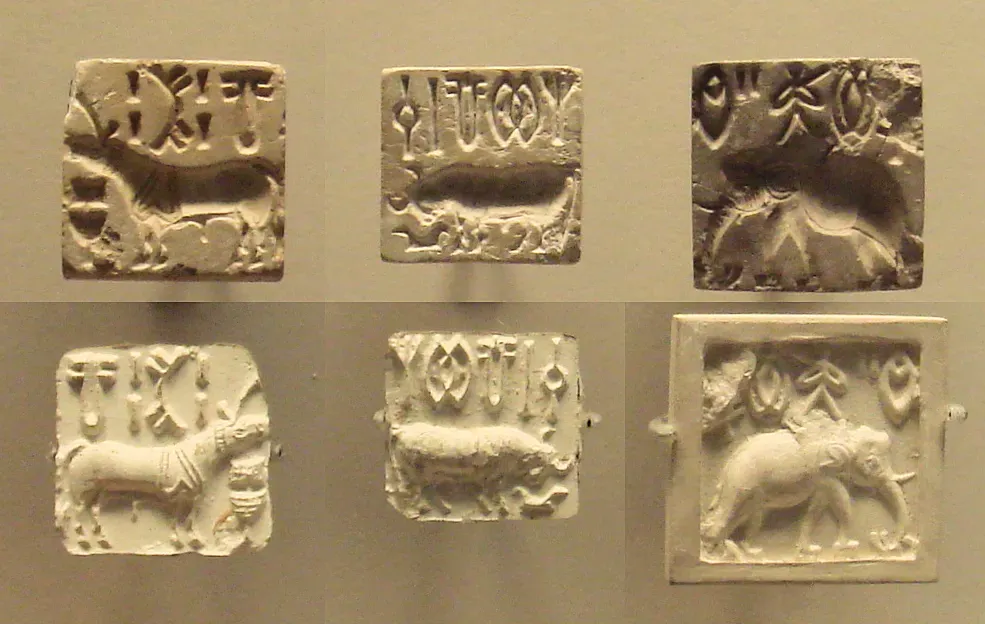
The Indus script is a corpus of symbols produced by the Indus Valley Civilisation, and most inscriptions containing these symbols are extremely short, making it difficult to judge whether or not they constituted a writing system, and despite many attempts, the script has not yet been deciphered. Imagine an entire civilization flourishing for centuries with advanced urban planning, sophisticated drainage systems, and thriving trade networks stretching to Mesopotamia, yet we can’t read a single word they wrote. By 1992, an estimated 4,000 inscribed objects had been discovered, with over 400 distinct signs represented across known inscriptions.
The problem? Inscriptions are very short, with the average length around five signs and the longest only 34 characters long, and inscriptions vary between just one and seven lines, with single lines being the most common. There is no known bilingual inscription to help decipher the script, which shows no significant changes over time. Some researchers think it might be an early form of Dravidian, others suggest Indo-European roots, while a few argue it’s not even a true writing system at all. In 2025, Tamil Nadu Chief Minister M. K. Stalin announced a $1 million prize for deciphering the Indus Valley Script, which shows just how desperately we want to crack this code. Will artificial intelligence finally give us the breakthrough we need? Time will tell.
Linear A: The Minoan Mystery That Outlived Its Successor
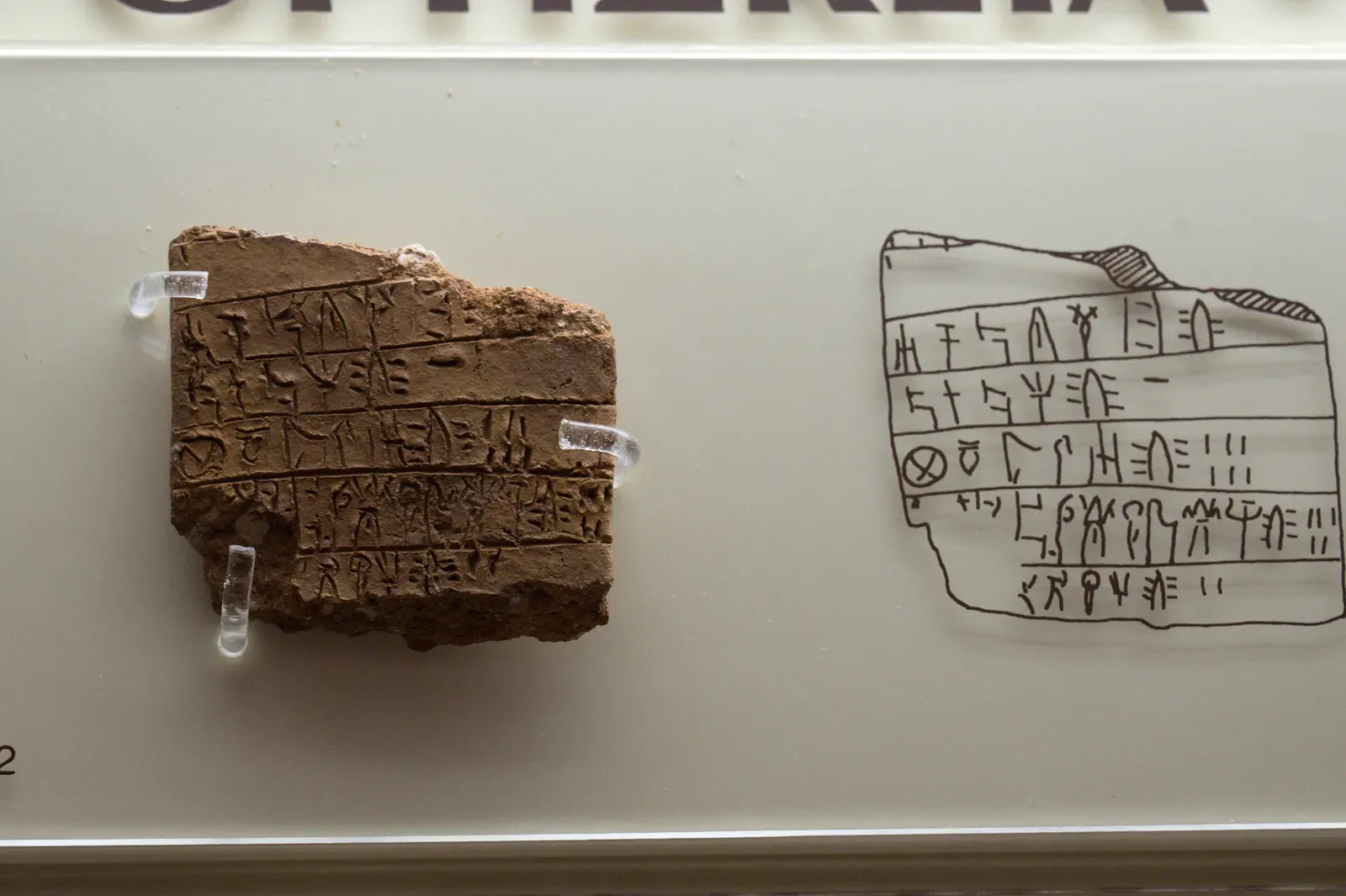
Here’s the thing that makes Linear A especially maddening: we’ve already solved its descendant. Linear B was deciphered as Greek in 1952 by Michael Ventris, revealing administrative records from Mycenaean Greece. Yet Linear A was used by the Minoans of Crete from 1800 BC to 1450 BC as the primary script in palace and religious writings of the Minoan civilization, and it evolved into Linear B. You’d think having the key to Linear B would unlock Linear A, right? Wrong.
There is currently no exact translation of the sign-sequences attested on Linear A tablets, primarily because we have not yet identified the linguistic family the Minoan language belongs to. Linear A is the yet-undeciphered language of the ancient Minoan civilization of Crete that flourished from roughly 1700 BCE to 1490 BCE, and linguist Brent Davis established for the first time the word order of the language as being verb-subject-object, like ancient Egyptian. That’s progress, certainly. Noteworthy efforts by researchers from MIT and Google’s DeepMind involve AI systems automatically translating Linear B texts, offering hope for unravelling Linear A, and as AI continues to push the boundaries of decipherment, Linear A stands on the brink of revealing its secrets. Maybe we’re closer than we think.
The Phaistos Disc: Ancient Crete’s Most Baffling Artifact
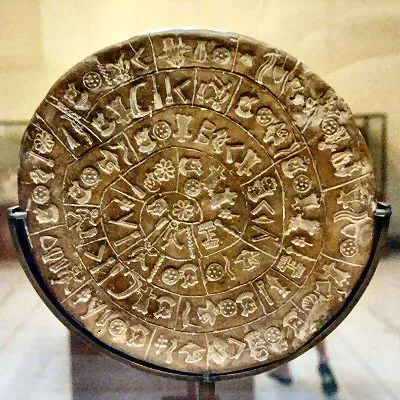
The Phaistos Disc is a disc of fired clay from the island of Crete, Greece, possibly from the middle or late Minoan Bronze Age bearing a text in an unknown script and language, and its purpose and its original place of manufacture remain disputed. Unlike scratched tablets or painted scrolls, this disc is something else entirely. The disc is about 16 cm in diameter and is covered on each side with a spiral text, consisting of a total of 241 occurrences of 45 distinct signs, which were created by pressing individual sign stamps onto the soft clay before firing. It’s basically an ancient example of movable type printing, created thousands of years before Gutenberg was even born.
While enthusiasts still believe the mystery can be solved, scholarly attempts at decipherment are thought to be unlikely to succeed unless more examples of the signs turn up elsewhere, as it is generally thought that there is not enough context available for meaningful analysis, and any decipherment without external confirmation is unlikely to be accepted as conclusive. Scholars have suggested everything from a prayer to an adventure story, from military propaganda to instructions for a board game, some regard it as a sacred text while others see it as an ancient geometric theorem, and without more examples of this mysterious writing system, the code might never be cracked. I know it sounds crazy, but some people have even suggested it’s a game board. The Phaistos Disc sits in a museum in Heraklion, Crete, silently taunting everyone who tries to read it.
Cretan Hieroglyphics: The Shadow Script of Ancient Crete
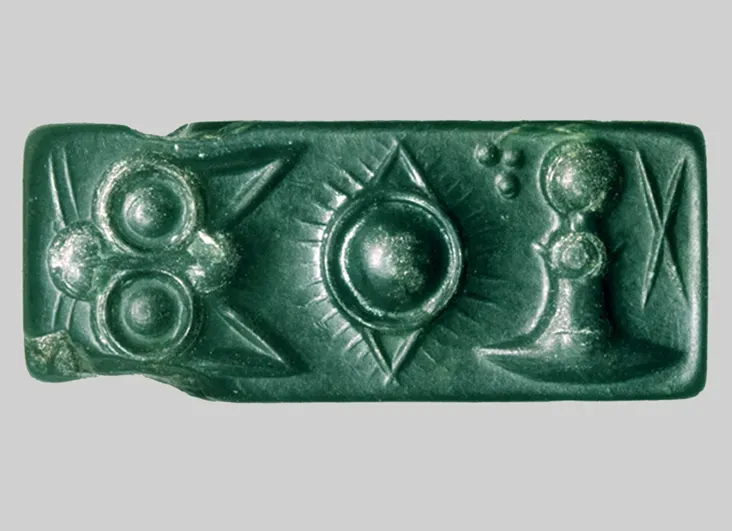
While everyone obsesses over Linear A and the Phaistos Disc, there’s another Minoan writing system that gets far less attention but is equally mysterious. Cretan Hieroglyphics appeared around the same time as Linear A, roughly between 2100 and 1700 BCE, and was primarily used for administrative purposes. The script consists of pictographic signs that bear some resemblance to Egyptian hieroglyphs, though they developed independently.
What makes this script particularly frustrating is the limited number of surviving examples. Most inscriptions are found on clay bars, seals, and a handful of stone objects. The signs themselves depict recognizable objects like body parts, tools, animals, and vessels, yet their phonetic values remain unknown. Scholars suspect there’s a relationship between Cretan Hieroglyphics and Linear A, possibly representing different stages of the same linguistic tradition or serving different administrative functions within Minoan society. The vast majority of these texts are so short and context-free that even the most sophisticated computational analysis struggles to find patterns. Like its contemporaries, this script died with the Minoan civilization, leaving behind tantalizing glimpses of a bureaucratic system we’ll probably never fully understand.
Conclusion: The Voices Still Waiting to Be Heard
These five ancient texts represent more than just unsolved academic puzzles. They’re the voices of people who lived, loved, governed, traded, and worshipped thousands of years ago. Each undeciphered symbol is a word someone thought, a message someone intended to preserve. The priests who inscribed Linear A tablets, the craftsman who stamped the Phaistos Disc, the bureaucrats who recorded goods in Indus Valley script, all believed their words would be understood. They had no idea future generations would stare at their writing with complete bafflement.
What’s remarkable is how close we might actually be to breakthrough moments. Artificial intelligence is analyzing patterns humans simply can’t see. New archaeological discoveries could unearth bilingual texts or additional examples that provide the context we desperately need. The million-dollar prize for deciphering the Indus script shows serious commitment to solving these mysteries. Perhaps within your lifetime, one or all of these texts will finally give up their secrets, revealing histories we never knew existed and answering questions we haven’t even thought to ask yet.
Did you expect that these mysteries would still be puzzling us in 2026? What do you think it will take to finally crack these ancient codes?