You’ve looked up at the sky a thousand times. Clouds roll by. Rain falls. Lightning flashes. But beyond what you see in your everyday glance upward, there’s a secret world of electrical discharges, glowing spheres, and dancing lights that most people never witness. Some of these phenomena seem almost supernatural, defying the laws of nature as we understand them.
Honestly, it’s kind of unsettling to think about all the bizarre events happening above our heads while we go about our daily lives. Scientists have documented many of these occurrences, yet they still struggle to explain the root causes. What makes our atmosphere such a theater of the unexplained?
Red Sprites Dancing Above Thunderstorms
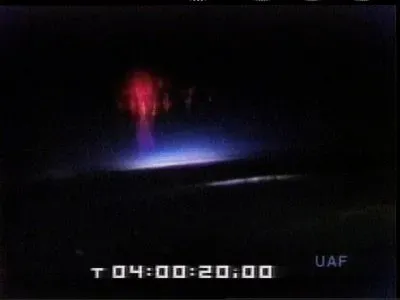
Picture this: large-scale electrical discharges occurring in the mesosphere high above thunderstorms, creating luminous red-orange flashes that flicker for less than a second. These sprites often occur in clusters at altitudes ranging from 50 to 90 kilometers above Earth’s surface, which places them near the edge of space itself. They’re so fleeting that you’d miss them if you blinked, yet they can span distances comparable to major cities.
The strange part is that despite being recorded in photographs and videos for more than 30 years, the root cause of sprite lightning remains unknown. Sprites are usually triggered by discharges of positive lightning between an underlying thundercloud and the ground, creating an electrical imbalance high above. Yet scientists still debate exactly how this energy transforms into those jellyfish-like tendrils of light. Some have even blamed sprites for otherwise unexplained accidents involving high altitude vehicular operations above thunderstorms, including a NASA balloon malfunction.
Ball Lightning’s Glowing Mystery
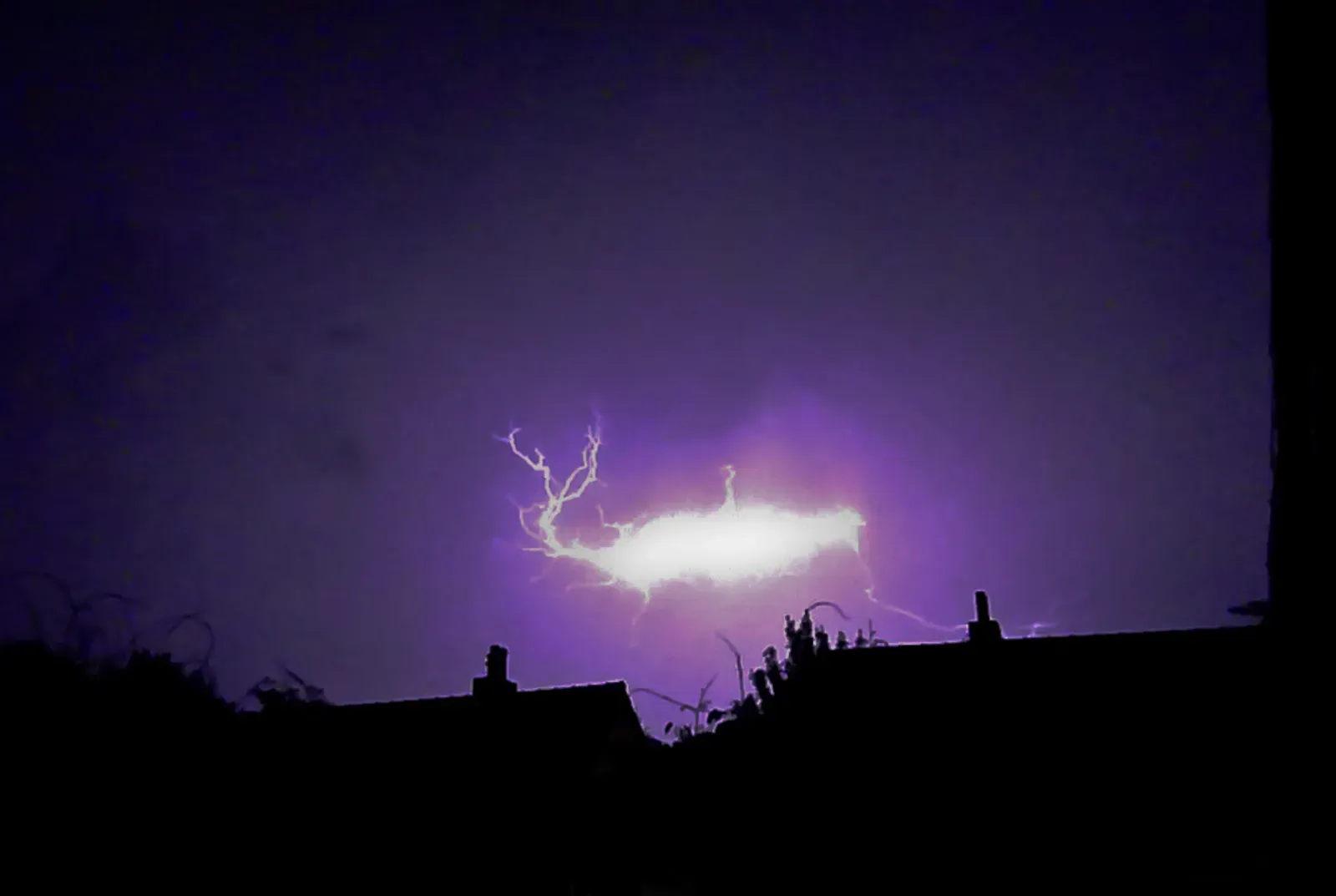
Ball lightning appears as slowly rotating spheres of light, often about the size of a grapefruit, floating above the ground during electrical storms. Sometimes the ball passes through a closed window or appears in the middle of a room, but almost always, it blinks out of existence after about 10 seconds. Think about that for a moment: a glowing orb materializing inside your home during a storm, defying all logic.
Ball lightning is one of the most mysterious atmospheric phenomena for science, with more than 10,000 instances reportedly seen around the world, yet scientists still cannot agree on what causes it. It wasn’t until 2012 that ball lightning was first captured on camera, which at least proved it wasn’t mass hallucination. Some theories suggest it involves compressed air creating rotating light, while others propose more exotic explanations. The intensity is staggering: roughly a billion times greater than normal lightning, according to some researchers.
ELVES: Electromagnetic Rings in the Ionosphere
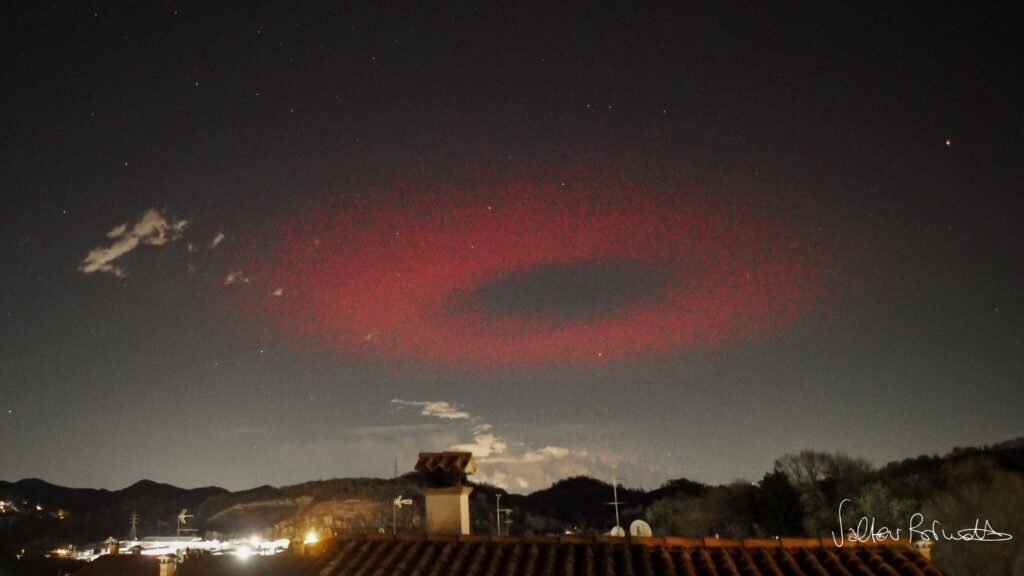
ELVES occur when an unusually powerful lightning strike generates an intense electromagnetic impulse, creating a phenomenon that looks nothing like traditional lightning. ELVES appear as rings or halos that can be up to 185 miles wide, expanding across the ionosphere in the blink of an eye. The name itself is a creative acronym standing for Emissions of Light and Very low-frequency perturbations due to Electromagnetic pulse sources.
Here’s the thing: ELVES are very rare and therefore more difficult to photograph than their sprite cousins. Both these phenomena are extremely fast too, lasting just milliseconds, making them nearly impossible to observe without specialized equipment. The color of both these atmospheric phenomena is due to the excitation of nitrogen particles in the upper atmosphere. When you see images of ELVES, they resemble giant crimson disks hovering in the darkness, like something from a science fiction film.
Noctilucent Clouds at the Edge of Space
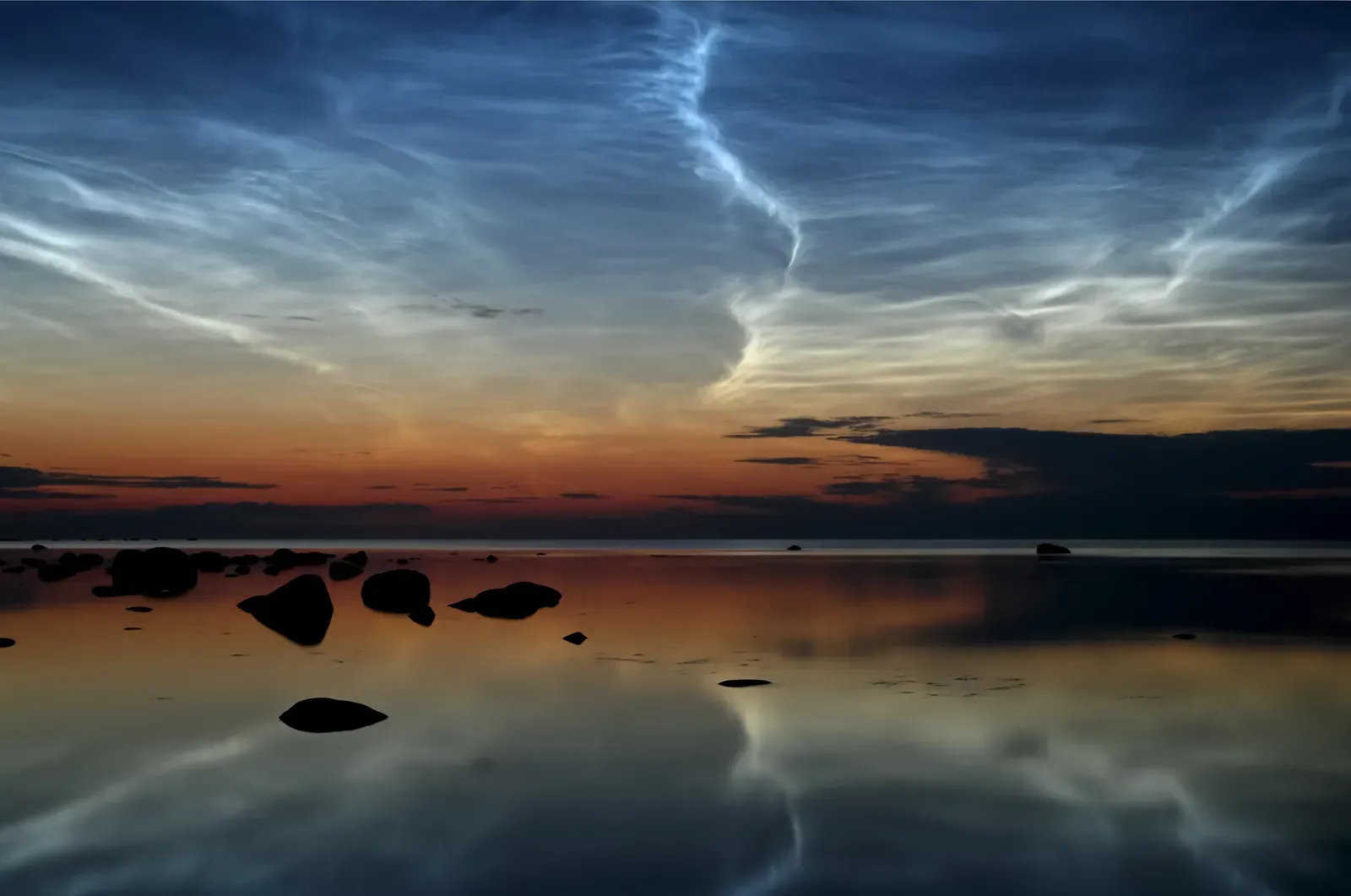
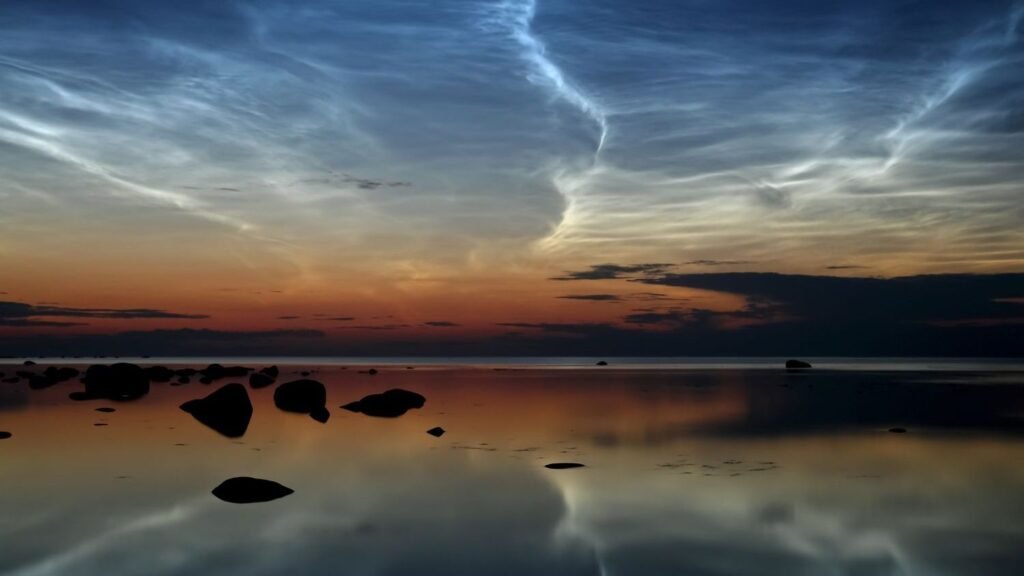
Noctilucent, or night-shining, clouds form far above the weather-producing clouds at some 80 kilometers above Earth’s surface and are composed of ice crystals, which may form on dust from meteorites. These aren’t your ordinary clouds. They can generally only be observed in twilight, when most of the sky is shrouded in darkness, but the sun’s rays can still reach the upper atmosphere to illuminate them from below.
These rare clouds are seen at this odd time because, while the sun may have disappeared at ground level, at a height of around 200,000 feet it’s still shining brightly, glowing from the outer reaches of the atmosphere as thin streaky clouds with a sometimes silvery luminescence. Let’s be real: seeing luminous clouds shimmering in a dark sky feels otherworldly. They tend to appear at high latitudes, making regions like northern Europe and Canada prime viewing spots. It’s hard to say for sure, but some researchers believe their frequency has increased in recent decades, possibly linked to atmospheric changes.
Nacreous Clouds: Mother of Pearl in the Stratosphere
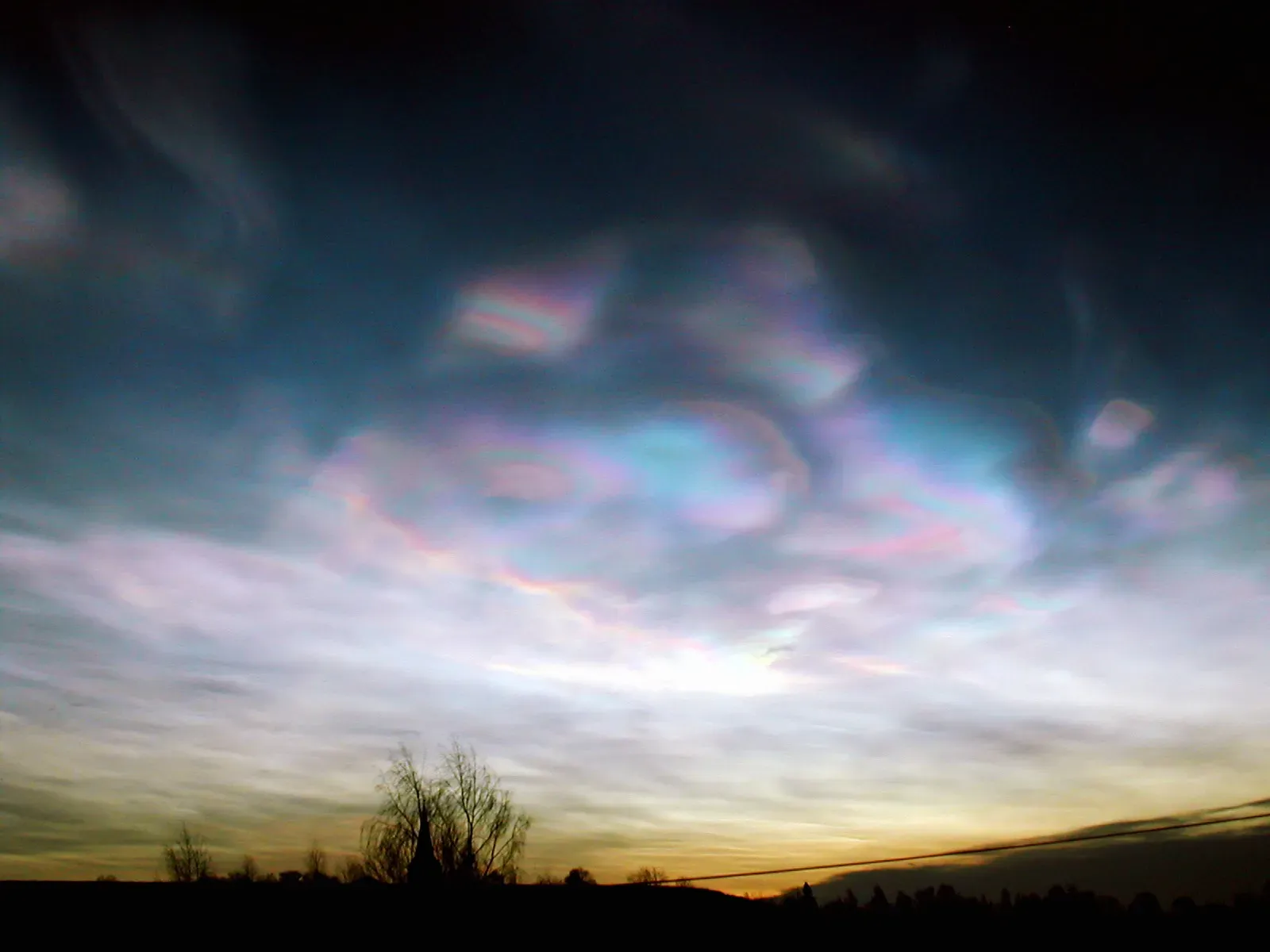
Polar stratospheric clouds, also known as nacreous or mother-of-pearl clouds, reveal vibrant beauty as an extremely rare phenomenon that looks like someone painted the sky with iridescent oils. The stratosphere begins some 10 kilometers above Earth’s surface, and since it is extremely dry compared to the lower troposphere, clouds rarely form at these altitudes.
What makes these clouds absolutely mesmerizing is how particles in the clouds scatter light, causing interference patterns and leading to the colorful fringes that give them their pearlescent appearance. They shimmer with colors that shift from pink to green to blue, creating an almost psychedelic display. You need exceptionally cold temperatures in the stratosphere for these to form, which is why they’re most commonly spotted in polar regions during winter. Honestly, photographs don’t do them justice.
Heat Bursts: Midnight Infernos From Dying Storms
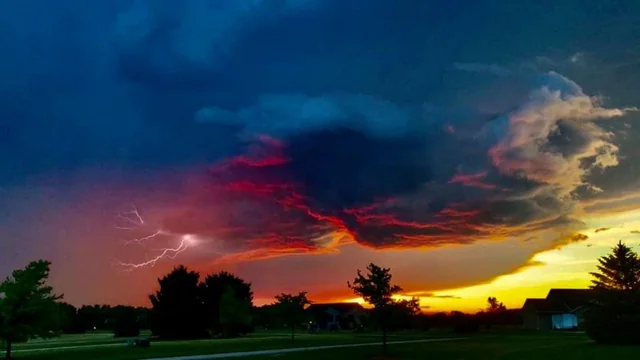
Imagine waking up at midnight to find the temperature has shot up 20 degrees in minutes and 80 mph wind gusts have ravaged your town, a rare phenomenon called a heat burst. This isn’t some gentle warming trend. It’s a sudden, violent injection of scorching air that can persist for hours. Heat bursts occur in the wake of dying thunderstorms, but other conditions have to be just right: the storm has to be high in the atmosphere and the air beneath must be hot and dry.
The mechanics are bizarre. A very dense parcel of air becomes too heavy to stay up, begins to fall through the atmosphere, and the quicker it’s losing heat, the quicker it falls. In the case of a heat burst, all of the moisture evaporates and that dense air is only getting warmer as it approaches the ground at high speeds, suddenly delivering oppressively hot and dry air that can stay in place for hours. Imagine stepping outside after midnight and being hit with temperatures that feel like midday in a desert. That’s the unsettling reality of a heat burst.
Virga: Phantom Rain That Never Arrives
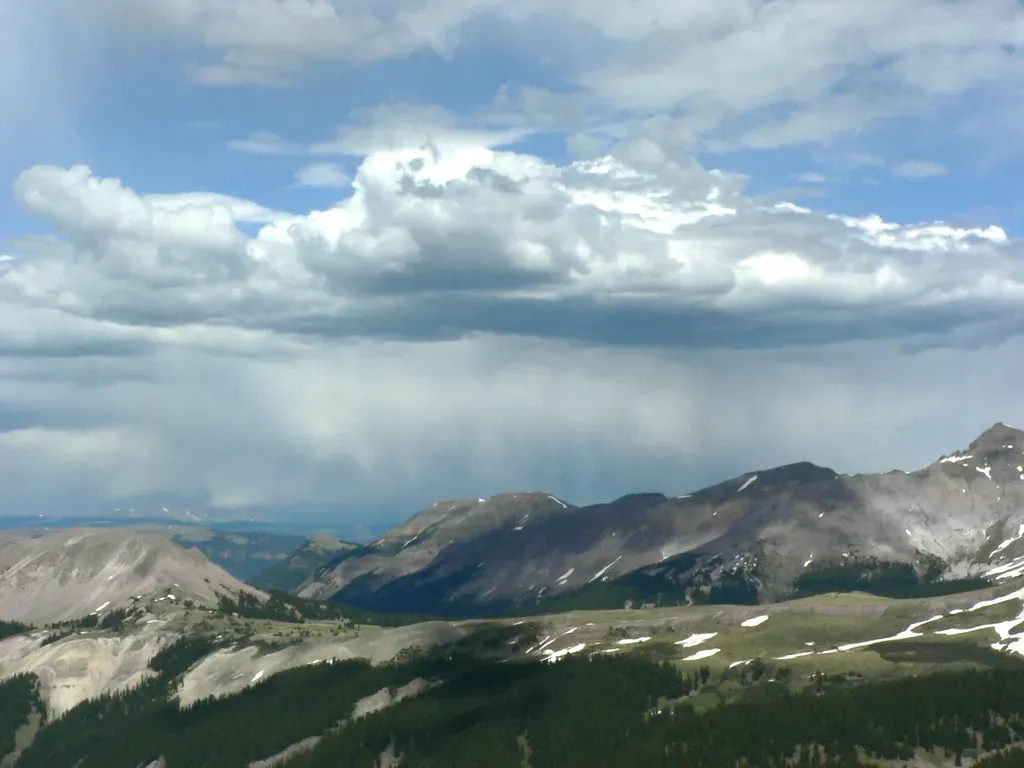
Virga is ghostly precipitation that never makes it to the ground because when the air beneath a cloud is very dry, precipitation falling through it evaporates before reaching Earth’s surface, leaving feathery streaks extending from the cloud’s base. You see what looks like rain falling from clouds, sometimes in elegant curtains, but it disappears into thin air before touching down.
There’s something almost melancholic about virga, particularly in arid regions where rain is desperately needed. The visual effect creates an illusion: rain is falling, yet the ground remains bone dry. The evaporation process takes a lot of energy out of the surrounding air and causes it to cool, and that cold air may then sink very quickly and dump a dangerously concentrated parcel of air and water or hail in a microburst. So while virga itself is harmless, it can spawn something much more dangerous. Nature has a way of turning beauty into hazard without warning.
Skyquakes: Booms With No Visible Source

Skyquakes refer to a mysterious acoustic phenomenon characterized by loud, booming or rumbling sounds that seem to originate from the sky without any immediately identifiable source, reported globally for centuries and often startling witnesses with their resemblance to distant artillery fire or an explosion. The auditory experience is described as a deep, low-frequency boom that can cause noticeable vibrations in windows and structures, with witnesses often reporting a rattling sensation accompanying the sound.
One scientific theory attributes some skyquakes to bolides, meteors that explode in the atmosphere creating a powerful sonic boom, detonating high above the ground and producing a shockwave that travels far, with the transient nature of these explosions and lack of physical evidence reaching the ground making them a plausible source. Atmospheric and oceanic dynamics also offer potential explanations: thermal inversions can create an acoustic duct which acts like a channel to focus and carry sound waves over immense distances, amplifying distant noises such as breaking ocean waves or far-off storms. Yet many skyquakes remain completely unexplained, defying our attempts to categorize them.
What do you think causes these mysterious atmospheric events? Have you ever witnessed any of these rare phenomena yourself? The sky holds more secrets than we often realize, and sometimes the most extraordinary shows happen when we’re not even looking. Perhaps next time there’s a distant thunderstorm or a twilight glow, you’ll remember to look up with fresh eyes. Did you expect our atmosphere to be this strange?