
Have you ever stopped to wonder what’s happening inside your head when you suddenly recall a childhood birthday party, recognize an old friend’s face, or remember the route home after years of driving the same path? Your brain holds the answers to these puzzling moments, and honestly, the mechanisms behind them are far stranger than you might expect. Memory isn’t just one simple system churning away quietly in the background. It’s more like an elaborate dance between different brain regions, each playing their own role in encoding, storing, and pulling up information when you need it most.
Let’s be real, though. Memory feels so ordinary most of the time that we don’t give it much credit. That is, until we forget someone’s name at a party or lose track of where we put our car keys. Suddenly, we’re face to face with just how fragile and complex the whole thing is. Recent research has peeled back layers of this mystery, revealing surprising truths about how your brain decides what to keep, what to toss, and how it digs through the archives when you’re trying to remember something important.
The Brain’s Filing System: Where Memories Actually Live
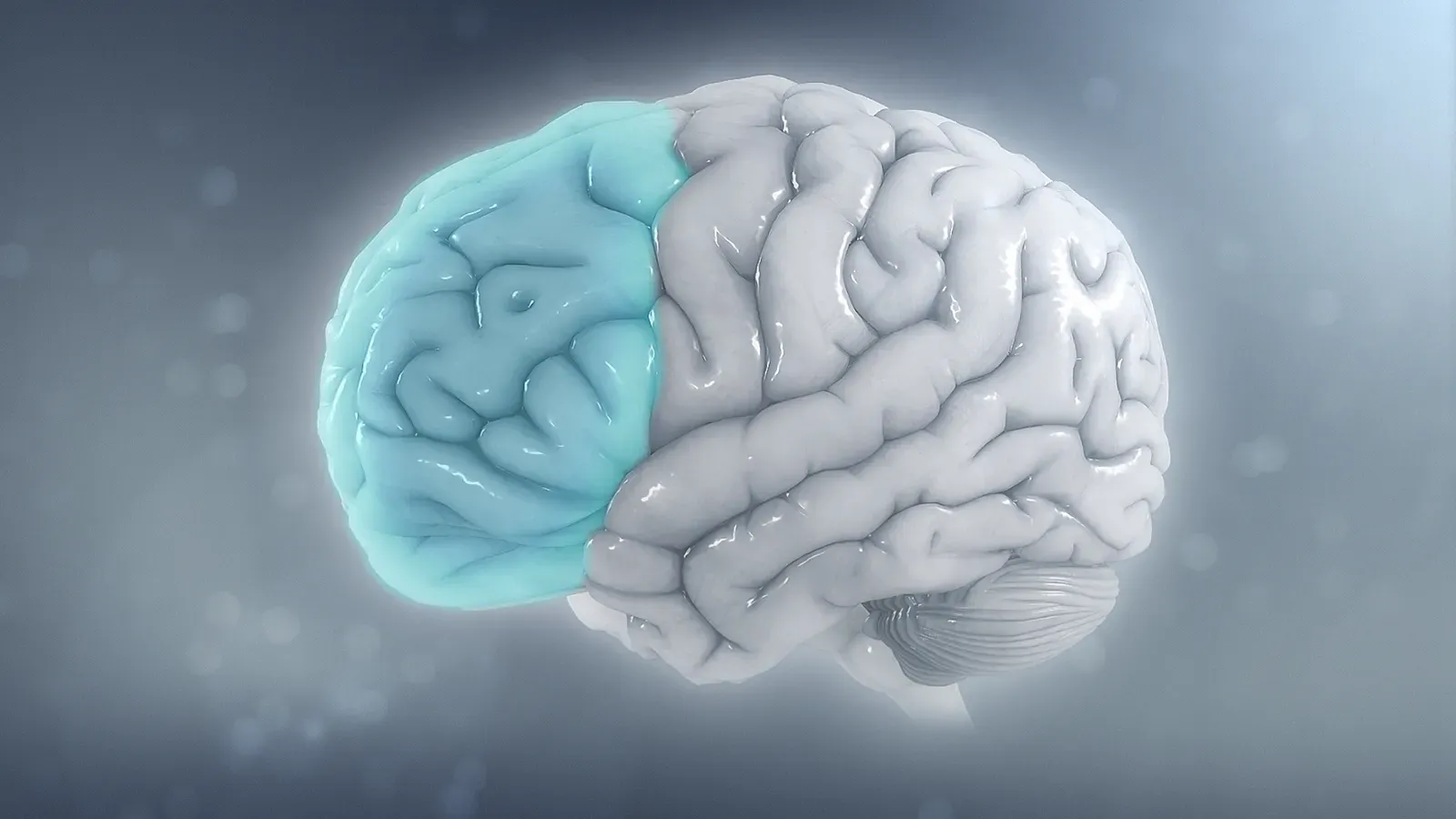
Your brain doesn’t store memories in one neat folder the way a computer might. Instead, memories form in your hippocampus, a seahorse-shaped structure tucked deep in your temporal lobes behind your temples. Think of it as your brain’s chief librarian, constantly cataloging new experiences.
What makes this even more fascinating is that memories are actually formed simultaneously in the hippocampus and the long-term storage location in the brain’s cortex. It’s hard to say for sure, but this dual-track approach seems to help your brain hedge its bets, creating backup copies of important information right from the start. The hippocampus handles the fresh memory while the cortex prepares space for long-term filing.
Different parts of your brain jump in depending on what kind of memory you’re forming. The cerebellum and basal ganglia are involved in procedural memory, which governs skills and habits like riding a bicycle or typing. Meanwhile, the prefrontal cortex gets busy when you’re recalling facts or personal episodes.
The Three-Stage Journey: How Information Becomes Memory
Encoding is defined as the initial learning of information; storage refers to maintaining information over time; retrieval is the ability to access information when you need it. These three stages work together like an assembly line, each dependent on the others.
Here’s the thing most people don’t realize: how we encode information determines how it will be stored and what cues will be effective when we try to retrieve it, and the act of retrieval itself also changes the way information is subsequently remembered. This means every time you remember something, you’re actually reshaping that memory slightly. Pretty wild when you think about it.
The process starts the moment you experience something new. Your senses capture the information, and your brain immediately begins evaluating whether it’s worth keeping. Not everything makes the cut, which is probably a good thing considering the sheer volume of information bombarding us every second.
Short-Term vs. Working vs. Long-Term: Understanding Memory Types
Short-term memory is a temporary storage space that holds information for a few seconds to minutes, while long-term memory is a mostly permanent storage space. It’s like the difference between jotting something on a sticky note versus writing it in permanent marker in a journal.
Working memory takes things a step further. Short-term memory stores information briefly, while working memory both stores and actively processes it for immediate use. Imagine you’re doing mental math: your short-term memory holds the numbers, but your working memory does the calculating.
Long-term memory, on the other hand, is where things get stored for the long haul. Long- and short-term memory could differ in two fundamental ways, with only short-term memory demonstrating temporal decay and chunk capacity limits, and both properties are still controversial but the current literature is rather encouraging regarding their existence. Essentially, your short-term memory has limited space and time, but long-term memory seems nearly limitless.
The Emotional Memory Boost: Why We Remember Feelings

Ever notice how you can remember exactly where you were during a shocking news event, but you can’t recall what you ate for lunch last Tuesday? That’s your amygdala at work. The amygdala performs primary roles in the formation and storage of memories associated with emotional events.
Emotional arousal activates the amygdala and such activation results in modulation of memory storage processes occurring in brain regions influenced by the amygdala. This creates a kind of biological highlighter, marking emotionally charged experiences as especially important. The stronger the emotion, the stronger the memory trace becomes.
Research has shown that ordinary moments can gain staying power if they’re connected to significant emotional events, and the brain prioritizes fragile memories when they overlap with meaningful experiences. So that random song playing during an emotional moment? You’ll probably remember it decades later.
The Molecular Machinery: What Happens at the Cellular Level

Memory resides within a dense network of billions of neurons within the brain, and we rely on synaptic plasticity – the strengthening and modulation of connections between these neurons – to facilitate learning and memory. When neurons fire together repeatedly, the connection between them gets stronger. It’s biological teamwork at its finest.
Recent breakthroughs have allowed scientists to track these changes with unprecedented precision. Patterns started to reveal rules governing how the brain decides which synapses to make stronger or weaker when storing a memory. Not all connections are created equal, and your brain is constantly evaluating which ones deserve reinforcement.
Neurons assigned to a memory trace reorganized their connections to other neurons through an atypical type of connection called a multi-synaptic bouton, where the axon of the neuron relaying the signal contacts multiple neurons that receive the signal. This discovery challenges older theories and reveals just how flexible and adaptive your brain’s wiring really is.
The Forgetting Paradox: Why Your Brain Actively Erases Memories

Until about ten years ago, most researchers thought that forgetting was a passive process in which memories decay over time, but a growing body of work suggests that the loss of memories is not a passive process and forgetting seems to be an active mechanism that is constantly at work in the brain. Your brain doesn’t just let memories fade – it deliberately removes them.
This might sound alarming, but it’s actually brilliant. We do not have a clear understanding of the human brain’s capacity for memory and if limiting, it would make sense that mechanisms would exist to remove irrelevant memories, and the clearance of irrelevant memories would open new storage space and facilitate retrieval. Think of it as spring cleaning for your mind.
When rats retrieved memories of an object, their later retention of other objects seen in the same context suffered, showing that forgetting caused by retrieval exceeded retention loss from time or interference. The very act of remembering one thing can actively suppress competing memories. It’s a trade-off your brain makes constantly without you even knowing it.
Why We Can’t Always Remember: The Retrieval Problem

We fail to retrieve a memory because of a discrepancy between the retrieval context and the encoding context. Ever walked into a room and forgotten why you came in? That’s context mismatch in action. The mental environment where you formed the intention differs from where you’re trying to recall it.
A memory can remain vivid but inaccessible because the pathways to that memory are overgrown with disuse. It’s like a hiking trail in the forest: if nobody walks it for months, vegetation takes over and it becomes harder to find. The memory still exists; you just can’t reach it easily.
Sometimes memories surface later when you’ve stopped actively searching. Searching unsuccessfully along ineffective retrieval pathways primes unused pathways nearby, and if some of these nearby pathways connect to the memory we want, priming makes them more likely to be activated later. Your brain keeps working on the problem in the background, which explains those sudden “aha!” moments hours after you’ve given up trying to remember.
The Future of Memory Science: What Recent Discoveries Tell Us
Recent findings show that long-term memories form through a sequence of molecular timing mechanisms that activate across different parts of the brain. Scientists have identified something like internal timers that determine how long memories should last. Some memories get early timers that fade quickly, while others receive extended timers for long-term preservation.
While a large proportion of neurons (70-80%) were involved in assigning a visual memory to a category, within each individual neuron, only brief, specific moments contributed to this encoding. This efficient strategy allows your brain to store diverse memories while using minimal energy. It’s elegance through economy.
Understanding the gene programs that preserve memory may help scientists redirect memory pathways around damaged brain regions in conditions such as Alzheimer’s by bypassing the damaged region and letting healthy parts of the brain take over. These discoveries aren’t just academically interesting – they hold real promise for treating memory disorders and improving how we learn.
Conclusion: The Ever-Changing Landscape of Your Mind
Memory turns out to be far more dynamic, flexible, and purposeful than we once believed. It’s not a static recording device but an active system constantly evaluating, reorganizing, and even strategically forgetting information to serve your survival needs. The hippocampus, amygdala, prefrontal cortex, and countless other regions work in concert, using molecular timers, emotional tags, and intricate neural networks to create the rich tapestry of your remembered experiences.
What’s truly remarkable is that every time you recall a memory, you’re not just accessing stored information – you’re reconstructing it, slightly altering it, and potentially strengthening or weakening it for future use. Your brain is perpetually balancing the need to remember important information with the practical necessity of forgetting the trivial stuff. It’s a system refined by millions of years of evolution, and scientists are only now beginning to decode its deepest mysteries.
Next time you forget where you left your phone, maybe give your brain a little credit. It’s not malfunctioning – it’s just busy managing an impossibly complex system that allows you to be who you are. What aspect of memory surprises you most?