Have you ever stopped to wonder what secrets hide beneath your feet? While we gaze up at stars and debate what might exist in distant galaxies, Earth itself is hoarding mysteries far stranger than most science fiction could dream up. Rocks that slide across empty deserts leaving trails behind them. Massive craters appearing overnight in frozen wastelands. Entire chunks of geological history vanishing without a trace.
The planet we call home isn’t as well understood as you might think. Sure, we’ve mapped continents and charted oceans, yet underneath it all lies a world that continues to bewilder even the brightest scientific minds. These aren’t ancient myths or legends passed down through generations. These are real, observable phenomena happening right now in 2026, and honestly, some of them are downright eerie. So let’s dive in and explore what truly lies beneath.
The Great Unconformity: A Billion Years Gone Missing
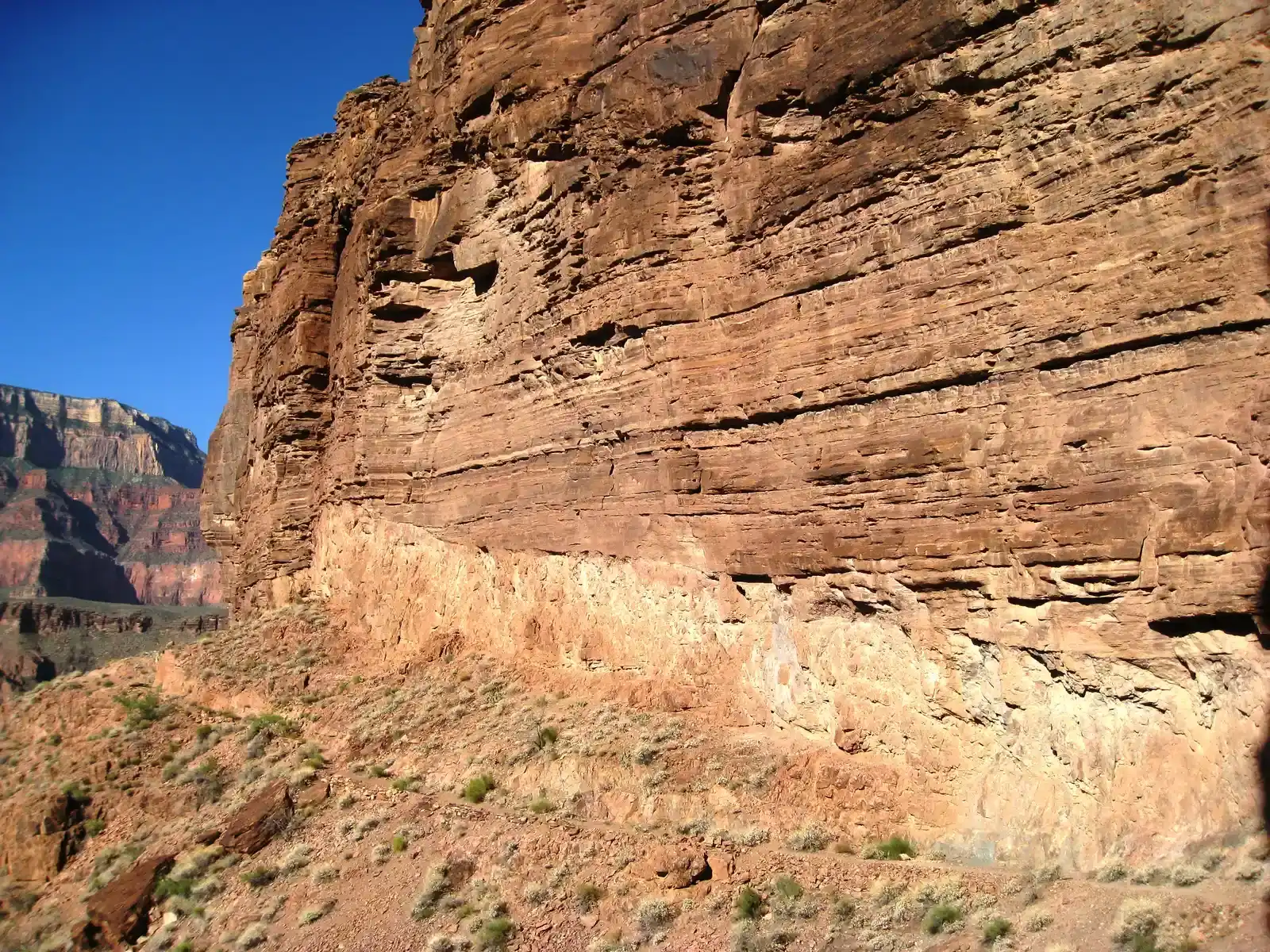
The Great Unconformity represents a huge gap in the geological record, with layers of rock dating from about 1.2 billion to 250 million years ago completely missing from certain areas around the globe, clearly visible in the stratigraphy of the Grand Canyon in Arizona. Imagine flipping through a history book only to discover that entire centuries have been ripped out. That’s essentially what geologists discovered when they examined canyon walls worldwide.
There is plenty of rock full of fossils from the Cambrian period around 540 million years ago, but the layer beneath it is basement rock formed roughly 1 billion years ago and empty of fossils. So what happened to everything in between? An emerging theory called Snowball Earth may explain where the rock disappeared to, suggesting that around 700 million years ago Earth was encased in snow and ice, with moving glaciers peeling off the planet’s crust and pushing it into oceans. Still, researchers aren’t entirely convinced this single event explains all the missing time everywhere on Earth.
Siberian Mystery Craters: The Earth’s Explosive Surprise
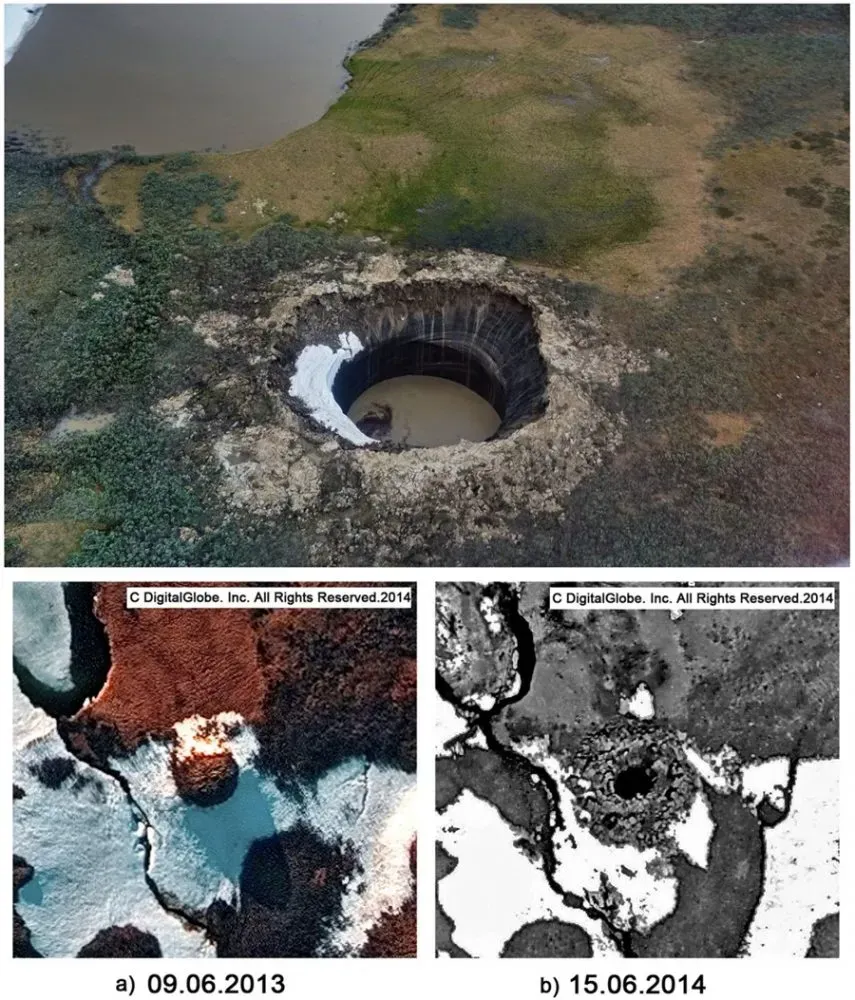
These craters are one of Earth’s most bizarre and most recent geological mysteries, located on Russia’s Yamal and Gydan Peninsulas, discovered in 2014 and haven’t stopped changing since, having grown bigger and more numerous. When these gaping holes first appeared, theories ran wild. Meteors? Aliens? Secret weapons tests?
People have suggested everything from a meteor impact to aliens, though the most common explanation suggests methane gas bubbles bursting as Siberian permafrost heats up. Yet here’s the thing that keeps scientists awake at night: even this seemingly logical explanation doesn’t fully account for all observations. The craters continue to multiply and expand in ways that don’t perfectly match the methane theory. Whatever process is at work beneath the Siberian tundra, it remains only partially understood.
The Eye of the Sahara: Africa’s Circular Enigma
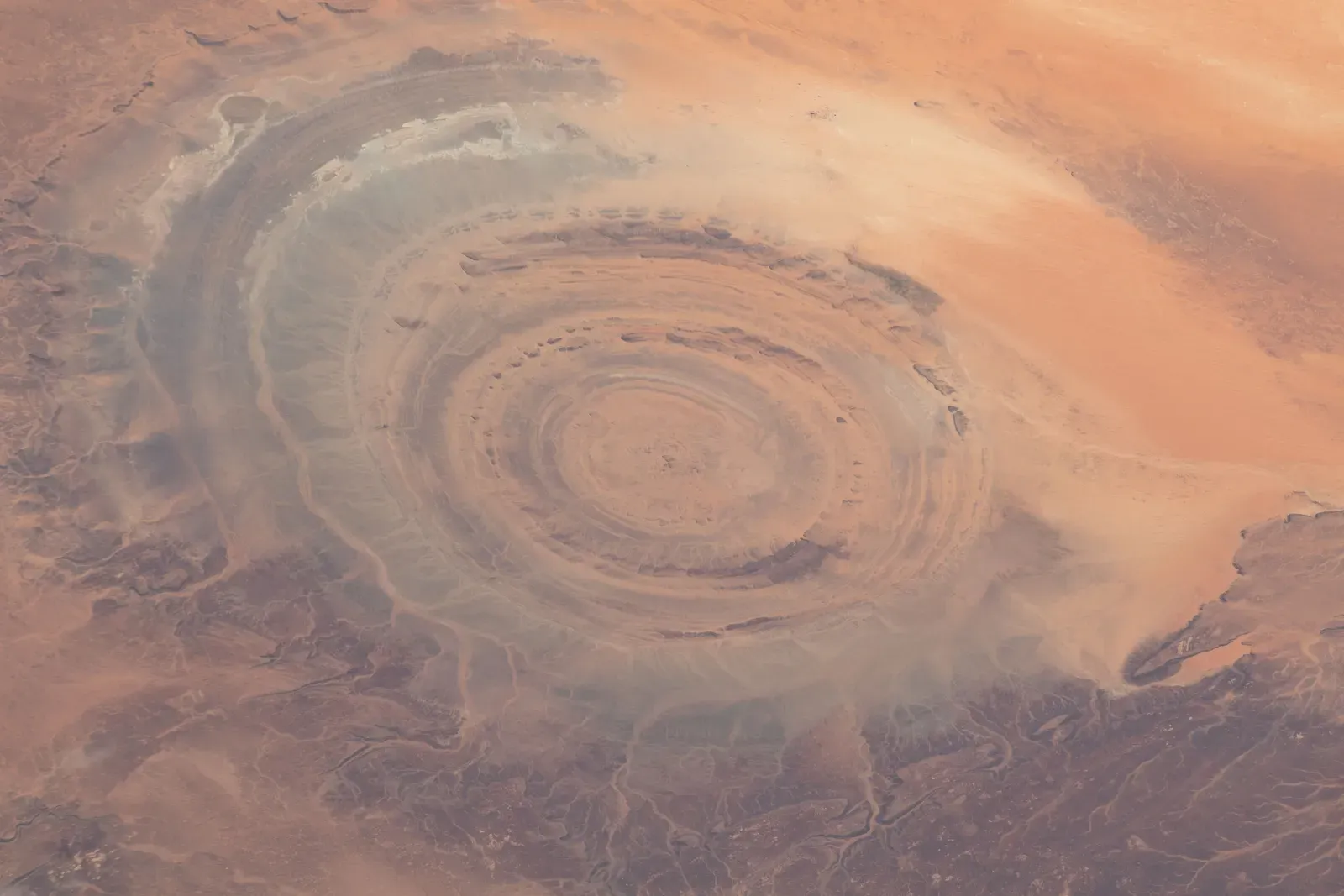
When astronauts first spotted this formation from space, they thought they’d discovered evidence of a massive asteroid impact. The Eye of the Sahara, also known as the Richat Structure, is a 28-mile-wide site of huge concentric circles found in Mauritania, though geologists found there isn’t enough melted rock among the rings to support an asteroid theory, and similarly there’s no evidence to suggest a volcanic eruption.
More recently, geologists have proposed the Eye of the Sahara could be an eroded, collapsed geological dome formed some 100 million years ago when Pangea broke up, with ancient rocks found on the surface that originated as much as 125 miles beneath Earth’s crust. The problem? Nobody can fully explain how erosion alone created such perfectly symmetrical circles. It looks too intentional, too precise to be random weathering. Research continues, but definitive answers remain frustratingly out of reach.
The Nastapoka Arc: Hudson Bay’s Perfect Curve
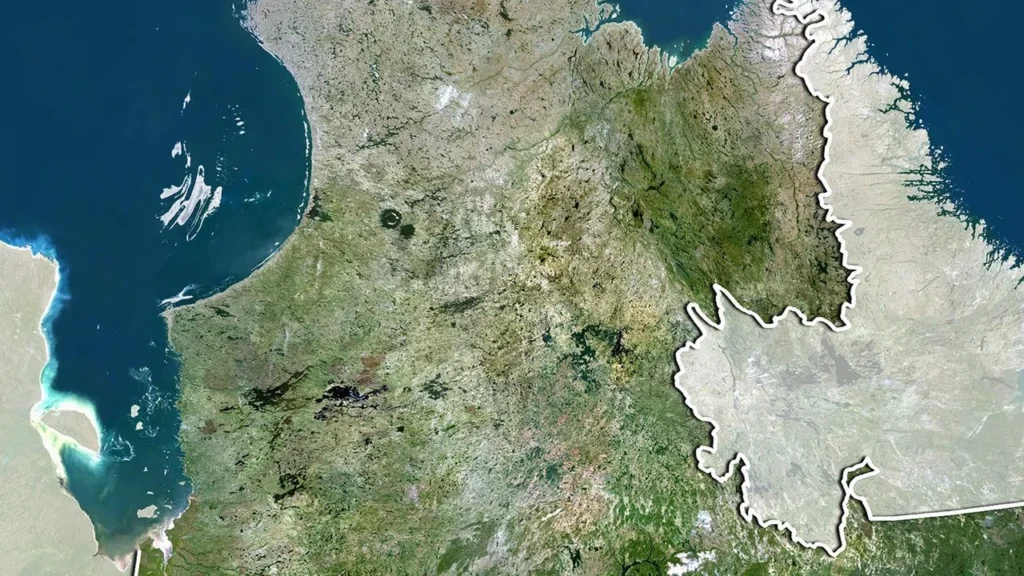
In the southeast corner of Hudson Bay, Canada, lies a near-perfect arc, first thought to be an impact crater from a meteorite, though none of the usual confirming evidence such as shatter cones or unusual melted rocks has been found. The arc is so geometrically flawless that it practically screams artificial origin.
The most commonly accepted theory based on geological evidence collected in the 1970s and later is that it’s a boundary formed when one shelf of rock was pushed under another, though this doesn’t explain how or why it’s so perfectly round. Nature rarely works in such clean, curved lines. Coastlines are jagged, eroded, chaotic. This arc defies that pattern completely, making it one of those geological features that sits uncomfortably between what we know should happen and what actually exists.
Sailing Stones of Death Valley: Rocks That Roam
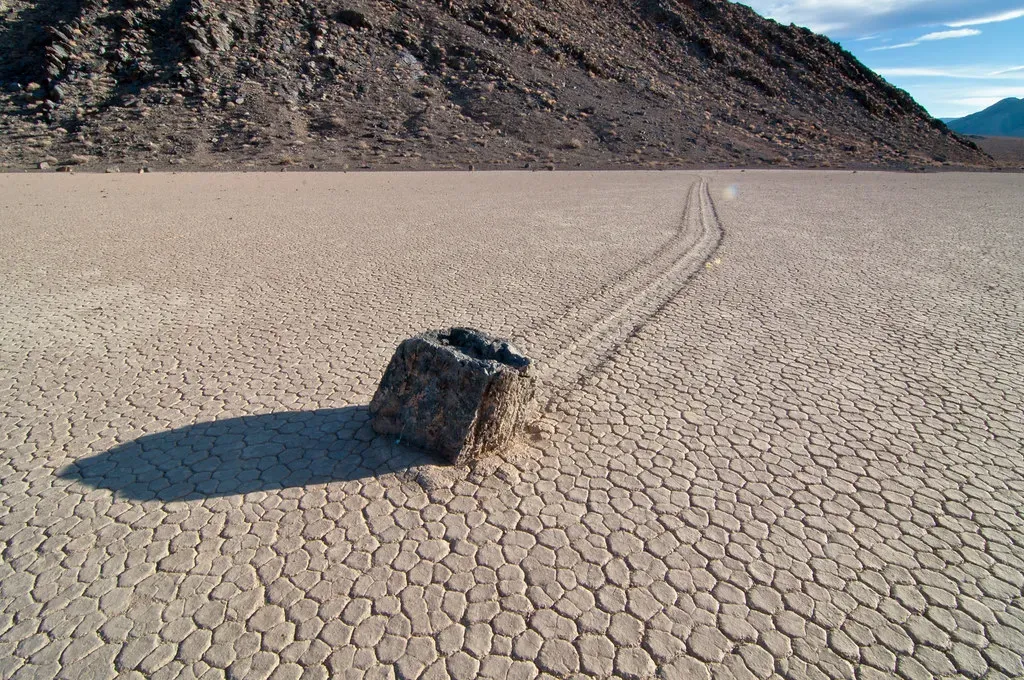
Picture a desolate, cracked desert floor. Now imagine heavy boulders somehow moving across it, leaving long trails behind them like breadcrumbs showing their journey. The sailing stones of the Racetrack Playa in Death Valley seem to strangely move on their own leaving long trails behind them, with NASA research suggesting ice forms around the rocks during winter months, perhaps allowing them to slip across the frozen surface.
Scientists have ruled out animals, gravity, and earthquakes as possible culprits for the stones’ strange movements. The ice sheet theory sounds plausible until you realize nobody has actually witnessed these stones in motion despite decades of monitoring. They move when nobody’s watching, leaving behind only their tracks as evidence. It’s one of those phenomena where the explanation feels just slightly incomplete, like we’re missing one crucial piece of the puzzle.
Mima Mounds: Earth’s Inexplicable Bumps
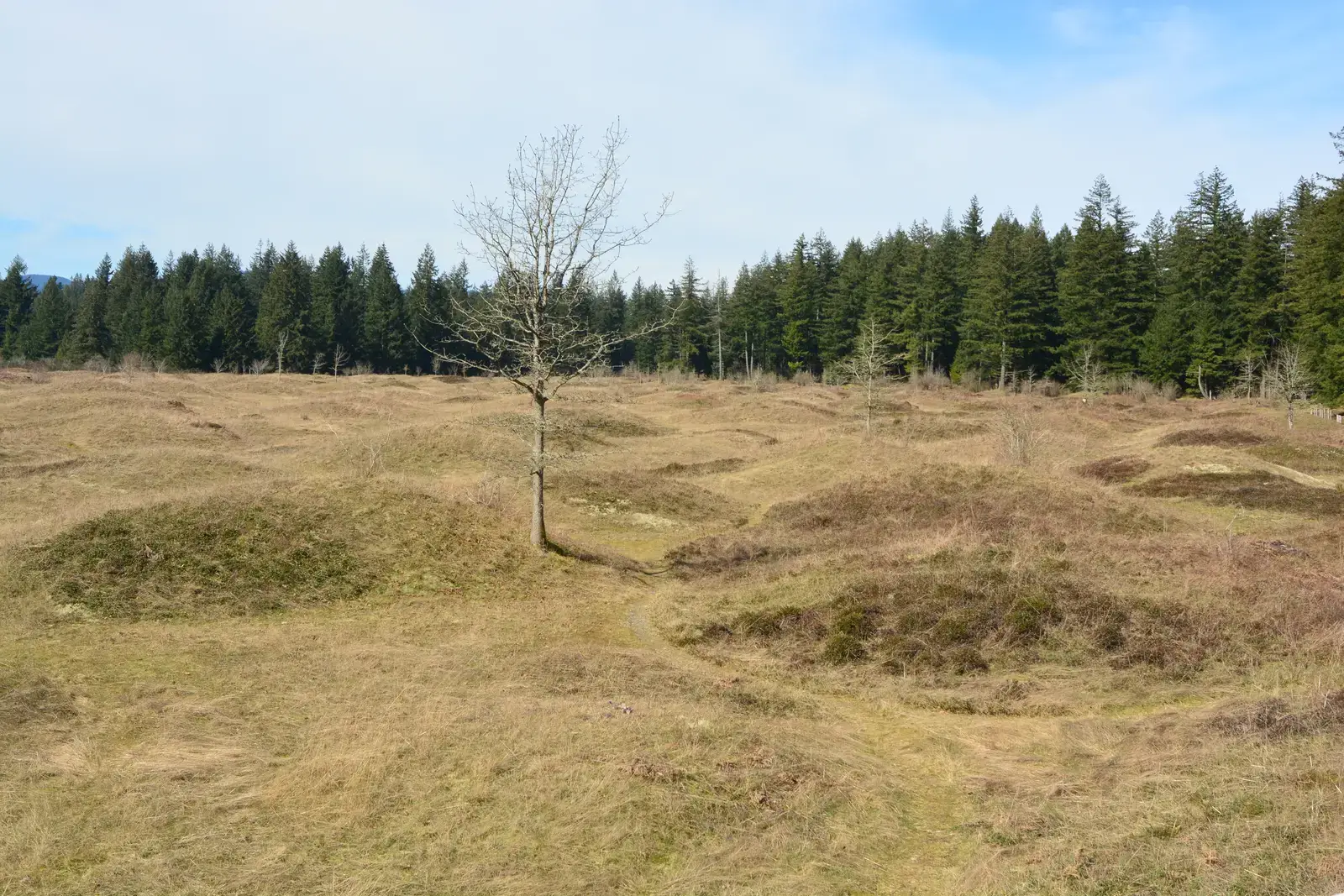
The Mima Mounds are mysterious uniform undulations in the grasslands of Washington State near Olympia ranging from 10 to 164 feet in diameter and up to 6.5 feet tall, discovered when American explorer Charles Wilkes in 1841 believed they were human-made burial mounds and excavated three, only to find them filled with loose stones. These aren’t isolated occurrences either. Similar mounds appear throughout North America from California to Colorado.
Similar mounds are found from California to Colorado and have puzzled naturalists for years, with scientists suggesting some may be 30,000 years old, which makes decoding them complex since humans are believed to have arrived in North America several thousand years later. Theories range from gopher activity to seismic vibrations to ancient glacial processes. Yet none of these explanations account for their remarkable uniformity and widespread distribution. They’re just there, scattered across prairies, defying simple categorization.
Lake Hillier: The Inexplicably Pink Waters
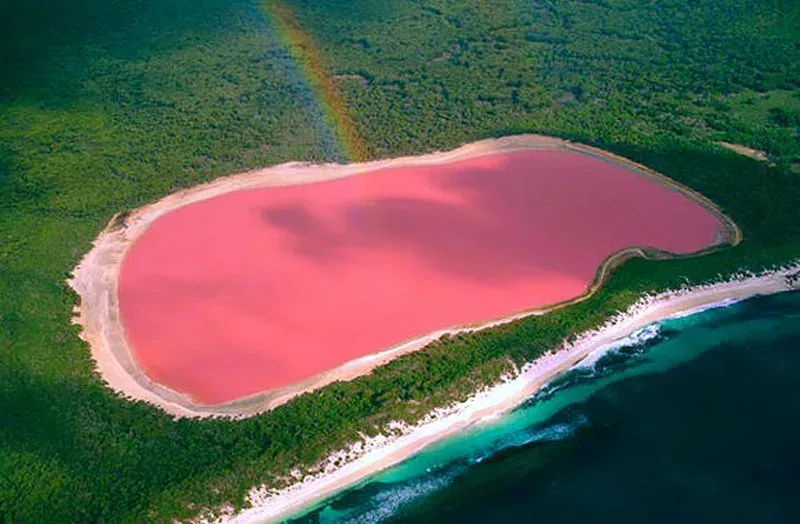
This small saltwater lake on an island off Western Australia is only one-third of a mile long, but its bubblegum-pink color makes it especially striking, having been documented in 1802 by British explorer Matthew Flinders who took a sample but failed to understand its startling hue. More than two centuries later, we’ve made progress but not complete understanding.
Tourists can visit only by helicopter though it is safe to swim in the waters, with scientists today suspecting the color is due to the presence of pink alga Dunaliella salina and/or pink bacterium Salinibacter ruber. Here’s what’s weird though: unlike other pink lakes worldwide, Hillier maintains its vibrant color year-round regardless of temperature or season. The exact chemical interactions creating this permanent pink remain uncertain. It’s just perpetually, inexplicably, brilliantly pink.
Blood Falls: Antarctica’s Crimson Flow
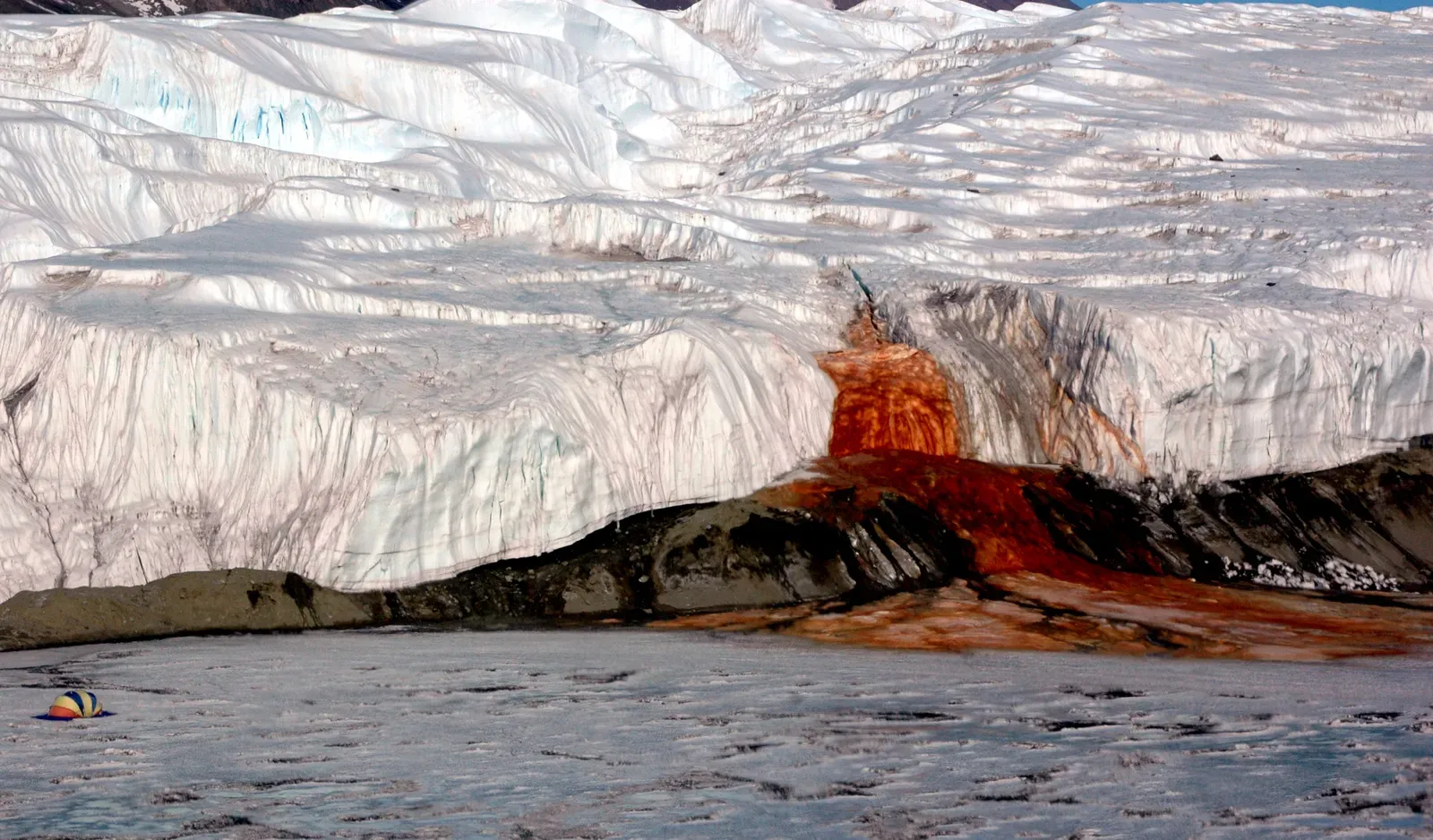
Blood Falls in Antarctica is where bright blood-looking iron-rich water seeps from the Taylor Glacier, forming when ancient seawater trapped beneath the glacier flows to the surface and the iron in this salty water is exposed to oxygen in the air oxidizing and turning it red. Think of rust bleeding from ice, staining pristine white glaciers with streaks of crimson.
The water flows from an underground reservoir beneath the glacier believed to have been sealed off from the outside world for millions of years, kept liquid due to geothermal heating from Earth’s interior allowing it to remain liquid even in extremely cold Antarctic temperatures, hosting a unique community of microorganisms adapted to survive in this harsh environment. It’s an entire isolated ecosystem preserved beneath ice for eons, now bleeding to the surface. The mechanics make sense scientifically, yet witnessing it feels otherworldly.
Fairy Circles of Namibia: Nature’s Perfect Patterns
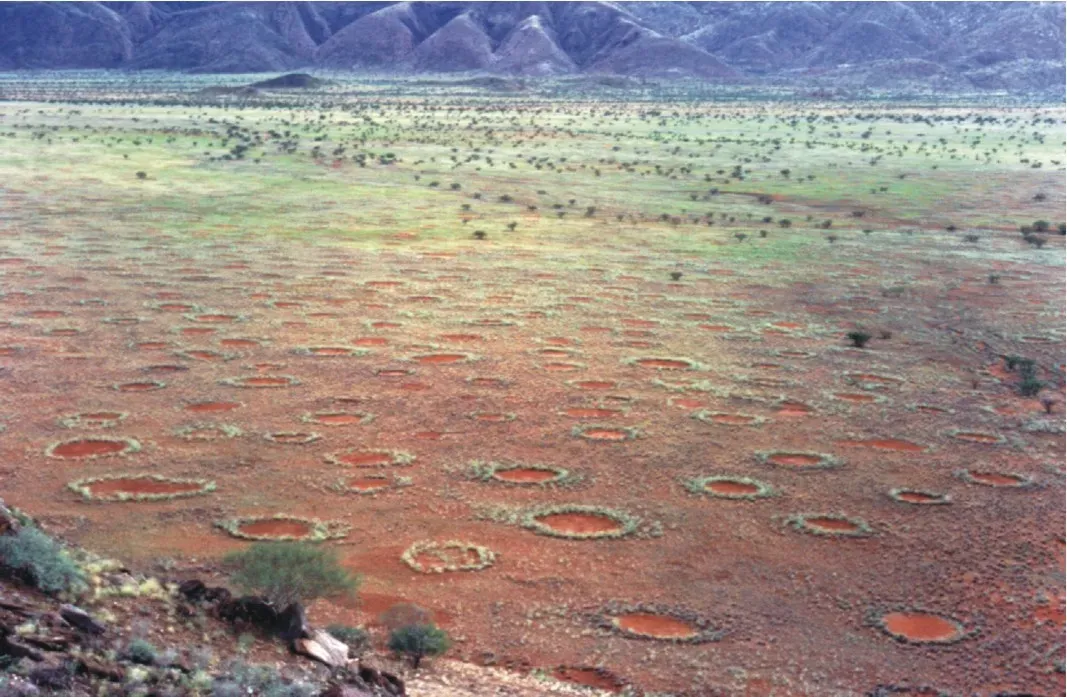
The mysterious fairy circles of Namibia are circular patches typically six to 40 feet in diameter of barren soil bordered by grass, extending for over 1000 miles throughout the Namib Desert, one of the driest regions on Earth. From above, they look like polka dots scattered across the landscape with mathematical precision.
While no theory fully explains the origins of fairy circles, a 2022 study linking them to ecohydrological feedback has proven convincing, debunking previous theories claiming pest activity is responsible, with scientists arguing the grass around circles pulls water away from the center creating a vacuum effect depriving inner grasses which cannot survive. Still, this doesn’t entirely explain their uniform size and spacing across such vast areas. They remain a living puzzle, beautiful and baffling in equal measure.
Patom Crater: Siberia’s Unexplained Nest
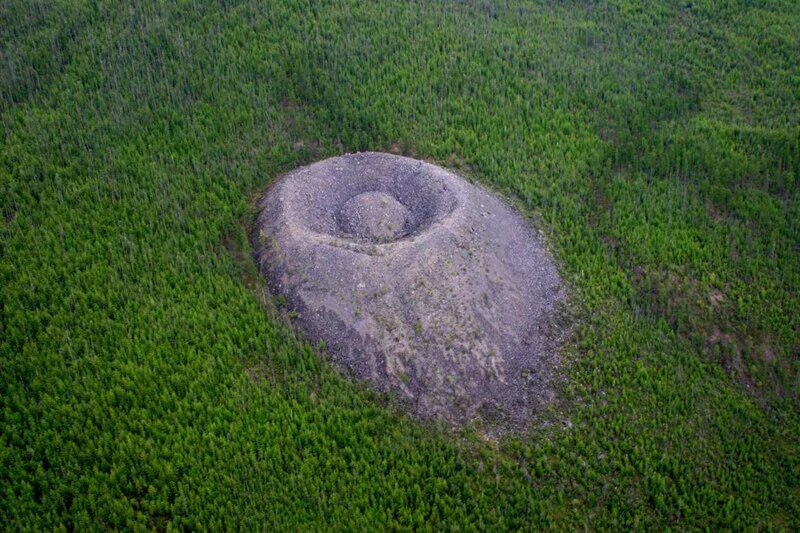
Patom Crater is a 131-foot-high geological formation in Siberia that looks a bit like a bird’s nest with an egg nestled inside, with scientists originally suggesting a meteor strike caused the unusual formation but a lack of meteorite fragments brought them back to the drawing board. The theories have ranged from plausible to bizarre.
Some geologists have hypothesized the uncommon formation came from under the earth rather than above it involving a magma explosion caused from steam beneath the surface, though it remains a strange area where no trees grow on the crater even though the surrounding landscape is dense forest. Local reports speak of unusual occurrences near the crater. Compasses act erratically. Wildlife avoids the area. Whatever created this formation left behind more questions than answers, and the crater sits there like Earth’s unanswered riddle.
Conclusion: The Planet’s Hidden Questions
Looking back at these ten geological oddities, one thing becomes crystal clear. We’ve barely scratched the surface of understanding our own planet. These aren’t ancient mysteries buried under millennia of myth and legend. These are现代 phenomena that scientists actively study using cutting-edge technology, yet they still defy complete explanation.
Perhaps that’s what makes Earth so fascinating. For all our satellites and sensors, our drills and data, the ground beneath our feet still holds secrets. Some of these mysteries may eventually yield to scientific investigation. Others might remain perpetually just beyond our grasp, reminding us that nature doesn’t owe us explanations.
What do you think drives these geological oddities? Are they simply processes we haven’t fully decoded yet, or does Earth still have a few tricks we’ve never even imagined? One thing’s certain: the planet we inhabit is far stranger and more wonderful than most of us ever stop to consider.