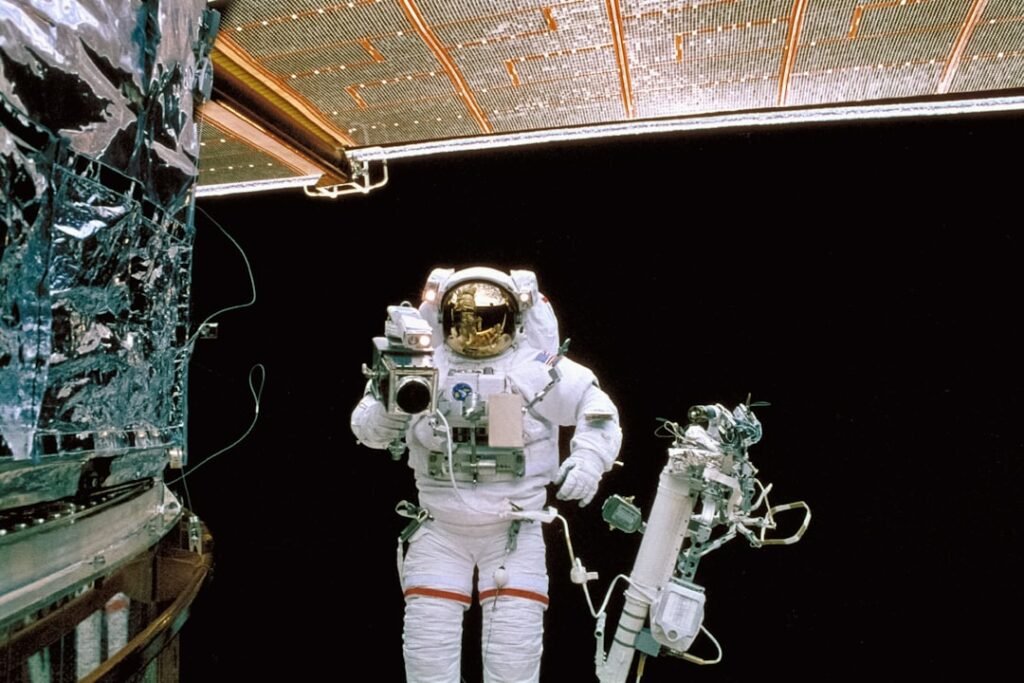

The Axiom 2 Crew’s Orbital Odyssey (Image Credits: Unsplash)
A groundbreaking study from the Axiom 2 mission reveals how the harsh environment of space induces rapid, yet reversible, changes in astronauts’ epigenetic markers of aging.
The Axiom 2 Crew’s Orbital Odyssey
The Axiom 2 mission, which lifted off in May 2023, marked a pivotal moment in private spaceflight as its four-member crew spent 10 days aboard the International Space Station conducting a battery of biomedical experiments.
These investigations focused on how the human body adapts to the unique challenges of microgravity and beyond-Earth conditions, providing valuable data on physiological responses that traditional ground-based studies struggle to replicate.
Among the crew’s tasks was the collection of blood samples before, during, and after their time in orbit, which later formed the basis for an in-depth analysis of cellular changes.
Researchers at the Buck Institute for Research on Aging spearheaded this effort, transforming the mission’s raw data into insights that bridge space exploration and human health sciences.
Epigenetic Shifts: Aging Accelerated in Zero Gravity
Spaceflight exposes astronauts to a cocktail of stressors – microgravity, cosmic radiation, disrupted sleep cycles, and isolation – that mimic and intensify aspects of terrestrial aging processes.
The study, published in the journal Aging Cell, examined epigenetic clocks, molecular tools that estimate biological age through DNA methylation patterns in blood cells.
Results showed that after just seven days in space, the crew experienced an average acceleration of their epigenetic age by nearly two years, a stark demonstration of how quickly environmental pressures can alter cellular function.
These changes involved genes linked to immune response, metabolism, and stress adaptation, highlighting space as an extreme model for understanding accelerated aging.
Yet, the findings also underscored the body’s remarkable plasticity, as the epigenetic markers began reverting almost immediately upon re-entry to Earth’s gravity.
Key Stressors and Their Biological Toll
To grasp the full scope of these transformations, consider the primary environmental factors at play during the mission.
- Microgravity disrupts fluid distribution in the body, leading to muscle atrophy and bone density loss similar to osteoporosis in the elderly.
- Ionizing radiation from cosmic rays damages DNA, potentially hastening cellular senescence, a hallmark of aging.
- Circadian rhythm disturbances from constant light exposure affect hormone regulation, compounding fatigue and immune suppression.
- Social isolation and confinement strain psychological resilience, mirroring chronic stress that erodes telomere length over time.
- Combined, these elements create a compressed timeline of aging effects, offering a condensed view of lifelong wear and tear.
This multifaceted assault explains the observed epigenetic uptick, but it also reveals pathways for intervention, such as targeted antioxidants or exercise regimens tested during the flight.
From Space to Earth: Lessons in Cellular Resilience
The reversibility of these epigenetic changes proved particularly striking, with blood samples taken within hours of landing showing a return to baseline or even slightly younger biological profiles.
By day 50 post-mission, most markers had normalized, suggesting that short-duration flights pose minimal long-term risks to aging trajectories.
Such outcomes position spaceflight not just as a hazard but as a controlled experiment for anti-aging therapies, potentially informing treatments for age-related diseases like Alzheimer’s or cardiovascular decline.
Collaborators from Weill Cornell Medicine contributed to the analysis, emphasizing how these findings could accelerate drug development by simulating decades of aging in mere days.
Future Horizons for Space and Aging Research
As humanity eyes Mars missions and extended lunar stays, understanding these reversible dynamics becomes crucial for astronaut health and mission planning.
The Axiom 2 data paves the way for follow-up studies on longer exposures, perhaps integrating advanced epigenome editing to counteract space-induced aging.
Ultimately, this research transcends orbit, offering hope that insights from the stars could extend healthy lifespans on our home planet.
Key Takeaways
- Spaceflight can advance epigenetic age by up to two years in under a week, driven by multiple environmental stressors.
- These changes largely reverse upon return to Earth, affirming human adaptability.
- The findings establish space as a powerful analog for studying and combating terrestrial aging.
Space exploration continues to unlock secrets of the human body, reminding us that even in the void, resilience prevails – what role might these discoveries play in your view of aging? Share your thoughts in the comments.