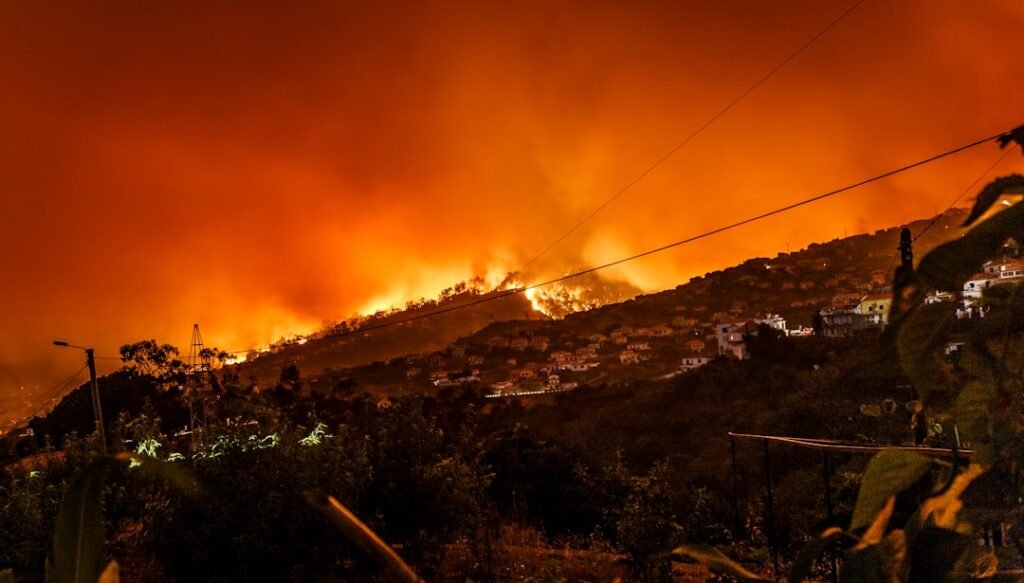

A Dramatic Uptick in Fire Activity (Image Credits: Unsplash)
Across the vast boreal landscapes of the Arctic and sub-Arctic zones, wildfires have surged in intensity and occurrence, reshaping ecosystems long accustomed to cooler climes.
A Dramatic Uptick in Fire Activity
Researchers at NASA observed a sharp rise in wildfire detections over the past decade, particularly in northern Eurasia, where fire incidents have multiplied dramatically. This escalation marks a departure from historical norms, as satellite imagery captured blazes spreading across previously less-affected terrains. The data highlighted not just more fires but ones that burned with greater ferocity, consuming larger areas and persisting longer into the season.
Northern regions, including parts of Russia and Alaska, now face what experts describe as a transformed fire regime. In Eurasia, the epicenter of this trend, annual fire counts have soared, driven by environmental shifts that amplify ignition risks. Such patterns signal broader changes in how these remote areas respond to warming global conditions.
Satellite Technology Lights the Way
Advanced satellite systems, including NASA’s MODIS and VIIRS instruments, have provided unprecedented views of this fiery expansion. These tools detect heat signatures in near real-time, mapping fire perimeters with precision across millions of square kilometers. The resulting visualizations reveal hotspots clustering in boreal forests and tundra edges, areas once shielded by permafrost and sparse vegetation.
By analyzing decades of archived data, scientists mapped the evolution of fire distribution, showing a northward creep of intense burns. For instance, fires in the Arctic Circle, rare before the late 20th century, now appear with alarming regularity. This technological edge allows for timely alerts to land managers and offers a global perspective on a phenomenon previously hard to track in such expansive, inaccessible territories.
Climate Drivers Fueling the Flames
Rising temperatures have dried out soils and expanded flammable shrublands, creating ideal conditions for fires to ignite and spread. Lightning strikes, increasingly common at higher latitudes due to shifting weather patterns, serve as a primary spark in these remote zones. NASA researchers noted that these combined factors mimic fire behaviors seen in more southern, temperate forests.
Jessica McCarty, Deputy Earth Science Division Chief at NASA’s Ames Research Center, explained the shift: “Fire has always been a part of the boreal and the Arctic landscape. But now it’s starting to act in more extreme ways that mimic what we’ve seen in the temperate and the tropical areas.” Human activities, such as resource extraction, may exacerbate vulnerabilities, though natural climate forcings dominate the trend.
Ecological and Global Repercussions
The intensified fires release vast amounts of stored carbon from peatlands and forests, accelerating greenhouse gas emissions and complicating efforts to curb climate change. In the Arctic, where thawing permafrost already poses challenges, these blazes erode protective vegetation layers, heightening erosion and altering wildlife habitats. Species adapted to infrequent, low-intensity burns now contend with megafires that scar the landscape for generations.
Communities in northern indigenous territories face heightened risks from smoke and displacement, while international monitoring underscores the need for cross-border strategies. Satellite data not only tracks these events but also informs predictive models to anticipate future outbreaks.
Key Strategies for Monitoring and Mitigation
To address the growing threat, agencies have ramped up surveillance through platforms like the Fire Information for Resource Management System (FIRMS). This resource delivers active fire maps and alerts, aiding rapid response in hard-to-reach areas. Policymakers advocate for enhanced fuel management and community preparedness programs tailored to boreal conditions.
Here are essential steps derived from recent analyses:
- Expand satellite networks for finer-resolution fire detection in polar regions.
- Integrate indigenous knowledge with scientific data for localized risk assessments.
- Promote international agreements to reduce emissions from northern wildfires.
- Invest in restoration projects to rebuild fire-resilient ecosystems.
- Develop early-warning systems using AI to forecast lightning-induced ignitions.
Key Takeaways
- Wildfire frequency in the Arctic has increased significantly over the last decade, especially in Eurasia.
- Satellites reveal fires are larger, hotter, and longer-lasting due to climate warming.
- Proactive monitoring and global cooperation are vital to mitigate escalating impacts.
As northern wildfires intensify, they serve as a stark reminder of climate vulnerabilities in Earth’s coldest realms, urging immediate action to safeguard these critical environments. What measures do you believe could best curb this trend? Share your thoughts in the comments.