The Enigma of Dark Stars (Image Credits: Cdn.mos.cms.futurecdn.net)
The James Webb Space Telescope has reshaped our view of the cosmos’s infancy, revealing anomalies that challenge long-held theories about the universe’s formative years.
The Enigma of Dark Stars
Researchers have long pondered the nature of dark stars, hypothetical celestial bodies that differ fundamentally from ordinary stars. These objects, first theorized nearly two decades ago, rely not on nuclear fusion for energy but on the annihilation of dark matter particles within their cores. Such a mechanism would allow them to grow immense, potentially reaching masses hundreds of times that of the sun.
Recent observations from the James Webb Space Telescope, or JWST, have brought these concepts into sharper focus. Astronomers detected signatures in distant light that align with predictions for dark stars, suggesting they may have illuminated the early universe. This discovery emerged from data collected during the telescope’s deep-space surveys, which peered back to when the universe was just a fraction of its current age. The findings, detailed in studies published in early 2026, propose that dark stars could have dominated the cosmic landscape before traditional stars took over.
Unlike conventional stars, dark stars would have been cooler and more diffuse, their surfaces shrouded in hydrogen clouds that absorb ultraviolet light. This property might explain why they evaded detection until now. As these stars collapsed under their own weight, they could have seeded the rapid formation of massive structures observed today.
Addressing Supermassive Black Holes in the Dawn Era
One of the most perplexing discoveries from JWST involves the prevalence of supermassive black holes in the universe’s youth. These behemoths, some millions of times the sun’s mass, appeared far earlier than models predicted, posing a challenge to explanations of black hole growth. Traditional theories relied on gradual accumulation from stellar remnants, a process too slow to account for the observed giants.
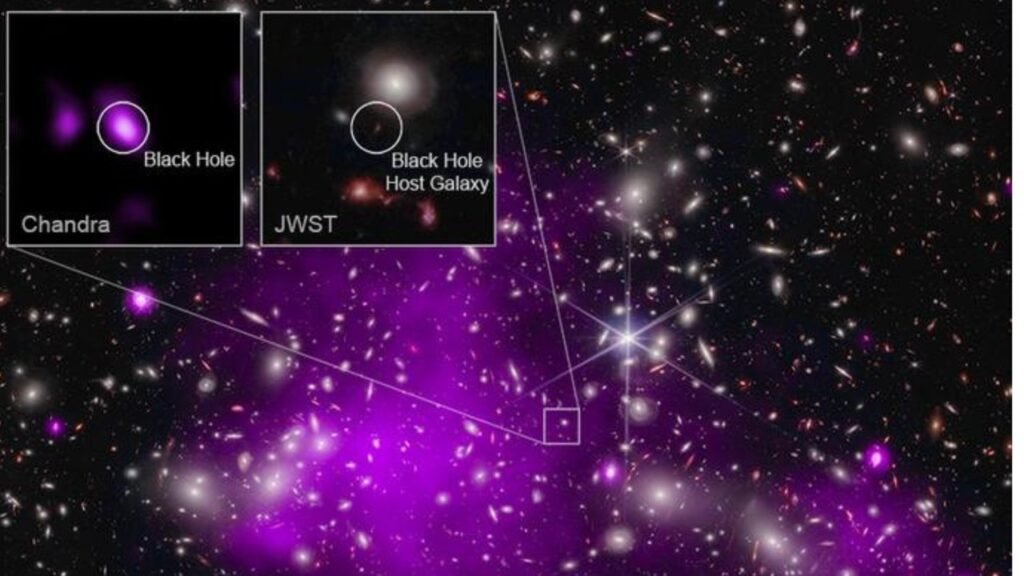
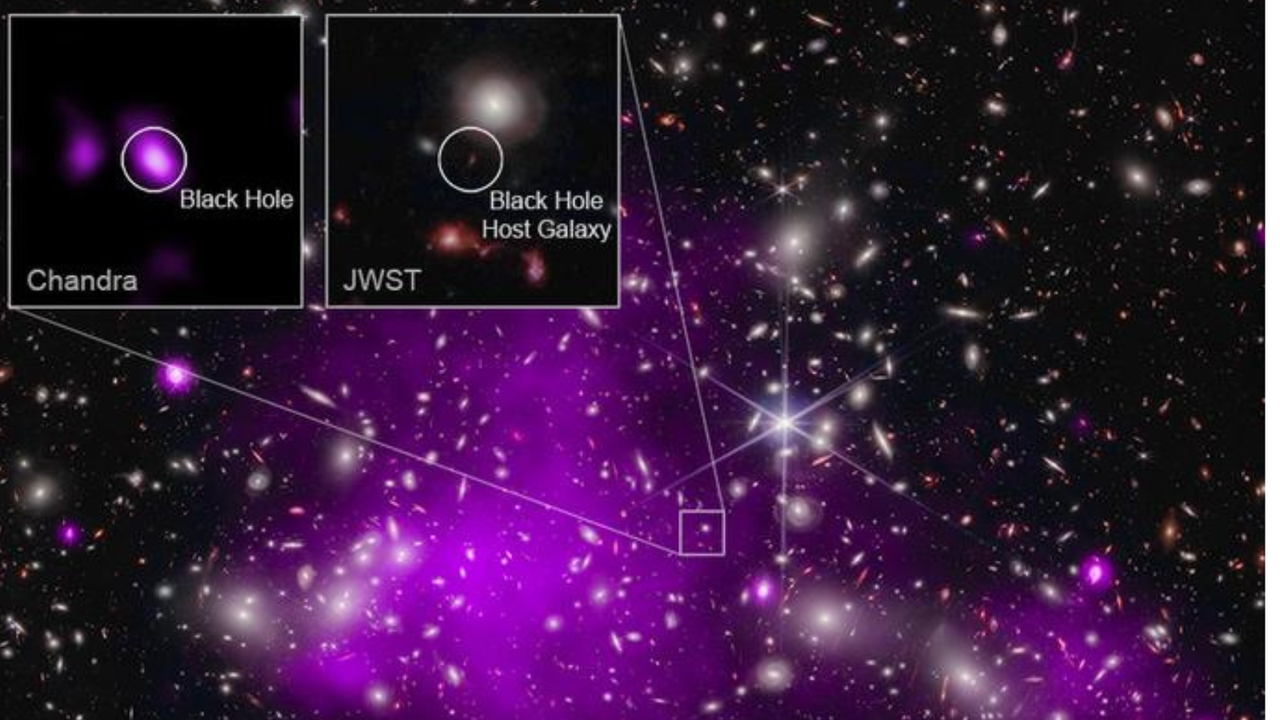
Dark stars offer a compelling alternative. Their enormous size and dark matter-fueled longevity would enable them to amass vast amounts of material before collapsing directly into black holes. This direct pathway bypasses the need for incremental mergers, aligning with JWST’s glimpses of ancient quasars powered by these early monsters. For instance, the galaxy UHZ1, observed at a redshift indicating its light traveled 13.2 billion years, hosts a black hole that defies standard formation timelines.
Scientists like Cosmin Ilie from Colgate University have modeled this scenario, showing how dark star collapses could produce the heavy seeds required for such rapid black hole development. This resolution not only fits the data but also ties into broader questions about cosmic evolution.
Explaining Blue Monsters and Little Red Dots
JWST’s infrared gaze has uncovered “blue monster” galaxies, unexpectedly bright and blue-shifted objects from cosmic dawn that suggest intense star formation or alternative energy sources. These galaxies appear overdeveloped for their era, with light profiles indicating something beyond ordinary stellar activity powered them.
Dark stars fit neatly into this puzzle. Their annihilation-driven glow could mimic the high-energy output of massive star clusters, fueling these galaxies without the telltale signs of fusion. Similarly, the “little red dots” scattered across early sky images – compact, reddish sources – may represent the dying embers of dark stars, their light reddened by expansion and absorption.
By integrating these observations, researchers propose a unified framework. Dark stars would have contributed to the universe’s reionization, the period when hydrogen fog cleared to allow light to travel freely. This process, observed in JWST spectra, matches the predicted radiation from dark matter interactions.
- Supermassive black holes: Direct collapse from dark stars accelerates formation.
- Blue monster galaxies: Powered by dark star luminosity, explaining premature brightness.
- Little red dots: Remnants of collapsed dark stars, appearing as compact red sources.
- Cosmic reionization: Dark star emissions ionize early hydrogen effectively.
- Dark matter clues: Annihilation rates reveal particle properties indirectly.
Broader Implications for Cosmic Understanding
The dark star hypothesis extends beyond immediate puzzles, offering insights into dark matter itself. If confirmed, these stars would provide indirect evidence of dark matter’s particle nature, as the annihilation energy must match observed luminosities. Current models suggest weakly interacting massive particles, or WIMPs, could drive this process, though alternatives remain viable.
Future JWST observations and complementary data from telescopes like Chandra will test these ideas. Enhanced surveys could detect more candidates, refining our grasp of the universe’s first light. This work underscores how interconnected cosmic phenomena are, from stellar birth to black hole dominance.
Key Takeaways
- Dark stars challenge traditional stellar evolution by harnessing dark matter energy.
- They resolve JWST’s findings on early black holes, bright galaxies, and enigmatic dots.
- Confirmation could unlock secrets of dark matter and the universe’s infancy.
As astronomers continue to decode the universe’s origins, dark stars stand as a bridge between mystery and revelation, reminding us that the cosmos holds layers yet to unfold. What role do you think these enigmatic objects played in shaping our reality? Share your thoughts in the comments.