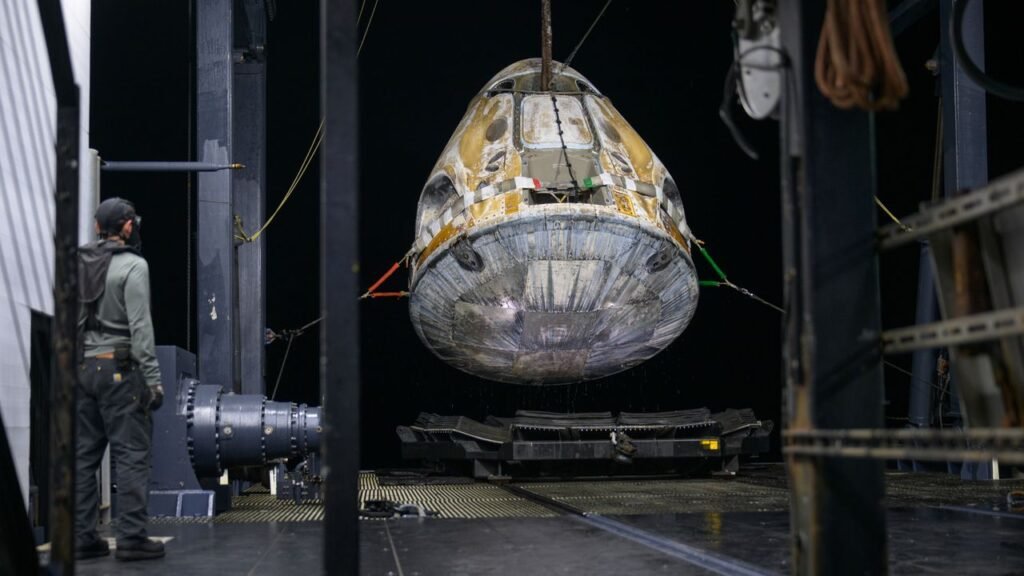
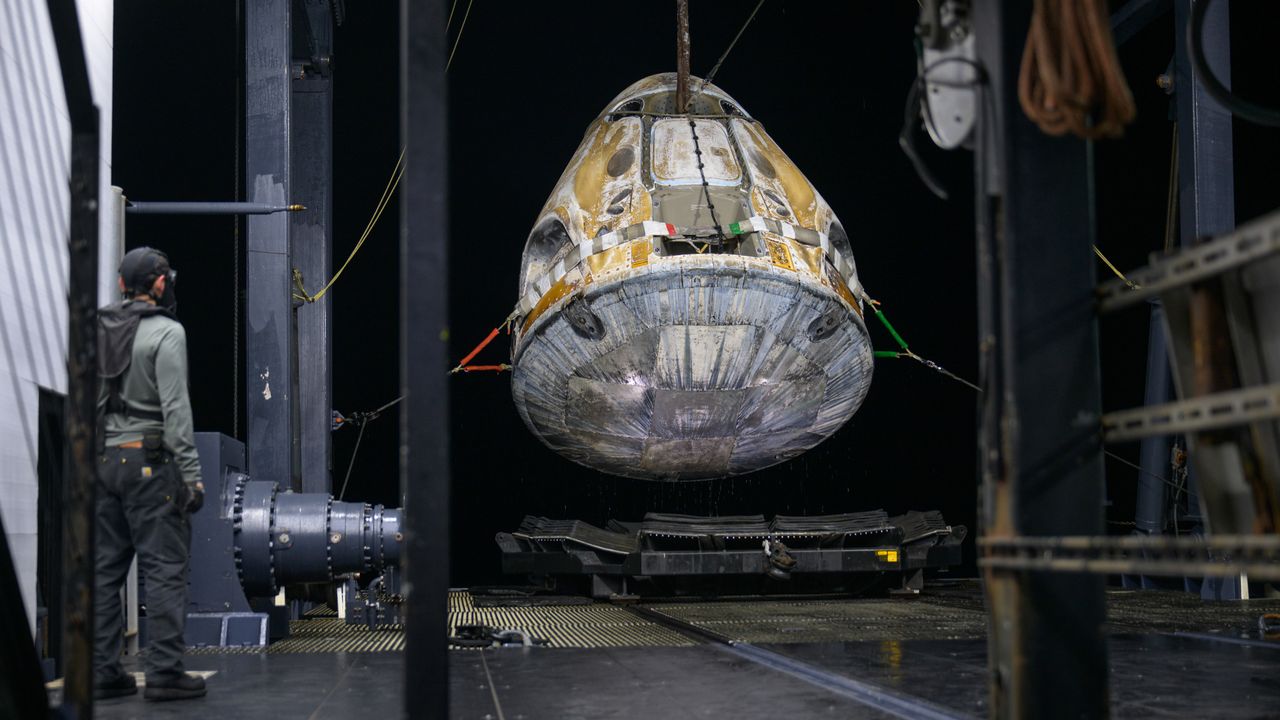
The Unexpected Health Challenge Aboard the ISS (Image Credits: Cdn.mos.cms.futurecdn.net)
Off the coast of San Diego, four astronauts from NASA’s Crew-11 mission touched down safely in the Pacific Ocean early Thursday, marking the space agency’s first medical evacuation from the International Space Station.
The Unexpected Health Challenge Aboard the ISS
A medical issue with one of the Crew-11 astronauts triggered NASA’s decision to bring the entire crew home ahead of schedule. The concern arose during their five-month stay on the orbital laboratory, prompting officials to prioritize safety over the original mission timeline. This event represented a historic shift, as no prior crew had returned early due to such circumstances.
Details about the specific health problem remained limited, with NASA emphasizing the astronaut’s stable condition throughout the process. The agency coordinated closely with international partners to ensure a swift yet secure response. Crew-11, which included two Americans, a Japanese astronaut, and a Russian cosmonaut, had been conducting various scientific experiments before the interruption.
Precision Planning for an Accelerated Departure
Once the decision was made, preparations moved rapidly to undock the SpaceX Crew Dragon capsule from the ISS. The crew detached about a month earlier than planned, setting the stage for a reentry trajectory aimed at the waters near California. Ground teams monitored every phase, from orbital adjustments to the deorbit burn that initiated their descent.
The operation showcased NASA’s expertise in contingency planning. Engineers and flight directors worked around the clock to verify systems and weather conditions. This seamless execution highlighted the robustness of current spacecraft designs, even under unforeseen pressures.
Splashdown Success and Immediate Recovery
The capsule splashed down without incident at approximately 2:56 a.m. local time, where recovery teams from SpaceX and NASA swiftly secured the vehicle. Divers assisted the astronauts as they emerged, beaming despite the abrupt end to their mission. Medical personnel conducted initial evaluations on site, confirming all four were in good shape following the journey.
Helicopters transported the crew to a nearby recovery ship, where further assessments took place. NASA reported no complications from reentry, attributing the smooth landing to meticulous pre-mission training. The astronauts underwent standard post-flight protocols to address the effects of prolonged microgravity exposure.
Key Milestones of the Crew-11 Mission
Before the medical event, Crew-11 achieved several notable objectives during their time on the ISS. They contributed to ongoing research in human health, materials science, and Earth observation. The mission also fostered international collaboration, underscoring the station’s role as a global outpost.
- Conducted over 200 hours of scientific experiments focused on long-duration spaceflight effects.
- Performed maintenance on station systems to support future expeditions.
- Captured high-resolution imagery of Earth’s changing climate patterns.
- Participated in educational outreach, inspiring students worldwide through live demonstrations.
- Advanced biotechnology studies, including protein crystal growth for pharmaceutical applications.
These accomplishments, though cut short, added valuable data to NASA’s archives. The crew’s adaptability in the face of challenges reinforced the mission’s overall success.
Lessons for the Future of Space Exploration
This evacuation underscored the vulnerabilities of human spaceflight, even in low-Earth orbit. NASA officials described the response as a testament to their operational excellence, with one statement noting it exemplified the agency’s commitment to crew welfare. The incident prompted reviews of medical protocols for upcoming missions, including Artemis lunar efforts.
Moving forward, enhancements to onboard diagnostics and telemedicine capabilities could mitigate similar risks. The safe return bolstered confidence in commercial partners like SpaceX, whose vehicle proved reliable once again. As space travel expands, such events serve as critical learning opportunities.
Key Takeaways:
- The first ISS medical evacuation demonstrated NASA’s rapid response capabilities.
- All Crew-11 astronauts landed in stable condition after a flawless splashdown.
- The mission’s early end highlighted priorities in astronaut health for long-term exploration.
In an era of ambitious space ambitions, the Crew-11 saga reminds us that human ingenuity prevails amid uncertainty. What aspects of this historic return intrigue you most? Share your thoughts in the comments below.