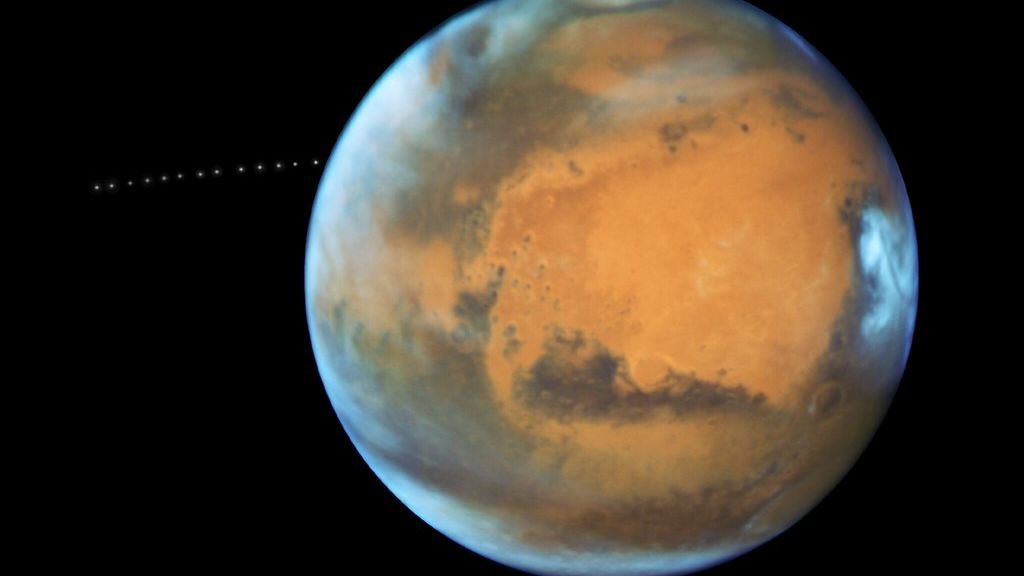

Here’s something wild. A planet that’s roughly half Earth’s size and sits tens of millions of miles away might actually be pulling the strings on our climate. Mars, that rusty little neighbor we dream about colonizing, has been quietly tugging on Earth’s orbit for billions of years. The result? It plays a surprisingly hefty role in determining when and how intensely our planet slips into ice ages.
Most of us learned in school that Earth’s climate dances to the rhythm of orbital variations called Milankovitch cycles. These cosmic wobbles and stretches change how much sunlight we receive over thousands of years. Scientists always knew Jupiter and Venus were the big players here. Yet new research reveals Mars is far from a bystander in this planetary ballet. It’s actually conducting parts of the orchestra.
The Featherweight That Punches Above Its Weight
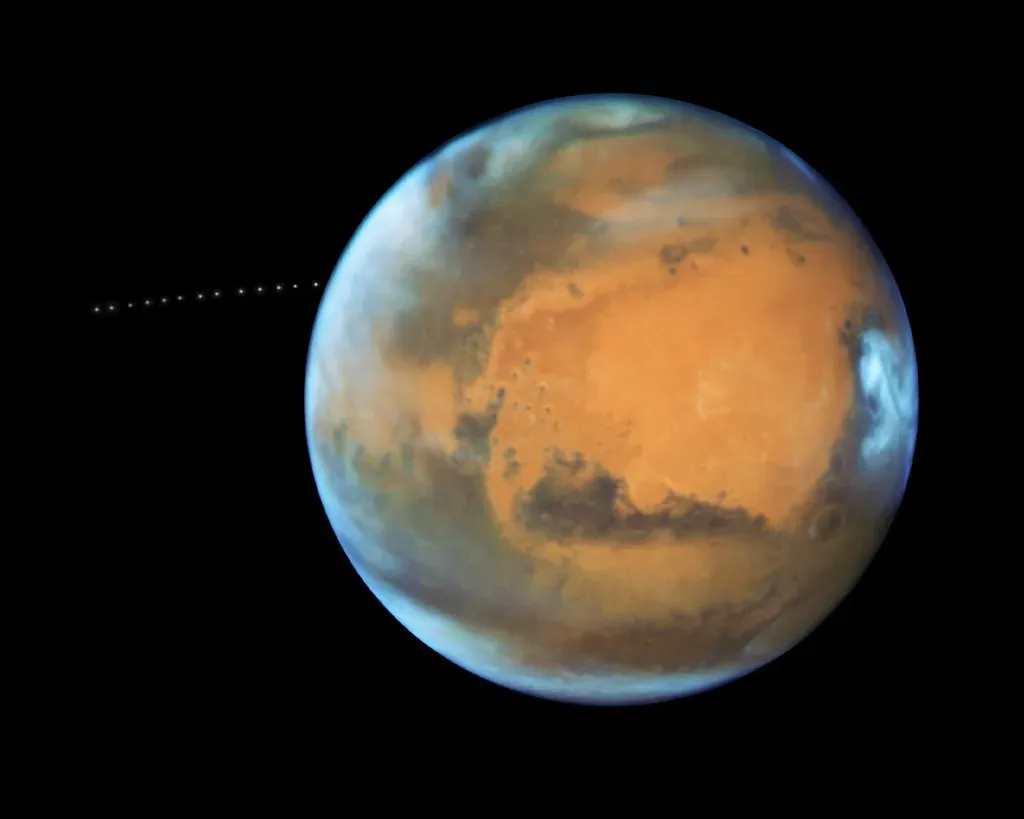
Mars weighs in at just one tenth of Earth’s mass, making it a genuine featherweight in planetary terms. Despite this, recent research shows the Red Planet is quietly tugging on Earth’s orbit and shaping the cycles that drive long-term climate patterns here, including ice ages. Think about that for a second. Something so small, so distant, wielding that much influence over our world.
The discovery initially shocked even the researchers themselves. Stephen Kane, a planetary astrophysics professor at the University of California Riverside, admitted he assumed Mars’s effect would be tiny and its gravitational influence too small to easily observe within Earth’s geologic history. Sometimes science is about checking your own assumptions and being dead wrong.
Why Distance Actually Helps Mars’s Cause
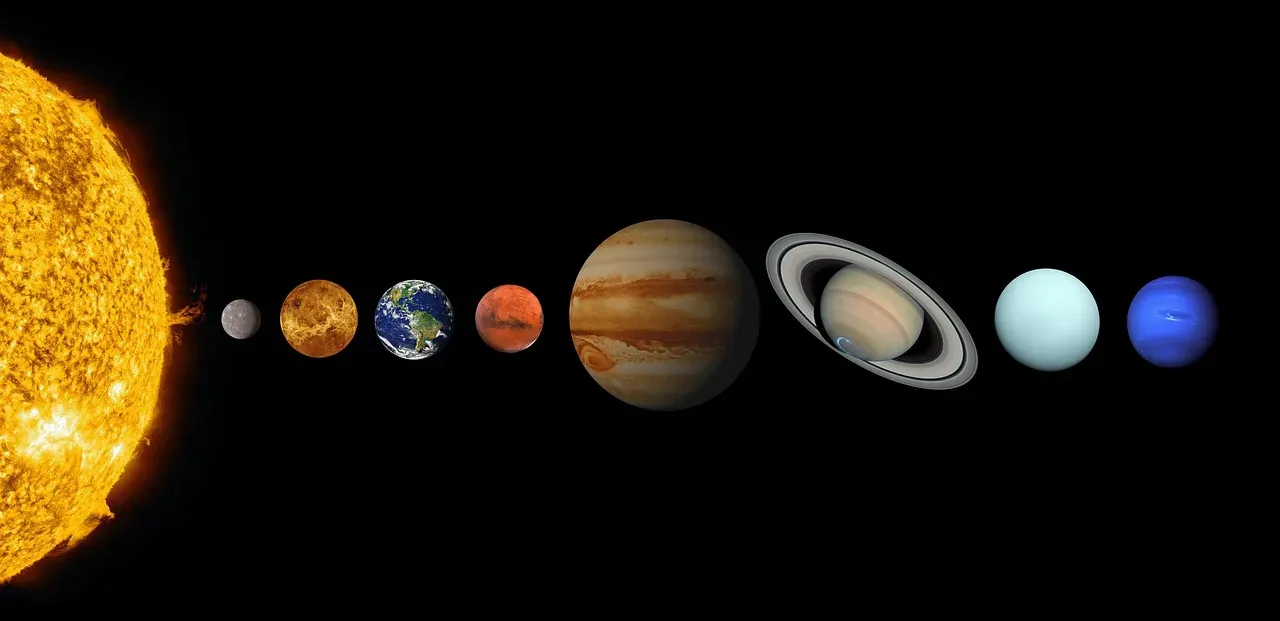
Here’s where things get counterintuitive. Because Mars sits farther from the Sun than Earth, it actually has a larger gravitational effect on our planet than it would if it were closer, essentially punching above its weight. The Sun’s overwhelming gravity dominates the inner planets, but Mars operates from a sweet spot where it can still exert meaningful influence without being completely overwhelmed.
Computer simulations run by Kane’s team varied Mars’s mass from zero all the way up to ten times its actual size. The models tracked how these changes rippled through Earth’s orbital variations over millions of years. What emerged was fascinating. Mars doesn’t just nudge Earth slightly; it fundamentally shapes major climate cycles that determine whether vast ice sheets advance or retreat across continents.
The Missing Cycles That Vanish Without Mars
When researchers removed Mars from their simulations, two significant cycles completely disappeared: one lasting roughly 100,000 years and another spanning 2.3 million years, both linked to ice ages. These aren’t minor blips in climate data. They’re foundational rhythms that have governed Earth’s glacial periods for eons.
The 430,000-year cycle driven by Venus and Jupiter occurred regardless of whether Mars was present in the simulations, but when Mars was removed, those two other major cycles simply vanished. It’s like removing a single instrument from a symphony and realizing the entire melody collapses. The music just doesn’t work without it.
The Grand Cycle That Defines Deep Time
The 2.4 million year grand cycle, which causes long term climate fluctuations, exists only because Mars has sufficient mass to create the right gravitational resonance, affecting how much sunlight Earth receives over millions of years. This isn’t about next year’s weather or even the next century’s climate. We’re talking about cycles that play out over timescales almost too vast for the human mind to grasp.
Geological evidence for this cycle shows up in sediment layers on the ocean floor. Ancient rocks record these rhythmic changes like a cosmic metronome ticking away in stone. The fact that Mars’s gravity is literally written into Earth’s geological record is frankly mind-blowing.
How Mars Stabilizes Earth’s Wobble
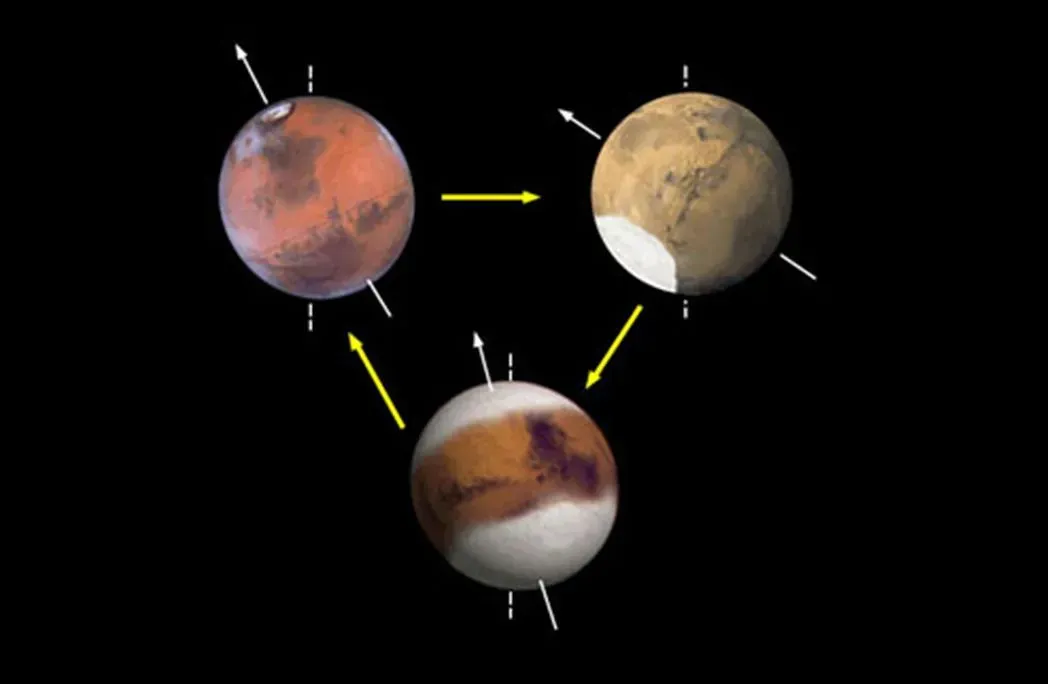
Earth’s axis currently tilts at about 23.5 degrees, creating our seasons. That angle isn’t fixed; it wobbles over time. As Mars’s mass was increased in simulations, the rate of change in Earth’s tilt actually decreased, meaning increasing Mars’s mass has a stabilizing effect on our tilt. A larger Mars would make Earth’s axial tilt more stable, changing more slowly over time.
This matters enormously for climate. Earth’s obliquity cycles lengthen from the canonical 41,000 years with increasing Mars mass, relocating to a dominant 45,000 to 55,000 year band when Mars is ten times its present mass. In other words, if Mars were bigger, ice sheets on Earth would grow and retreat according to entirely different schedules. The whole pattern of glaciation would be unrecognizable.
The Orbital Stretch That Changes Everything
Earth’s path around the Sun isn’t a perfect circle. It’s slightly elliptical, and that shape changes over time. These cycles affect how circular or stretched Earth’s orbit is, the timing of Earth’s closest approach to the Sun, and the tilt of its rotational axis, which influence how much sunlight different parts of Earth receive, affecting glacial cycles and long-term climate patterns.
Mars’s pull on Earth’s eccentricity has an impact through a grand cycle lasting 2.4 million years, during which Mars’s gravitational pull slightly shifts Earth’s path around the Sun. That slight shift accumulates. Over geological time, it translates into dramatic differences in solar energy reaching our planet, tipping the balance between ice ages and warmer interglacial periods.
Five Major Ice Ages and Counting
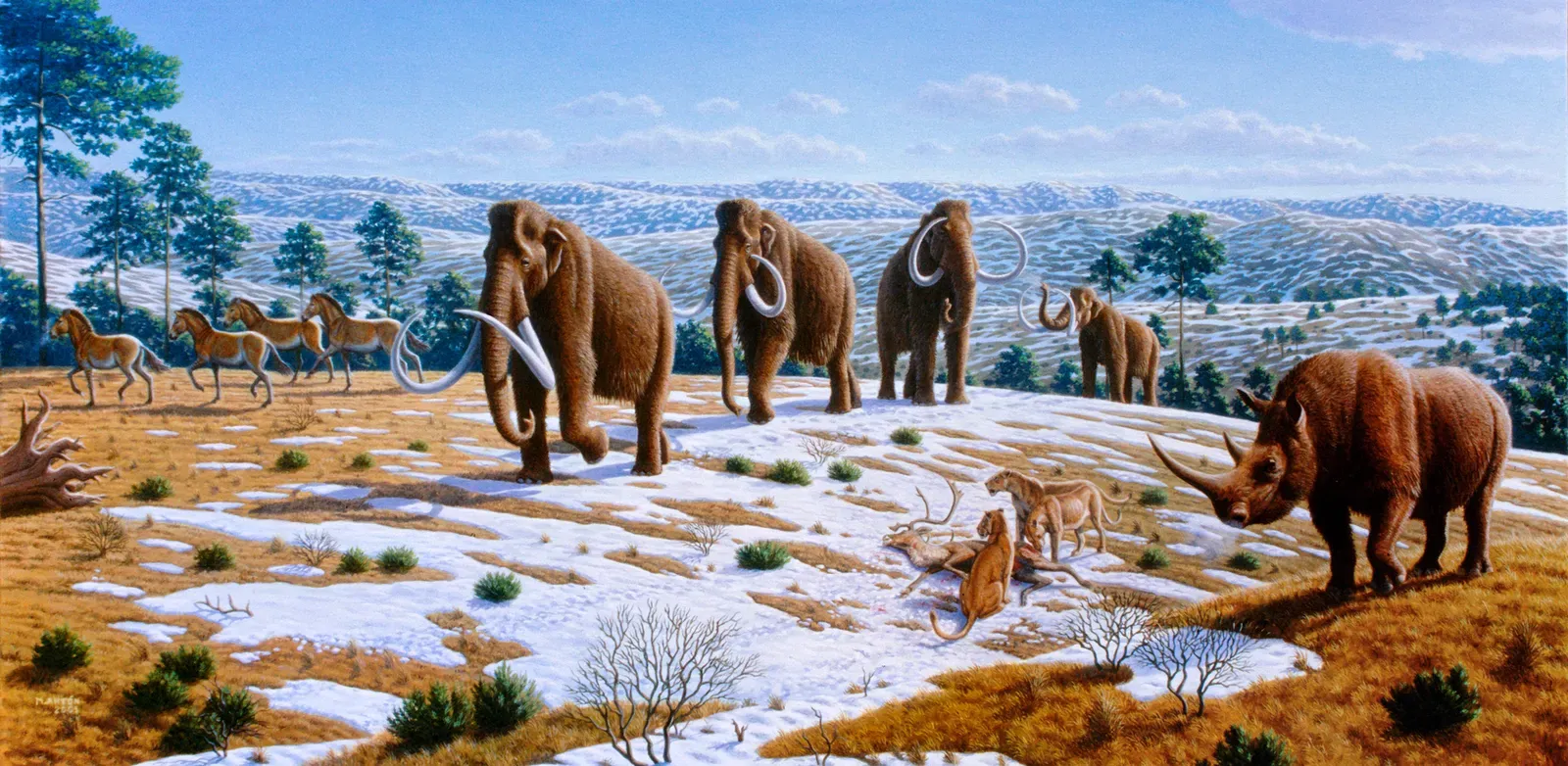
Let’s be real about where we are right now. Earth has survived at least five major ice ages, and we’re actually in one now, defined as a period when permanent ice sheets exist at the poles. When people talk about “the Ice Age,” they usually mean the last glacial maximum, when enormous ice sheets covered much of North America and Europe.
The last major ice sheet, known as the Wisconsin glaciation, retreated only about 11,000 years ago after covering much of North America. That’s incredibly recent in geological terms. The ice was here when humans were building the first permanent settlements. Mars helped set the timing for that retreat, just as it will influence future glacial advances.
What If Mars Never Existed?
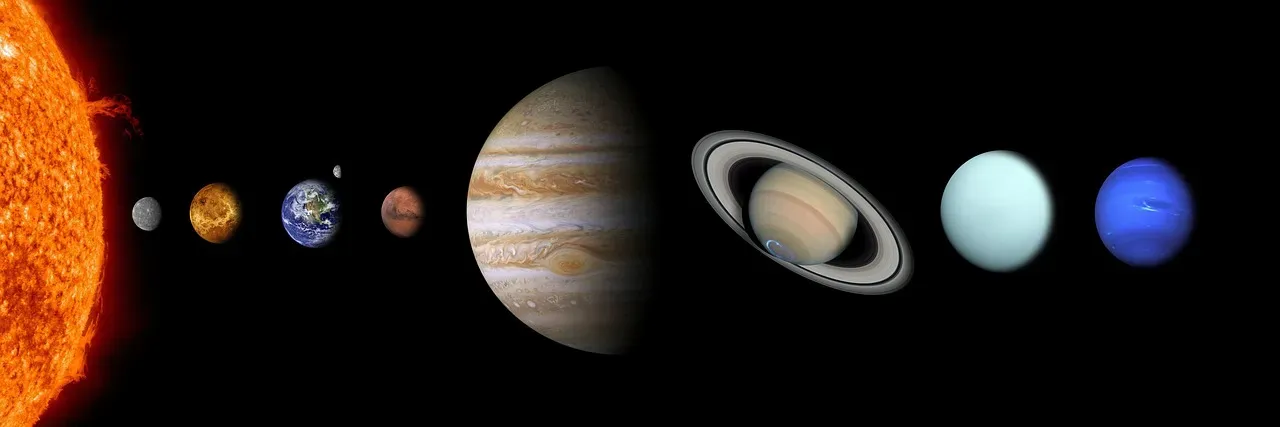
This is where the research gets genuinely unsettling. Glacial periods affect the proliferation of regions like forests and grasslands on Earth, which drive evolutionary changes like walking upright, the use of tools and social cooperation. Without Mars tugging on Earth’s orbit, our climate history would have unfolded completely differently.
Without Mars, Earth’s orbit would be missing major climate cycles, raising questions about what humans and other animals would even look like if Mars weren’t there. Would we exist at all? Would intelligent life have emerged under a different climate regime? It’s impossible to say, but the fact that we’re even asking the question shows just how intertwined our fate is with that distant red world.
The Implications for Alien Worlds
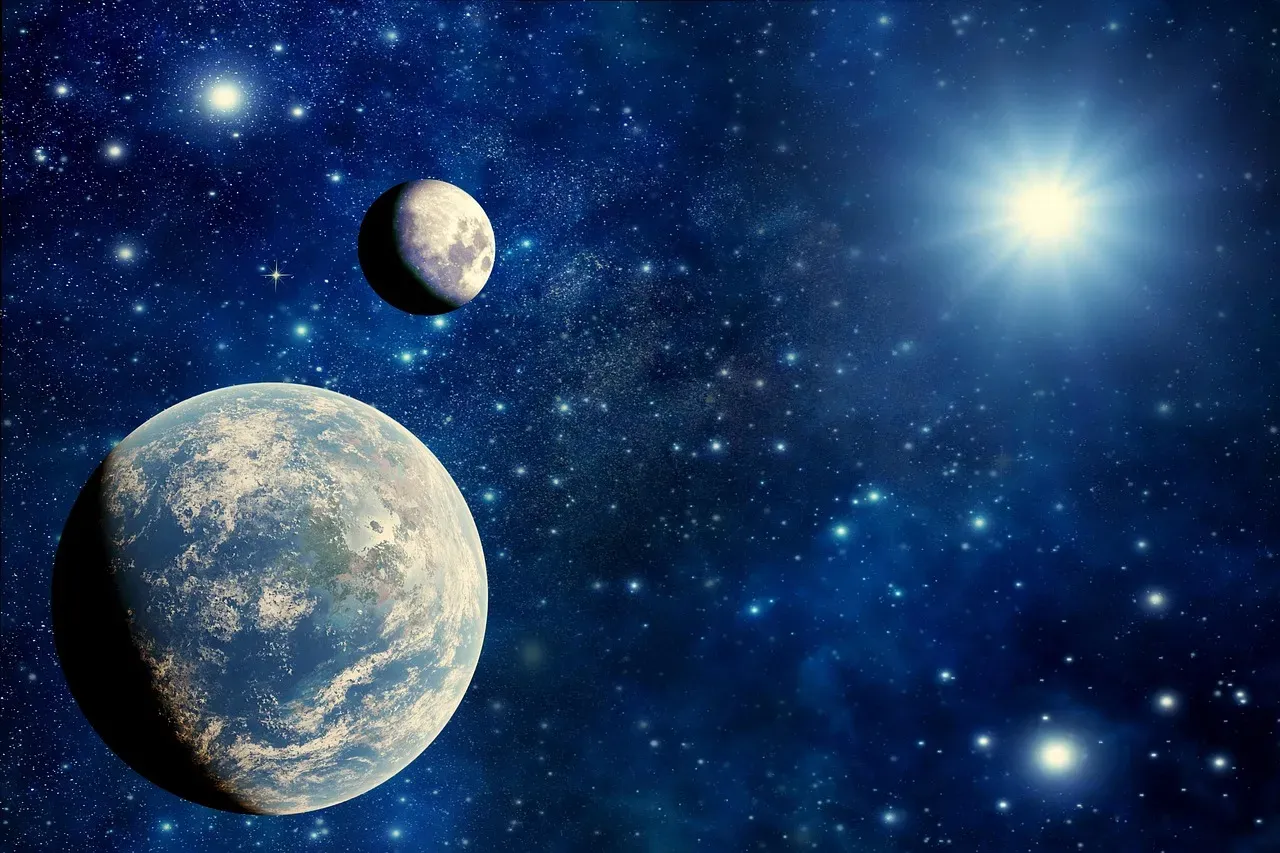
This discovery helps assess the habitability of Earth-like exoplanets by understanding the impact from other planets in the same system. When astronomers find potentially habitable planets orbiting distant stars, they can’t just look at whether the planet sits in the Goldwater zone. They need to map the entire planetary neighborhood.
The study hints that even small planets far out in other solar systems could help keep the climates of life-friendly worlds steady, as planets further out in a system could affect an Earth-like planet’s climate. A terrestrial world might have perfect conditions for life, but if it lacks the right planetary companions to stabilize its climate cycles, life could struggle to gain a foothold.
Ocean Sediments Hold the Proof

Existing studies suggest sediment layers on the ocean floor reflect how Earth’s climate cycles are influenced by the Red Planet. These aren’t just theoretical models. Scientists have physical evidence from deep-sea drilling cores that show regular patterns matching the predicted Martian influence.
The 2.4 million year eccentricity cycle is related to the precession of the perihelions of Earth and Mars, and the 1.2 million year obliquity cycle is associated with the precession of the nodes of the two planets. These astronomical “grand cycles” are predicted by theory and confirmed by layers of sediment deposited over millions of years. The rocks don’t lie.
A Metronome That Never Stops
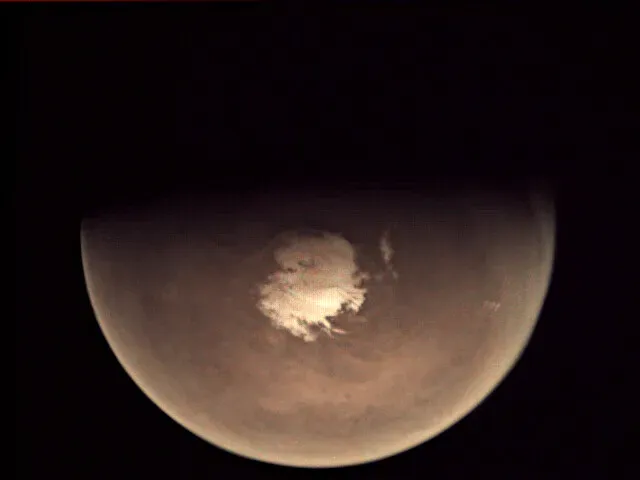
The most stable feature across all simulations was the 405,000-year eccentricity cycle, driven by interactions between Venus and Jupiter, which persists regardless of Mars’s mass, providing a steady beat underlying Earth’s climate variations. This is the baseline rhythm, the drumbeat that keeps going no matter what.
The shorter 100,000-year cycles that pace ice age transitions depend critically on Mars, and as Mars becomes more massive in simulations, these cycles lengthen and gain power. Mars essentially modulates the rhythm set by the bigger planets. It adds complexity and variation to what would otherwise be a more monotonous pattern.
When Computer Models Confirmed the Hunch
Kane’s team didn’t set out to prove Mars was important. Kane assumed Mars had some effect but expected it to be tiny, with gravitational influence too small to easily observe within Earth’s geologic history, and he set out to check his own assumptions. That’s good science. Start skeptical and let the data surprise you.
The simulations tracked Earth’s behavior over tens of thousands to millions of years. They modeled how orbital eccentricity, axial tilt, and other parameters shifted under different scenarios. When Mars was dialed down to nearly zero mass, crucial climate cycles simply disappeared from the data. When Mars was scaled up, those cycles grew stronger and shifted their periods. The correlation was undeniable.
Chaotic Solar System Dynamics
The Solar System isn’t as orderly as we’d like to think. A prominent episode of cyclicity disturbance coincides with the Paleocene-Eocene Thermal Maximum about 56 million years ago, and correlates with a chaotic orbital transition in the Solar System evident in several astronomical solutions. Planetary orbits can enter and exit resonances, causing sudden shifts in climate-forcing patterns.
This chaos is part of the natural order. Planets gravitationally interact in complex ways that produce long-term unpredictability. Mars is one player in this intricate dance, but its role in shaping Earth’s ice age cycles demonstrates that even seemingly minor partners can have outsized effects when orbital resonances align just right.
The Human Connection to Martian Gravity
Some anthropologists contend that rapid climate shifts caused by these orbit cycles caused a shift in Africa from forests to grasslands, which produced environmental pressures that pushed humans to start walking on their hind legs and develop a bigger brain. If that’s true, then Mars didn’t just influence Earth’s climate. It influenced us.
Our upright posture, our tool use, our social structures, all might trace back to climate cycles partially driven by a planet millions of miles away. That’s a humbling thought. We like to think of ourselves as separate from the cosmos, masters of our own destiny. In reality, we’re products of astronomical forces we’re only beginning to understand.
Conclusion: The Hidden Architect of Climate
Mars has always captured human imagination as a potential second home, a destination for future explorers. Now we know it’s been shaping our first home for billions of years. Earth’s Milankovitch cycles aren’t just about Earth and the Sun but are a product of our entire planetary neighborhood, with Mars playing an unexpectedly important supporting role in shaping our climate.
The Red Planet isn’t just a dusty world waiting to be explored. It’s a gravitational partner that has influenced every ice age, every interglacial warm period, and possibly even the evolution of life itself. The next time you look up at that reddish dot in the night sky, remember that it’s been quietly conducting Earth’s climate symphony for longer than multicellular life has existed. Pretty remarkable for a planet that’s only one tenth our mass, don’t you think?