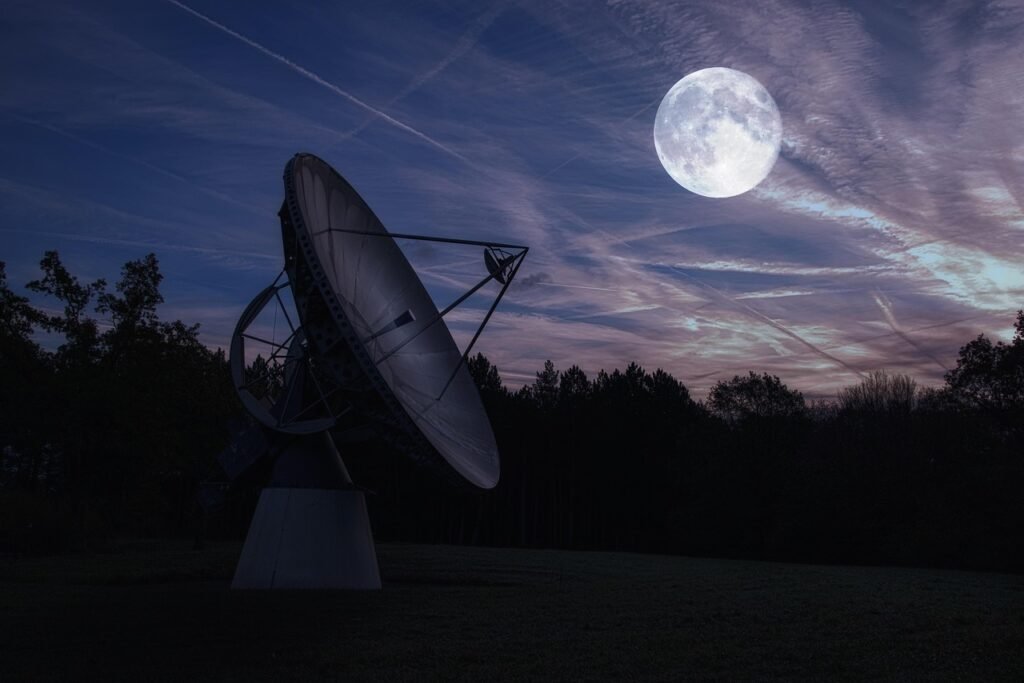

A Pioneer in Distributed Discovery (Image Credits: Pixabay)
Berkeley, California – In a remarkable culmination of volunteer-driven science, University of California researchers have identified 100 radio signals from a vast dataset that warrant closer examination in the ongoing quest for extraterrestrial intelligence.
A Pioneer in Distributed Discovery
The SETI@home initiative launched in 1999 as a groundbreaking effort to harness the idle processing power of personal computers worldwide. Millions of participants downloaded software that analyzed radio telescope data during downtime, turning everyday devices into tools for cosmic exploration. This crowdsourced approach democratized the search for signs of intelligent life, fostering a global community passionate about the stars.
Over its 21-year run until 2020, the project processed signals from the Arecibo Observatory in Puerto Rico, scanning the skies for narrowband emissions that could indicate artificial origins. Volunteers contributed billions of hours of computation, making SETI@home one of the largest distributed computing projects in history. The enthusiasm it sparked highlighted how public involvement could accelerate scientific progress in astrophysics.
Sifting Through a Sea of Data
Researchers at UC Berkeley’s Space Sciences Laboratory faced an enormous challenge: sifting through the 12 billion candidate signals generated by the volunteers. Automated algorithms first filtered out known sources of interference, such as satellites and human-made radio frequency interference. What remained required meticulous human oversight to distinguish potential anomalies from noise.
The analysis, detailed in publications from The Astronomical Journal, involved advanced techniques to rank signals based on their characteristics, like frequency stability and intensity. Teams employed machine learning to refine detections, ensuring no promising leads slipped away. This phase transformed raw data into actionable insights, underscoring the value of long-term, collaborative research.
Spotlighting the Top 100 Candidates
Among the billions of detections, 100 signals emerged as particularly intriguing due to their unusual patterns that did not match terrestrial sources. These candidates exhibit traits like narrow bandwidths and non-repeating pulses, hallmarks of possible technosignatures from distant civilizations. Berkeley scientists now prioritize these for follow-up observations using modern radio telescopes.
The selection process emphasized signals from within our galaxy, focusing on regions where advanced life might thrive. While none have been confirmed as extraterrestrial, their persistence in the data has renewed excitement in the SETI community. For instance, some signals align with known star systems, prompting speculation about habitable zones.
Next Steps in the Cosmic Hunt
With SETI@home’s data archived, the Berkeley team plans to reobserve these signals using facilities like the Green Bank Telescope. Collaborations with international observatories will amplify the search, incorporating multi-wavelength analysis to cross-verify findings. This evolution from volunteer computing to professional scrutiny marks a new era in the discipline.
Funding and technological advancements, including AI-driven signal processing, will play key roles in these investigations. The project also inspires ongoing initiatives like Breakthrough Listen, which builds on SETI@home’s legacy.
- SETI@home operated from 1999 to 2020, engaging millions of volunteers.
- It analyzed data from the Arecibo radio telescope.
- Generated 12 billion signals of interest.
- Narrowed to 100 candidates for further study.
- Focuses on narrowband radio emissions as potential technosignatures.
- Supports broader SETI efforts at UC Berkeley.
Key Takeaways
- The 100 signals represent the most promising leads from two decades of data.
- Volunteer contributions made this scale of analysis possible.
- Future telescope time could confirm or rule out extraterrestrial origins.
As the search for cosmic neighbors continues, these 100 signals remind us of humanity’s enduring curiosity about the universe. What discoveries might they hold? Share your thoughts in the comments below.