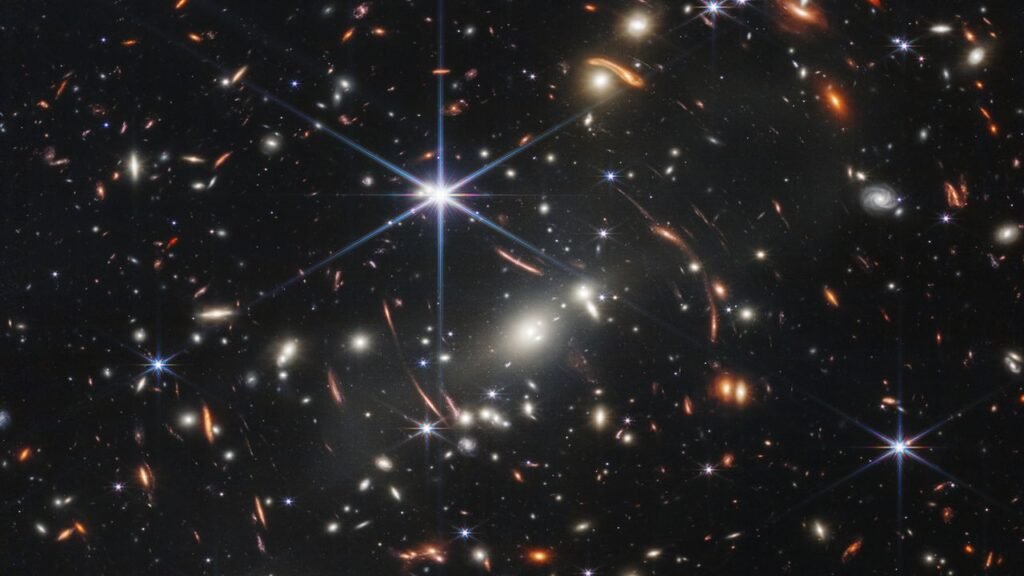
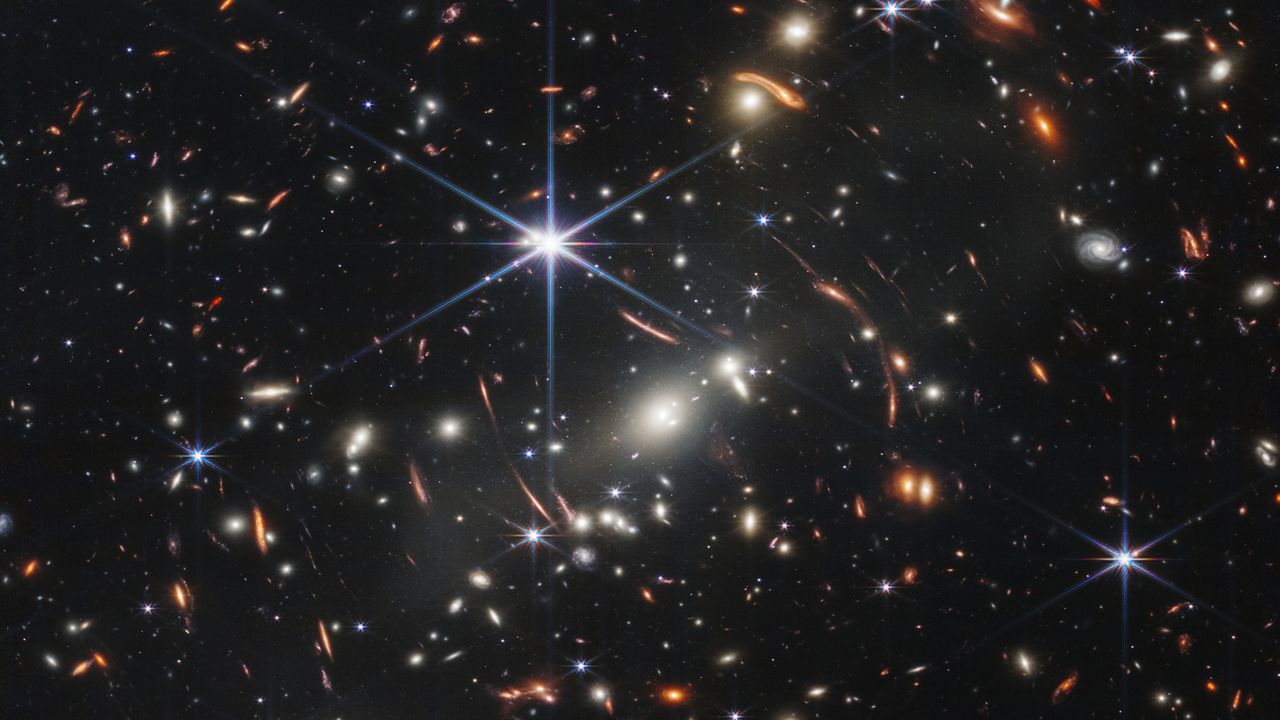
Expectations from Cosmic Simulations (Image Credits: Cdn.mos.cms.futurecdn.net)
Astronomers have long anticipated that the early universe teemed with countless small galaxies, yet recent observations reveal a surprising scarcity that challenges foundational models of cosmic structure formation.
Expectations from Cosmic Simulations
Computer simulations of the universe’s infancy painted a picture of abundance. These models, grounded in the Lambda Cold Dark Matter framework, forecasted that dark matter halos – tiny gravitational wells – would seed the birth of numerous dwarf galaxies shortly after the Big Bang.
Researchers expected these structures to number in the millions, serving as the building blocks for larger galaxies like our Milky Way. Such predictions aligned with observations of the cosmic microwave background, which hinted at a universe filled with these primordial entities. However, as telescopes peer deeper into space and time, the reality diverges sharply from theory.
The discrepancy first emerged from surveys using instruments like the James Webb Space Telescope. Data indicated far fewer low-mass galaxies than anticipated, prompting scientists to question whether the models overlooked key physical processes.
Observations Paint a Leaner Picture
Deep-field images from advanced observatories show the early universe hosted fewer small galaxies than predicted. Studies of regions billions of light-years away suggest that while massive galaxies formed rapidly, their diminutive counterparts lagged behind or vanished altogether.
Astronomers analyzed light from quasars and distant star-forming regions, expecting to detect signatures of these tiny systems through their ultraviolet emissions. Instead, the counts fell short by factors of ten or more. This shortfall extends to the present day, where nearby dwarf galaxies also appear underrepresented in certain environments.
One notable example involves the detection of ultra-faint dwarfs around the Milky Way, but even these are rarer than simulations suggest. The pattern holds across redshifts, indicating a persistent puzzle from the universe’s youth to now.
Theories Behind the Vanishing Act
Several hypotheses seek to explain the missing galaxies. Feedback from supermassive black holes in larger neighbors may have stripped gas from these dwarfs, halting star formation before they could shine brightly.
Another idea points to reionization, the era when ultraviolet light from the first stars ionized the intergalactic medium. This process could have heated and dispersed the gas needed for dwarf galaxy growth, rendering many halos barren.
Dark matter’s properties might also play a role. If it interacts more strongly than assumed, it could prevent the collapse necessary for galaxy formation in small halos.
- Supernova explosions driving out gas in proto-galaxies.
- Mergers with bigger systems erasing traces of dwarfs.
- Ionizing radiation suppressing cooling in low-mass halos.
- Variations in dark matter density on small scales.
- Efficient dust obscuration hiding faint emissions.
Broader Ramifications for Astrophysics
The scarcity reshapes our understanding of galaxy assembly. If tiny galaxies were less common, the hierarchical merging process that built the cosmic web might have proceeded differently, affecting the distribution of stars and elements today.
This enigma ties into debates over dark matter. Upcoming missions, such as the Roman Space Telescope, aim to map faint structures more comprehensively, potentially resolving whether the models need tweaking or if observational biases persist.
Resolving this could illuminate the universe’s first billion years, when conditions favored rapid evolution. It also influences predictions for the abundance of habitable zones in the cosmos.
Key Takeaways
- Tiny galaxies are crucial for testing dark matter theories but appear underrepresented in the early universe.
- Possible culprits include environmental feedback and reionization effects.
- Future telescopes may uncover hidden populations, refining our cosmic timeline.
The hunt for these elusive dwarfs underscores the universe’s capacity to surprise, reminding us that even robust theories evolve with new evidence. As we refine our tools and models, this mystery could unlock deeper secrets of cosmic origins. What aspects of this cosmic shortfall intrigue you most? Share your thoughts in the comments.