

Almost everyone has had that eerie feeling: you walk into a room you’ve never seen before and you’re suddenly sure you’ve stood there, in that exact moment, doing that exact thing. Your stomach drops, your brain flickers, and for a few seconds it feels like reality has a glitch. Then it’s gone. That strange, flickering experience is déjà vu, and for something so common, it’s shockingly mysterious.
For a long time, déjà vu lived mostly in the territory of superstition and storytelling. People connected it with past lives, psychic premonitions, or hidden messages from the universe. But over the last few decades, neuroscientists and psychologists have quietly been trying to pin it down with brain scans, memory experiments, and some clever tricks. The answers they’ve found are not only fascinating, they’re also way more human and relatable than the myths.
The Strange Familiarity: What Déjà Vu Actually Feels Like

Déjà vu is a sudden, powerful sense that a new situation is somehow weirdly familiar, even though you know, logically, that it’s not. You remember nothing concrete, no specific prior event you can point to, just this unnerving sense that you’ve lived this moment before. It tends to last only a few seconds, which almost makes it feel like the mental version of seeing something out of the corner of your eye. You sense it clearly, and then your brain snaps back to normal and the feeling dissolves.
What’s wild is that this sensation is usually paired with a strong awareness that something is off. People will often think, “This is so familiar, but I know that can’t be right.” That tension between feeling and logic is part of what makes déjà vu feel so spooky. It’s like your mind is briefly out of sync with itself, your emotional sense of memory racing ahead while your rational brain slams on the brakes.
How Common Is Déjà Vu – And Who Feels It Most?

Despite how strange it feels, déjà vu is incredibly common. Studies suggest that roughly about two out of three people report experiencing it at least once in their lives, and some people feel it fairly regularly. It shows up across cultures and countries, which suggests it’s tied to how the human brain works rather than to any specific upbringing or beliefs. It isn’t a rare quirk; it’s almost a built-in “feature” of how we process the world.
Interestingly, déjà vu appears most often in younger adults, especially in late teens and twenties, and then tends to fade as people age. That alone hints that déjà vu might be connected to how flexible and active our memory systems are at different stages of life. People who travel more, consume a lot of media, or regularly encounter new environments also tend to report it more frequently, possibly because their brains are juggling more overlapping experiences and patterns.
Memory Glitches: When Your Brain’s Familiarity System Misfires

One leading explanation is that déjà vu is a kind of memory “glitch” where the brain’s familiarity system fires when it shouldn’t. In simple terms, your brain has at least two big systems for memory: one that says “this is familiar” and another that says “this is where and when you’ve seen it before.” Déjà vu seems to happen when familiarity lights up, but the system that retrieves specific details finds nothing. So you get a raw feeling of “I know this” with no story attached.
A useful analogy is a song you recognize but can’t place. You hear a melody and feel sure you know it, but you can’t remember the lyrics or where you heard it first. With déjà vu, that same thing plays out with a moment in your life instead of a tune. Something about the scene in front of you matches a pattern your brain has seen before, just enough to feel familiar, but not enough to let you pull up an actual memory. The result is that unsettling experience of displaced recognition.
Split-Second Perception Errors: The Double-Take Theory

Another idea focuses less on memory and more on timing. According to this view, déjà vu can occur when your brain processes the same information twice in rapid succession, but with a tiny delay between them. The first pass is so quick and shallow you barely register it; the second pass lands like a normal perception but feels oddly familiar, because your brain already skimmed it a moment earlier. So you confuse that rapid re-processing with a “past experience.”
It’s a bit like glancing at a notification on your phone, ignoring it, and then looking again a second later and feeling like you’ve “seen this before.” In a lab, some researchers have tried to mimic this by briefly showing people images in rapid bursts, creating a subtle lag in processing. While it doesn’t perfectly recreate natural déjà vu, it does support the idea that tiny timing errors in the brain can create big subjective effects, including the sense that reality is repeating itself.
False Alarms in the Temporal Lobes: What Brain Scans Reveal
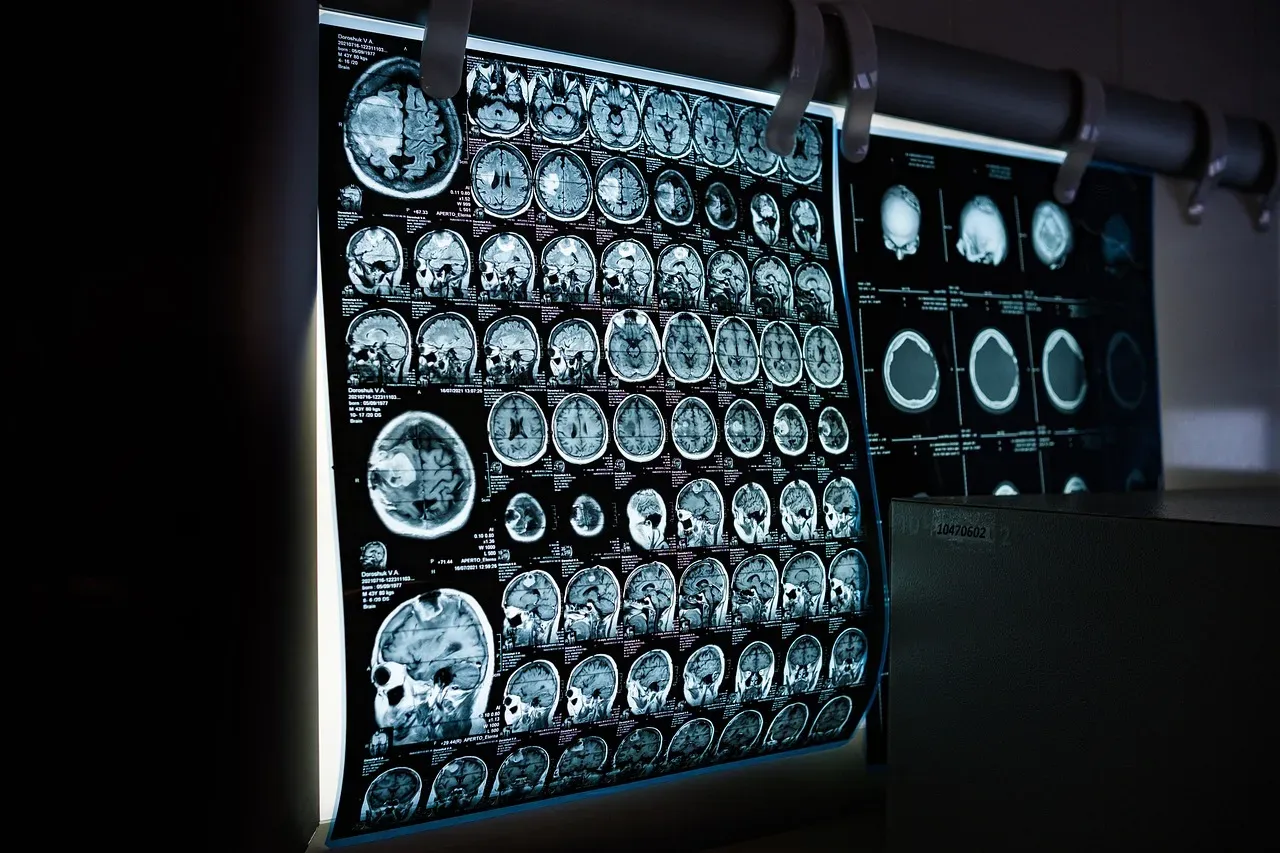
The most revealing clues about déjà vu have come from studying people with certain types of epilepsy, especially temporal lobe epilepsy. Some of them report intense, frequent déjà vu experiences just before a seizure. When doctors recorded their brain activity, they found abnormal bursts of activity in memory-related regions, including the hippocampus and nearby temporal areas. That suggested déjà vu might be linked to brief, harmless misfires in those same areas in otherwise healthy people.
Brain imaging research in people without epilepsy has hinted at something similar on a smaller scale. When volunteers experience déjà vu in controlled experiments using virtual environments or memory tricks, regions involved in memory and familiarity show increased activity. It’s as if the brain’s “this feels known” circuit is hitting the alarm button when it does not quite have the evidence to justify it. A mild, momentary, and non-dangerous version of what, in more extreme form, becomes a seizure aura.
Pattern Recognition, Prediction, and the Brain’s Shortcut Strategy

Stepping back, déjà vu also makes sense as a side effect of something incredibly useful: your brain’s talent for pattern recognition and prediction. Your mind is constantly comparing the present with the past to guess what might happen next. That’s how you know how to behave in a café you’ve never been to before, or how you anticipate the flow of a conversation. Sometimes, though, the brain seems to recognize a “pattern match” where there isn’t a real, single memory underneath, more like combining fragments from many similar experiences.
Imagine walking into a new office building that has the same color walls as your old school, similar floor tiles to a hotel lobby you once visited, and the same smell as your friend’s house. Your brain might fuse all those micro-similarities into one big wave of familiarity. In that moment, you feel like you’ve been there before, even though you haven’t stepped in that exact place at that exact time. Déjà vu, in this sense, could be the price we pay for a brain that constantly cuts corners and leans on shortcuts to move fast and keep us functional.
Is Déjà Vu a Warning Sign – Or Just a Quirk? What It Means for You

For most people, déjà vu is simply a normal, if slightly eerie, part of being human. It tends to be brief, rare, and harmless, more like a brain hiccup than a serious malfunction. If it only pops up once in a while and you feel fine otherwise, it’s usually nothing to worry about. In fact, in a strange way, it’s proof that your memory systems and pattern detectors are working hard in the background, even if they occasionally go a bit overboard.
However, if déjà vu starts happening very frequently, lasts longer than a few seconds, or is paired with other symptoms like blackouts, confusion, or odd sensory experiences, then it can be worth talking to a doctor or neurologist. In those cases, it may be one clue among many that something more serious is going on in the temporal lobes. But for the vast majority of people, déjà vu lives in that curious middle ground: not mystical, not dangerous, just a fascinating peek behind the curtain of how the brain stitches together our sense of reality.
A Glitch, A Mirror, Or A Window Into The Mind?

When you strip away the myths, déjà vu isn’t a message from another life or a spoiler from the future; it’s a brief moment when the machinery of memory and perception slips out of sync. Familiarity appears without a story, patterns are recognized without context, and for a heartbeat you stand in the uncanny valley of your own mind. That uneasy jolt is your awareness catching the brain in the act, seeing the gears move instead of just enjoying the finished picture.
In that sense, déjà vu is less a defect and more a reminder of how complex and improvisational our inner world really is. Your brain is constantly guessing, stitching, and revising, and most of the time you never notice. So the next time reality feels like a rerun, you can see it not as a cosmic glitch, but as a rare chance to watch your mind misfire in a very human way. When that strange wave of familiarity hits you again, what story will you tell yourself about what it really means?