

If you’ve ever caught yourself thinking people in the distant past were primitive or clueless, it might be time to retire that idea. The deeper researchers dig into archaeology, engineering, and ancient texts, the more it becomes obvious: people thousands of years ago were not just surviving, they were solving brutally hard problems with almost no tools and zero modern technology. In some ways, their creativity feels even bolder than ours, because they were working in the dark without a manual.
I still remember the first time I saw a cross-section diagram of an ancient Roman aqueduct in a book. It hit me that someone, without calculators or computers, had to figure out the perfect slope for water to move for tens of miles without stalling or flooding. That moment shattered the lazy idea that history is just a straight line from stupid to smart. These ten ancient innovations show that ingenuity has always been part of being human – and some of them are so clever they could easily pass as modern concepts with a bit of cosmetic upgrade.
1. The Wheel: Simplicity That Changed Everything
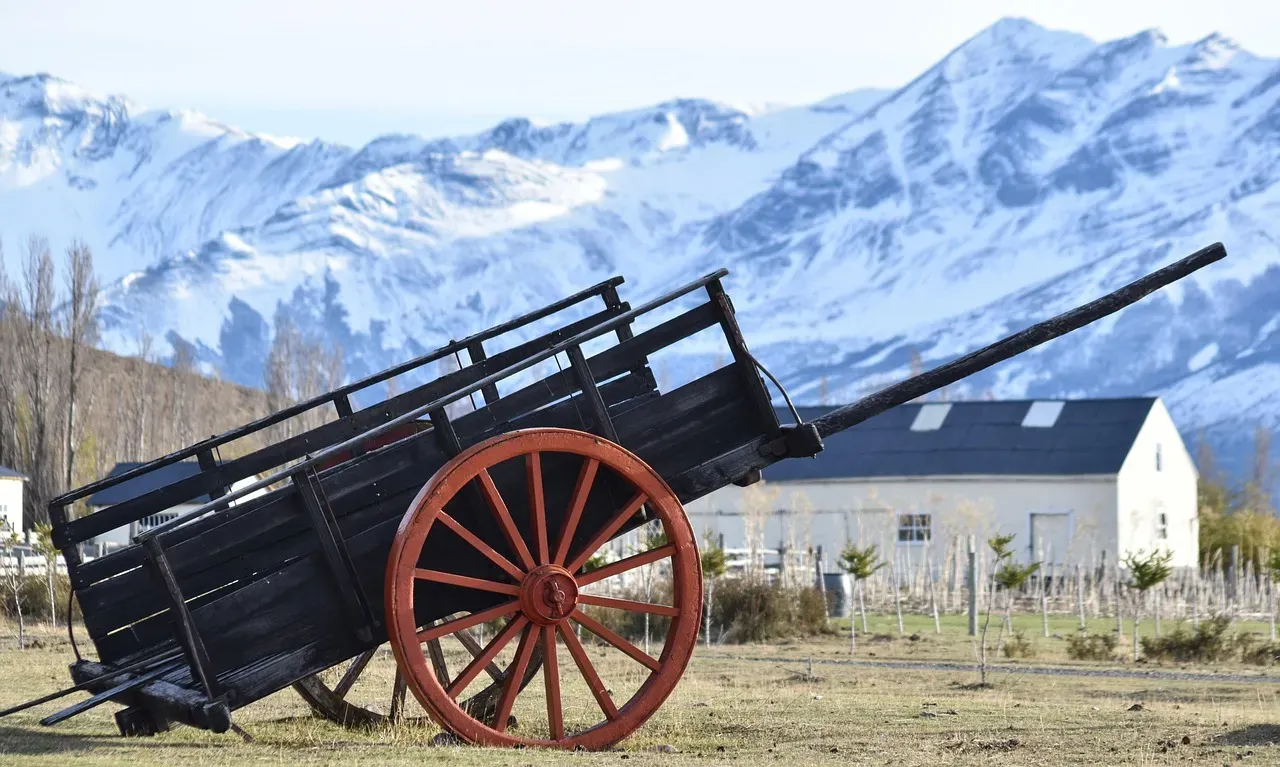
It sounds almost boring to start with the wheel, because it’s so familiar that our brains glide right past it, but a wheel attached to an axle is one of the greatest mental leaps in human history. The earliest known wheels, found in Mesopotamia and surrounding regions, weren’t even built for transport at first; they were used in pottery-making, where rotating clay on a wheel allowed for more consistent, faster production. Only later did people start to realize that the same basic idea – something round spinning around a fixed center – could make it easier to move heavy loads that would have taken whole teams of people to drag.
What’s wild is that a wheel is deceptively tricky: you need a round disc, a smooth bore in the center, a sturdy axle, and a way to reduce friction between them, all using wood or stone and very basic tools. It’s not just a “circle on a stick”; it’s a little mechanical system. Once this idea spread, it fueled carts, chariots, and eventually complex machinery like water wheels and millstones. When people say the wheel was revolutionary, they aren’t exaggerating – this was the moment humans learned to offload raw muscle work into geometry and physics.
2. Ancient Aqueducts: Plumbing on a Civilizational Scale
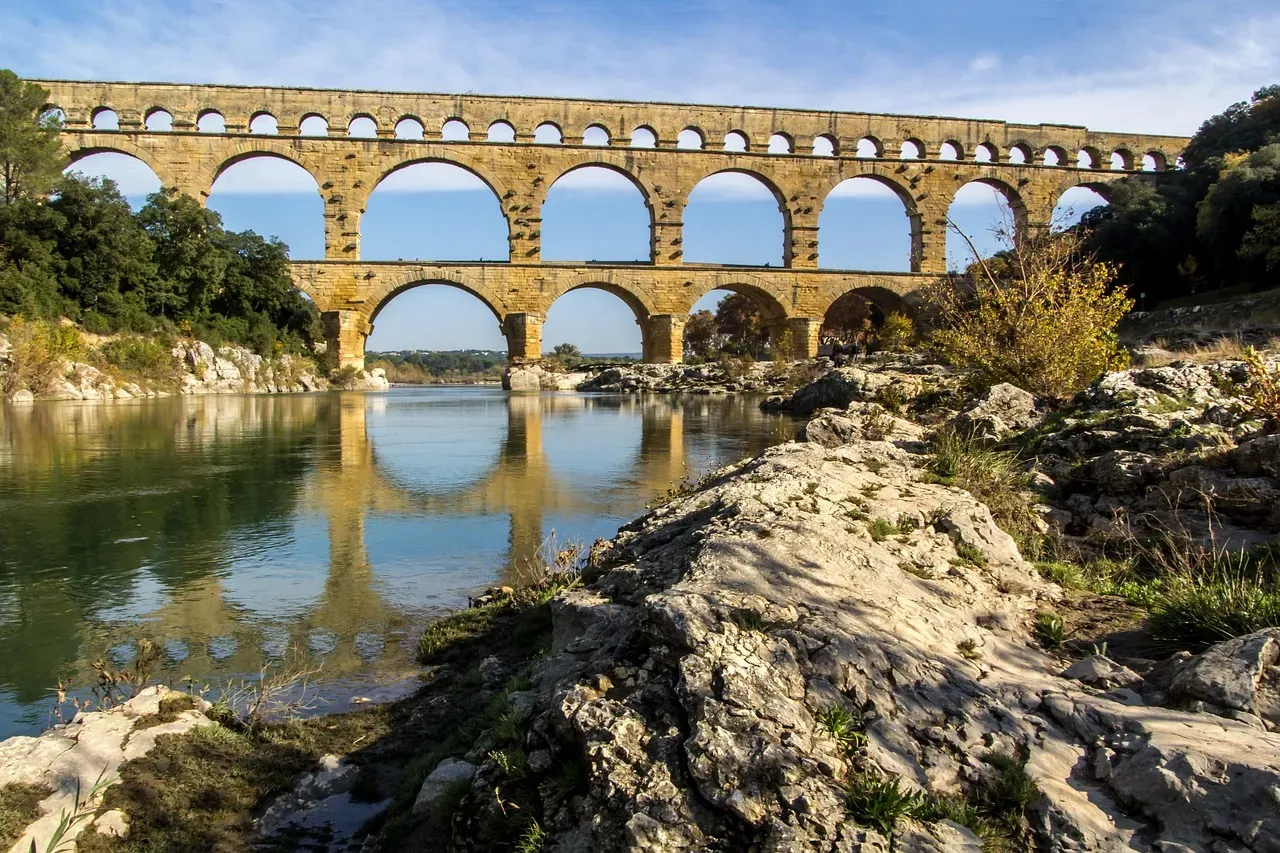
Imagine building a water supply system so well that it could deliver fresh water from mountains dozens of miles away to a city of hundreds of thousands of people, relying only on gravity. That’s exactly what ancient civilizations like the Romans did, and they weren’t even the first; earlier examples exist in places like ancient Persia and the Near East. These systems used channels, tunnels, and elevated stone structures to maintain a tiny but consistent downward slope, carefully engineered so the water never stopped or overflowed. It’s like balancing on a knife-edge – but for tens of miles, through hills and valleys.
What makes aqueducts such a powerful sign of human ingenuity is that they required so many skills at once: surveying land, understanding gradients, dealing with leaks, and working out how to cross ravines and rivers. Some aqueducts even ran underground in tunnel systems to reduce evaporation and protect the water from contamination. When you stand under the arches of a surviving aqueduct today, you’re not just looking at a big stone construction; you’re looking at an invisible math problem that someone solved perfectly, centuries before modern engineering degrees existed.
3. The Antikythera Mechanism: An Ancient Analog Computer
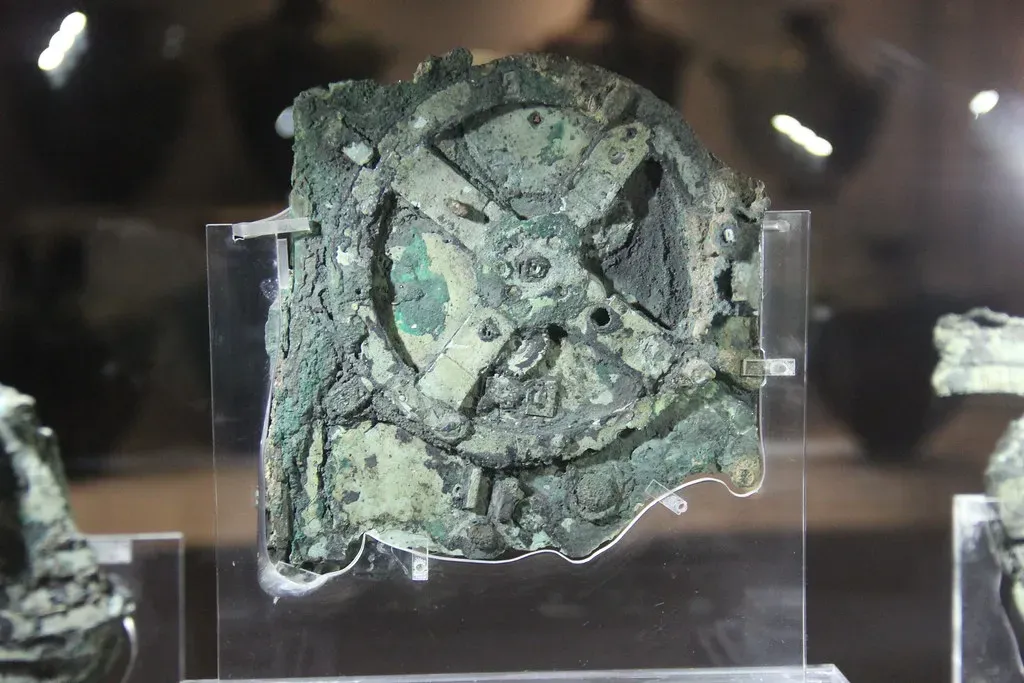
The Antikythera mechanism looks like a corroded lump of metal at first glance, but once researchers scanned and reconstructed it, they discovered a jaw-dropping machine packed with tiny bronze gears. Built in ancient Greece more than two thousand years ago, it tracked the motions of the sun, moon, and likely the known planets, forecasting eclipses and possibly even timing athletic games and religious events. It’s not an exaggeration to say it behaves like an analog computer, calculating astronomical positions through interlocking gear ratios instead of software code.
What shocks people is the level of precision involved: dozens of meshing gears, some with oddly specific tooth counts, all cut by hand without modern tools. For a long time, historians assumed this level of mechanical sophistication only appeared in Europe during the late medieval and early modern periods. The Antikythera mechanism basically walked into the room and overturned that assumption. It shows that ancient scientists and craftsmen weren’t just star-gazing poets; they were building compact, complex devices that would feel right at home in a steampunk version of a tech lab.
4. Egyptian Pyramids and Stone Engineering: Moving the Impossible

Everyone knows the pyramids are big, but it’s easy to forget just how extreme those construction challenges really were. The Great Pyramid of Giza contains millions of stone blocks, many weighing several tons each, stacked with astonishing precision so that the structure still stands straight and stable after thousands of years. There’s no evidence of alien intervention or other wild fantasies – just massive amounts of organized human labor, smart logistics, and clever techniques for moving and positioning heavy stone with sledges, ramps, levers, and probably a lot of water and lubrication tricks on sand.
What impresses engineers today is not just the size, but the accuracy. The sides of the Great Pyramid are aligned closely to the cardinal directions, and the base is remarkably level given the tools available at the time. This means the builders had solid knowledge of surveying, geometry, and project planning. It also means somebody had to coordinate thousands of workers, manage materials coming from distant quarries, and keep everything synchronized. The pyramids are less a mystery and more a monument to what happens when human minds obsess over a project for generations and refuse to accept “good enough.”
5. Roman Concrete: Building for the Far Future
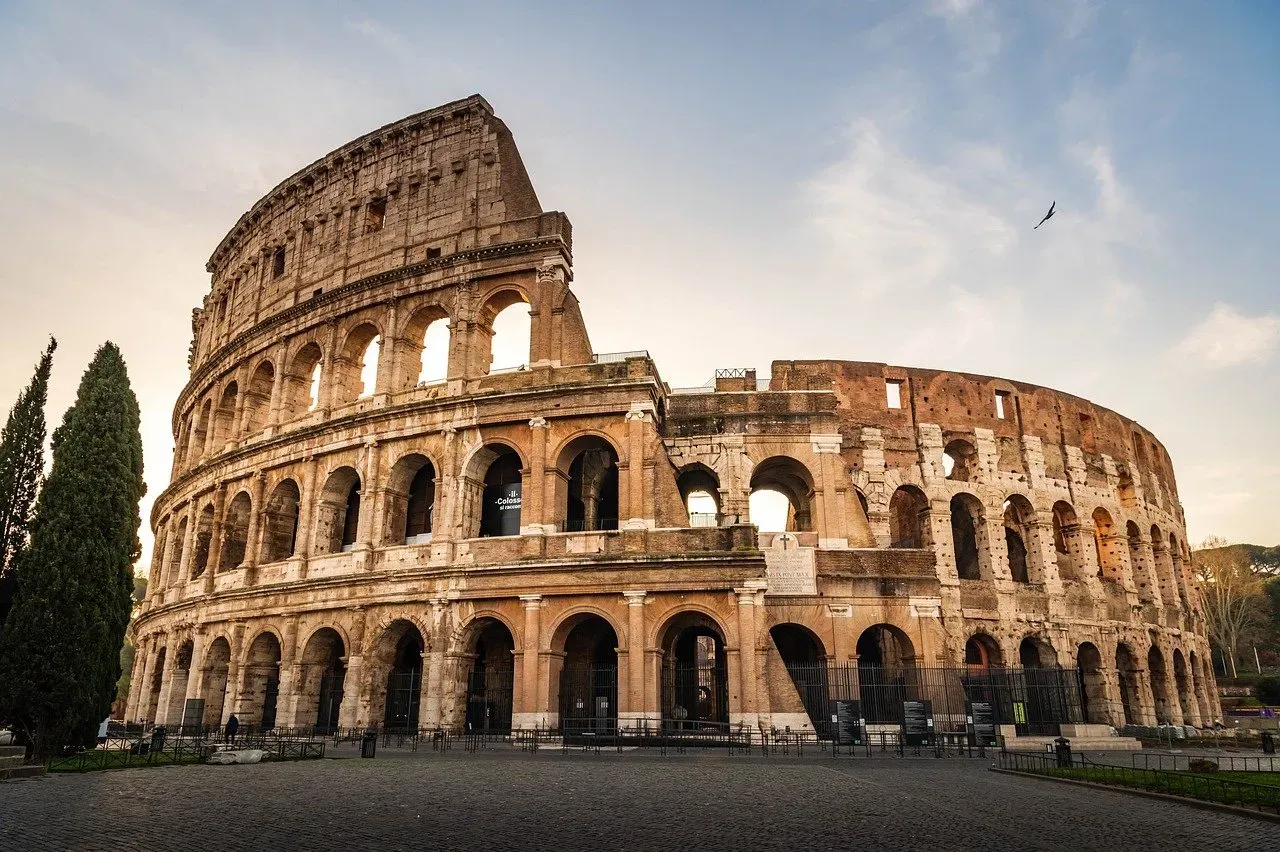
Modern concrete cracks, crumbles, and needs maintenance within a century if you’re lucky, yet ancient Roman concrete structures like the Pantheon dome and coastal harbors are still holding together after nearly two thousand years. The secret wasn’t magic; it was chemistry and experimentation. Roman builders used a mix that included volcanic ash, lime, and various aggregates, and this special blend reacted with seawater in a way that actually strengthened the material over time, especially in marine environments. Instead of decaying, parts of the concrete slowly transformed into tough, interlocking crystals.
For a long stretch of history, this recipe was basically lost, and people assumed modern materials simply had to be better. Then scientists started analyzing Roman samples and realized, in some applications, the ancients had us beat. The Romans themselves clearly understood that their mix could do things ordinary stone and mortar couldn’t, because they used it to push the limits of architecture – massive domes, soaring vaults, enormous public baths. Roman concrete is a classic example of ancient trial-and-error tuned by sharp observation, leading to technology that doesn’t just work for a while but is quietly designed to outlive its makers by millennia.
6. Ancient Roads and Long-Distance Networks
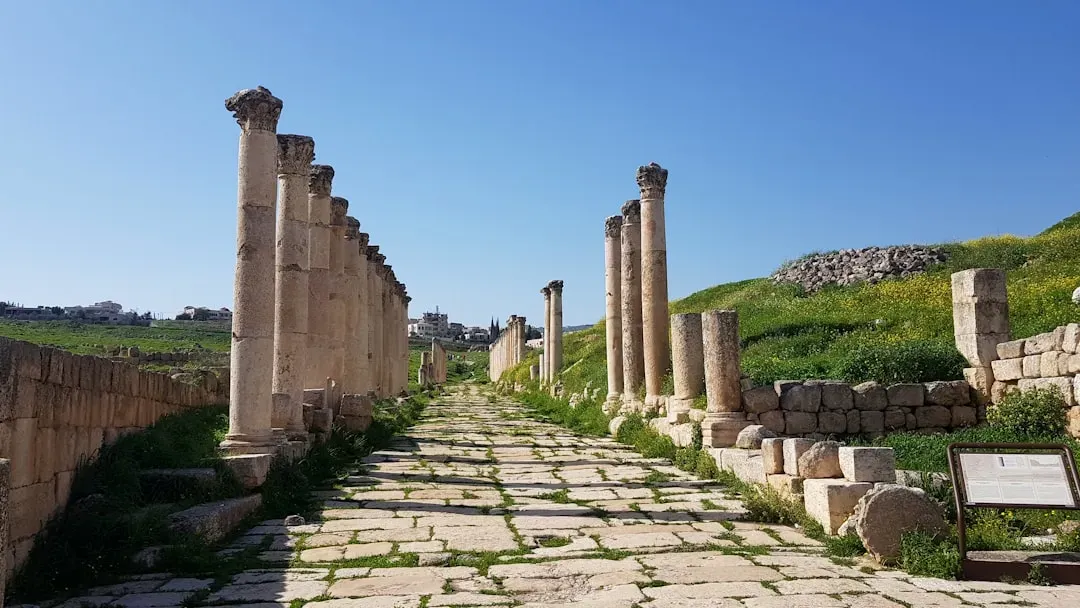
The phrase “all roads lead to Rome” comes from a very real physical network that stretched across Europe, North Africa, and the Near East. Roman engineers weren’t the only road builders – earlier civilizations in Mesopotamia, the Indus Valley, and Mesoamerica built impressive routes too – but the Roman system stands out for its scale, durability, and planning. These roads weren’t just dirt paths; they had layered construction with drainage, curbstones, and sometimes even milestones and rest stops, allowing soldiers, merchants, and messengers to move far faster than they could on unprepared ground.
What makes this an innovation rather than just “a lot of paths” is that people realized infrastructure is a kind of technology that multiplies everything else. Stable roads shrank distances, stabilized trade, and even helped ideas, religions, and scientific knowledge spread from region to region. Standing on an old stone road today, it’s easy to imagine carts and sandals wearing grooves into the same place hundreds of years apart. That invisible mental leap – the idea that a maintained, engineered route has enormous long-term payoff – feels very modern, yet our ancestors were already acting on it centuries ago.
7. Sophisticated Ancient Surgery and Medicine

Ancient medicine is often caricatured as chanting and guesswork, and to be fair, there was plenty of trial, error, and mistaken belief. But buried in the history are startling examples of real medical skill. Archaeologists have found skulls from prehistoric and ancient societies with deliberate holes cut into them – a procedure called trepanation – where the bone shows signs of healing, meaning the patient survived the surgery. In ancient India, China, Egypt, and Greece, there were detailed texts describing fractures, wounds, surgical tools, and even procedures for plastic reconstruction of noses and ears.
Of course, they lacked antibiotics, modern anesthesia, and a proper understanding of germs, so outcomes were uneven and risky. Yet the fact that anyone was performing complex operations at all is proof of relentless curiosity and courage. Imagine being the first person to decide to cut into a skull to relieve pressure, or to set a broken limb with splints and bandages instead of just hoping for the best. These early surgeons treated the human body like a system that could be studied and repaired, laying down both techniques and attitudes that modern medicine still depends on today.
8. Early Writing Systems: Turning Memory into Technology

Before writing, everything humans wanted to preserve had to live in fragile human memory: stories, laws, debts, harvest records. That worked only as long as people remembered correctly, which is never guaranteed. Then societies in Mesopotamia, Egypt, China, Mesoamerica, and elsewhere started doing something radical: they encoded speech and ideas into marks on clay, stone, bone, and paper-like materials. Cuneiform, hieroglyphs, early Chinese characters, and other scripts turned fleeting thoughts into physical objects that could outlast their creators.
Writing isn’t just communication; it’s a memory machine. It lets you compare harvests across decades, track trade across regions, and pass detailed instructions through time. Legal codes, religious texts, astronomical observations, medical recipes – all became transmissible, improvable, and checkable. When you see a weathered inscription on a temple wall or a scratched tablet from an archive, you’re looking at pure human stubbornness refusing to let knowledge evaporate. In a way, every book or file you use today is an echo of that first moment when someone realized that marks in clay could stand in for words and ideas in the mind.
9. Water Management and Irrigation Systems
Settling near rivers was one thing; learning to control them was another leap entirely. Early civilizations in places like Mesopotamia, Egypt, the Indus Valley, ancient China, and pre-Columbian Americas developed canals, dikes, basins, and irrigation networks that allowed them to direct water precisely where crops needed it. They had to work out how to prevent floods, avoid salting the soil, and share water fairly across communities – problems that are still giving modern planners headaches. These systems supported cities, surplus food, and population growth far beyond what rain-fed agriculture alone could handle.
You can think of irrigation as a kind of hacking of the natural cycle, bending seasonal floods and river flows into something more predictable and useful. This demanded measurement, timing, simple machines for lifting water, and agreed rules for who could divert what and when. Some of the earliest known legal conflicts are about water rights, which shows just how central this technology was. When you picture ancient fields watered by carefully cut channels, you’re seeing the moment when humans refused to accept whatever nature handed them and instead decided to negotiate, reshape, and schedule it.
10. Urban Planning and Complex Cities

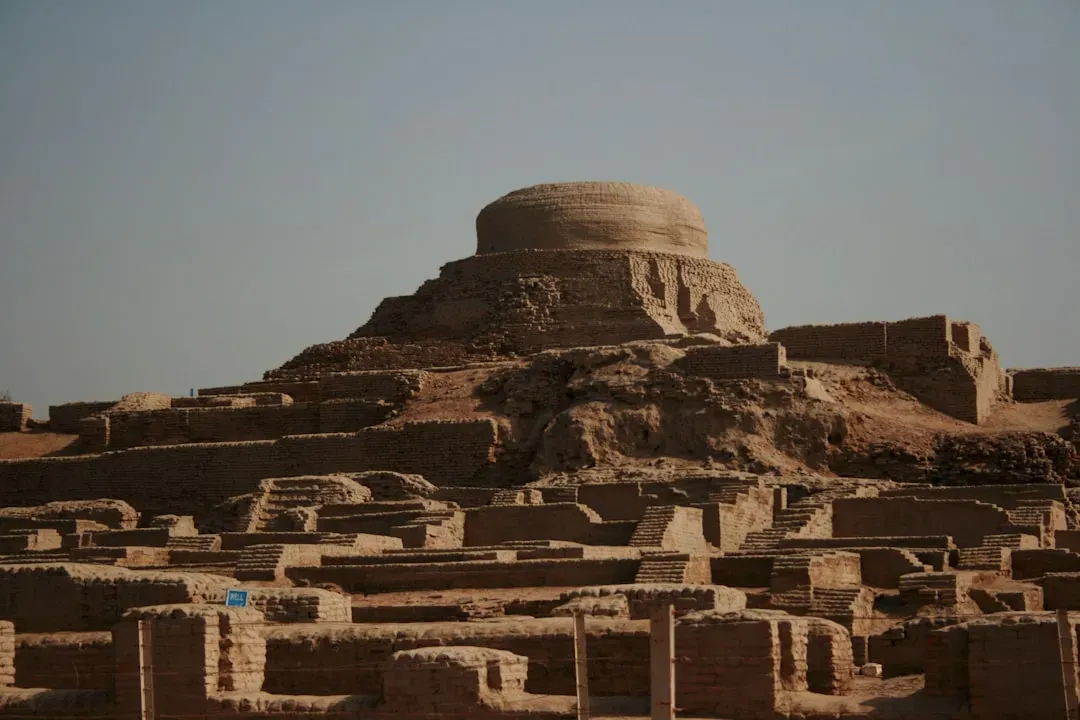
We tend to assume city planning is a relatively modern profession, but ancient cities prove otherwise. Places like Mohenjo-daro in the Indus Valley, certain pre-Columbian cities, and later Greek and Roman towns show clear evidence of grid layouts, drainage systems, public baths, marketplaces, and zoning of living and working areas. Some had standardized brick sizes, aligned streets, and what appears to be an intentional design rather than chaotic sprawl. That means someone – or more realistically, many people over generations – were thinking of the city as a system, not just a random pile of buildings.
Living close together in big numbers creates problems: waste, disease, traffic, noise, fire risk, and conflict. Ancient planners tackled these with the tools they had, laying out streets to catch breezes, channeling waste away through sewers, centering life around plazas and temples, and sometimes building impressive defensive walls. The fact that we still grapple with very similar issues in modern cities shows how universal these challenges are. What’s inspiring is that thousands of years ago, long before skyscrapers and subways, people were already experimenting with how to make dense human life not just possible, but bearable and even vibrant.
Ingenuity Is Not a Modern Invention
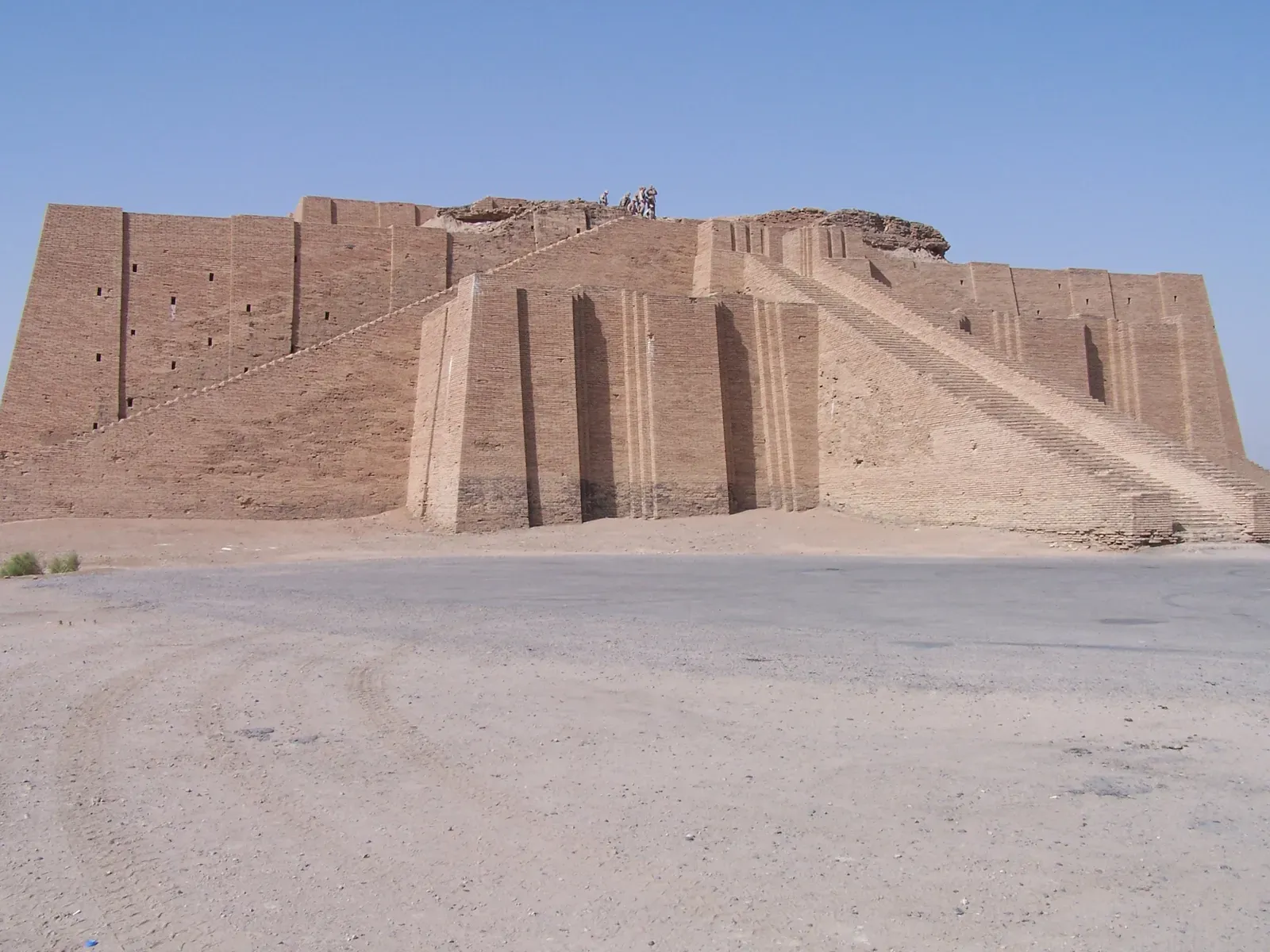
When you line up these ancient innovations – wheels, aqueducts, stone monuments, concrete, roads, surgery, writing, water networks, and planned cities – the pattern is hard to ignore. People in the past were dealing with the same core problems we face today: moving things, caring for bodies, sharing information, managing resources, and living together without everything collapsing. They attacked those problems with patience, creativity, and a willingness to try risky ideas, often leaving behind solutions so solid that they literally still stand.
What changes over time are the materials, the tools, and the scale, but not the basic human impulse to tinker and improve. Looking at these achievements, it becomes harder to feel smug about our modern gadgets and easier to feel connected to a long chain of problem-solvers who were every bit as clever, ambitious, and stubborn as we are. Next time you turn on a tap, drive on a road, read a screen, or walk through a city, it might be worth pausing for a second and asking yourself: how much of what feels “new” is really just an ancient idea in modern clothes?